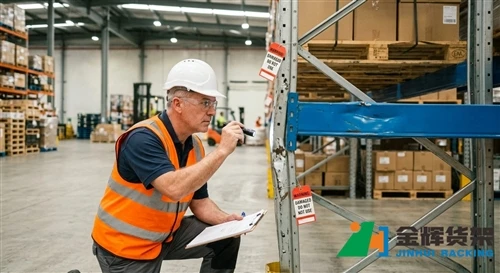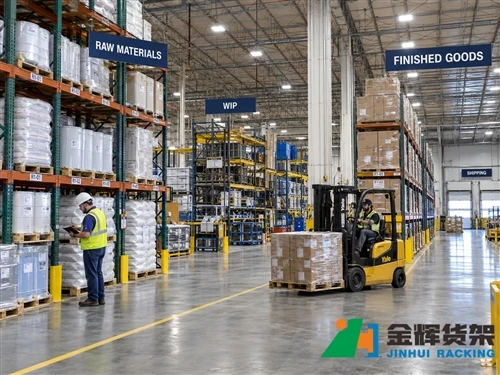
Warehouse space is expensive, and simply adding more pallet racks does not always increase storage capacity in the most practical way. The way rack rows are positioned within the warehouse can be just as important as the rack itself.
Back-to-back pallet racking is one common configuration used to organize pallet storage into efficient rack blocks. Instead of leaving a full operating aisle between every individual rack frame, two rack rows can be positioned back-to-back, allowing the storage structure to share a common rear side.
This arrangement can make better use of warehouse floor space while preserving forklift access to both sides of the rack block.
However, back-to-back racking is not simply a matter of placing two racks together. Rack depth, pallet overhang, aisle layout, building columns, forklift traffic, fire protection requirements, and inventory accessibility all need to be considered when developing the layout.
Quick Answer
Back-to-back pallet racking places two pallet rack rows with their rear sides facing each other, creating a compact storage block that can be accessed from aisles on both sides. It can increase the amount of pallet storage within a warehouse while maintaining direct forklift access to individual rack positions. The exact configuration depends on pallet dimensions, rack depth, aisle requirements, building conditions, and storage objectives.
What Is Back-to-Back Pallet Racking?
Back-to-back pallet racking is a warehouse layout configuration in which two rows of pallet rack frames are positioned with their backs facing each other.
Each rack row has an operating aisle on its outer side.
A simplified arrangement looks like this:
Forklift Aisle → Rack Row → Rack Row → Forklift Aisle
This differs from placing individual rack rows separately throughout the warehouse because the two rows can share a common back-to-back arrangement.
The configuration is commonly used with selective pallet racking because it allows pallets to be accessed independently from either side.
Industrial pallet racking systems can be configured in back-to-back layouts according to pallet dimensions, storage requirements, rack depth, warehouse height, and forklift operation.
How Does Back-to-Back Pallet Racking Work?
Each rack row is designed to store pallets facing its own operating aisle.
The two rack rows are then positioned rear-to-rear to form one larger storage block.
For example, a warehouse may have:
- One forklift aisle on the left side
- One pallet rack row facing the left aisle
- A second rack row facing the opposite aisle
- A second forklift aisle on the right side
Forklifts can therefore access pallet positions from both sides of the storage block.
This arrangement can create a more organized warehouse layout than installing isolated single rack rows throughout the building.
Why Use Back-to-Back Pallet Racks?
The primary reason to use a back-to-back configuration is to make better use of the warehouse floor area while maintaining pallet accessibility.
Several potential benefits include:
- More efficient use of floor space
- Higher pallet storage capacity within the same building
- Direct access to pallets from both sides
- Organized rack blocks
- Clear forklift operating aisles
- Flexible SKU storage
- Simple integration with selective pallet racking
The exact storage improvement depends on the warehouse dimensions and the layout before and after the redesign.
Back-to-back racking should therefore be evaluated using the complete warehouse plan rather than assuming that every facility will achieve the same capacity increase.
Back-to-Back Pallet Racking vs. Single Rack Rows
A single rack row has an operating aisle on one side and may have another rack row, wall, or open space behind it.
Back-to-back racks combine two storage rows into one block.
| Configuration | Typical Characteristic | Best Consideration |
|---|---|---|
| Single rack row | Rack storage arranged independently | Flexible layout or perimeter storage |
| Back-to-back racks | Two rack rows arranged rear-to-rear | Efficient warehouse storage blocks |
| Deep-lane systems | Multiple pallets stored in depth | Higher density where selectivity is less critical |
The choice depends on whether the warehouse prioritizes accessibility, density, flexibility, or a combination of these factors.
How Back-to-Back Rack Depth Affects Warehouse Space
Rack depth becomes especially important when two rows are positioned back-to-back.
The combined footprint of the two rack frames, pallet positions, required clearances, and any rear structural arrangement determines how much floor area the storage block occupies.
Using a deeper rack does not automatically produce better space utilization.
The rack needs to accommodate the pallet dimensions while maintaining appropriate clearances for safe loading and unloading.
Our previous guide on pallet rack upright frame selection explains how rack depth and frame configuration relate to the overall rack design.
How Pallet Dimensions Affect Back-to-Back Rack Layout
Pallet dimensions should be established before determining the final rack configuration.
A pallet's length, width, height, and load weight can influence rack depth, beam length, clearances, and storage level spacing.
For example, a warehouse using 1200 × 1000 mm pallets may require a different rack configuration from a facility using 1200 × 800 mm pallets or 48 × 40 inch pallets.
The actual pallet should therefore be measured rather than assuming that one standard pallet dimension applies to every project.
Our article on how pallet size affects pallet racking design provides more information about this relationship.
How Back-to-Back Racks Affect Forklift Aisles
Back-to-back rack blocks still require operating aisles on their outer sides.
The aisle width needs to accommodate the actual forklift and pallet load being handled.
Important factors include:
- Forklift type
- Turning requirements
- Load dimensions
- Lift height
- Operator visibility
- One-way or two-way traffic
- Pedestrian movement
Reducing the aisle width simply to fit additional rack rows may reduce operational efficiency if the forklift cannot operate comfortably within the available space.
Our previous article on warehouse aisle width and pallet racking covers this issue in more detail.
Can Back-to-Back Racks Increase Pallet Storage Capacity?
They can, depending on the existing warehouse layout.
The potential improvement comes from organizing storage into compact rack blocks while retaining forklift access on both sides.
However, storage capacity should not be measured only by the number of rack bays.
A useful comparison should consider:
- Total pallet positions
- Floor area occupied by racks
- Number and width of aisles
- Cross aisles
- Staging requirements
- Building columns
- Forklift travel paths
- Required access routes
A layout with fewer theoretical pallet positions may sometimes provide better operational efficiency if it significantly reduces congestion and travel distances.
Back-to-Back Racking for High-SKU Warehouses
Warehouses with many SKUs often require direct access to a large number of pallet positions.
Back-to-back selective racks can work well in this type of environment because each rack face can be organized independently.
For example, one rack face may store one product group while the opposite face stores another group.
This creates a logical division of inventory while keeping individual pallets accessible.
However, SKU placement should be based on actual inventory movement rather than simply assigning products alphabetically.
How to Organize Fast-Moving and Slow-Moving Inventory
Inventory velocity can influence which rack rows should be positioned closest to high-traffic areas.
Fast-moving products may require frequent forklift access or replenishment, while slow-moving products may be accessed less frequently.
One practical approach is to divide the warehouse into storage zones according to movement frequency.
Our previous article on improving pallet rack storage efficiency discusses how inventory organization can influence warehouse performance.
How Back-to-Back Racking Works With Receiving and Shipping
Back-to-back rack blocks should be positioned in relation to the warehouse's receiving and shipping operations.
Inbound pallets need a practical route from receiving to storage, while outbound inventory needs a clear route from storage toward picking, staging, and shipping.
If rack blocks are arranged without considering these movements, forklifts may have to travel around the entire storage area unnecessarily.
Our guide on planning pallet racking around receiving and shipping areas provides a broader approach to integrating rack rows with warehouse material flow.

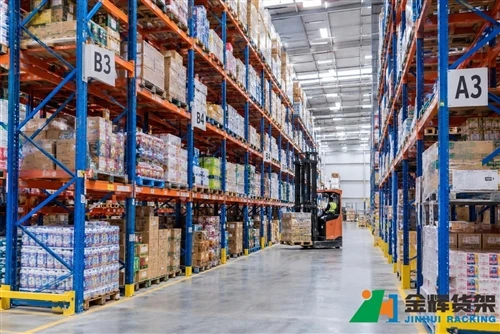
Back-to-back pallet rack rows create a compact storage block while maintaining forklift access from both sides.
How Building Columns Affect Back-to-Back Rack Blocks
Existing structural columns can interrupt an otherwise regular back-to-back rack layout.
A column may occupy space where a rack upright, pallet position, or forklift route would otherwise be located.
Instead of forcing the rack system around a theoretical grid, the actual building structure should be incorporated into the design.
Rack bay widths, row lengths, cross aisles, and access routes can then be adjusted according to the real warehouse conditions.
See our previous guide on how warehouse columns affect pallet racking layout for more details.
How to Plan a Back-to-Back Pallet Rack Layout
A practical planning process can start with the following steps:
- Measure the warehouse. Record length, width, clear height, columns, doors, docks, and fixed equipment.
- Confirm pallet dimensions. Measure pallet length, width, height, and maximum loaded weight.
- Determine rack depth. Select a frame depth appropriate for the pallet and storage configuration.
- Determine beam levels. Establish how many pallet positions are required vertically.
- Select the forklift. Confirm the equipment that will access the rack system.
- Set aisle requirements. Allow sufficient space for the actual forklift and load.
- Create rack blocks. Position rack rows back-to-back where the building layout allows.
- Add cross aisles. Provide practical routes between different storage zones when required.
- Review traffic flow. Check receiving, storage, picking, staging, and shipping movements.
- Reserve expansion space. Consider future rack additions where business growth is expected.
Should Every Rack Row Be Back-to-Back?
No.
Back-to-back configuration is a layout option rather than a requirement for every warehouse.
Some rack rows may be better positioned against walls, around columns, near staging areas, or beside other equipment.
For example, perimeter rack rows may use a single-facing configuration while the central warehouse area uses back-to-back rack blocks.
This mixed approach can make better use of irregular warehouse floor plans.
Back-to-Back Racking in E-commerce Warehouses
E-commerce warehouses often need both reserve pallet storage and active picking areas.
Back-to-back pallet racks can be used for reserve inventory while lower-level picking zones, shelving, or other equipment handle frequently picked products.
This creates a vertical storage strategy in which palletized reserve inventory occupies upper rack levels while order-picking inventory remains easier to access.
The rack blocks should be positioned so that replenishment forklifts can access reserve pallets without unnecessarily interfering with pedestrian picking traffic.
Our recent article How to Choose Pallet Racking for an E-commerce Warehouse explains this storage strategy in more detail.
Back-to-Back Racking for Manufacturing Warehouses
Manufacturing facilities may use pallet racking for raw materials, work-in-process inventory, packaging materials, and finished goods.
Back-to-back rack blocks can be useful where several storage zones need to be organized within the same production-support warehouse.
However, rack rows should not obstruct material routes between receiving, production, staging, and finished-goods shipping.
The storage layout should therefore be designed around the actual production flow.
When a Higher-Density System May Be Better
Back-to-back selective racking provides excellent accessibility, but it does not necessarily provide the highest possible storage density.
If a warehouse stores a small number of SKUs in very large quantities, a higher-density system may make more sense.
Potential alternatives include:
- Drive-in pallet racking
- Push-back pallet racking
- Pallet flow racking
- Double-deep pallet racking
- Automated or shuttle-based storage
The appropriate choice depends on inventory turnover, pallet access requirements, storage density objectives, forklift operation, and warehouse layout.
For example, push-back pallet racking may provide greater storage depth for suitable batch-storage applications, while selective back-to-back racks may be preferable when direct access to individual pallet positions is more important.
How Back-to-Back Racking Affects Warehouse Expansion
Warehouse growth should be considered when the initial rack layout is developed.
If every available area is filled with rack blocks, adding future storage may require a major reorganization.
A better approach can be to reserve appropriate expansion areas or design the rack grid so additional bays can be added later.
Rack height, bay width, beam levels, and future aisle requirements should all be considered as part of the long-term storage strategy.
Our previous article how to plan pallet racking for future warehouse growth covers this topic in greater detail.
Common Back-to-Back Pallet Racking Layout Mistakes
Making Rack Blocks Too Long
Extremely long rack blocks can increase forklift travel distances and make access between storage zones more difficult.
Ignoring Cross Aisles
Large warehouses may require additional cross-aisle connections to provide practical movement between rack sections.
Using the Same Layout for Every Warehouse
Warehouse dimensions, columns, docks, inventory, and forklifts vary significantly. A standard rack grid may not fit every building.
Focusing Only on Pallet Capacity
The highest theoretical pallet count is not necessarily the best warehouse layout if it creates traffic congestion.
Ignoring Fast-Moving Inventory
Frequently accessed products should be considered when deciding where rack blocks are positioned.
Leaving No Room for Future Expansion
A warehouse can become difficult to modify if every available area is occupied from the beginning.
How to Determine Whether Back-to-Back Racking Is Right for Your Warehouse
Ask the following questions before selecting this configuration:
- How many pallets need to be stored?
- How many individual SKUs are involved?
- Does each pallet require direct access?
- What forklift will be used?
- How wide do the operating aisles need to be?
- Where are receiving and shipping areas located?
- Are there structural columns inside the storage area?
- How much staging space is required?
- How much warehouse expansion is expected?
- Is storage density more important than maximum selectivity?
If the answers indicate that individual pallet access is important while the warehouse also needs efficient floor utilization, a back-to-back selective rack layout may be a practical option.
FAQ About Back-to-Back Pallet Racking
What does back-to-back pallet racking mean?
Back-to-back pallet racking means two rack rows are positioned with their rear sides facing each other, creating a storage block with forklift aisles on both sides.
Does back-to-back racking increase storage capacity?
It can improve storage space utilization by organizing racks into compact blocks. The actual increase depends on the previous layout, aisle requirements, building dimensions, and rack configuration.
Can selective pallet racks be installed back-to-back?
Yes. Selective pallet racks are commonly arranged in back-to-back configurations, allowing pallets on both rack faces to remain individually accessible.
How much space should be left between two back-to-back racks?
The required arrangement depends on the rack design, pallet overhang, frame configuration, applicable installation requirements, and whether rear protection or other components are used. The final dimension should be determined from the actual rack specification rather than a generic number.
Is back-to-back pallet racking suitable for high-SKU warehouses?
It can be. Because each rack face can provide direct pallet access, back-to-back selective racks can work well where many different SKUs need to be stored and accessed independently.
Can back-to-back racks be used in an e-commerce warehouse?
Yes. They can be used for reserve pallet inventory while separate picking areas handle individual orders.
Is back-to-back racking better than drive-in racking?
Neither system is universally better. Back-to-back selective racking generally provides greater individual pallet accessibility, while drive-in racking can provide higher density for suitable batch-storage applications.
Final Thoughts
Back-to-back pallet racking is a layout strategy designed to balance pallet accessibility and warehouse space utilization.
By arranging two rack rows rear-to-rear, warehouses can create compact storage blocks while maintaining forklift access from both sides.
The configuration can be particularly useful for warehouses with many SKUs, direct pallet-access requirements, and a need to organize storage efficiently.
However, the rack arrangement should always be developed around the actual warehouse. Pallet dimensions, rack depth, aisle requirements, forklift type, building columns, receiving and shipping flow, inventory turnover, and future expansion all influence the final layout.
The best pallet rack layout is therefore not simply the one that fits the most racks into the building. It is the configuration that provides an effective balance between storage capacity, accessibility, material flow, and long-term warehouse operation.
Planning a back-to-back pallet racking layout? Jinhui Rack can help evaluate your warehouse dimensions, pallet specifications, storage capacity, forklift requirements, and material flow to develop a customized rack configuration.
Talk to Jinhui Rack About Your Warehouse Racking Project
Whether you are optimizing an existing warehouse or planning a new storage facility, a properly designed back-to-back pallet rack layout can help you make better use of available floor space while keeping pallet access practical.
Send us your warehouse dimensions, pallet size, maximum pallet weight, required pallet positions, forklift type, and warehouse layout for a customized storage solution.
WhatsApp: +86 185 0252 7163
Email: info@jhrack.com