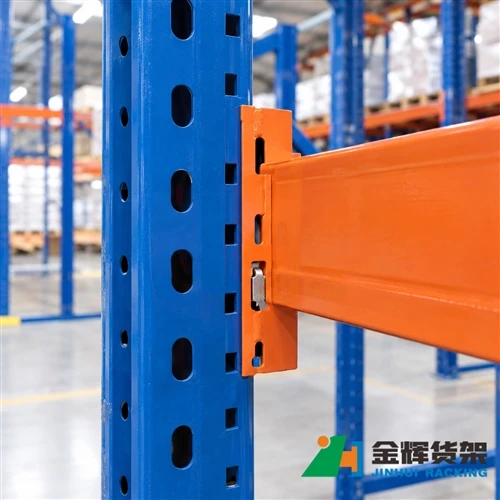
Forklifts and pallet racking are designed to work together in modern warehouses, but their interaction also creates one of the most common risks to rack systems: accidental impact.
A forklift does not need to hit a rack at high speed to cause a problem. Contact can occur while turning into an aisle, positioning a pallet, reversing from a rack position, or maneuvering around the end of a rack row.
The lower sections of pallet rack uprights are particularly exposed because they are located close to normal forklift travel paths.
For this reason, pallet rack protection should be considered during warehouse layout planning and rack installation rather than treated as an optional accessory after the system is already operating.
Quick Answer
The most practical way to reduce pallet rack damage is to combine suitable rack protection with correct aisle planning, forklift traffic control, operator training, and regular rack inspection. Upright protectors and end-of-aisle guards can help shield vulnerable rack areas, while a properly designed layout reduces unnecessary contact between forklifts and rack structures.
Why Forklift Impact Is a Concern for Pallet Racking
Industrial pallet racks are designed to support palletized loads through their beams, upright frames, and connected structural components.
Forklift impact is a different type of event from the vertical storage load that the rack normally carries.
A collision can introduce localized forces into a rack upright, baseplate, or other component that were not part of the intended pallet storage load.
This is why a rack that appears stable after a minor collision should not automatically be assumed to be unaffected.
Any visible damage should be assessed according to the warehouse's rack inspection and safety procedures.
Which Parts of a Pallet Rack Are Most Exposed?
Not every part of a rack has the same level of exposure to forklift traffic.
Common high-risk areas include:
- Front faces of rack uprights
- Rack ends at the entrance to aisles
- Lower upright sections
- Rack positions near loading and staging areas
- Rack rows beside busy forklift routes
- Uprights near intersections and turning areas
- Rack systems positioned close to pedestrian traffic
The actual risk depends on the warehouse layout, forklift type, traffic volume, aisle configuration, and operating practices.
What Is Pallet Rack Upright Protection?
Pallet rack upright protection refers to protective equipment installed around or near rack uprights to reduce the likelihood of direct forklift contact with the structural frame.
Depending on the application, protection can include floor-mounted guards, upright protectors, end-of-aisle barriers, or other warehouse protection systems.
The objective is not to make the rack itself immune to impact. Instead, properly selected protection creates a physical barrier between moving equipment and vulnerable rack components.
Rack protection products are available in different shapes, materials, mounting methods, and sizes, so the appropriate solution should be selected according to the rack and traffic environment.
Why Rack End Protection Is Important
The end of a pallet rack row is often exposed to turning forklift traffic.
When a forklift approaches the end of a rack aisle, the vehicle may turn before entering the next aisle or operating area.
This makes the rack-end upright more exposed than an upright located deeper inside a straight aisle.
End-of-aisle protection can create a physical separation between the forklift travel path and the rack structure.
For warehouses with high forklift activity, rack ends should therefore be considered separately when developing a protection strategy.

Rack upright protection installed at the base of pallet rack frames in a forklift operating area.
How Rack Guards Help Reduce Forklift Damage
Rack guards are designed to place a protective structure between forklift traffic and vulnerable rack components.
Depending on the design, a guard may surround the bottom of an upright or create a larger barrier around an exposed rack end.
Common protection configurations include:
- Upright post protectors
- Rack leg guards
- End-of-aisle guards
- Steel rack barriers
- Impact-resistant polymer guards
- Guard rails around rack areas
The right choice depends on where the protection is required and how forklifts interact with the rack.
Where Should Pallet Rack Guards Be Installed?
There is no single protection arrangement that works for every warehouse.
A practical assessment should identify areas where forklifts are most likely to approach or turn near rack structures.
Potential locations include:
- Aisle entrances
- Rack row ends
- Forklift turning zones
- High-traffic storage areas
- Loading and unloading areas
- Staging areas beside pallet racks
- Intersections between warehouse aisles
- Areas with limited visibility
Protection should be based on actual traffic patterns rather than simply installing identical guards throughout the entire warehouse.
How Warehouse Aisle Design Influences Rack Protection
Rack protection and aisle design are closely connected.
A forklift that has sufficient maneuvering space is less likely to need tight corrective movements around rack uprights.
If aisles are too narrow for the selected forklift and load, operators may need to make more complex maneuvers, increasing the potential for contact with rack structures.
Our previous article on warehouse aisle width and pallet racking explains why forklift requirements should be considered before finalizing rack rows.
Forklift Type Should Be Considered When Choosing Rack Protection
Different material-handling vehicles interact with pallet racks differently.
A counterbalance forklift, reach truck, narrow-aisle truck, or other specialized equipment may have different turning characteristics and operating envelopes.
The rack protection system should therefore be selected according to the actual equipment used in the warehouse.
Important information can include:
- Forklift width
- Overall length
- Turning radius
- Load dimensions
- Fork length
- Operating direction
- Typical travel speed
- Rack approach angle
A protection product that works well in a wide aisle may not be the best choice for a narrow aisle where every inch of floor space matters.
How Pallet Dimensions Influence Forklift Impact Risk
The pallet itself can also influence the way forklifts approach a rack.
Oversized or irregular loads may extend beyond the normal pallet footprint and require additional maneuvering space.
Pallet overhang, load stability, and visibility can all affect how an operator positions a pallet inside a rack bay.
This is another reason why rack protection should be considered together with pallet specifications.
Our previous guide on how pallet size affects pallet racking design explains how pallet dimensions influence the overall rack configuration.
Rack Protection Is Not a Substitute for Good Warehouse Layout
Installing rack guards does not mean that warehouse traffic can be designed without considering rack protection.
Protection should be part of a larger warehouse safety strategy.
A well-planned layout can reduce unnecessary forklift movements and provide clearer travel routes.
Useful layout considerations include:
- Clearly defined forklift aisles
- Logical rack row orientation
- Dedicated staging areas
- Appropriate cross aisles
- Separated pedestrian routes where required
- Good visibility at intersections
- Protected rack ends
- Clearly marked traffic directions
The goal is to make the intended movement through the warehouse obvious to operators.
Protecting Rack Uprights Near Loading Areas
Loading and staging areas can create additional impact exposure because pallets and forklifts may be moving in several directions.
A rack located immediately beside a busy staging area may experience more traffic than a rack positioned in a low-activity storage zone.
Where rack uprights are close to loading operations, additional physical protection may be appropriate.
The rack layout should also provide sufficient space for pallets to be staged without blocking forklift aisles or creating blind approaches to rack rows.
How Rack Protection Works With Back-to-Back Pallet Racking
Back-to-back pallet racking can create efficient storage blocks, but the outer rack ends remain exposed to forklift traffic.
Protection should therefore be considered at the ends and other exposed areas of the rack block.
Our previous article on back-to-back pallet racking explains how rack rows can be organized into compact storage blocks.
Combining the rack layout with appropriate protection can help create a more practical operating environment.
What Happens After a Forklift Hits a Pallet Rack?
A forklift collision should not simply be treated as a cosmetic issue.
After an impact, the affected rack should be checked according to the warehouse's inspection procedure.
Potential signs of damage can include:
- Bent upright members
- Damaged bracing
- Deformed baseplates
- Displaced rack components
- Damaged beams or connectors
- Visible cracks or damage around anchors
- Changes in rack alignment
If damage is found, the affected area should be handled according to the applicable rack safety procedure and qualified assessment requirements.
Do not simply straighten a damaged structural component and return it to service without appropriate evaluation.
Why Regular Pallet Rack Inspection Still Matters
Even with rack protection installed, inspections remain necessary.
Protective guards reduce exposure to impact, but they cannot eliminate every possible accident.
Routine inspections can help identify damage before it becomes a larger operational problem.
Inspection programs can consider:
- Upright condition
- Beam condition
- Baseplates
- Anchors
- Bracing
- Rack alignment
- Rack protection equipment
- Load labels
- Visible impact damage
Our previous pallet rack inspection checklist can be used as a related resource when developing a warehouse inspection routine.
How to Choose Pallet Rack Protection
When selecting a protection system, consider the following factors:
- Rack upright dimensions: The guard needs to fit the actual upright and baseplate configuration.
- Forklift traffic: Consider the type and frequency of equipment movement.
- Impact direction: Determine whether contact is likely from the front, side, or both.
- Available aisle space: Avoid selecting a guard that creates an unnecessary obstruction.
- Mounting method: Check whether floor anchoring or another installation method is appropriate.
- Warehouse visibility: High-visibility protection can make vulnerable areas easier for operators to identify.
- Maintenance: Consider how damaged protection can be inspected and replaced.
- Rack configuration: Make sure the protection works with the existing pallet rack design.
Steel vs. Polymer Rack Protection
Rack protection products can be manufactured from different materials, with steel and polymer-based solutions commonly used for different applications.
Steel guards can provide a rigid physical barrier, while some polymer systems are designed to absorb or deflect impact energy.
The best material depends on the traffic environment, rack configuration, available floor space, expected impact exposure, and installation requirements.
Instead of choosing a material based only on appearance or price, evaluate how the protection will interact with the actual forklift traffic.
How to Protect Rack Ends in High-Traffic Warehouses
Rack ends should receive particular attention when forklifts frequently turn around storage blocks.
A practical protection strategy can combine:
- End-of-aisle barriers
- Upright protection
- Clearly marked forklift routes
- Appropriate aisle width
- Visible rack identification
- Regular inspections
This creates multiple layers of protection instead of relying on a single component.
Protecting Pallet Racking in Manufacturing Warehouses
Manufacturing facilities can have a more complex traffic environment than conventional storage warehouses.
Forklifts may move between raw material storage, production lines, staging areas, and finished goods storage.
Rack protection should therefore be considered around intersections between storage and production areas.
Our previous article on pallet racking for manufacturing warehouses discusses how rack layouts can be adapted to production-related storage requirements.
Protecting Pallet Racking in E-commerce Warehouses
E-commerce warehouses can experience high levels of inventory movement, especially where reserve pallet storage is combined with active picking operations.
Forklifts may share the facility with order-picking equipment, carts, conveyors, and pedestrian traffic.
In this environment, rack protection should be coordinated with pedestrian routes and picking areas.
Reserve storage racks located near high-traffic replenishment routes may require additional attention to rack-end protection and traffic separation.
Common Pallet Rack Protection Mistakes
Protecting Only One Side of the Rack
If forklifts approach a rack from multiple directions, protecting only one exposed area may leave another vulnerable point unprotected.
Choosing Guards Without Measuring the Uprights
Rack upright dimensions and baseplate configurations vary. Protection should be selected using actual measurements.
Ignoring Aisle Clearance
A large guard can reduce usable aisle space if it is not considered during layout planning.
Installing Protection After a Major Layout Change
When rack rows or forklift routes are changed, the original protection arrangement should be reviewed again.
Assuming Rack Guards Eliminate the Need for Inspection
Protection reduces exposure but does not replace inspection and maintenance.
Using the Same Protection Everywhere
Rack ends, individual uprights, building columns, and pedestrian areas may have different protection requirements.
A Practical Pallet Rack Protection Checklist
- Identify high-traffic forklift routes.
- Mark exposed rack ends.
- Identify vulnerable upright positions.
- Review forklift turning areas.
- Check aisle widths.
- Measure rack upright dimensions.
- Select suitable protection types.
- Review floor mounting conditions.
- Check pedestrian routes.
- Inspect rack protection regularly.
- Inspect the rack after any significant impact.
- Update the protection plan when warehouse traffic changes.
How Rack Protection Fits Into a Complete Pallet Racking System
Rack protection should not be considered independently from the rest of the storage system.
A complete pallet racking project can include:
- Pallet rack upright frames
- Rack beams
- Baseplates and anchors
- Wire decking or other pallet supports
- Rack guards
- End-of-aisle protection
- Row identification
- Load capacity labels
- Safety accessories
Our pallet racking product category provides a starting point for selecting a rack configuration based on warehouse requirements.
FAQ About Pallet Rack Protection
What is pallet rack protection?
Pallet rack protection refers to physical protection systems designed to reduce the risk of damage to pallet rack uprights and other exposed components from forklifts and warehouse traffic.
Why do pallet rack uprights need protection?
Rack uprights are structural components that can be exposed to forklift traffic, particularly near aisle entrances, rack ends, and busy operating areas. Physical protection can help separate moving equipment from these vulnerable components.
Are pallet rack guards necessary?
The appropriate protection depends on the warehouse layout, forklift traffic, rack configuration, applicable safety requirements, and site-specific risk assessment. A qualified warehouse safety or engineering professional can determine what protection is appropriate for a particular facility.
Where should rack upright protectors be installed?
They are commonly considered for exposed rack uprights near forklift travel paths, aisle entrances, loading areas, turning zones, and other locations where impact risk is elevated.
Can rack guards prevent all forklift damage?
No. Rack guards are intended to reduce exposure to impact, but they cannot eliminate every collision or guarantee that the rack will remain undamaged after a significant impact.
Should a pallet rack be inspected after a forklift collision?
Yes. Any significant impact should be handled according to the warehouse's rack inspection and safety procedures. Visible structural damage should not be ignored.
Does rack protection affect warehouse aisle width?
It can. Floor-mounted guards and barriers occupy some floor area, so their dimensions should be considered when planning forklift aisles.
Final Thoughts
Protecting pallet racking from forklift impact requires more than installing a guard around a rack upright.
The most effective approach combines suitable rack protection with an appropriate warehouse layout, correctly sized forklift aisles, clear traffic routes, operator awareness, and regular rack inspection.
Rack ends and lower upright sections deserve particular attention because they are commonly exposed to forklift movement.
At the same time, protection should be selected according to the actual warehouse rather than using the same configuration for every rack row.
When rack design, forklift operation, and protection measures are planned together, warehouses can create a more practical storage environment while reducing the potential for costly rack damage.
Planning a pallet racking system for a busy warehouse? Jinhui Rack can help you evaluate rack configuration, pallet dimensions, aisle requirements, storage capacity, and warehouse traffic conditions to develop a practical pallet storage solution.
Talk to Jinhui Rack About Your Pallet Racking Project
Whether you are installing a new industrial pallet racking system or upgrading an existing warehouse, the right rack configuration and protection strategy can help you make better use of your storage space while supporting daily warehouse operations.
Send us your warehouse dimensions, pallet size, maximum pallet weight, required pallet positions, forklift type, and warehouse layout for a customized solution.
WhatsApp: +86 185 0252 7163
Email: info@jhrack.com