Pallet Rack Upright Protection: Column Guards, Frame Protectors and End-of-Aisle Barriers
Pallet racking is exposed to potential impact during everyday warehouse operations. Forklifts, reach trucks, pallet trucks, and other material-handling equipment operate close to rack uprights, particularly at aisle intersections, rack ends, and loading positions. Even a relatively small collision can damage a structural component and affect the condition of the storage system.
Pallet rack upright protection helps reduce the likelihood of direct vehicle contact with vulnerable rack components. Common solutions include column guards, upright protectors, frame protection systems, and end-of-aisle barriers. Although these products serve related purposes, they differ in their coverage, installation arrangements, and intended applications.
Understanding these differences helps warehouse operators select suitable protection for their rack layout, vehicle movements, and operating conditions.
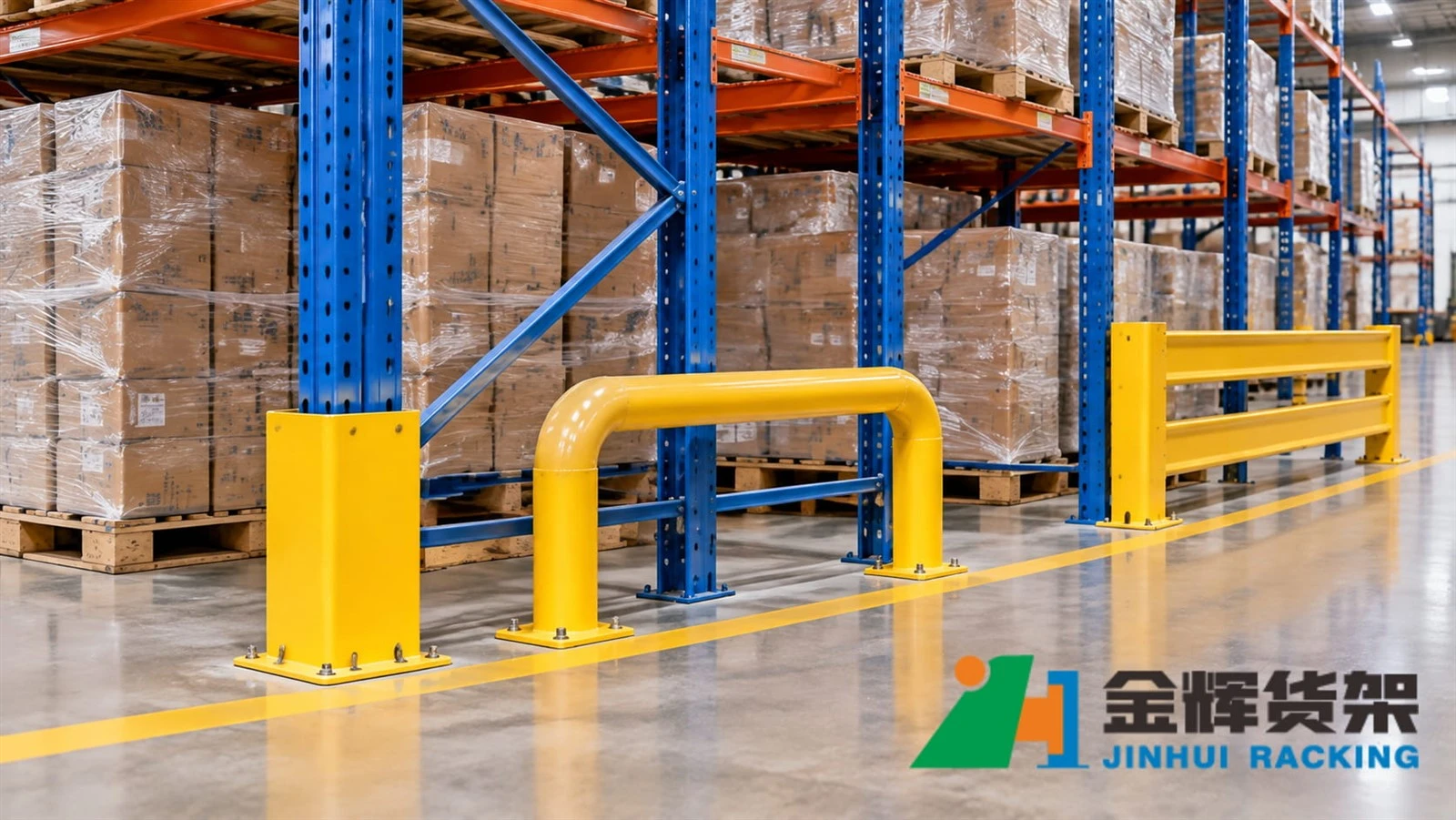
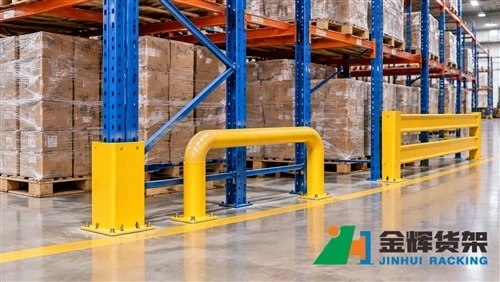
Column guards and end-of-aisle barriers help protect vulnerable pallet rack areas from vehicle contact.
1. Why Pallet Rack Upright Protection Is Important
Uprights are key structural members of a pallet racking system. Together with horizontal beams, bracing, connectors, base plates, and anchorage, they form the load-supporting structure.
During normal warehouse activity, rack uprights may be exposed to several types of impact:
- Forklift turning: A truck turning into or out of an aisle may contact an upright if its travel path is too close to the rack.
- Pallet handling: Incorrect positioning or maneuvering can bring the forklift, pallet, or load into contact with the rack structure.
- Reach truck operation: Repeated movements around narrow storage aisles can increase exposure at vulnerable rack positions.
- Cross-aisle traffic: Rack ends and aisle intersections may experience contact from vehicles moving between warehouse zones.
- Pedestrian and equipment interaction: Poorly separated traffic routes can increase the risk of accidental contact with storage equipment.
Installing suitable protection can create a physical buffer between moving equipment and rack components. It should be considered part of a broader warehouse safety strategy rather than a substitute for appropriate aisle design, operator training, and rack inspections.
2. Common Types of Pallet Rack Protection
Several types of protective equipment are available for warehouse racking. The appropriate choice depends on which components need protection and the type of impact exposure expected at each location.
2.1 Pallet Rack Column Guards
Column guards are protective devices installed around or in front of individual rack uprights. They are commonly positioned near the base of a column, where forklift forks, wheels, or other vehicle components may make contact.
Depending on their design, column guards may be manufactured from formed steel, molded polymer, or other protective materials. Some designs are attached to the floor, while others use different mounting arrangements.
Typical applications include:
- Uprights beside frequently used forklift travel routes.
- Rack columns near loading and unloading positions.
- Columns exposed to repeated maneuvering activities.
- Individual uprights identified as vulnerable during a warehouse risk assessment.
When selecting a column guard, check its dimensions, coverage height, mounting method, compatibility with the upright profile, and the manufacturer's stated impact-performance information.
2.2 U-Shaped and Wraparound Upright Protectors
U-shaped or wraparound protectors provide coverage around more than one side of a rack upright. They may be suitable where vehicles approach the same column from different directions.
Compared with a simple front-mounted protector, a wraparound design may offer broader physical coverage. However, the actual protection depends on its geometry, material, installation clearance, and impact characteristics.
Before installation, confirm that the protector does not obstruct the rack base plate, anchorage, inspection access, or other components that need to remain visible and accessible.
2.3 Rack Frame Protectors
Frame protectors are designed to protect a larger portion of a rack frame or a group of vulnerable structural members. Depending on the design, they may cover the lower part of a frame or provide a protective barrier across multiple upright positions.
These products can be considered where individual column guards do not provide sufficient coverage for the identified traffic exposure.
Because frame protectors can interact with multiple structural components and floor anchors, their dimensions and installation details should be checked against the rack layout and the protection manufacturer's instructions.
2.4 End-of-Aisle Safety Barriers
End-of-aisle barriers are generally installed at the exposed ends of rack rows. They create a physical boundary between vehicle traffic and the rack structure.
Common designs include steel guardrails, U-shaped barriers, and extended protective rails. They may be anchored to the warehouse floor and positioned to intercept vehicle contact before it reaches the rack uprights.
End-of-aisle protection is particularly relevant at:
- Open ends of pallet rack rows.
- Cross-aisle intersections.
- Forklift turning and reversing areas.
- Locations adjacent to busy internal traffic routes.
The barrier layout should consider vehicle turning paths, pallet overhang, pedestrian access, and available maneuvering space. It should not create a new obstruction or reduce required operational clearances.
3. Column Guards vs. Frame Protectors vs. End-of-Aisle Barriers
These protective products are related but are not interchangeable in every application. The following comparison summarizes their typical functions.
| Protection Type | Main Coverage | Typical Location | Main Consideration |
|---|---|---|---|
| Column Guard | Individual upright | Lower section of a rack column | Upright profile, guard height, and mounting compatibility |
| Wraparound Protector | Multiple sides of an upright | Columns exposed to different approach directions | Coverage and clearance around the column |
| Frame Protector | Larger section of a rack frame | Lower frame areas or selected frame sections | Frame compatibility and installation arrangement |
| End-of-Aisle Barrier | Exposed rack-row end | Aisle entrances and rack-row ends | Vehicle paths, floor anchorage, and traffic clearance |
4. How to Select the Right Rack Protection
Protection should be selected according to actual warehouse conditions rather than appearance alone. A guard that fits one rack profile or vehicle arrangement may not be suitable for another installation.
4.1 Identify the Vulnerable Rack Locations
Start by reviewing the warehouse layout and observing normal material-handling activities. Identify areas where vehicles turn, reverse, load pallets, or pass close to rack columns.
Useful information includes:
- Forklift and reach truck travel routes.
- Rack-row ends and aisle intersections.
- Areas with a history of vehicle contact or visible rack damage.
- Locations with limited maneuvering space.
- Pedestrian routes close to storage equipment.
4.2 Check the Rack Upright Profile
Rack uprights are available in different profiles, dimensions, and connection arrangements. A protective device should fit the intended column without interfering with its structural components.
Confirm the upright width, depth, base plate arrangement, and available mounting space before ordering protection equipment.
4.3 Consider the Material and Design
Protective devices may use steel, polymer, or other materials. Their performance depends on the product design, material properties, geometry, mounting method, and impact conditions.
When comparing products, review:
- Material and construction.
- Specified impact-performance information, where available.
- Guard height and coverage area.
- Mounting and anchoring requirements.
- Resistance to the warehouse operating environment.
- Inspection and replacement accessibility.
Do not assume that all steel guards or polymer protectors provide the same level of protection. Use documented product information when evaluating their suitability.
4.4 Preserve Forklift and Pedestrian Clearances
Protective equipment occupies physical space. If it is installed too close to a vehicle route, it may reduce turning clearance or create an obstruction for pallet handling.
Check the complete operating envelope, including the truck body, forks, pallet dimensions, load overhang, and turning movement. Pedestrian access and emergency routes should also remain clear.
5. Installation Considerations for Rack Protection
Correct installation is important for the protective device to perform as intended. Before installation, review the manufacturer's instructions and confirm that the proposed mounting arrangement is suitable for the warehouse floor and rack configuration.
5.1 Verify the Installation Position
Position the guard so that it protects the intended vulnerable area without blocking rack identification labels, inspection points, base plates, or required access.
5.2 Check Floor and Anchoring Conditions
For floor-mounted protectors and barriers, confirm the concrete floor condition and the specified anchoring requirements. Anchor selection, embedment, spacing, and installation details should follow the approved product and project documentation.
Do not assume that an existing rack anchor can automatically be used to secure an additional protective device.
5.3 Avoid Interference with Structural Components
Protection equipment should not require unauthorized drilling, welding, cutting, or modification of rack uprights, braces, or base plates. Any proposed attachment to the rack structure should be reviewed for compatibility and approved by the responsible designer or manufacturer.
5.4 Confirm Traffic and Operating Clearance
After installation, review the actual travel path of the material-handling equipment. Confirm that the guard does not obstruct forklift movement, pallet placement, emergency access, or normal warehouse operations.
6. Inspection and Maintenance of Rack Protectors
Rack protection equipment should be included in the warehouse's routine inspection program. A guard may become damaged or displaced after an impact, even when the rack behind it appears undamaged.
Inspection should consider the following points:
- Visible deformation: Look for bending, cracking, splitting, or other physical damage.
- Mounting condition: Check for loose fasteners, damaged anchors, or movement from the original position.
- Surface condition: Review coating damage, corrosion, and deterioration of protective materials.
- Coverage: Confirm that the guard still protects the intended area.
- Clearance: Check that the device has not become an obstruction to forklift or pedestrian movement.
- Rack condition: Inspect the nearby upright, bracing, base plate, and connections for possible impact damage.
If a collision occurs, inspect the affected rack structure even when a protective device was installed. A guard can reduce direct contact, but it does not guarantee that the rack has remained undamaged.
Damaged rack components should be assessed by competent personnel. Do not assume that replacing the guard alone resolves possible structural damage. Follow the applicable inspection and repair procedures before returning the affected storage position to service.
7. Common Mistakes When Installing Rack Protection
Several avoidable mistakes can reduce the usefulness of rack protection equipment:
- Protecting only visible columns: Rack ends, intersections, and other exposed areas may also need protection based on the traffic assessment.
- Selecting by appearance: A guard that looks strong may not have verified impact performance for the intended application.
- Ignoring floor conditions: Inappropriate anchoring or unsuitable concrete conditions can affect the installation.
- Reducing operating clearance: Poorly positioned barriers can interfere with forklifts, pallets, and pedestrian routes.
- Blocking inspection access: Protective devices should not conceal important structural areas that require inspection.
- Treating guards as structural repairs: Protection equipment does not restore the capacity of a damaged upright or replace a structural assessment.
- Ignoring damaged protectors: A damaged guard may no longer provide the intended coverage and should be evaluated.
8. Integrating Rack Protection into Warehouse Safety Planning
Rack protection is most effective when coordinated with other warehouse safety measures. It should be considered during the design of storage layouts, vehicle routes, pedestrian walkways, and loading areas.
A practical planning process includes:
- Review the warehouse layout and identify areas with higher vehicle-contact exposure.
- Assess forklift dimensions, turning movements, pallet sizes, and operating clearances.
- Identify whether individual column guards, frame protectors, or end-of-aisle barriers are appropriate.
- Check product specifications, mounting requirements, and compatibility with the rack system.
- Install the protection according to approved instructions.
- Include the guards and nearby rack structures in routine inspection records.
- Review protection arrangements when vehicle routes, rack layouts, or operating equipment change.
Warehouse operators should also consider traffic separation, suitable speed controls, operator training, visibility, and housekeeping. Physical guards are one part of a wider risk-control strategy.
Frequently Asked Questions
What is pallet rack upright protection?
Pallet rack upright protection refers to protective devices installed around or near rack columns to reduce the likelihood of direct impact from forklifts and other material-handling equipment. Common options include column guards, wraparound protectors, and frame protection systems.
Are column guards and end-of-aisle barriers the same?
No. Column guards generally protect individual uprights, while end-of-aisle barriers protect exposed rack-row ends or larger areas along vehicle routes. They address different impact locations and may be used together when appropriate.
Do rack protectors prevent all forklift damage?
No. Their performance depends on the design, material, installation, and impact conditions. They can reduce exposure to direct contact, but they cannot guarantee that rack components will remain undamaged after every collision.
Can a damaged rack upright remain in use if a column guard is installed?
Not automatically. A protective guard does not restore the structural capacity of a damaged upright. The affected rack must be assessed according to the applicable inspection and repair procedures before continued use is considered.
Should every pallet rack upright have a protector?
Not necessarily. Protection requirements should be based on the warehouse layout, vehicle routes, operating conditions, and risk assessment. Exposed columns and rack ends may require priority attention.
Conclusion
Pallet rack upright protection helps warehouse operators reduce the risk of direct vehicle contact with vulnerable storage structures. Column guards, wraparound protectors, frame protectors, and end-of-aisle barriers each provide different types of coverage.
The right solution depends on rack geometry, forklift movements, floor conditions, operating clearances, and the protective device's documented performance. Proper installation and regular inspection are equally important.
By combining suitable rack protection with safe traffic planning, operator training, and routine structural inspections, warehouses can better manage impact risks and maintain a more reliable storage environment.
Contact Us
Planning a new pallet racking installation or looking to improve protection around existing warehouse racks? JINHUI RACK can help you discuss storage configurations and project requirements for different warehouse applications.
Share your warehouse layout, rack dimensions, forklift type, and protection requirements with our team to explore a suitable solution.
Email: info@jhrack.com
WhatsApp: +86 185 0252 7163