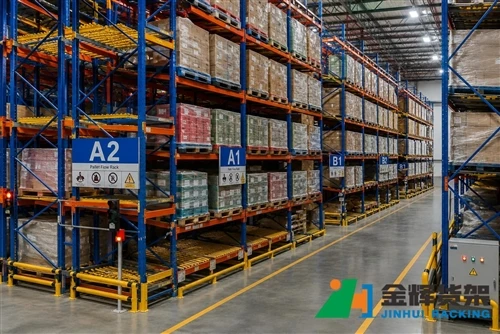
A manufacturing warehouse has a different storage profile from a conventional distribution center. Materials may arrive as bulk components, move between production stages, and eventually return to the warehouse as finished products. At the same time, production schedules can create sudden changes in inventory volume.
Because of this, pallet racking for manufacturing warehouses needs to support more than simple pallet storage. The rack system should work together with receiving, production, staging, material handling, and shipping.
A well-designed storage system can help manufacturers use vertical space more effectively, keep raw materials organized, improve pallet accessibility, and create clearer material flow between the warehouse and production area.
This guide explains how to choose pallet racking for a manufacturing warehouse, which factors should be evaluated before installation, and how different pallet rack configurations can be assigned to raw materials, work-in-process inventory, and finished goods.
Quick Answer
The right manufacturing warehouse racking system depends on pallet dimensions, load weight, SKU variety, inventory turnover, forklift type, warehouse height, production flow, and future expansion. Selective pallet racking is often the most flexible starting point, while drive-in, push back, pallet flow, double deep, and radio shuttle systems can be used for specific inventory profiles.
Why Manufacturing Warehouses Need a Different Racking Strategy
A manufacturing warehouse often performs several storage functions at the same time.
- Receiving raw materials from suppliers
- Storing production components
- Holding work-in-process inventory
- Storing packaging materials
- Holding finished products before shipment
- Managing returned or rejected materials
- Supporting production line replenishment
Each of these activities can have different storage requirements.
For example, raw materials may need to remain in reserve storage until they are released to production. Finished products may require frequent movement to the shipping area. Packaging materials may have large quantities but relatively low turnover.
Using one storage configuration for every material category can therefore create unnecessary handling and inefficient use of warehouse space.
Start With the Material Flow Before Choosing the Rack
One of the most important principles in manufacturing warehouse storage is to understand how materials move through the facility.
A typical manufacturing material flow may look like this:
Supplier Receiving → Raw Material Storage → Production → Finished Goods Storage → Shipping
The pallet racking layout should support this flow rather than obstruct it.
For example, raw materials that are frequently delivered to production should not be placed in a remote corner of the warehouse simply because that area has spare capacity.
Likewise, finished goods waiting for shipment should ideally have a logical relationship with staging and loading areas.
This is why rack selection and warehouse layout should be considered together.

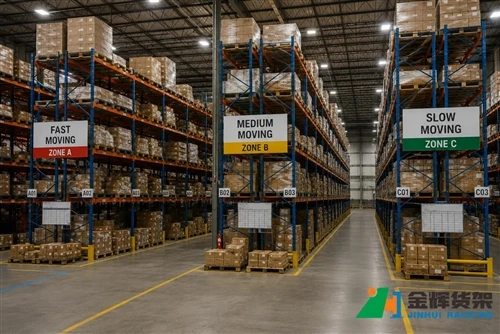
A manufacturing warehouse should position pallet storage according to the movement of materials between receiving, production, storage, and shipping.
What Should You Measure Before Installing Manufacturing Warehouse Racking?
Before requesting a pallet racking design, manufacturers should collect accurate information about the building, pallets, inventory, and material handling equipment.
Important information includes:
- Warehouse length and width
- Clear ceiling height
- Column locations
- Floor condition and load capacity
- Pallet length and width
- Maximum pallet weight
- Maximum load height
- Number of SKUs
- Average pallets per SKU
- Inventory turnover
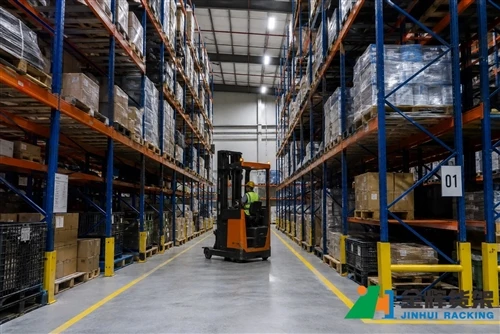
- Forklift type
- Forklift lifting height
- Required aisle configuration
- Inbound and outbound pallet volume
- Expected future storage growth
These measurements form the basis of a practical industrial pallet racking design.
Selective Pallet Racking for Manufacturing Warehouses
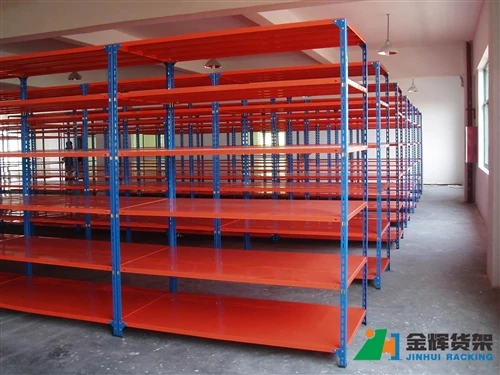
Selective Pallet Racking is often a strong choice for manufacturing facilities because it provides direct access to individual pallets.
Manufacturers frequently handle a wide range of raw materials, components, finished products, and packaging materials. When SKU variety is high, accessibility can be more important than maximum storage density.
Advantages of Selective Racking in Manufacturing
- Direct access to individual pallet positions
- Suitable for many SKUs
- Adjustable beam levels
- Easy product identification
- Flexible storage allocation
- Suitable for different forklift types
- Simple to expand with additional rack bays
Selective racking is particularly useful when production requires frequent access to different raw materials or components.
It can also be used for finished goods when products are manufactured in relatively small batches and require individual pallet accessibility.
How Raw Materials Influence Rack Selection
Raw materials can vary dramatically between manufacturing industries.
A metalworking factory may store steel coils, components, and heavy pallets. A food manufacturer may handle cartons of ingredients. An electronics manufacturer may have smaller and lighter components combined with packaged finished products.
Therefore, the rack system should be selected according to the actual load characteristics rather than the industry name alone.
Important questions include:
- What is the heaviest pallet?
- Are pallet dimensions standardized?
- Do materials have different storage heights?
- Are some materials stored in bulk?
- How frequently are materials delivered to production?
- Are specific materials required for FIFO control?
These questions can significantly change the recommended storage configuration.
Pallet Weight Is Critical for Manufacturing Rack Design
Manufacturing facilities often store heavier loads than standard commercial warehouses.
A rack configuration designed for relatively light consumer products may not be suitable for heavy industrial materials.
The rack design should therefore account for:
- Maximum pallet load
- Number of pallet levels
- Beam span
- Frame height
- Frame depth
- Beam capacity
- Load distribution
- Forklift operating conditions
Manufacturers should provide the actual maximum pallet weight instead of relying only on average load weight when requesting a rack quotation.
This gives the racking engineer a more realistic basis for structural calculations.
How Finished Goods Storage Differs From Raw Material Storage
Finished goods often have a different movement pattern from raw materials.
Raw materials generally move:
Receiving → Storage → Production
Finished goods typically move:
Production → Finished Goods Storage → Order Picking or Shipping
If finished goods are shipped frequently, their storage location should support fast retrieval and efficient movement to the shipping area.
For this reason, a manufacturing warehouse may benefit from separating raw material storage and finished goods storage into dedicated zones.
When Should a Manufacturing Warehouse Use Push Back Racking?
Push Back Racking can be useful when a manufacturer stores multiple pallets of the same product or material and wants to increase storage density.
Unlike conventional selective racking, pallets can be stored several positions deep.
This makes push back storage suitable for:
- Batch-produced finished goods
- Seasonal production inventory
- Large quantities of similar materials
- Products with multiple pallets per SKU
- Reserve inventory
Push back systems typically support LIFO-style storage, so manufacturers should consider whether product rotation requirements are compatible with this operating method.
For products with strict FIFO requirements, another rack configuration may be more appropriate.
Drive-In Racking for Bulk Manufacturing Storage
Drive-In Pallet Racking can provide high storage density by allowing forklifts to enter storage lanes.
This system can be particularly useful for manufacturing operations with large quantities of similar products.
Consider a factory that produces a limited number of product families in very large batches. After production, thousands of pallets may need to remain in storage before shipment.
In this situation, using conventional selective racks for every pallet may consume a significant amount of aisle space.
Drive-in storage can reduce the number of aisles required and make better use of the warehouse footprint.
Drive-In Racking May Be Suitable When:
- SKU variety is relatively low
- Pallet quantities per SKU are high
- Storage density is a major priority
- Inventory is stored in batches
- LIFO storage is acceptable
- Products have relatively stable dimensions
It is generally less appropriate when operators need immediate access to individual pallets across a large SKU range.
Pallet Flow Racking for FIFO Manufacturing Inventory
Some manufacturing processes require strict product rotation.
This is particularly relevant for food, beverage, pharmaceutical, chemical, and other products where production date or shelf life matters.
Pallet Flow Racking uses gravity-driven rollers to move pallets through storage lanes.
Products can be loaded from one side and retrieved from the opposite side, supporting a FIFO workflow.
This configuration can help manufacturers manage:
- Production dates
- Expiration dates
- Batch rotation
- Short shelf-life products
- High-turnover inventory
For manufacturers with strict inventory rotation requirements, the physical design of the storage system can help support consistent stock rotation.
Double Deep Racking for Medium-Density Manufacturing Storage
Double deep racking can be considered when a manufacturer wants greater density than selective racking while retaining relatively straightforward forklift operation from the aisle.
Because pallets are stored two positions deep, the system can reduce the number of aisle-facing rack positions required.
However, manufacturers should understand that the rear pallet is not directly accessible while the front pallet remains in place.
Therefore, double deep storage is more suitable for inventory with multiple pallets per SKU than for inventory where every pallet requires immediate access.
For a detailed explanation of the system, see:
Double Deep Pallet Racking: How It Works, Benefits, and When to Use It.
Radio Shuttle Racking for High-Volume Factory Warehouses
Radio Shuttle Racking is an option for manufacturers that require high-density pallet storage while reducing forklift travel inside deep storage lanes.
A motorized shuttle moves pallets through the rack channels, allowing the forklift to remain primarily at the aisle.
This can be attractive for large manufacturing warehouses with:
- High pallet volumes
- Large production batches
- Limited floor space
- Expensive warehouse expansion
- High forklift traffic
- Long-term reserve inventory
The higher initial investment means the system should be evaluated based on actual storage volume, pallet movement, labor requirements, and expected utilization.
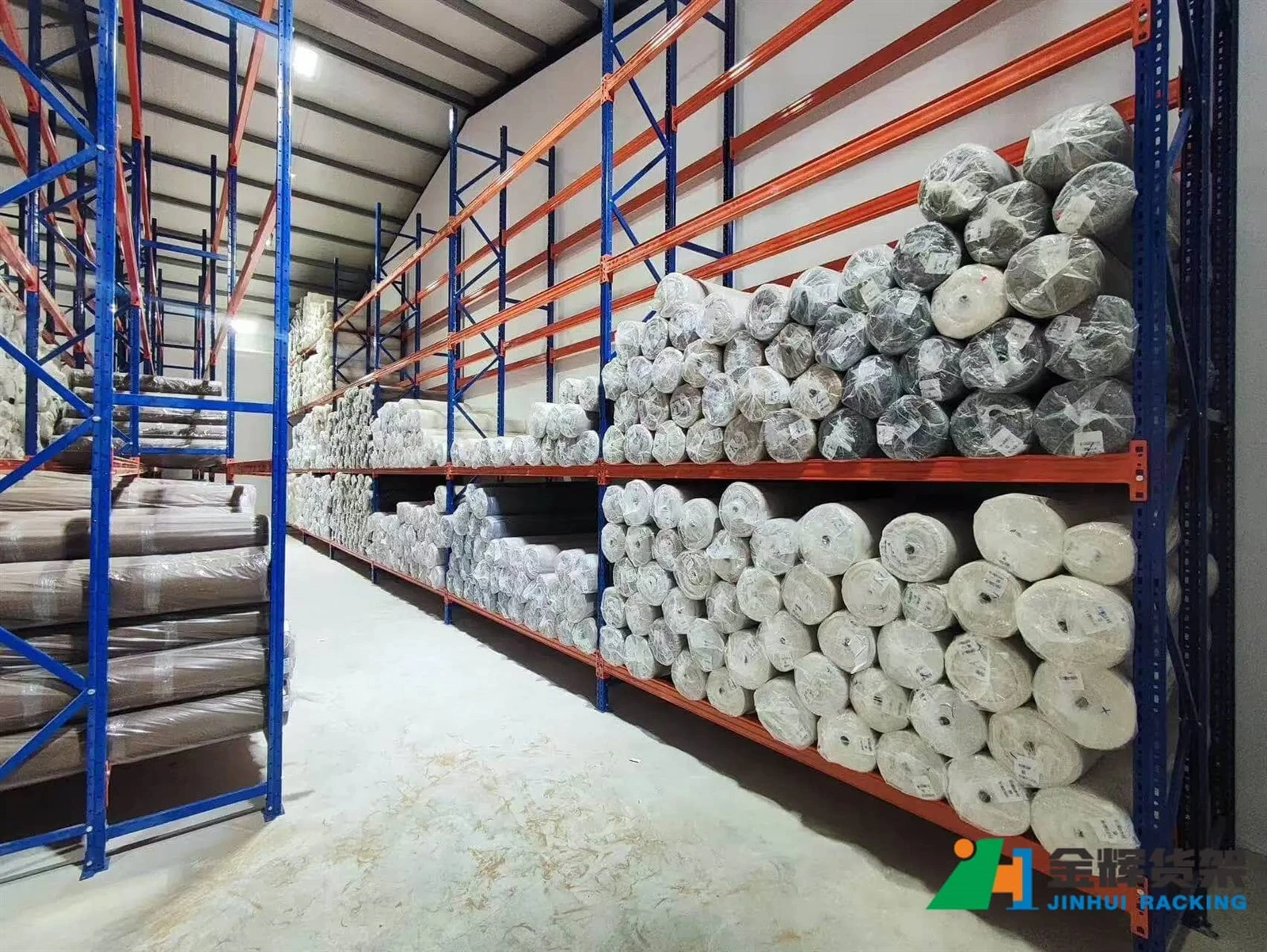
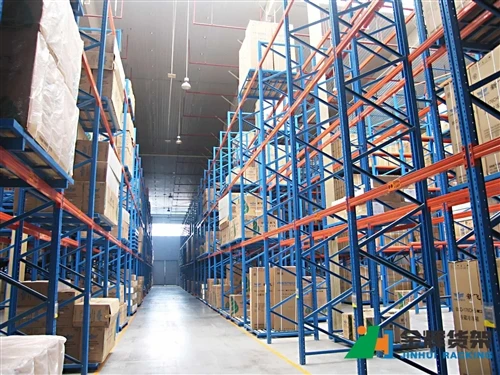
Heavy-duty pallet racks can be configured for different load requirements in manufacturing and industrial warehouses.
How to Match Racking With Manufacturing Inventory Turnover
Inventory turnover should be considered alongside storage density.
Fast-moving materials require frequent pallet movements. If operators repeatedly enter deep storage lanes to retrieve products, the additional handling can reduce productivity.
Slow-moving reserve materials are different. These products may remain in storage for long periods, making higher-density storage more attractive.
A practical approach is to divide inventory into several movement categories.
| Inventory Type | Typical Movement | Main Priority | Possible Rack Type |
|---|---|---|---|
| Fast-moving raw materials | Frequent replenishment | Accessibility | Selective |
| Batch inventory | Periodic movement | Density | Push Back |
| Bulk materials | Low frequency | Maximum density | Drive-In |
| FIFO inventory | Continuous rotation | Stock rotation | Pallet Flow |
| Large reserve inventory | Low to medium | Density + handling efficiency | Radio Shuttle |
How Forklift Type Affects Manufacturing Pallet Racking
The forklift used inside the warehouse has a direct impact on rack layout.
Different forklifts require different operating clearances, lift heights, and aisle configurations.
Before finalizing the rack design, manufacturers should identify:
- Forklift model
- Overall forklift width
- Turning radius
- Maximum lift height
- Load center
- Fork length
- Reach capability
- Operating aisle requirement
A rack layout should never be designed independently from the equipment that will load and unload the pallets.
For example, increasing rack depth may create additional storage positions, but if the forklift requires significantly more maneuvering space, the actual productivity improvement may be smaller than expected.
Manufacturing Warehouse Aisle Planning
Aisle space represents a major part of the warehouse footprint.
Reducing aisle width can increase the number of potential storage positions, but the correct aisle dimension depends on the forklift and operating method.
Manufacturers should balance:
- Pallet capacity
- Forklift maneuverability
- Travel distance
- Safety clearance
- Order frequency
- Required throughput
The objective is not to create the narrowest possible aisle. The objective is to create an aisle configuration that supports safe and productive material handling.
Should Raw Materials and Finished Goods Use the Same Rack System?
Not necessarily.
Some manufacturing warehouses can use the same rack type throughout the facility, particularly when inventory characteristics are relatively consistent.
However, facilities with significantly different raw material and finished goods profiles may benefit from separate storage configurations.
For example:
- Raw materials: selective pallet racking for easy production replenishment
- Batch components: push back racking for increased density
- Bulk materials: drive-in racking for large quantities
- Finished goods: selective or pallet flow depending on shipment and rotation requirements
- Reserve inventory: high-density shuttle storage
This type of zoning can make the warehouse easier to operate and manage.
How to Plan Rack Location Around Production Lines
Production proximity is an important but sometimes overlooked factor.
Materials that are consumed frequently should not require long forklift journeys across the warehouse every time the production line needs replenishment.
Manufacturers can consider creating dedicated staging or forward storage areas near production.
Bulk reserve inventory can remain in higher-density storage farther away, while frequently consumed materials can be stored closer to the production interface.
This creates a two-stage storage strategy:
High-density reserve storage → Forward storage → Production line
This approach can reduce unnecessary forklift travel while still taking advantage of high-density storage.
How Manufacturing Batch Size Affects Rack Selection
Production batch size can have a significant impact on storage requirements.
A manufacturer producing small batches across hundreds of SKUs may need a highly accessible storage system.
Another manufacturer producing a few product families in very large batches may benefit more from deep-lane storage.
Consider the following relationship:
- Small batches + many SKUs = accessibility becomes more important
- Large batches + few SKUs = density becomes more important
This simple distinction can help narrow down the appropriate rack configuration before detailed engineering begins.
How to Plan for Seasonal Manufacturing Inventory
Some manufacturers experience significant seasonal fluctuations.
For example, production may increase before a major sales season, creating temporary demand for hundreds or thousands of additional pallet positions.
A warehouse designed only around average inventory may become overcrowded during peak periods.
Manufacturers should therefore consider:
- Peak inventory volume
- Average inventory volume
- Peak pallet arrivals
- Peak shipping volume
- Temporary staging requirements
- Future rack expansion
Flexible rack configurations can make it easier to adapt to seasonal demand without completely redesigning the warehouse.
Safety Considerations for Manufacturing Pallet Racking
Manufacturing environments often involve heavy loads, forklifts, production equipment, and frequent vehicle movement. Rack design should therefore include appropriate safety considerations.
Important factors include:
- Rack load capacity
- Upright protection
- End-of-aisle protection
- Pallet quality
- Forklift operating procedures
- Rack inspection programs
- Floor condition
- Anchoring requirements
- Clear load signage
The final system should be designed and installed according to applicable local building, fire, seismic, and warehouse safety requirements.
Manufacturers should also establish regular rack inspection and maintenance procedures after installation.
Why Future Expansion Should Be Included in the Initial Design
Manufacturing companies rarely remain static.
Production capacity can increase, new product lines can be introduced, and additional raw materials may need to be stored.
A pallet racking system should therefore be considered as part of the company's long-term warehouse infrastructure.
Useful questions include:
- Can additional rack bays be added?
- Can beam levels be adjusted?
- Can the warehouse accommodate taller racks in the future?
- Can different rack types coexist in the same facility?
- Can future automation be introduced?
- Is there enough space for future staging requirements?
Planning these possibilities early can reduce future modification costs.
Should a Manufacturing Warehouse Combine Different Pallet Rack Systems?
For many factories, the answer is yes.
A mixed storage strategy can be more practical than forcing every inventory category into the same rack configuration.
| Warehouse Zone | Typical Inventory | Recommended Direction |
|---|---|---|
| Receiving | Incoming materials | Staging + Selective |
| Raw Material Storage | Components and materials | Selective / Double Deep |
| Bulk Storage | Large production batches | Drive-In / Push Back |
| FIFO Zone | Date-sensitive inventory | Pallet Flow |
| Finished Goods | Completed products | Selective / Push Back |
| Reserve Storage | Long-term inventory | Radio Shuttle / High Density |
Manufacturing Pallet Racking Selection Checklist
Before selecting a rack manufacturer, prepare the following information:
- Warehouse dimensions
- Clear building height
- Column spacing
- Pallet dimensions
- Maximum pallet weight
- Maximum pallet height
- Total pallet quantity
- Number of SKUs
- Production batch sizes
- Inventory turnover
- FIFO or LIFO requirements
- Forklift specifications
- Daily pallet movements
- Peak inventory requirements
- Expected future expansion
The more accurate the information, the easier it becomes to develop a rack layout that matches actual factory operations.
Common Mistakes When Choosing Factory Warehouse Racking
Mistake 1: Choosing the Rack Based Only on Storage Capacity
Maximum pallet capacity is important, but it should not be the only objective. A system that stores more pallets but slows production replenishment may reduce overall warehouse performance.
Mistake 2: Ignoring Pallet Weight
Manufacturing materials can be considerably heavier than typical consumer goods. Maximum pallet load should be used for rack capacity calculations.
Mistake 3: Ignoring Production Flow
Rack locations should support the movement of materials into and out of production.
Mistake 4: Using Deep Storage for Every SKU
High-density systems are not automatically suitable for high-SKU inventory. Deep storage can reduce accessibility when pallets need to be retrieved individually.
Mistake 5: Designing Around Current Inventory Only
Future production growth should be considered during the initial warehouse design.
Mistake 6: Forgetting Forklift Requirements
Forklift dimensions and operating characteristics directly affect aisle width, rack height, and overall warehouse layout.
How to Calculate the Right Storage Strategy
A useful starting point is to divide inventory according to four characteristics:
- SKU variety
- Pallet quantity per SKU
- Inventory turnover
- Required accessibility
When SKU variety is high and pallet quantity per SKU is low, direct-access storage is usually more practical.
When SKU variety is low and pallet quantity per SKU is high, high-density storage becomes more attractive.
Turnover then determines how much accessibility should be prioritized.
This gives manufacturers a more logical starting point than simply choosing the rack with the highest advertised storage density.
FAQ About Pallet Racking for Manufacturing Warehouses
What is the best pallet racking for a manufacturing warehouse?
There is no universal solution. Selective pallet racking is often suitable for diverse raw materials and finished goods, while push back, drive-in, pallet flow, double deep, and radio shuttle systems can be selected for specific inventory requirements.
What type of rack is best for raw materials?
Selective pallet racking is often useful for raw materials because it provides direct access. However, high-volume materials may be better suited to double deep, push back, drive-in, or shuttle storage.
Can manufacturing warehouses use drive-in pallet racking?
Yes. Drive-in racking can be effective for large quantities of similar materials or finished products where high storage density is more important than direct access to every pallet.
Is pallet flow racking suitable for manufacturing?
It can be. Pallet flow racking is particularly useful when manufacturing inventory requires FIFO rotation or frequent pallet movement.
Should raw materials and finished goods use different racks?
They can. If raw materials and finished products have different turnover rates, SKU profiles, or accessibility requirements, using different storage configurations can improve warehouse efficiency.
How important is forklift type when designing pallet racking?
Forklift type is critical because it affects aisle width, rack height, pallet handling, and the overall warehouse layout.
Should manufacturers plan for future expansion?
Yes. Production volumes and product ranges can change, so modular and expandable pallet racking can provide valuable flexibility.
Final Thoughts
Choosing pallet racking for a manufacturing warehouse should begin with material flow, not the rack itself.
Raw materials, work-in-process inventory, finished goods, and reserve stock can have completely different storage requirements. SKU variety, pallet weight, production batch size, turnover, forklift type, and future growth should all be evaluated before selecting the final configuration.
Selective pallet racking provides flexibility and direct access. Double deep and push back systems can increase storage density for suitable inventory. Drive-in racking is useful for bulk storage, pallet flow supports FIFO operations, and radio shuttle systems can provide high-density storage for large-volume applications.
For many manufacturing facilities, the most effective solution is not one rack type but a carefully planned combination of systems.
The right manufacturing warehouse racking system should balance storage capacity, accessibility, material flow, forklift productivity, safety, and future expansion.
Get a Customized Manufacturing Warehouse Racking Solution
Every factory has different pallet dimensions, production processes, inventory profiles, and warehouse constraints.
Jinhui Rack provides customized pallet racking solutions for manufacturing plants, industrial warehouses, logistics centers, and distribution facilities.
Our engineering team can develop a storage solution based on your warehouse dimensions, pallet specifications, load requirements, forklift type, SKU profile, and required storage capacity.
For a customized proposal, send us your warehouse layout or dimensions together with pallet size, pallet weight, required pallet positions, and forklift information.
WhatsApp: +8618502527163
Email: info@jhrack.com