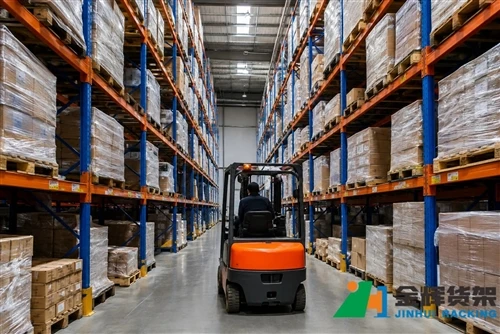
Third-party logistics warehouses face a different storage challenge from conventional manufacturing or private warehouses. A 3PL provider may manage inventory for dozens or even hundreds of customers, with each client having different SKUs, pallet quantities, turnover rates, handling requirements, and storage expectations.
That makes pallet racking for 3PL warehouses more complicated than simply choosing the system with the highest storage density.
A high-density rack may work extremely well for one customer storing large quantities of identical products, but the same system may create unnecessary handling problems for another customer with hundreds of SKUs and only a few pallets per SKU.
For this reason, successful 3PL warehouse design usually starts with inventory characteristics and operating requirements rather than the rack itself.
This guide explains how 3PL operators can select the right pallet racking system for multi-client storage, how different rack types fit different inventory profiles, and which factors should be considered before investing in a new warehouse storage system.
Quick Answer
For many 3PL warehouses, selective pallet racking provides the best starting point because it offers direct access and flexibility for multiple clients. However, high-volume customers may benefit from double deep, push back, drive-in, pallet flow, or radio shuttle systems. The most efficient 3PL warehouse often uses a combination of storage systems instead of relying on one rack type for every customer.
Why 3PL Warehouses Need a Different Racking Strategy
A private warehouse normally has a relatively predictable inventory profile. A manufacturer may store its own raw materials and finished products, while a retailer may have a defined product range.
A 3PL warehouse is different.
The warehouse operator is effectively providing storage as a service. Customer requirements can change as contracts begin, inventory volumes fluctuate, and new clients are added.
A typical 3PL facility may simultaneously store:
- High-volume consumer goods
- Low-volume specialty products
- Fast-moving retail inventory
- Slow-moving reserve stock
- Food and beverage products
- Industrial components
- Seasonal inventory
- Products requiring FIFO rotation
This variety creates a major design challenge: the warehouse needs enough flexibility to serve different customers without wasting valuable storage space.
That is why 3PL warehouse racking should be designed around customer segmentation, inventory behavior, and operational workflow.

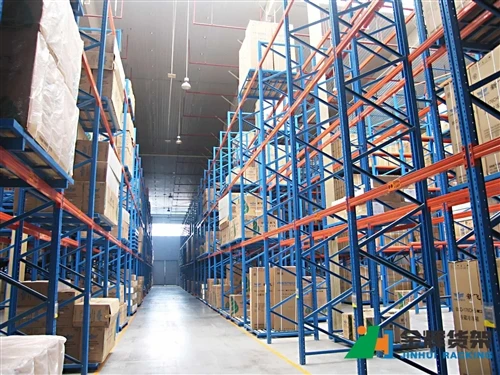
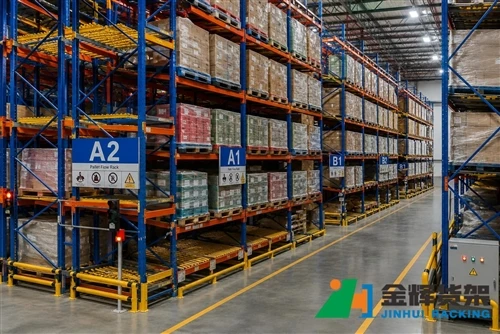
A well-planned 3PL warehouse can combine different pallet racking systems to support multiple customer inventory profiles.
What Should a 3PL Operator Consider Before Choosing Pallet Racking?
Before selecting a storage system, a 3PL operator should collect information about both current and expected inventory.
The most important factors include:
- Number of customers
- Number of SKUs per customer
- Average pallets per SKU
- Maximum pallet weight
- Pallet dimensions
- Inventory turnover
- Order frequency
- FIFO or LIFO requirements
- Required pallet accessibility
- Available warehouse height
- Forklift type
- Required storage density
- Expected business growth
These factors are more useful than simply asking how many pallet positions can fit inside the building.
For example, two 3PL customers may each require 500 pallet positions, but one may store 10 SKUs with 50 pallets per SKU while the other stores 250 SKUs with only two pallets per SKU.
Their ideal storage configurations can be completely different.
Start With Customer Inventory Profiles
The first step in designing 3PL warehouse pallet racking is to divide customers into inventory groups.
A practical approach is to classify customers according to SKU variety, pallet quantity, turnover, and access requirements.
| Customer Profile | Typical Inventory | Main Requirement | Possible Racking |
|---|---|---|---|
| High SKU variety | Many SKUs, few pallets each | Accessibility | Selective Pallet Racking |
| High pallet volume | Few SKUs, many pallets | Storage density | Drive-In / Push Back |
| Fast-moving inventory | Frequent pallet movement | Throughput | Selective / Pallet Flow |
| Batch storage | Multiple pallets per SKU | Density + accessibility | Double Deep / Push Back |
| Large-volume customer | High pallet quantities | Maximum capacity | Radio Shuttle |
This customer segmentation approach allows a 3PL provider to allocate different storage zones according to actual operational requirements.
Selective Pallet Racking for 3PL Warehouses
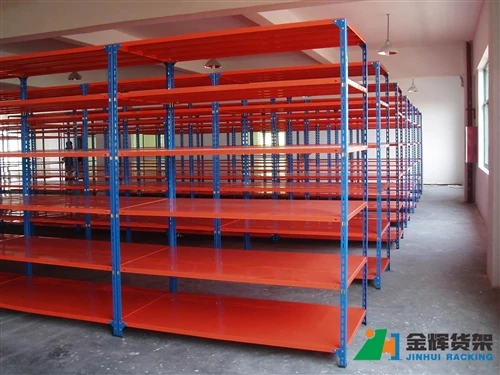
Selective Pallet Racking is often the foundation of a multi-client 3PL warehouse because it provides direct access to individual pallet positions.
This is particularly valuable when a warehouse handles many SKUs and customers simultaneously.
Each pallet position can be assigned to a particular customer, SKU, batch, or inventory category without requiring operators to move other pallets first.
Why Selective Racking Works Well for 3PL
- Direct access to each pallet position
- Flexible beam levels
- Suitable for many SKUs
- Easy customer inventory segregation
- Compatible with common forklift equipment
- Easy to expand with additional bays
The main disadvantage is storage density. Because each pallet needs aisle-facing access, selective racking uses more aisle space than high-density systems.
For a 3PL warehouse with thousands of SKUs and frequent individual pallet retrieval, however, that trade-off can be worthwhile.
When Should a 3PL Warehouse Use Double Deep Racking?
Double deep pallet racking can be useful when a 3PL customer has multiple pallets of the same SKU but still needs more accessibility than a deeper compact storage system provides.
By storing pallets two positions deep, the warehouse can reduce the number of aisle-facing rack positions required.
This can make double deep racking an attractive option for medium-volume customers whose inventory is too dense for conventional selective storage but not suitable for deep-lane storage.
Because the rear pallet is not directly accessible without dealing with the front pallet, customer inventory should be evaluated carefully before using this configuration.
For more detail on this system, see our guide:
Double Deep Pallet Racking: How It Works, Benefits, and When to Use It.
Push Back Racking for High-Volume 3PL Customers
Push Back Racking is a useful option for 3PL customers who store several pallets of the same product and want higher density without requiring forklifts to enter deep rack lanes.
Push back systems use inclined rails and nested carts. When a new pallet is loaded, it pushes previously stored pallets deeper into the lane.
This makes the system particularly suitable for batch-oriented storage.
Good 3PL Applications for Push Back Racking
- FMCG inventory
- Beverage products
- Consumer goods
- Seasonal inventory
- Large customer accounts
- Products stored several pallets deep
The key consideration is that push back racking normally follows a LIFO storage pattern. Therefore, it should not be automatically assigned to products requiring strict FIFO rotation.
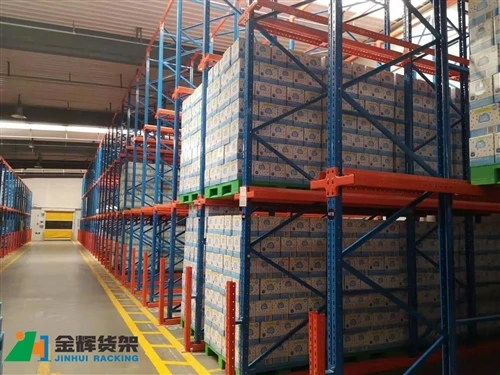
Drive-In Racking for Bulk 3PL Storage
Drive-In Pallet Racking focuses heavily on storage density.
Forklifts enter the storage lanes to place and retrieve pallets, allowing the rack structure to eliminate many conventional aisles.
For a 3PL warehouse, drive-in storage can be particularly effective when one customer occupies large quantities of a relatively small number of SKUs.
For example, a customer may temporarily store thousands of pallets of the same product during a seasonal production cycle.
Instead of using hundreds of individual selective pallet positions, a dedicated drive-in zone may provide a more efficient use of warehouse space.
When Drive-In Racking Makes Sense for 3PL
- Low SKU variety
- High pallet quantities
- Batch storage
- Limited floor space
- LIFO-compatible inventory
- Longer-term storage
It is generally less suitable for customers requiring rapid access to individual pallets across a large SKU range.
Pallet Flow Racking for FIFO-Oriented 3PL Inventory
Some 3PL customers require inventory rotation based on product age, production date, or expiration date.
For these operations, Pallet Flow Racking can provide a more suitable storage configuration.
Pallet flow systems use gravity-driven roller lanes to move pallets from the loading side toward the picking side.
This creates a natural FIFO workflow.
Typical applications include:
- Food distribution
- Beverage logistics
- Perishable products
- Pharmaceutical distribution
- Cold chain logistics
- Fast-moving inventory
For a 3PL operator, this can also simplify inventory rotation because the physical storage configuration supports the required product flow.
Radio Shuttle Racking for High-Density 3PL Storage
When a 3PL warehouse manages a very large customer account or needs to maximize pallet capacity within an expensive facility, Radio Shuttle Racking becomes an option worth evaluating.
A radio shuttle uses a motorized shuttle cart to move pallets inside deep storage lanes, reducing the need for forklifts to enter the rack structure.
This approach can improve storage density while reducing forklift travel inside the rack lanes.
For 3PL operations, radio shuttle systems are particularly interesting when:
- A customer has a large pallet inventory
- Storage density is a major commercial requirement
- Forklift travel needs to be reduced
- The warehouse operates high-volume pallet movements
- Cold storage space is expensive
- Semi-automated handling is acceptable
The higher initial investment means that the system should be evaluated against expected throughput, storage volume, labor requirements, and contract duration.

High-density storage systems can be assigned to large-volume 3PL customers while selective racks support more flexible inventory.
Should a 3PL Warehouse Use One Racking System?
In many cases, no.
One of the biggest mistakes in 3PL warehouse design is trying to use the same storage system for every customer.
A mixed-racking strategy can provide better overall warehouse performance.
For example, a facility could use:
- Selective pallet racking for high-SKU customers
- Double deep racking for medium-volume customers
- Push back racking for batch inventory
- Drive-in racking for large quantities of identical products
- Pallet flow racking for FIFO inventory
- Radio shuttle racking for high-volume or high-density storage
This approach creates a more flexible storage portfolio.
Instead of forcing every customer into one storage configuration, the 3PL operator can match the rack type to the customer's commercial and operational requirements.
How Customer Contracts Should Influence Rack Selection
3PL warehouse investments should also consider contract duration.
A storage system with a higher initial investment may make sense for a long-term customer with stable inventory volumes. The same investment may be difficult to justify for a short-term contract with uncertain demand.
Before installing specialized storage equipment, consider:
- Contract duration
- Expected customer growth
- Minimum guaranteed storage volume
- Average pallet occupancy
- Daily inbound volume
- Daily outbound volume
- Required service level
- Potential customer turnover
This is particularly important when evaluating semi-automated or high-density systems.
How SKU Variety Changes the Racking Decision
SKU variety is one of the strongest indicators of whether a 3PL warehouse should prioritize accessibility or density.
| SKU Profile | Pallets per SKU | Priority | Potential Solution |
|---|---|---|---|
| Very high SKU variety | 1–3 | Accessibility | Selective |
| High SKU variety | 3–10 | Flexibility + density | Selective / Double Deep |
| Medium SKU variety | 10–30 | Density | Double Deep / Push Back |
| Low SKU variety | 30+ | Maximum density | Drive-In / Radio Shuttle |
These are planning guidelines rather than fixed thresholds. Actual rack selection should be based on warehouse dimensions, inventory behavior, forklift capabilities, and required service levels.
How Inventory Turnover Affects 3PL Rack Selection
Inventory turnover is another major consideration.
Fast-moving products need quick access. If a pallet is moved several times each week, the additional density provided by a deep storage system may not compensate for the extra handling required.
Slow-moving inventory is different.
If products remain in storage for weeks or months, maximizing pallet density can become more important than direct access.
A practical 3PL strategy is therefore to place high-turnover inventory closer to efficient picking zones and assign high-density storage to reserve or slower-moving stock.
Reserve Storage vs Picking Storage in a 3PL Warehouse
Another effective approach is to separate reserve inventory from frequently accessed inventory.
Selective pallet racking can be used for inventory requiring frequent pallet access, while high-density systems can store reserve stock.
For example:
Fast-moving stock → Selective / Pallet Flow
Medium-turnover stock → Double Deep / Push Back
Slow-moving bulk stock → Drive-In / Radio Shuttle
High-value or highly selective stock → Direct-access storage
This creates a warehouse layout based on movement frequency rather than simply customer identity.
How Warehouse Layout Affects 3PL Storage Efficiency
The rack system is only one part of a successful 3PL warehouse.
The layout should also consider:
- Receiving docks
- Shipping docks
- Cross-docking areas
- Staging zones
- Picking areas
- Forklift travel paths
- Battery charging areas
- Returns processing
- Quality inspection zones
- Customer-specific storage areas
Putting too much rack into the building can actually reduce operational efficiency if receiving and shipping areas become congested.
For this reason, storage density should always be considered together with material flow.
Why Flexible Rack Design Matters for 3PL Operators
Customer requirements can change.
A customer that occupies 1,000 pallet positions today may need 1,500 positions next year. Another customer may leave the facility entirely.
For this reason, modular pallet racking can be particularly valuable in 3PL operations.
Adjustable beam levels, standardized bay configurations, and expandable rack rows allow operators to modify storage capacity as customer demand changes.
Before installing a new system, it is worth asking:
- Can additional bays be added later?
- Can beam levels be adjusted?
- Can the layout accommodate different pallet heights?
- Can storage zones be reassigned?
- Can the warehouse support future automation?
How to Avoid Over-Designing a 3PL Warehouse
Higher density does not automatically mean better warehouse performance.
A 3PL provider earns revenue from storage and handling services. If a high-density system increases pallet capacity but slows down customer orders, the additional storage may not produce the expected financial return.
Common examples include:
- Using drive-in racks for high-SKU inventory
- Using deep storage for very fast-moving products
- Installing expensive automation for low-volume customers
- Reducing aisles so aggressively that forklift productivity falls
- Using one rack configuration for every customer
The goal should be the right density for the right inventory, not maximum density at any cost.
Should a 3PL Warehouse Invest in Radio Shuttle Racking?
Radio shuttle systems can provide strong value when the facility has a large volume of palletized inventory and a clear need for high-density storage.
However, the investment should be evaluated using actual operational data.
Important questions include:
- How many pallets will the system store?
- How many pallet movements occur each day?
- How many years is the storage capacity expected to be used?
- How expensive is additional warehouse floor space?
- How much forklift travel can be reduced?
- Does the customer contract justify the investment?
If the answers indicate sustained high utilization, radio shuttle may provide a stronger long-term solution than conventional deep storage.
3PL Warehouse Racking Selection Checklist
Before requesting a quotation, a 3PL operator should prepare the following information:
- Warehouse length, width, and clear height
- CAD layout if available
- Pallet dimensions
- Maximum pallet weight
- Total pallet quantity
- Number of customers
- Number of SKUs per customer
- Average pallets per SKU
- Fast-moving and slow-moving inventory ratios
- FIFO or LIFO requirements
- Forklift type
- Required aisle width
- Expected future storage growth
- Daily inbound and outbound pallet volume
Providing this information allows a racking manufacturer to design a system around actual warehouse operations rather than supplying a generic rack configuration.
Recommended Racking Strategy for Different 3PL Customer Types
| Customer Type | Inventory Characteristics | Recommended Storage Direction |
|---|---|---|
| Retail / E-commerce | High SKU variety, frequent access | Selective Pallet Racking |
| FMCG | High volume, moderate SKU count | Push Back / Selective |
| Food Distribution | FIFO, high turnover | Pallet Flow |
| Industrial Bulk Storage | Large batches, low SKU variety | Drive-In |
| Cold Chain | High storage cost, large volumes | Radio Shuttle / Drive-In |
| Mixed 3PL Inventory | Multiple customer profiles | Combination of Systems |
Common Mistakes When Designing 3PL Warehouse Racking
Mistake 1: Designing Around One Customer
A 3PL warehouse should consider both current contracts and future customer requirements. A layout optimized for one large account may become inefficient if the customer changes its storage volume.
Mistake 2: Maximizing Density Everywhere
Maximum density can reduce accessibility and increase handling time. Different inventory profiles require different storage strategies.
Mistake 3: Ignoring Customer Inventory Turnover
Fast-moving products should not automatically be placed in the deepest available storage lanes.
Mistake 4: Forgetting Future Expansion
A 3PL operation can grow quickly. Rack layouts should leave reasonable opportunities for additional bays, levels, or higher-density systems.
Mistake 5: Choosing Racking Without Considering Forklifts
Forklift dimensions, lift height, turning radius, reach capability, and operating speed all influence the final rack layout.
Mistake 6: Ignoring Contract Economics
A high-investment storage system should be justified by expected utilization and customer revenue rather than storage capacity alone.
How to Build a Scalable 3PL Pallet Storage System
A scalable 3PL warehouse should be able to adapt as customers and inventory change.
A practical long-term strategy is to create several storage zones with different purposes.
For example:
- Zone A: High-access selective pallet storage
- Zone B: Medium-density double deep or push back storage
- Zone C: High-density bulk storage
- Zone D: FIFO pallet flow storage
- Zone E: Semi-automated radio shuttle storage
- Zone F: Temporary or seasonal inventory
This type of zoning gives a 3PL operator more flexibility when customer requirements change.
FAQ About Pallet Racking for 3PL Warehouses
What is the best pallet racking system for a 3PL warehouse?
There is no single best system for every 3PL warehouse. Selective pallet racking is often the most flexible starting point, while high-volume customers may be better served by double deep, push back, drive-in, pallet flow, or radio shuttle systems.
Why is selective pallet racking popular in 3PL warehouses?
Selective pallet racking provides direct access to each pallet position, making it suitable for warehouses handling many customers, SKUs, and inventory movements.
Can a 3PL warehouse combine different racking systems?
Yes. Combining storage systems is often an effective way to match different rack configurations with different customer inventory profiles.
Is drive-in racking suitable for 3PL storage?
Drive-in racking can be suitable for 3PL customers with large quantities of similar products and relatively low SKU variety. It is less suitable when individual pallet accessibility is a priority.
When should a 3PL use push back racking?
Push back racking can be considered when a customer stores multiple pallets per SKU and needs higher density while maintaining forklift operation from the aisle.
Is pallet flow racking suitable for 3PL warehouses?
Yes. Pallet flow racking can be particularly useful for customers requiring FIFO inventory rotation, such as food, beverage, and other date-sensitive products.
When is radio shuttle racking worth considering?
Radio shuttle racking becomes more attractive when pallet volume is high, storage density is important, forklift travel needs to be reduced, and the expected utilization justifies the additional investment.
How should a 3PL warehouse plan for future customers?
The layout should include modular rack configurations, expansion areas, flexible storage zones, and enough operational space to accommodate changes in customer inventory volume.
Final Thoughts
The best pallet racking strategy for a 3PL warehouse is not necessarily the one with the highest pallet density.
The real objective is to match storage density, accessibility, inventory flow, handling efficiency, and customer requirements.
Selective pallet racking provides flexibility for high-SKU customers. Double deep and push back systems can increase density for medium-volume inventory. Drive-in racking is useful for bulk storage, while pallet flow supports FIFO operations. For large-volume customers and high-density environments, radio shuttle systems can provide a further step toward semi-automated storage.
By combining these systems strategically, a 3PL provider can create a warehouse that serves multiple customer profiles without sacrificing operational efficiency.
The right 3PL racking solution should be designed around your customers, inventory behavior, forklift operation, and future storage demand-not simply the number of pallets you need to store today.
Get a Customized 3PL Warehouse Racking Solution
Every 3PL warehouse has a different combination of customer requirements, pallet dimensions, inventory turnover, storage density targets, and material handling equipment.
Jinhui Rack provides customized warehouse pallet racking solutions for 3PL providers, logistics centers, distribution warehouses, manufacturing facilities, and high-density storage operations.
Our engineering team can develop a rack layout based on your warehouse dimensions, pallet specifications, load requirements, SKU distribution, forklift type, and expected storage volume.
For a customized warehouse racking proposal, please provide your warehouse layout or dimensions together with pallet size, pallet weight, required storage capacity, and forklift information.
WhatsApp: +8618502527163
Email: info@jhrack.com