Introduction
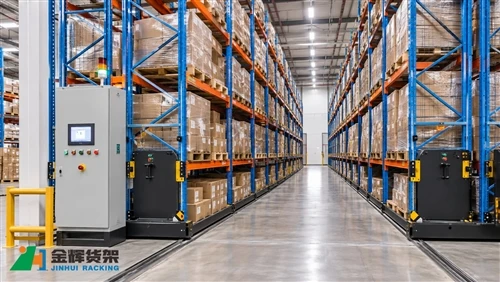
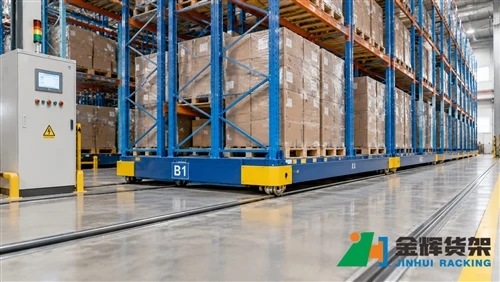
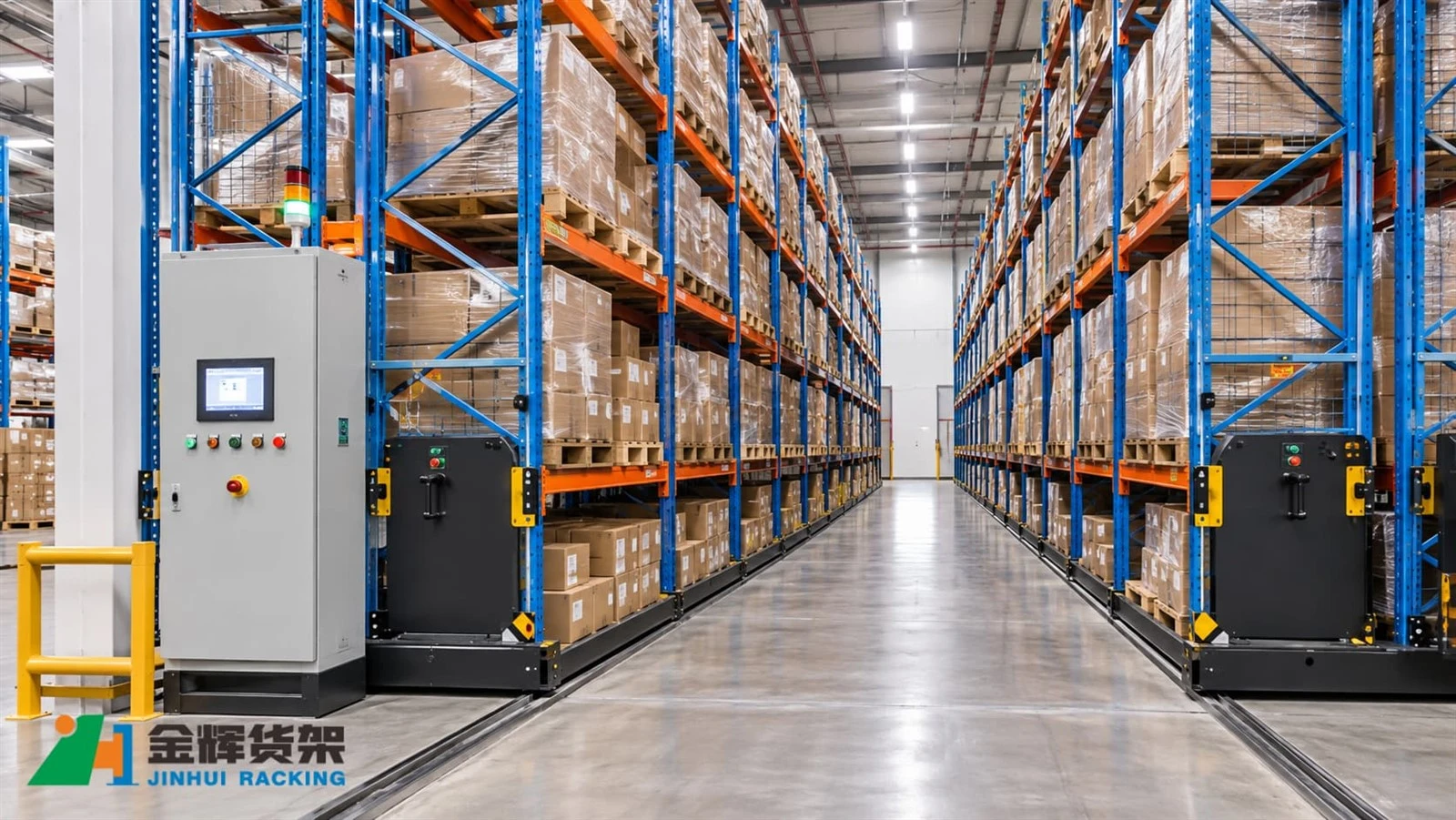
Powered mobile racking systems provide high-density storage by moving rack structures along floor-mounted rails to create access aisles when required. Their motorized operation improves warehouse space utilization and reduces the need for multiple fixed aisles.
However, an unexpected power failure can interrupt rack movement and prevent operators from accessing stored goods. Without a clearly defined recovery procedure, attempting to move the racks manually or restart the system without proper checks may create additional safety risks.
Understanding how to respond to a power interruption is therefore an important part of powered mobile racking operation and maintenance.
This guide explains the key safety precautions, manual recovery considerations, inspection procedures, and restart checks that warehouse operators should follow when a powered mobile racking system loses power.
Powered Mobile Racking System and Its Main Operating Components
1. What Happens When Powered Mobile Racking Loses Power?
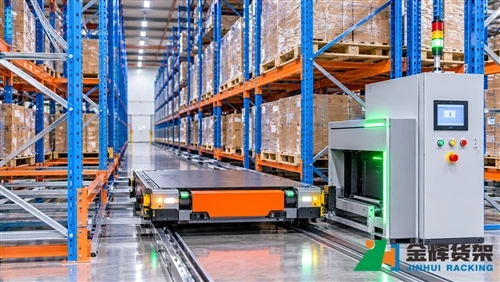
Powered mobile racking typically uses electric motors, drive mechanisms, control panels, sensors, and safety devices to move storage units along dedicated floor rails.
When the electrical supply is interrupted, several situations may occur depending on the system design:
- Movement stops: The electric drive system can no longer perform normal powered movement.
- Control functions become unavailable: The control panel, operating buttons, or automated movement functions may stop responding.
- The current aisle configuration remains unchanged: Mobile bases may remain in their existing positions, potentially leaving some storage locations inaccessible.
- Safety functions may require verification: Sensors, emergency stops, and control circuits may need inspection before normal operation resumes.
- An alarm or fault indication may appear: Some systems retain fault information or display an error when power is restored.
The actual response depends on the electrical configuration, drive system, braking arrangement, and backup power provisions. Operators should never assume that every powered mobile racking installation has the same power-failure behavior.
2. Immediate Safety Precautions After a Power Failure
Before attempting to recover access, warehouse personnel should establish that the installation is safe.
2.1 Stop Normal Operating Activities
Stop attempts to operate the mobile bases through the normal control panel. Do not repeatedly press operating buttons or attempt to force the racks to move.
If forklifts or other material-handling equipment are operating near the installation, suspend related activities until the situation has been assessed.
2.2 Check the Working Aisles
Identify whether any employees are inside an open aisle or between moving rack structures.
Confirm that:
- No personnel are trapped inside the storage area.
- No forklift or pallet is positioned within a potential movement zone.
- No loose materials are obstructing the rails.
- No visible structural damage has occurred.
- The mobile bases are not visibly misaligned.
If personnel may be trapped or there is an immediate safety hazard, follow the site's emergency response procedure.
2.3 Isolate the Electrical Supply When Required
If the incident involves electrical damage, unusual noise, smoke, burning smells, exposed wiring, or suspected equipment malfunction, isolate the system according to the site's electrical safety and lockout/tagout procedures.
Electrical inspection and repair should only be performed by authorized personnel.
Important: A power interruption does not automatically mean that the system is safe to enter or move. Personnel must follow the equipment manufacturer's emergency instructions and the site's risk-control procedures.
3. Manual Override Options for Powered Mobile Racking
Some powered mobile racking systems are equipped with manual override or emergency movement provisions. These features may allow authorized personnel to restore access when normal electrical operation is unavailable.
However, the design and operation of manual recovery systems vary between manufacturers and equipment models.
3.1 Mechanical Manual Override
A mechanical override may provide a means of moving the mobile base without relying on normal motorized operation.
Depending on the design, this may involve a dedicated mechanical operating mechanism or another manufacturer-specified emergency movement arrangement.
Before using this function, operators should confirm:
- The correct emergency operating procedure for the equipment model.
- Whether the electrical drive must be isolated.
- Whether mechanical brakes or locking devices require a specific procedure.
- Whether additional personnel or tools are required.
- Whether the movement area is completely clear.
Never use improvised tools, external pulling equipment, or forklifts to force a mobile rack into position.
3.2 Battery Backup Systems
Some powered mobile storage installations include battery backup options. Depending on the configuration, backup power may maintain selected control or movement functions during a mains power interruption.
Before relying on battery backup, confirm:
- Whether backup power is installed.
- Which system functions remain available.
- Whether the backup supply has sufficient capacity.
- Whether safety sensors and interlocks remain operational.
- Whether the manufacturer permits continued movement under backup power.
Battery backup should not be assumed to be standard equipment on every powered mobile racking system.
3.3 Manufacturer-Specific Emergency Procedures
Some installations provide dedicated emergency controls, while others require a technician to perform recovery operations.
Operators should always refer to the manufacturer's technical documentation before using any manual override.
If the recovery procedure is unclear, contact the equipment supplier or qualified service technician rather than attempting an unfamiliar operation.
4. Inspect the Mobile Racking System Before Restarting
Once electrical power has been restored or emergency recovery has been completed, the system should be inspected before returning to normal operation.
4.1 Check Floor Rails and Running Wheels
Inspect the visible rail sections for:
- Dust, debris, or foreign objects.
- Damaged or displaced rail components.
- Signs of wheel obstruction.
- Unusual wear or deformation.
- Visible misalignment between the mobile base and rail.
Any suspected mechanical obstruction should be investigated before movement resumes.
4.2 Inspect the Drive Mechanism
The drive system should be checked for visible damage or abnormal operating conditions.
Depending on the equipment design, inspection may include:
- Drive motors.
- Transmission components.
- Couplings and drive shafts.
- Gearboxes.
- Braking components.
- Electrical connections.
Any damaged or abnormal component should be assessed by qualified maintenance personnel.
4.3 Check Safety Sensors
Powered mobile racking may incorporate safety devices such as:
- Aisle-entry detection sensors.
- Photoelectric barriers.
- Obstruction detection devices.
- Emergency stop buttons.
- Travel limit switches.
- Audible and visual warning devices.
Each installed safety device should be checked according to the manufacturer's inspection and testing procedure.
A sensor that appears physically intact may still have an electrical or control-system fault.
4.4 Review the Control Panel
Check the control panel for fault codes, warning indicators, or abnormal status messages.
Where available, review the system's fault history to identify whether the interruption was caused by:
- Loss of incoming electrical power.
- A control circuit fault.
- A motor overload.
- A safety device activation.
- A communication failure.
- Another equipment-related issue.
The original cause should be identified and addressed rather than simply clearing the alarm.
5. Safe Restart Procedure After Power Restoration
Restarting powered mobile racking should be a controlled process rather than an immediate return to automatic operation.
Step 1: Confirm Power Supply Stability
Verify that the incoming electrical supply has been restored and that the relevant electrical protection devices are operating correctly. Qualified personnel should investigate any recurring electrical interruptions.
Step 2: Confirm the Mechanical Condition
Inspect the mobile bases, rails, wheels, and accessible drive components. Make sure there are no visible obstructions or signs of mechanical damage.
Step 3: Verify Safety Devices
Check that all installed safety devices are functioning according to the approved testing procedure. Any bypassed, damaged, or malfunctioning safety device must be addressed before normal operation resumes.
Step 4: Review and Clear Fault Conditions
Authorized personnel should identify the cause of the fault and follow the manufacturer's instructions for resetting the control system. Resetting an alarm without understanding its cause is not an acceptable substitute for inspection.
Step 5: Conduct a Controlled Test
If the system has passed the required checks, perform a controlled operational test under the manufacturer's commissioning or recovery procedure.
Observe:
- Smooth mobile base movement.
- Correct stopping positions.
- Normal motor operation.
- Proper warning signals.
- Correct safety interlock responses.
- Absence of abnormal vibration or noise.
Testing should take place with the required exclusion zones established and without personnel in hazardous movement areas.
Step 6: Return to Normal Operation
Only after the required checks have been completed and the system has been approved by authorized personnel should normal warehouse operations resume.
Record the interruption, identified fault, inspection results, corrective actions, and restart approval.
6. Common Power-Failure Recovery Problems and Their Possible Causes
Understanding common symptoms can help maintenance teams investigate problems more efficiently.
| Observed Problem | Possible Cause | Recommended Action |
|---|---|---|
| Control panel does not respond | Incoming power or control circuit interruption | Check the power supply and control system. |
| Mobile base cannot move | Drive fault, brake condition, or mechanical obstruction | Inspect the drive and movement path. |
| Fault alarm remains after power restoration | Unresolved electrical or safety-related fault | Review fault history and follow the manufacturer's reset procedure. |
| Safety sensor prevents movement | Obstruction, sensor misalignment, or sensor malfunction | Inspect and test the affected safety device. |
| Abnormal noise during movement | Mechanical damage, wheel issues, or drive component problems | Stop operation and arrange a mechanical inspection. |
| System stops unexpectedly after restarting | Safety interlock activation or unresolved equipment fault | Identify the triggering condition before restarting. |
These are possible diagnostic directions, not definitive fault diagnoses. The same symptom may have different causes depending on the system configuration.
7. Preventive Maintenance to Reduce Power-Failure Downtime
Although electrical interruptions cannot always be avoided, a planned maintenance program can reduce the likelihood of equipment damage and help shorten recovery time.
7.1 Regular Electrical Inspections
Inspect electrical connections, control cabinets, power cables, protective devices, and other relevant components according to the manufacturer's maintenance schedule.
Pay particular attention to loose connections, overheating, damaged insulation, and recurring electrical faults.
7.2 Routine Rail and Wheel Maintenance
Keep the rail system clean and inspect the running surfaces regularly. Foreign objects or damaged rail sections can interfere with movement and increase mechanical stress.
7.3 Periodic Safety Function Testing
Test emergency stops, aisle detection systems, obstruction protection, and other installed safety devices at the intervals specified by the manufacturer.
Keep inspection records so that maintenance teams can identify recurring problems.
7.4 Maintain Emergency Recovery Documentation
Every powered mobile racking installation should have accessible operating and emergency documentation.
The documentation should identify:
- The system model and equipment configuration.
- Electrical isolation points.
- Approved emergency recovery methods.
- Authorized maintenance personnel.
- Safety inspection requirements.
- Manufacturer and service contact information.
7.5 Train Warehouse Operators
Operators should understand normal operating procedures and know what to do when the system stops unexpectedly.
Training should cover emergency stopping, restricted access, incident reporting, and when to contact qualified maintenance personnel.
Operators should not perform mechanical or electrical recovery procedures unless they have been specifically trained and authorized.
8. What to Confirm When Purchasing Powered Mobile Racking
Power-failure recovery should also be considered during the initial equipment specification and procurement process.
Before selecting a powered mobile racking solution, warehouse operators and project engineers should confirm the following technical details with the supplier.
| Technical Consideration | Questions to Ask the Supplier |
|---|---|
| Power-failure response | What happens when the main electrical supply is interrupted? |
| Manual override | Is an approved manual recovery mechanism available? |
| Backup power | Is battery backup included or available as an option? |
| Safety interlocks | Which safety devices remain functional during emergency operation? |
| Recovery procedure | What steps are required to restore normal operation? |
| Maintenance access | Can authorized technicians safely inspect the drive and control components? |
| Technical documentation | Are wiring diagrams, operating instructions, and maintenance manuals supplied? |
| After-sales support | Is technical assistance available for troubleshooting and recovery? |
These questions help buyers understand not only the normal operating performance of the equipment but also how the system will respond to unexpected interruptions.
Conclusion
Power failures can temporarily interrupt powered mobile racking operations, but a properly designed recovery procedure helps protect personnel, equipment, and warehouse operations.
The most important considerations are to secure the working area, identify the cause of the interruption, use only approved emergency recovery methods, inspect mechanical and electrical components, verify safety devices, and perform a controlled restart.
For warehouse projects requiring high-density storage and motorized aisle access, selecting a powered mobile racking system with clearly documented emergency procedures and appropriate maintenance support is an important part of long-term operational planning.
Contact Us for Powered Mobile Racking Solutions
Looking for a reliable powered mobile racking solution for your warehouse? Jinhui Rack provides warehouse storage systems designed around different storage capacities, facility layouts, and operational requirements.
Whether you are planning a new warehouse, upgrading an existing storage facility, or evaluating motorized high-density storage, our team can help you discuss suitable racking configurations and project requirements.
Contact Jinhui Rack today to discuss your warehouse storage project and get professional support for your storage system planning.
Explore Our Powered Mobile Racking System
Visit Jinhui Rack to learn more about our warehouse storage solutions.