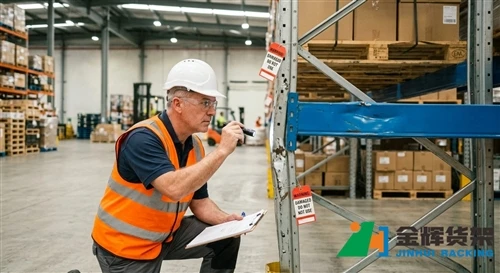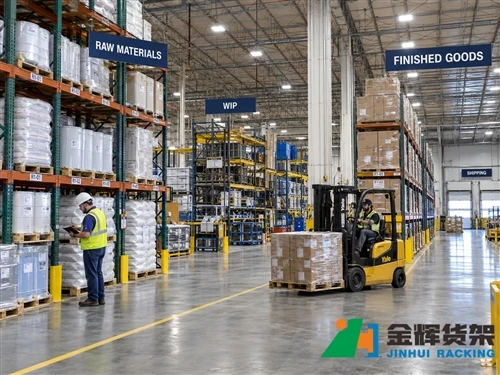
Warehouse operators are often faced with the same problem: how can more pallets be stored in an existing building without adding more floor space?
Traditional selective pallet racking provides excellent accessibility, but every pallet position needs to face an aisle. As the number of pallets increases, aisle requirements can consume a significant portion of the warehouse footprint.
Double deep pallet racking offers a practical middle ground. Instead of storing one pallet deep, the system stores two pallets deep, allowing warehouses to reduce aisle requirements and increase pallet capacity while maintaining relatively efficient forklift access.
However, double deep racking is not simply a matter of putting two pallets behind each other. The warehouse needs the right forklift equipment, suitable pallet dimensions, an appropriate inventory profile, and a layout that makes the additional storage depth worthwhile.
This guide explains how double deep pallet racking works, its advantages and limitations, forklift requirements, inventory considerations, warehouse applications, and how to determine whether it is the right storage system for your facility.
Quick Answer
Double deep pallet racking is a good choice for warehouses that need more storage density than selective racking but still require relatively fast access to pallets. It is particularly suitable for facilities with medium SKU variety, multiple pallets per SKU, and a suitable reach truck or double-deep forklift.
What Is Double Deep Pallet Racking?
Double deep pallet racking is a pallet storage configuration in which two pallets are stored one behind another on each side of a rack aisle.
Unlike conventional selective pallet racking, where the forklift can normally access the pallet directly from the aisle, double deep racking creates a second storage position behind the front pallet.
This configuration reduces the number of aisles required for a given number of pallet positions. As a result, more of the warehouse floor can be allocated to actual storage.
At the same time, the rear pallet remains accessible without requiring the forklift to drive into a deep storage lane as it would with drive-in racking.
This makes double deep racking an intermediate solution between highly accessible selective racking and more compact deep-lane systems.

Double deep pallet racking uses two pallet positions in depth to increase warehouse storage density.
How Does a Double Deep Pallet Racking System Work?
The basic structure of a double deep pallet rack is similar to conventional adjustable pallet racking, but the storage layout is designed to place two pallet positions behind each other.
From the aisle, the forklift can access the first pallet position. To reach the second pallet, the forklift needs additional reach capacity so the forks can extend beyond the front storage position.
This is why forklift selection is an important part of double deep rack planning.
Typical Double Deep Storage Process
- The forklift approaches the rack from the warehouse aisle.
- The front pallet position can be loaded directly.
- For the rear position, the forklift extends its forks or uses a suitable reach mechanism.
- The rear pallet is placed behind the front pallet.
- During retrieval, the front pallet normally needs to be removed before the rear pallet can be accessed.
This creates a storage system that improves density while maintaining aisle-based forklift operation.
Why Is Double Deep Racking Considered a High-Density Storage System?
The main reason is simple: two pallet positions are accessed from the same aisle footprint.
In selective pallet racking, each pallet position needs front access from an aisle. When pallets are stored two deep, fewer rack faces are required for the same number of pallet positions.
This can reduce the amount of floor space dedicated to aisles and increase the percentage of the building used for pallet storage.
However, the exact capacity improvement depends on the warehouse layout.
Factors such as rack height, aisle width, pallet dimensions, building columns, fire protection requirements, forklift turning radius, staging areas, and required clearances all affect the final pallet count.
For this reason, double deep racking should be evaluated using an actual warehouse layout rather than a simple percentage calculation.
Double Deep Pallet Racking vs Selective Pallet Racking
Selective pallet racking is one of the most accessible and flexible warehouse storage systems. Every pallet can normally be accessed directly from the aisle.
Double deep racking sacrifices some of that accessibility to increase storage density.
| Factor | Selective Pallet Racking | Double Deep Pallet Racking |
|---|---|---|
| Pallet Depth | Single deep | Two pallets deep |
| Pallet Accessibility | Direct access | Front pallet has priority access |
| Storage Density | Moderate | Higher |
| Forklift Requirement | Standard forklift or reach truck | Reach truck or double-deep capable equipment |
| SKU Flexibility | Excellent | Moderate |
| Best Inventory Profile | Many SKUs / frequent access | Medium SKU volume / multiple pallets per SKU |
If a warehouse has a large number of SKUs but only one or two pallets for each SKU, selective racking may still be the better solution.
If the warehouse stores multiple pallets of the same SKU and needs more capacity, double deep racking becomes more attractive.
You can also read our previous comparison of Selective Pallet Rack vs Drive In Rack to understand how accessibility changes when moving from selective to compact storage.
What Type of Forklift Is Required for Double Deep Racking?
Forklift selection is one of the most important differences between selective and double deep storage.
Because the second pallet is positioned behind the first, the forklift needs enough reach capability to place and retrieve the rear pallet safely.
Reach trucks equipped with telescopic forks or pantograph-style mechanisms are commonly considered for double deep applications.
The exact equipment requirement depends on the rack depth, pallet dimensions, load weight, aisle width, and warehouse operating conditions.
Why Forklift Compatibility Matters
A rack system should never be designed independently from the material handling equipment.
For example, a warehouse may have enough ceiling height for a certain number of rack levels, but if the selected forklift cannot safely reach the rear pallet position at the required height, the theoretical storage capacity cannot be achieved in practice.
Before purchasing a double deep system, confirm:
- Forklift maximum lift height
- Maximum reach depth
- Load capacity at extended reach
- Fork length
- Aisle width requirement
- Pallet dimensions
- Pallet weight
- Operator visibility
- Turning and maneuvering requirements
These specifications should be coordinated with the rack design from the beginning.
What Inventory Is Best Suited to Double Deep Racking?
Double deep pallet racking is generally most effective when a warehouse stores multiple pallets per SKU.
This is because the second pallet position becomes more useful when there is enough inventory volume to justify storing products in depth.
Typical characteristics include:
- Medium SKU variety
- Multiple pallets per SKU
- Moderate to high pallet volume
- Relatively predictable inventory demand
- Limited warehouse floor space
- A need for higher density than selective racking
Double deep storage can be especially useful for distributors and manufacturers that have several pallets of each major product but still need access to a relatively broad range of SKUs.
Is Double Deep Pallet Racking FIFO or LIFO?
Double deep pallet racking is generally better suited to LIFO-oriented storage because the rear pallet cannot normally be retrieved before the front pallet without moving the front load.
This does not mean every warehouse using double deep racking must operate strictly under a formal LIFO inventory policy. However, the physical access pattern naturally gives priority to the front pallet.
For products where strict FIFO rotation is essential, a pallet flow system may be more appropriate.
Our previous article, Pallet Flow Rack vs Push Back Rack, explains the difference between FIFO-oriented pallet flow storage and LIFO-oriented push back storage in greater detail.
Double Deep Racking vs Push Back Racking
Double deep and push back racking can both provide high-density storage, but they solve the problem differently.
Double deep racking stores two pallets deep using conventional rack beams and requires a forklift capable of reaching the rear pallet.
Push back racking uses inclined rails and carts to store multiple pallets deep. When a new pallet is loaded, it pushes previously stored pallets toward the rear of the lane.
| Feature | Double Deep | Push Back |
|---|---|---|
| Storage Depth | Two pallets deep | Multiple pallets deep |
| Forklift Access | Reach to rear position | Front-side operation |
| Storage Density | High | Very High |
| Mechanical Components | Standard rack structure | Rails and carts |
| Typical Inventory Flow | LIFO-oriented | LIFO |
| Best Use | Moderate-density storage with relatively good access | Higher-density batch storage |
If two pallets deep are sufficient for the warehouse's inventory profile, double deep can provide a simpler solution. If the warehouse needs deeper storage lanes, push back may provide greater density.
However, the final decision should also consider forklift productivity, pallet turnover, SKU quantity, and the cost of additional equipment.
Double Deep Racking vs Drive-In Racking
Double deep and drive-in racking are both high-density pallet storage systems, but their forklift operating methods are very different.
With double deep racking, the forklift remains in the warehouse aisle and reaches the rear pallet from the aisle.
With drive-in racking, the forklift enters the storage lane to place and retrieve pallets.
This means double deep racking generally provides greater pallet accessibility and less forklift interaction with the rack structure, while drive-in racking can achieve higher storage density for suitable bulk-storage applications.
For a detailed comparison of drive-in and push back systems, see Drive In Rack vs Push Back Rack.
Advantages of Double Deep Pallet Racking
1. Higher Storage Density
The most obvious benefit is increased pallet capacity within a similar warehouse footprint.
By storing two pallets deep, the system can reduce the number of aisle-facing rack positions required for a given amount of inventory.
2. Better Space Utilization
Warehouse space is expensive. Double deep storage allows more floor area to be dedicated to pallet storage instead of aisles.
3. More Accessible Than Deep-Lane Systems
Although the rear pallet is not as directly accessible as the front pallet, forklifts do not need to enter a deep rack lane as they do with drive-in storage.
4. Suitable for Medium SKU Volumes
Double deep can be a good compromise for warehouses that have too many SKUs for deep homogeneous storage but do not need direct access to every pallet.
5. Efficient Use of Vertical Space
Like other pallet racking systems, double deep racks can be designed to use available building height while maintaining appropriate clearances for forklifts and stored loads.
6. Can Reduce Cost per Pallet Position
When the warehouse layout is optimized correctly, additional pallet positions can reduce the effective storage cost per position compared with maintaining a larger number of aisles.
Limitations of Double Deep Pallet Racking
Double deep racking is not suitable for every warehouse.
Reduced Direct Accessibility
The rear pallet cannot normally be removed without first dealing with the front pallet. This makes the system less flexible than selective pallet racking.
Special Forklift Requirements
The warehouse may need reach equipment or another forklift configuration capable of safely accessing the second pallet position.
Inventory Management Becomes More Important
Products need to be organized carefully so that pallets stored behind each other do not create unnecessary handling problems.
Not Ideal for Very High SKU Variety
If each SKU only occupies one pallet, storing pallets two deep may reduce flexibility rather than improve it.
More Complex Than Basic Selective Storage
The rack design, forklift selection, aisle dimensions, and inventory layout need to be coordinated more carefully than with a simple selective rack configuration.
When Should You Choose Double Deep Pallet Racking?
Double deep racking should be considered when a warehouse has a clear need for additional pallet density but still wants aisle-based forklift operation.
It can be a strong candidate when:
- The warehouse has limited floor space.
- There are multiple pallets per SKU.
- Inventory variety is moderate.
- LIFO-oriented storage is acceptable.
- Reach trucks are already available or can be justified.
- Storage density is more important than direct access to every pallet.
- The warehouse wants a less complex alternative to deeper compact storage systems.
When Should You Not Choose Double Deep Racking?
There are also situations where selective or another high-density system may be more appropriate.
Double deep may not be the best option when:
- Every pallet must be directly accessible.
- The warehouse has a very large number of SKUs with low pallet quantities.
- Strict FIFO rotation is required.
- The existing forklifts cannot reach the rear pallet safely.
- Inventory changes very frequently.
- Storage lanes would frequently contain mixed products.
In these cases, selective pallet racking, pallet flow racking, or another storage solution may provide a better operational fit.
Double Deep Pallet Racking for Cold Storage
Cold storage facilities often have strong reasons to consider high-density pallet storage.
Refrigerated and frozen warehouse space can be expensive to build and operate. Increasing the number of pallet positions within an existing footprint can therefore improve the economics of the facility.
Double deep racking can be useful for cold storage applications where inventory is stored in batches and strict FIFO is not required for every product.
However, cold-storage projects require additional planning. Rack dimensions, pallet specifications, forklift performance, building insulation, refrigeration equipment, clearances, and fire protection requirements all need to be coordinated.
The storage system should be designed together with the cold room rather than installed as an isolated component.
Double Deep Racking for Manufacturing Warehouses
Manufacturing facilities often have a mixture of raw materials, components, work-in-process inventory, and finished goods.
For finished goods or raw materials stored in multiple pallet quantities, double deep racking can increase capacity without requiring the warehouse to adopt a much deeper storage system.
It can also be useful when the warehouse needs to balance production output with available storage space.
For example, a manufacturing warehouse may receive several pallets of the same finished product each day. Storing those pallets two deep can reduce the amount of aisle space needed while keeping the products accessible from conventional forklift aisles.
Double Deep Racking for Distribution Centers
Distribution centers often have more complex inventory profiles than manufacturing plants because they may handle products from many suppliers and ship to many customers.
Double deep racking can be effective when SKU volumes are large enough to justify deeper storage but not so homogeneous that a drive-in or shuttle system becomes the obvious choice.
The main planning challenge is balancing storage density against order-picking requirements.
If a distribution center needs frequent access to individual pallets across a large SKU range, selective racking may remain preferable. If inventory is more batch-oriented, double deep storage can reduce aisle requirements and increase capacity.
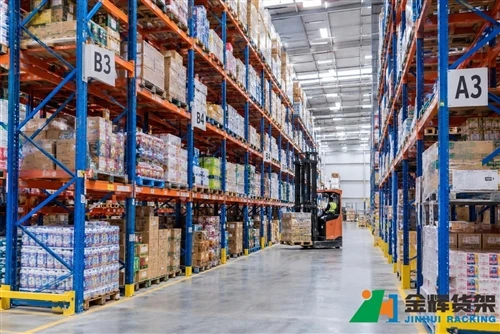
Reach truck operation is an important consideration when accessing the rear pallet position in double deep racking.
How to Plan a Double Deep Pallet Rack Layout
A successful double deep rack layout begins with the warehouse rather than the rack itself.
Before designing the system, collect the following information:
- Warehouse length and width
- Clear building height
- Column locations
- Pallet length and width
- Maximum pallet weight
- Number of pallets required
- Number of SKUs
- Pallets per SKU
- Forklift type
- Required forklift aisle width
- Required storage height
- Fire protection requirements
- Loading and unloading areas
- Staging space
- Future expansion requirements
Once these variables are known, the rack layout can be optimized around actual operating conditions.
Rack Height
Available clear height has a direct impact on the number of pallet levels that can be installed.
However, the highest possible rack is not necessarily the most efficient solution. Forklift lift height, building structure, sprinkler requirements, pallet stability, and operational safety all need to be considered.
Aisle Width
Aisle width must match the selected forklift and its operating requirements.
Reducing the aisle can increase storage density, but an aisle that is too narrow for the forklift can reduce productivity and create safety problems.
Storage Depth
Double deep storage normally uses two pallet positions in depth. The exact rack depth depends on pallet dimensions, clearances, beam configuration, and forklift reach.
How Does Double Deep Racking Affect Warehouse Capacity?
The capacity improvement comes mainly from reducing the number of aisle-facing rack positions needed to store the same number of pallets.
Imagine a warehouse that needs to store 1,000 pallets.
With single-deep selective storage, each pallet position requires direct aisle access. A large portion of the warehouse may therefore be occupied by forklift aisles.
With double deep storage, pallets can be positioned behind each other. This reduces the number of rack faces required and can allow the warehouse to use more of its footprint for actual storage.
The final capacity gain depends heavily on the building dimensions and layout, so warehouse-specific CAD planning is recommended rather than relying on a generic percentage.
Double Deep Pallet Racking Safety Considerations
Like any industrial pallet racking system, double deep racking needs to be designed and operated according to the actual loads and warehouse conditions.
Important considerations include:
- Rated rack load capacity
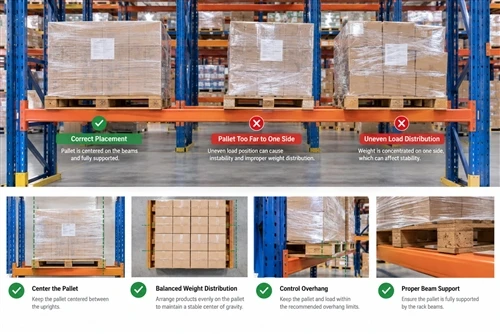
- Correct pallet placement
- Forklift compatibility
- Rack anchoring
- Column protection
- Beam safety locks
- Clear aisle dimensions
- Pallet condition
- Routine rack inspection
- Operator training
Rack capacity should always be based on the actual engineered configuration rather than a generic load rating.
Warehouse operators should also establish inspection procedures so that damaged uprights, beams, anchors, safety pins, and other structural components can be identified and addressed promptly.
Common Mistakes When Buying Double Deep Racking
1. Selecting the Rack Before the Forklift
The rack and forklift need to work as one system. Choosing the rack first and checking equipment compatibility later can lead to layout limitations.
2. Focusing Only on Pallet Capacity
More pallet positions are valuable only when operators can efficiently access and manage the stored inventory.
3. Ignoring SKU Distribution
If there are too many SKUs with very few pallets per SKU, double deep storage may create unnecessary handling problems.
4. Making Aisles Too Narrow
Aisle reduction can improve theoretical density, but excessive reduction can hurt forklift productivity.
5. Ignoring Rear Pallet Accessibility
The second pallet position requires appropriate reach capability. This should be included in the design from the beginning.
6. Comparing Only the Rack Purchase Price
The total project cost can include rack equipment, forklift upgrades, installation, protection accessories, warehouse modifications, and ongoing operating costs.
Is Double Deep Racking More Cost-Effective Than Selective Racking?
It can be, particularly when warehouse floor space is limited and the facility has enough pallet volume per SKU to make deep storage practical.
However, the initial rack price is only one part of the calculation.
A complete evaluation should consider:
- Cost per pallet position
- Additional forklift investment
- Warehouse rental or expansion cost
- Labor productivity
- Inventory accessibility
- Storage density
- Future expansion
A more expensive rack system can produce a lower total storage cost if it significantly increases usable capacity without creating major handling inefficiencies.
When Double Deep Is the Right Middle Ground
One of the strongest reasons to consider double deep racking is that it fills a gap between two common storage strategies.
Selective pallet racking offers excellent accessibility but uses more aisle space.
Deep-lane systems such as drive-in or push back racking can provide higher density but change the way inventory is accessed.
Double deep racking provides a middle option:
More density than selective racking.
More aisle-based access than drive-in storage.
Less mechanical complexity than push back or shuttle systems.
A practical option for warehouses with medium SKU variety and multiple pallets per SKU.
Double Deep Pallet Racking Decision Guide
| Warehouse Requirement | Recommended Direction |
|---|---|
| Direct access to every pallet | Selective Pallet Racking |
| Two pallets deep with higher density | Double Deep Racking |
| Large quantities of identical products | Drive-In / Push Back / Shuttle |
| Strict FIFO inventory flow | Pallet Flow Racking |
| Medium SKU variety + multiple pallets per SKU | Double Deep Racking |
| Very high-density automated storage | Radio Shuttle / Automated Systems |
FAQ About Double Deep Pallet Racking
What is double deep pallet racking?
Double deep pallet racking stores two pallets one behind another on each side of the aisle. It increases storage density while maintaining aisle-based forklift operation.
How many pallets deep is double deep racking?
As the name indicates, the standard configuration stores two pallet positions deep. The actual rack depth depends on pallet dimensions, clearances, and engineering requirements.
What forklift is used for double deep racking?
Reach trucks or forklifts equipped with suitable telescopic or pantograph-style reach mechanisms are commonly considered. The exact equipment should be selected according to pallet weight, dimensions, rack height, aisle width, and required reach.
Is double deep racking FIFO?
Double deep racking is generally better suited to LIFO-oriented storage because the front pallet normally needs to be moved before the rear pallet can be retrieved. Warehouses requiring strict FIFO should evaluate pallet flow or another FIFO-oriented system.
Is double deep racking better than selective racking?
Neither system is universally better. Selective racking provides better pallet accessibility, while double deep racking provides higher storage density. The better choice depends on SKU variety, pallet volume, warehouse space, and forklift requirements.
Is double deep racking suitable for cold storage?
Yes. Double deep pallet racking can be used in cold storage when the inventory profile and forklift equipment are appropriate. The complete warehouse design should account for refrigeration, fire protection, pallet dimensions, rack loads, and operating conditions.
How much more capacity can double deep racking provide?
The improvement varies by warehouse layout. Storing pallets two deep can increase storage density and reduce aisle requirements, but the actual number of pallet positions depends on building dimensions, rack height, aisle width, pallet size, and required clearances.
Can double deep racking be customized?
Yes. Double deep pallet racks can be customized according to warehouse dimensions, pallet size, load capacity, rack height, number of levels, forklift specifications, and required storage positions.
How to Decide If Double Deep Racking Is Right for Your Warehouse
Before choosing a double deep system, answer five basic questions:
- How many pallets does each major SKU occupy?
- Does the warehouse need direct access to every pallet?
- Is LIFO-oriented storage acceptable?
- Does the existing forklift have sufficient reach capacity?
- How much additional storage density is required?
If the warehouse has medium SKU variety, multiple pallets per SKU, limited floor space, and suitable reach equipment, double deep racking can be an effective way to increase storage capacity without moving to a much more complex storage system.
Final Recommendation
Double deep pallet racking is best viewed as a balance between accessibility and storage density.
It provides more pallet capacity than conventional selective racking by using two-deep storage, while keeping forklift operations primarily within conventional aisles.
The system is particularly suitable for warehouses with medium SKU variety and multiple pallets per SKU. It becomes less attractive when every pallet needs direct access or when strict FIFO rotation is essential.
For warehouses evaluating several high-density options, the decision should be based on the complete operating profile rather than storage capacity alone.
The right pallet racking system is the one that provides the required storage density without creating unnecessary handling, forklift, or inventory-management problems.
Get a Customized Double Deep Pallet Racking Solution
Every warehouse has different pallet dimensions, load requirements, SKU profiles, forklift equipment, and building conditions. A double deep pallet rack should therefore be designed around the actual warehouse layout rather than selected from a standard rack size.
Jinhui Rack provides customized Double Deep Pallet Racking Systems for warehouses, manufacturing facilities, distribution centers, cold storage facilities, and other industrial storage applications.
For an accurate warehouse racking proposal, provide your warehouse length, width, clear height, pallet dimensions, maximum pallet weight, number of pallets, number of SKUs, forklift type, and required storage levels. These details allow the rack layout and pallet capacity to be matched to your actual operation.
WhatsApp: +8618502527163
Email: info@jhrack.com