Why Comparing Selective Pallet Rack and Drive In Rack Matters
Warehouse storage systems directly affect operational efficiency, inventory management, and facility expansion potential. While many businesses compare rack prices before making a decision, the real question should be how the storage system supports warehouse operations over the next 10 to 15 years.

Among all storage systems available today, Selective Pallet Rack and Drive In Rack remain two of the most widely used solutions. However, each system is designed for completely different inventory profiles and warehouse objectives.
If you are currently planning a new warehouse, we recommend first reviewing our guide on How to Choose the Right Pallet Racking for a New Warehouse, which explains the key factors affecting rack selection.
What Is Selective Pallet Rack?
Selective pallet racking is the most common warehouse storage system worldwide. It provides direct access to every pallet location, making it ideal for facilities storing a large number of SKUs.

Because every pallet is immediately accessible, selective racking supports fast picking operations and flexible inventory management.
Typical applications include:
- Distribution centers
- E-commerce fulfillment facilities
- Retail warehouses
- Third-party logistics providers (3PL)
- Automotive parts warehouses
Main advantages:
- 100% pallet accessibility
- Easy inventory control
- Simple installation
- Lower initial investment
- Compatible with most forklift types
What Is Drive In Rack?
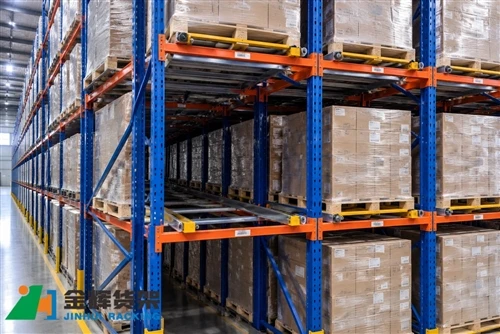
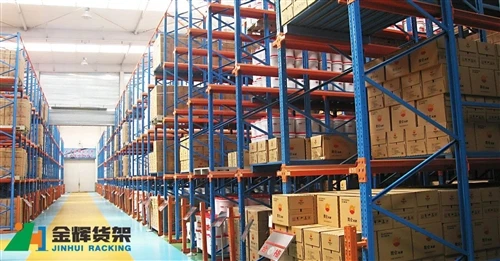
Drive In Rack is a high-density storage system that allows forklifts to enter storage lanes directly. Instead of requiring aisles between every rack row, pallets are stored in deep lanes.

This design significantly increases storage density by reducing aisle space.
Drive In Rack is commonly used in:
- Cold storage warehouses
- Food processing facilities
- Beverage distribution centers
- Manufacturing warehouses
- Bulk inventory storage operations
Main advantages:
- High storage density
- Reduced warehouse footprint
- Lower cost per pallet position
- Excellent for large product batches
Selective Pallet Rack vs Drive In Rack: Key Differences
| Factor | Selective Pallet Rack | Drive In Rack |
|---|---|---|
| Pallet Accessibility | 100% | Limited |
| Storage Density | Medium | High |
| SKU Variety | High | Low |
| Inventory Rotation | FIFO & LIFO | Mainly LIFO |
| Forklift Efficiency | High | Medium |
| Installation Cost | Lower | Moderate |
| Space Utilization | Medium | Excellent |
Storage Density Comparison
The biggest advantage of Drive In Rack is storage density.
In many warehouses, aisles account for 35% to 45% of total floor space. Because Drive In Rack eliminates many of these aisles, significantly more pallet positions can be installed within the same building.
Consider a 5,000-square-meter warehouse:
| Storage System | Approximate Pallet Positions |
|---|---|
| Selective Pallet Rack | 3,500 |
| Drive In Rack | 5,000+ |
In this example, Drive In Rack increases storage capacity by more than 40%.

Accessibility Comparison
Storage density is important, but accessibility is equally critical.
Selective racking allows immediate access to every pallet location.
This means warehouse operators can:
- Pick any pallet at any time
- Handle large SKU quantities
- Reduce inventory searching time
- Improve order fulfillment speed
Drive In Rack sacrifices accessibility to achieve higher density.
If inventory consists of thousands of product variations, selective racking is usually the better choice.
Inventory Rotation Considerations
Inventory flow plays a major role in storage system selection.
FIFO Operations
Industries requiring First-In-First-Out inventory management include:
- Food
- Pharmaceuticals
- Beverages
- Cold chain logistics
For these operations, Pallet Flow Rack or Radio Shuttle Rack may be better alternatives.
LIFO Operations
Drive In Rack performs exceptionally well in Last-In-First-Out environments where large quantities of identical products are stored.
Forklift Requirements
Forklift selection also affects rack choice.
Selective pallet racks work well with:
- Counterbalance forklifts
- Reach trucks
- VNA trucks
Businesses seeking maximum storage density often combine selective systems with VNA Rack layouts.
Drive In Rack requires specially trained forklift operators because forklifts enter storage lanes directly.
This can increase the risk of rack damage if proper training is not provided.
Real Warehouse Example #1: Distribution Center
A regional distribution center stores more than 4,000 SKUs and processes hundreds of daily orders.
In this environment, accessibility is more important than storage density.
Recommended solution:
- Selective Pallet Rack
- Mezzanine Rack
- Warehouse Shelving
This combination supports rapid order picking and inventory accuracy.
Real Warehouse Example #2: Cold Storage Facility
A cold storage operator manages frozen products stored in large batches.
Refrigerated space is expensive, making storage density the primary objective.
Recommended solution:
- Drive In Rack
- Radio Shuttle Rack
These systems maximize cubic storage utilization and reduce refrigeration costs per pallet position.

Cost Comparison
Many buyers focus solely on rack purchase price.
However, total ownership cost includes:
- Installation costs
- Labor costs
- Forklift productivity
- Warehouse expansion costs
- Maintenance expenses
Selective racking often has lower installation costs, while Drive In Rack may reduce building costs by increasing storage density.
The best choice depends on warehouse operations rather than initial rack price alone.
Common Mistakes When Choosing Between These Systems
Mistake #1: Choosing Based Only on Density
Higher density is not always better if accessibility suffers.
Mistake #2: Ignoring SKU Count
Drive In Rack works best with low SKU counts and high pallet quantities.
Mistake #3: Forgetting Future Growth
Warehouse expansion plans should influence storage system selection.
Mistake #4: Ignoring Automation Opportunities
Many facilities eventually upgrade to automated solutions such as ASRS Storage Systems or shuttle-based storage systems.
The Future of High-Density Storage
While Drive In Rack remains popular, many businesses are transitioning toward semi-automated and automated storage solutions.
Modern warehouses increasingly adopt:
These systems improve throughput, reduce labor costs, and maximize storage capacity.
Conclusion
Selective Pallet Rack and Drive In Rack serve different warehouse requirements. While selective racking provides maximum accessibility and flexibility, drive in racking focuses on achieving the highest possible storage density.
If your warehouse handles thousands of SKUs and requires fast order fulfillment, Selective Pallet Rack is typically the better choice. If your operation stores large quantities of the same product and space utilization is the priority, Drive In Rack may offer greater value.
Before making a final decision, evaluate inventory characteristics, forklift requirements, storage density goals, and future expansion plans. You can also review our guides on How to Choose the Right Pallet Racking for a New Warehouse and How Much Space Should Be Left Between Pallet Racks? for additional warehouse planning insights.
Frequently Asked Questions
Which is better, selective pallet rack or drive in rack?
Neither system is universally better. Selective pallet rack is ideal for warehouses with a large number of SKUs and frequent picking activities, while drive in rack is better suited for storing large quantities of the same product where storage density is the primary concern.
How much more storage can drive in rack provide compared to selective racking?
Depending on warehouse layout and pallet dimensions, drive in rack systems can increase storage capacity by approximately 30% to 50% by reducing the number of required aisles.
Is drive in rack suitable for FIFO inventory management?
Traditional drive in rack systems are primarily designed for LIFO inventory rotation. Warehouses requiring FIFO operations often choose Pallet Flow Rack or Radio Shuttle Rack instead.
What industries commonly use drive in rack systems?
Drive in rack systems are widely used in cold storage facilities, food processing plants, beverage warehouses, manufacturing operations, and other facilities that store large volumes of identical products.
Can selective pallet rack be upgraded in the future?
Yes. Many warehouses start with selective pallet rack systems and later upgrade to VNA Rack, Radio Shuttle Rack, or ASRS Storage Systems as storage requirements and automation needs increase.
What is the biggest advantage of selective pallet rack?
The biggest advantage is direct access to every pallet position. This improves inventory visibility, order picking efficiency, and overall warehouse flexibility.
What is the biggest advantage of drive in rack?
The biggest advantage is storage density. By reducing aisle space, drive in rack systems maximize the number of pallet positions that can be installed within a warehouse.
How do I choose the right storage system for a new warehouse?
The decision should be based on SKU quantity, inventory turnover, storage density requirements, warehouse dimensions, and future growth plans. Reviewing warehouse layout requirements before selecting a racking system can help avoid costly redesigns later.