Why Choosing the Right Pallet Racking System Matters
Many companies focus primarily on warehouse size when planning a new facility. However, warehouse performance is often determined by how efficiently the available space is utilized.
The right racking system can increase storage capacity by 40% to 80%, improve inventory management, reduce forklift travel time, and support future business growth. The wrong choice can create bottlenecks that affect daily operations for years.

Before comparing different storage systems, warehouse managers should first understand their inventory profile, operational workflow, and growth projections.
Start by Understanding Your Inventory Profile
The first step is understanding what products will be stored and how they move through the warehouse.
Ask the following questions:
- How many SKUs will be stored?
- What is the average pallet weight?
- How often are products picked?
- Do products require FIFO inventory rotation?
- Are inventory levels seasonal or stable throughout the year?
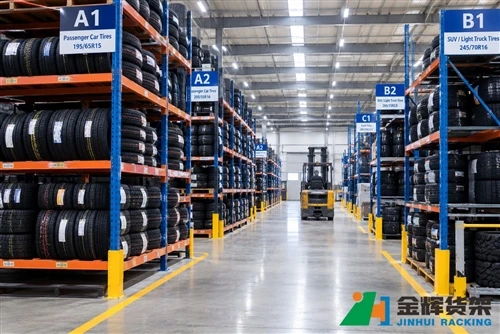
Warehouses storing thousands of SKUs typically prioritize accessibility over storage density. In these environments, a Selective Pallet Rack System is usually the most practical solution because every pallet position remains directly accessible.
Warehouses storing large volumes of the same product often benefit from higher-density storage systems.
Warehouse Scenario #1: Distribution Centers with Large SKU Counts
A typical distribution center may store several thousand SKUs with varying inventory turnover rates.
The primary challenge is fast pallet access.
In this scenario, selective racking provides significant advantages:
- 100% pallet accessibility
- Simple inventory control
- Fast picking operations
- Easy warehouse reconfiguration

Although storage density is lower than high-density systems, operational flexibility often outweighs the space savings.
Warehouse Scenario #2: Cold Storage Facilities
Cold storage warehouses face unique challenges.
Every cubic meter of refrigerated space increases operating costs. As a result, maximizing storage density becomes a priority.
For cold storage facilities, businesses often choose:
These systems reduce aisle requirements and significantly increase pallet positions within the same building footprint.
Many cold storage operators report storage capacity improvements of 40% to 70% after switching from selective racking to shuttle-based systems.
Warehouse Scenario #3: Manufacturing Facilities
Manufacturing warehouses often store raw materials, work-in-progress inventory, and finished products.
Inventory is typically managed in larger batches, making high-density storage more attractive.
Recommended solutions include:
These systems balance storage density with efficient pallet retrieval.

Warehouse Scenario #4: E-commerce Fulfillment Centers
E-commerce facilities require a completely different storage strategy.
Inventory variety is extremely high, order volumes fluctuate rapidly, and picking speed directly affects customer satisfaction.
Common solutions include:
Combining pallet storage with mezzanine platforms often maximizes vertical space utilization while improving order fulfillment efficiency.
How Warehouse Height Affects Rack Selection
One of the most overlooked factors in warehouse design is ceiling height.
Many businesses lease additional warehouse space when they could simply utilize vertical storage more effectively.
For warehouses taller than 10 meters, businesses should evaluate:

These solutions dramatically increase storage capacity without increasing warehouse footprint.
Storage Density Comparison
| Storage System | Accessibility | Storage Density | Best Application |
|---|---|---|---|
| Selective Rack | Excellent | Medium | Multi-SKU Warehouses |
| Push Back Rack | Good | High | Distribution Centers |
| Radio Shuttle Rack | Good | Very High | Cold Storage |
| Pallet Flow Rack | Excellent | High | FIFO Operations |
| ASRS | Automated | Maximum | Large Automated Facilities |
How Forklift Equipment Influences Rack Design
Forklift specifications directly affect aisle width requirements and rack configuration.
Warehouse planners should evaluate:
- Forklift turning radius
- Lift height
- Load dimensions
- Future equipment upgrades
Many warehouse redesign projects occur because forklift requirements were not considered during the initial planning phase.
Common Mistakes When Choosing Pallet Racking
Choosing Based Only on Price
The cheapest rack system is rarely the most economical over its lifetime.
Ignoring Future Growth
Many warehouses outgrow their storage systems within three to five years.
Overlooking Inventory Rotation Requirements
FIFO and LIFO operations require completely different storage solutions.
Underestimating Labor Costs
A storage system that saves labor can often provide a faster return on investment than one that simply reduces installation costs.
Future Warehouse Trends
Warehouse automation continues to accelerate globally.
As labor costs rise and warehouse space becomes more expensive, many businesses are investing in:
Businesses planning new warehouses should evaluate whether future automation may influence today's storage decisions.
Conclusion
The right pallet racking system depends on inventory characteristics, warehouse dimensions, storage density requirements, inventory rotation methods, and long-term growth plans.
Whether your facility requires the flexibility of Selective Pallet Rack, the density of Push Back Rack, the efficiency of Radio Shuttle Rack, or the automation capabilities of an ASRS Storage System, investing time in proper planning will maximize warehouse performance and long-term ROI.