Cold storage warehouses face unique operational challenges. Limited space, high energy costs, low-temperature working environments, and frequent pallet movement all require highly efficient warehouse storage solutions.
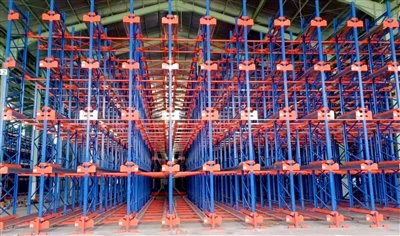
Traditional pallet racking systems often struggle to maximize storage density inside cold rooms, especially when warehouse expansion costs continue to rise. As a result, more cold storage facilities are adopting Radio Shuttle Racking Systems to improve storage capacity and operational efficiency.
Radio shuttle storage systems combine high-density pallet storage with semi-automated pallet handling technology, making them one of the most effective storage solutions for modern cold chain logistics.
Why Cold Storage Warehouses Need High-Density Storage
Operating a cold storage warehouse is significantly more expensive than operating a standard warehouse. Every cubic meter of refrigerated space increases energy consumption and operational costs.
For this reason, maximizing storage density becomes extremely important.
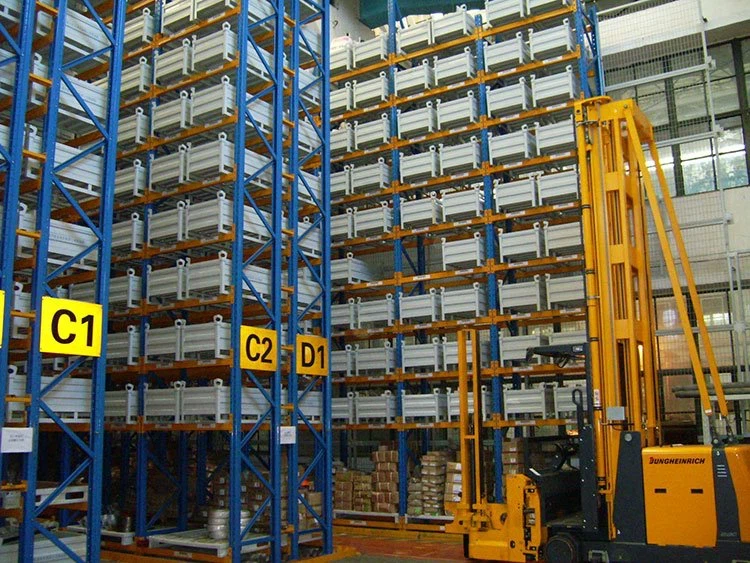
Traditional selective pallet racking usually requires wide forklift aisles, which reduces total pallet capacity inside refrigerated warehouses.
High-density systems such as radio shuttle racking can greatly reduce aisle space while increasing pallet storage positions.
- Higher warehouse space utilization
- Reduced refrigeration energy costs
- Improved pallet storage capacity
- Better warehouse organization
How Radio Shuttle Racking Works
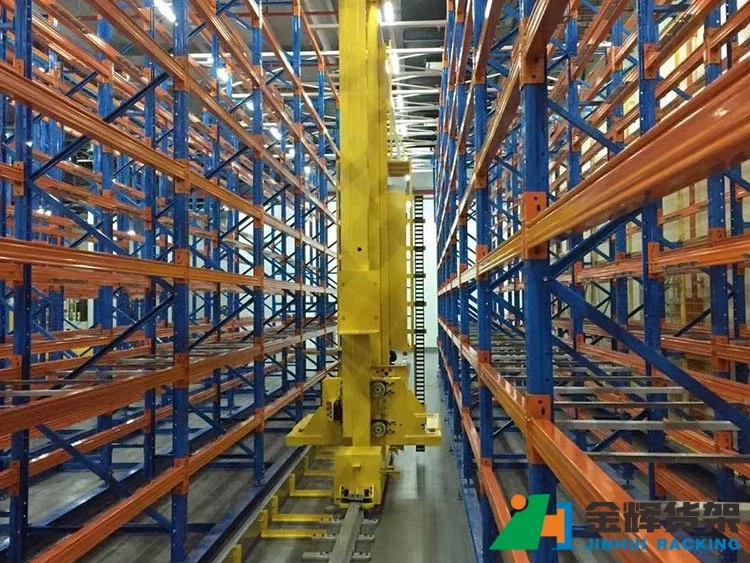
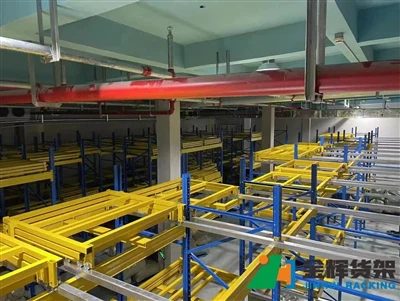
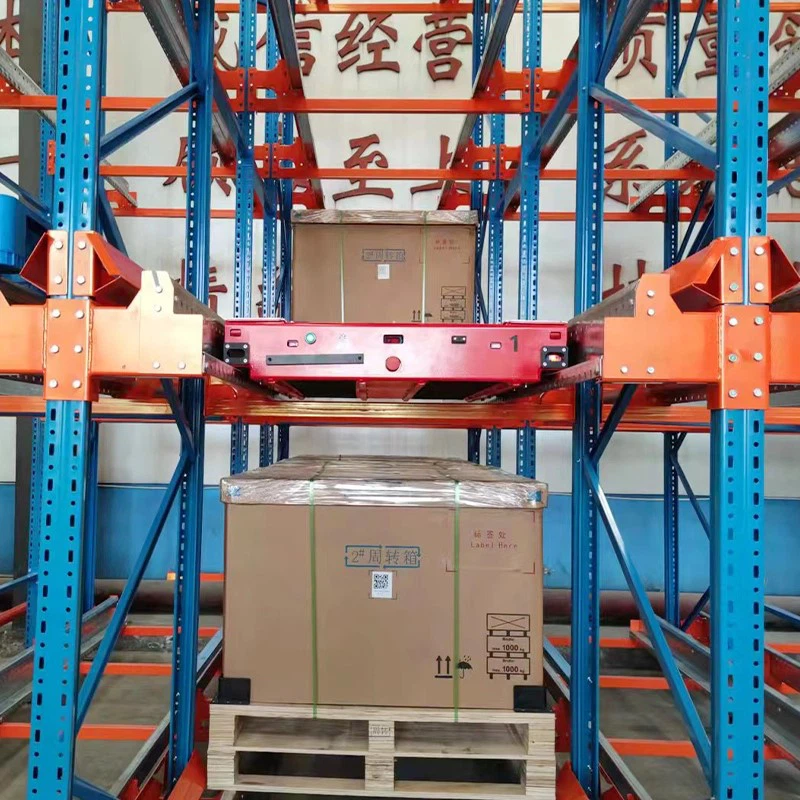
Unlike traditional pallet racking systems, radio shuttle racks use an automated shuttle cart to transport pallets inside the storage lanes.
Forklifts only need to place pallets at the entrance of the racking lane. The shuttle then automatically moves the pallets to the correct storage position.
When retrieving goods, the shuttle delivers pallets back to the aisle for forklift pickup.
This operating method reduces forklift travel inside the racking system and improves both safety and efficiency.
Main Advantages of Radio Shuttle Racking in Cold Storage
Maximized Storage Density
Radio shuttle systems reduce the number of forklift aisles required inside the warehouse, allowing more pallets to be stored within the same refrigerated area.
This is especially important for frozen food warehouses, meat storage facilities, and cold chain distribution centers.
Reduced Forklift Operation Time
Because forklifts no longer enter deep storage lanes, pallet handling becomes faster and safer.
Reduced forklift travel also helps minimize equipment wear and energy consumption.
Improved Warehouse Safety
Traditional drive-in systems often increase the risk of forklift collisions inside rack structures.
Radio shuttle systems reduce direct forklift contact with the racks, helping extend rack lifespan and improve operational safety.
Suitable for FIFO and LIFO Management
Radio shuttle systems can support both FIFO (First In First Out) and LIFO (Last In First Out) inventory management depending on warehouse design requirements.
This flexibility makes the system suitable for different cold storage inventory operations.
Industries Commonly Using Radio Shuttle Racking
Radio shuttle warehouse systems are widely used in industries requiring high-density pallet storage:
- Cold chain logistics centers
- Frozen food warehouses
- Beverage storage facilities
- Dairy product warehouses
- Pharmaceutical cold storage
- Large manufacturing warehouses
- E-commerce distribution centers
Radio Shuttle Rack vs Traditional Drive-In Rack
Both drive-in racks and radio shuttle systems are designed for high-density pallet storage, but shuttle systems offer several operational advantages.
| Item | Drive-In Rack | Radio Shuttle Rack |
|---|---|---|
| Forklift Entry Into Rack | Required | Not Required |
| Storage Density | High | Very High |
| Operational Efficiency | Moderate | High |
| Rack Damage Risk | Higher | Lower |
| Automation Level | Manual | Semi-Automatic |
How to Choose the Right Shuttle Racking Solution
Choosing the correct radio shuttle system depends on several factors:
- Warehouse dimensions
- Pallet size and weight
- Storage temperature requirements
- Inventory turnover rate
- FIFO or LIFO requirements
- Forklift equipment
- Expected storage capacity
A professional warehouse layout design can help maximize both storage density and operational efficiency.
Conclusion
As cold storage operating costs continue to rise, more warehouses are upgrading to intelligent high-density storage systems.
Radio shuttle racking offers an ideal balance between storage density, operational efficiency, and warehouse automation, making it one of the most popular storage solutions for modern cold chain logistics.
At JINHUI Rack, we provide customized Radio Shuttle Racking Systems for cold storage warehouses, logistics centers, and industrial storage facilities worldwide.
Contact our team today for customized warehouse storage solutions and free layout design support.