In many warehouses, forklifts spend more time traveling than actually handling goods. Long travel distances not only reduce warehouse efficiency but also increase labor costs, equipment wear, and operational risks.
As warehouse order volumes continue to grow, reducing unnecessary forklift movement has become one of the most effective ways to improve overall warehouse performance.
By optimizing warehouse layout, selecting the right racking system, and improving inventory organization, companies can significantly reduce forklift travel time while increasing storage and picking efficiency.
Why Forklift Travel Time Matters
Forklift movement directly affects warehouse productivity. When forklifts travel excessive distances, warehouses often experience:
- Slower pallet handling efficiency
- Higher labor costs
- Increased fuel or battery consumption
- Traffic congestion inside aisles
- More equipment maintenance
- Higher risk of rack collision damage
In large distribution centers, even small improvements in forklift routes can save significant operational costs over time.
Common Causes of Excessive Forklift Travel
Poor Warehouse Layout
Many warehouses expand storage areas without redesigning traffic flow. This often creates inefficient forklift routes and unnecessary travel between receiving, storage, and shipping zones.
Wide Aisle Spacing
Traditional storage layouts usually require wider aisles for standard forklifts, reducing storage density and increasing travel distance.
Improper SKU Positioning
Fast-moving products stored far away from shipping areas force forklifts to spend more time traveling across the warehouse.
Low Storage Density
Warehouses with low-density storage systems may require forklifts to travel longer distances to access inventory.
Warehouse Storage Systems That Improve Forklift Efficiency
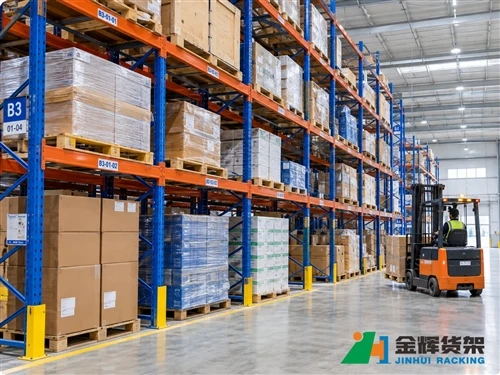
VNA Pallet Racking
Very Narrow Aisle (VNA) racking systems reduce aisle width while maximizing storage capacity.
By increasing pallet positions within the same warehouse area, forklifts can access inventory more efficiently with shorter travel paths.
- Higher storage density
- Improved warehouse space utilization
- Reduced forklift travel distance
- Suitable for high SKU warehouses

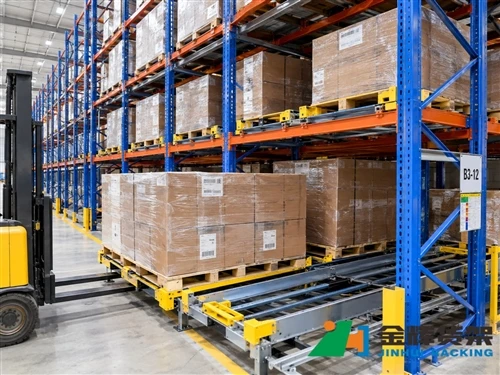
Radio Shuttle Racking
Radio shuttle systems reduce forklift entry into storage lanes by using automated shuttle cars to move pallets inside the racks.
Forklifts only need to place pallets at the rack entrance, greatly reducing travel time and improving safety.
- Faster pallet handling
- Reduced forklift movement
- Higher operational efficiency
- Ideal for high-volume warehouses
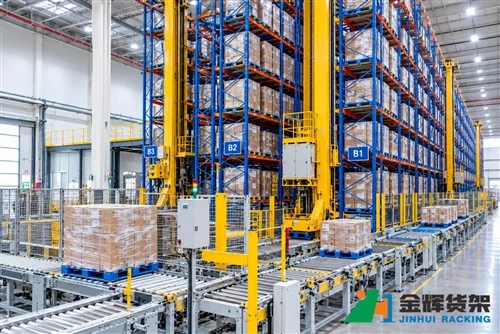
ASRS Automated Warehouse System
Automated Storage and Retrieval Systems (ASRS) minimize manual forklift operations by automating pallet storage and retrieval processes.
The system uses stacker cranes, conveyors, and warehouse management software to optimize warehouse movement automatically.
- Reduced labor dependency
- Improved inventory accuracy
- Lower forklift traffic
- Higher warehouse automation level

How to Optimize Warehouse Layout for Better Forklift Flow
Improving warehouse traffic flow is one of the most effective ways to reduce unnecessary forklift movement.
Recommended optimization strategies include:
- Separating inbound and outbound traffic routes
- Placing high-turnover inventory near shipping zones
- Reducing cross-warehouse transportation paths
- Using high-density storage systems
- Creating dedicated forklift traffic lanes
- Implementing warehouse management systems (WMS)
A well-planned warehouse layout can significantly improve both storage efficiency and order fulfillment speed.
The Role of Automation in Modern Warehouses
Modern warehouses are increasingly integrating automation technologies to reduce manual handling operations.
Popular warehouse automation solutions include:
- AGV systems
- ASRS automation
- Radio shuttle systems
- Smart WMS software
- Barcode & RFID inventory tracking
These technologies help reduce forklift workload while improving operational accuracy and warehouse productivity.
Conclusion
Reducing forklift travel time is one of the fastest ways to improve warehouse efficiency and lower operational costs.
By optimizing warehouse layout, improving inventory organization, and upgrading storage systems, businesses can significantly enhance warehouse productivity without expanding facility size.
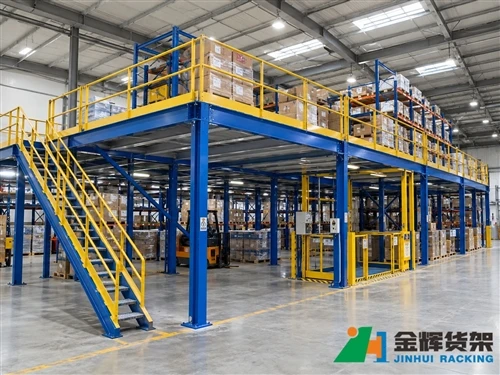
At JINHUI Rack, we provide customized warehouse storage solutions including pallet racking, VNA systems, shuttle racks, mezzanine platforms, and ASRS warehouse automation systems.
Contact us today for professional warehouse layout planning and customized storage solutions.