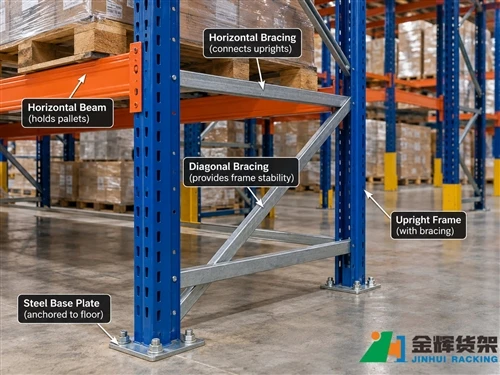
As warehouse operations become more demanding, businesses are looking for ways to store more pallets, reduce unnecessary handling, and improve inventory control. Traditional pallet racking relies heavily on forklifts and manual coordination, while an Automated Storage and Retrieval System (ASRS) uses automated equipment and software to move goods between storage and retrieval points.
ASRS racking is not simply a taller pallet rack. It is part of an integrated warehouse system that combines storage structures, automated handling equipment, control software, and inventory information. Understanding how these elements work together helps warehouse operators determine whether automation fits their storage and throughput requirements.
This guide explains the main components of an ASRS racking system, how pallet storage and retrieval work, which operating conditions favor automation, and what businesses should evaluate before planning an automated warehouse.
What Is an ASRS Racking System?
ASRS stands for Automated Storage and Retrieval System. It is a warehouse solution that uses automated equipment to place goods into designated storage locations and retrieve them when required.
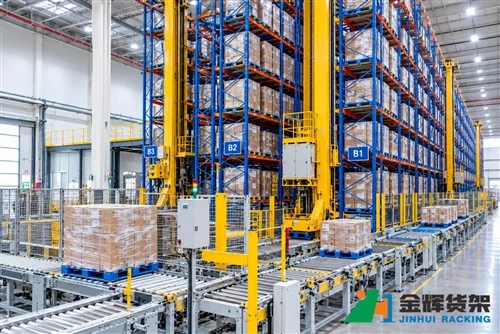
In a pallet-based ASRS, high-rise racking provides the physical storage positions. Equipment such as stacker cranes or automated shuttle systems moves pallets through the storage structure, while conveyors or other transfer equipment connect storage operations with inbound and outbound areas.
Software coordinates storage locations, inventory records, and equipment movements. Depending on the project, the system may include a Warehouse Management System (WMS), a Warehouse Control System (WCS), barcode or RFID identification, and interfaces with other warehouse or enterprise software.
The exact configuration depends on pallet characteristics, required throughput, building conditions, inventory processes, and the level of automation selected.
How Does Automated Pallet Storage Work?
An automated pallet storage process typically follows a sequence of identification, location assignment, mechanical handling, and inventory confirmation. The detailed workflow varies by system design and software integration.
1. Pallets Enter the Inbound Area
Goods arrive at a designated receiving point and are prepared for automated handling. Before entering the system, pallets may need to meet defined requirements for dimensions, load stability, weight, and pallet condition.
These checks matter because automated equipment operates according to planned clearances and handling parameters. A damaged pallet or an unstable load may interrupt the process or require manual intervention.
2. Pallet Information Is Identified
A barcode, RFID tag, or another identification method can associate the physical pallet with its inventory record. The system uses the available product and order information to determine how the pallet should be handled.
Identification requirements should be established during project planning. The warehouse needs consistent rules for product codes, pallet IDs, and inventory data so that physical movements correspond to the correct digital records.
3. The System Assigns a Storage Location
Based on the configured storage rules and available locations, the warehouse software determines where the pallet should be stored. Depending on the system, assignment rules may consider product characteristics, inventory status, storage restrictions, and operational priorities.
The assigned location must be compatible with the pallet and the storage system. The system also needs accurate information about available positions to avoid assigning a location that is already occupied or otherwise unavailable.
4. Automated Equipment Moves the Pallet Into Storage
A stacker crane or other automated handling equipment transports the pallet to its designated position. The racking structure provides the storage locations, while the equipment follows the movement instructions issued by the control system.
In a crane-based installation, the equipment travels along the relevant aisle and lifts or lowers the load to the required level. Other ASRS configurations use shuttle technology or different automated mechanisms suited to their storage arrangement.
5. Inventory and Location Records Are Updated
After a storage movement is confirmed, the software updates the pallet's recorded location. This helps warehouse personnel and connected systems identify where inventory is expected to be stored.
Reliable records depend on correct identification, communication between systems, and confirmation that equipment movements have been completed successfully. Software alone cannot compensate for inconsistent labeling or inaccurate operational data.
How Does the Retrieval Process Work?
Retrieval generally follows the reverse sequence, beginning with a request for a particular pallet or inventory item.
- Retrieval request: The warehouse system receives an instruction to retrieve the required pallet.
- Location confirmation: The software identifies the recorded storage position and checks the relevant inventory information.
- Automated movement: The stacker crane or shuttle equipment travels to the designated location and retrieves the pallet.
- Transfer to dispatch: The pallet is transferred to an outbound conveyor, staging point, or another defined handover location.
- Transaction confirmation: The inventory record is updated according to the system's confirmation process.
The retrieved pallet can then proceed to order preparation, production, dispatch, or another warehouse operation. The design should ensure that the storage system and the downstream process can handle the expected movement volume.
Key Components of an ASRS Racking System
An ASRS project brings together structural, mechanical, electrical, and software elements. Each component has a different role, and the overall system must be designed as an integrated solution.
| Component | Main Function | Planning Consideration |
|---|---|---|
| Racking structure | Provides the physical storage positions for pallets or other unit loads. | Rack geometry, load requirements, building conditions, and equipment compatibility. |
| Stacker crane | Moves loads vertically and horizontally between transfer points and storage locations. | Travel paths, lifting requirements, aisle configuration, and expected throughput. |
| Shuttle equipment | Moves loads within a compatible automated storage arrangement. | Storage configuration, pallet compatibility, movement logic, and system interfaces. |
| Conveyor system | Transfers pallets between receiving, storage, and dispatch areas. | Pallet dimensions, transfer points, traffic flow, and upstream or downstream capacity. |
| Warehouse Management System (WMS) | Manages inventory information, storage assignments, and warehouse transactions. | Inventory rules, location data, order processes, and software integration. |
| Warehouse Control System (WCS) | Coordinates automated equipment movements and control sequences. | Equipment communication, movement logic, status feedback, and exception handling. |
| Identification devices | Identify pallets and associate physical goods with digital records. | Label placement, scanning conditions, data accuracy, and identification standards. |
Not every ASRS installation uses the same equipment combination. The components should be selected according to the required storage method, handling process, and system architecture.
ASRS Racking vs. Conventional Pallet Racking
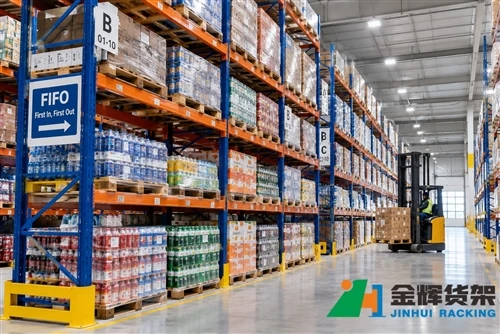
Conventional pallet racking and ASRS serve different operational needs. Conventional systems usually depend on forklifts and warehouse personnel to place and retrieve pallets. ASRS uses automated equipment to perform defined storage and retrieval movements.
| Comparison Factor | Conventional Pallet Racking | ASRS Racking |
|---|---|---|
| Pallet handling | Typically performed by forklift operators. | Performed by automated equipment within the designed workflow. |
| Storage location control | May rely on manual procedures, a WMS, or a combination. | Usually coordinated through integrated software and equipment controls. |
| Building and equipment requirements | Depends on rack layout, forklift operation, and site conditions. | Requires compatibility between racking, automated equipment, controls, and building conditions. |
| Operational flexibility | Changes may be relatively straightforward when the rack design permits. | Changes may require software, equipment, and system-capacity reviews. |
| Initial investment | Generally lower when only conventional racking and basic handling equipment are required. | Usually higher because automation equipment, software, integration, and commissioning are involved. |
| Best-fit conditions | Operations that prioritize direct access, flexibility, or simpler handling arrangements. | Operations with suitable, repeatable flows and a business case for automated handling. |
Automation is not automatically the better choice for every warehouse. The right decision depends on storage requirements, handling volume, labor availability, building constraints, integration needs, and the expected financial return.
When Should a Warehouse Consider ASRS?
ASRS may be worth evaluating when a warehouse has clear operational requirements that can benefit from automated storage and retrieval.
High-Volume, Repeatable Pallet Movements
Facilities that regularly move substantial quantities of palletized goods between receiving, storage, and dispatch may benefit from a more coordinated handling process. The system must still be sized around actual peak and average demand, rather than an assumed throughput figure.
Limited Floor Space or a Need to Use Building Height
Where the building and operating conditions permit, an automated high-rise storage arrangement can use vertical space and reduce dependence on conventional forklift aisles. However, achievable storage density depends on rack geometry, equipment requirements, fire protection, building services, and access needs.
Demand for More Consistent Inventory Location Control
Automated storage combined with suitable software can help coordinate inventory locations and equipment movements. This is especially relevant when a warehouse needs consistent transaction records and clearly defined material flows.
Labor or Handling Constraints
Businesses facing difficulties staffing repetitive material-handling tasks may investigate automation as one part of a wider operational plan. The business case should account for maintenance, technical support, downtime procedures, and the skills needed to operate the system.
Facilities With Defined Material Flows
ASRS is easier to plan when inbound and outbound processes, pallet types, inventory rules, and downstream operations are sufficiently understood. Highly variable loads or frequently changing processes may require additional flexibility in the system design.
Which Types of ASRS May Suit Different Operations?
ASRS is a broad category rather than one specific machine or rack design. Different configurations are intended for different load types and storage processes.
- Unit-load ASRS: Designed for handling full pallets or other large unit loads, often using automated cranes and high-rise racking.
- Shuttle-based ASRS: Uses automated shuttle equipment within a compatible storage structure and may suit operations seeking dense storage and automated pallet movement.
- Mini-load ASRS: Generally used for smaller loads such as totes, cartons, or bins rather than conventional full pallets.
- Multi-shuttle systems: Use shuttle equipment to support high-frequency movement of smaller loads in suitable storage and order-fulfillment operations.
- Four-way shuttle systems: Use shuttle vehicles capable of moving in multiple directions within a designed storage arrangement.
The names and capabilities of systems can vary by supplier. Confirm the intended load type, equipment arrangement, throughput assumptions, and storage method before comparing proposed solutions.
What Should Be Evaluated Before Designing an ASRS Warehouse?
Successful automation planning begins with accurate operating data. Before selecting equipment, establish what the system needs to store, how often goods move, and how the warehouse connects to the rest of the business.
Pallet Dimensions and Load Characteristics
Document pallet length, width, loaded height, maximum weight, pallet condition, and load stability. If multiple pallet types are used, identify their proportions and handling restrictions.
Storage Capacity and Throughput
Determine the number of storage positions required and the expected inbound and outbound movements. Average daily volume alone may not represent the busiest operating periods, so peak demand and recovery requirements should also be considered.
Building and Site Conditions
Review the available footprint, clear height, floor condition, columns, doors, loading areas, building services, and applicable local requirements. The building must accommodate the proposed rack structure and the equipment operating within or alongside it.
Software and System Integration
Define how the ASRS will exchange data with existing warehouse or enterprise software. Clarify responsibility for inventory records, order instructions, equipment commands, status messages, fault handling, and recovery after interruptions.
Maintenance and Contingency Planning
Automated equipment needs planned maintenance, suitable spare parts, technical support, and procedures for handling faults. Consider how the warehouse will respond if a conveyor, crane, shuttle, or software interface becomes unavailable.
Total Project Cost and Return on Investment
Assess the complete project rather than the rack structure alone. The evaluation may include storage equipment, conveyors, controls, software, integration, installation, commissioning, training, maintenance, energy use, and future modifications.
Compare these costs with realistic operating benefits, using documented assumptions about labor, handling volume, space utilization, inventory processes, and equipment availability. Avoid relying on generic savings percentages without project-specific evidence.
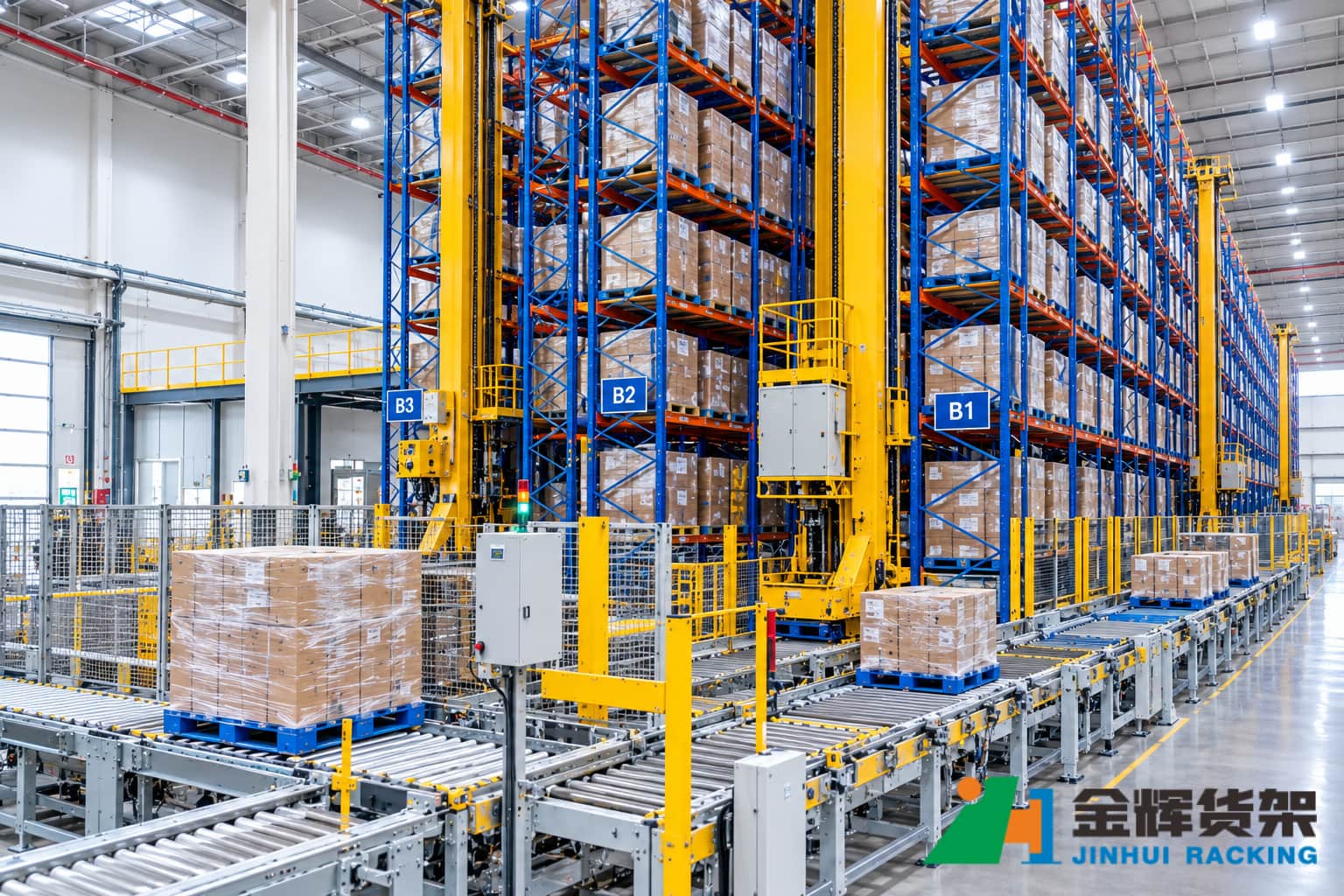
An ASRS warehouse integrates high-rise pallet racking, automated handling equipment, conveyors, and control software to coordinate pallet storage and retrieval.
Common ASRS Planning Mistakes
Focusing on Storage Density Alone
More storage positions do not necessarily mean better warehouse performance. The design also needs to support required throughput, pallet accessibility, maintenance access, and downstream material flow.
Underestimating Pallet Variation
Differences in pallet size, weight, condition, or load stability can affect automated handling. Define acceptable load characteristics and exceptions before finalizing the system design.
Treating Software as a Separate Afterthought
Inventory data, storage rules, equipment commands, and confirmation processes must work together. Late integration planning can create avoidable changes during implementation.
Ignoring Downstream Bottlenecks
An ASRS may retrieve pallets efficiently, but congestion can still occur if conveyors, staging areas, picking stations, or dispatch operations cannot handle the output.
Failing to Plan for Faults and Recovery
Equipment interruptions are an operational consideration in any automated facility. Establish how faults will be detected, who will respond, how affected inventory will be tracked, and how operations will resume safely.
How to Start an ASRS Racking Project
A structured planning process helps align the physical storage system with warehouse operations.
- Define the operating objective: Identify whether the priority is storage capacity, handling throughput, inventory control, labor planning, or a combination.
- Collect warehouse and pallet data: Document building dimensions, site constraints, pallet characteristics, storage volume, and movement requirements.
- Map inbound and outbound workflows: Identify how goods arrive, where they are identified, how they enter storage, and where retrieved pallets need to go.
- Evaluate suitable automation configurations: Compare equipment and storage arrangements against the actual load type, capacity, and operating process.
- Define software integration: Establish data interfaces, storage rules, equipment controls, and exception-handling responsibilities.
- Review the complete project scope: Confirm engineering, equipment supply, installation, commissioning, training, maintenance, and support requirements.
- Validate the proposed design: Review layout drawings, operational assumptions, technical interfaces, safety requirements, and acceptance criteria before ordering.
For a tailored solution, the supplier will generally need the warehouse layout, pallet dimensions, maximum load weight, required storage positions, expected pallet movements, and information about existing warehouse software.
Explore JINHUI ASRS Storage Solutions
ASRS projects require the storage structure, handling equipment, control software, and warehouse process to be planned as a coordinated system. The appropriate configuration depends on the goods being stored, the required movement volume, available building space, and the level of automation needed.
JINHUI provides automated warehouse storage solutions for different storage requirements. Businesses planning a new automated facility or upgrading an existing warehouse can review the available configurations and discuss project requirements with the supplier.
Explore JINHUI ASRS Storage Systems to review automated storage solution options.
When requesting a project discussion, prepare your warehouse drawings, pallet specifications, target storage capacity, expected inbound and outbound movements, and current software requirements. These details help establish a practical starting point for system planning.
Contact JINHUI Rack:
WhatsApp: +86 185 0252 7163
Email: info@jhrack.com
Website: https://www.jinhui-rack.com/