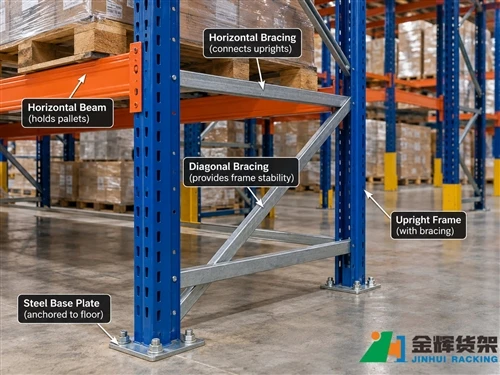
When purchasing a pallet racking system, warehouse operators and project buyers often request quotations from several suppliers. At first glance, the proposals may appear similar because they describe the same number of pallet positions or a similar rack layout. However, the actual specifications, included components, delivery terms, and project responsibilities may be quite different.
Choosing a supplier based only on the lowest quoted price can lead to unexpected expenses, specification mismatches, or additional work after the order is placed. A more reliable approach is to compare each proposal against the same technical and commercial requirements.
This guide explains how to compare pallet rack supplier quotations, identify differences that affect the overall project, and make a purchasing decision based on specifications, scope, and long-term suitability.
Why Pallet Rack Quotations Can Be Difficult to Compare
Two suppliers may quote for a warehouse with the same target storage capacity but propose different rack configurations. One quotation may include protective accessories and delivery, while another may cover only the rack structure.
Differences can also appear in beam dimensions, upright configurations, surface treatment, packaging, installation responsibilities, and warranty terms.
Before comparing prices, confirm that each supplier is quoting against the same project requirements. Otherwise, a lower quotation may simply represent a different scope of supply.
Compare the Technical Specifications First
Technical specifications should be reviewed before commercial terms. The proposed rack system needs to match the warehouse's storage requirements and operating conditions.
Check the following items in each quotation:
- Rack system type.
- Overall rack height and depth.
- Beam length and number of storage levels.
- Required pallet positions.
- Maximum pallet weight and applicable load requirements.
- Upright frame and beam configurations.
- Required safety and protection accessories.
- Special project requirements.
If a supplier proposes an alternative configuration, ask for the differences to be clearly identified. An alternative may be suitable, but it should not be assumed to be equivalent without technical review.
Check Whether the Quoted Storage Capacity Is Equivalent
Storage capacity is a useful comparison point, but the number of pallet positions alone does not tell the whole story.
Confirm that each quotation uses a comparable layout, pallet arrangement, number of levels, and storage configuration. A proposal with more pallet positions may also use a different storage method or provide a different level of pallet accessibility.
Compare the following details:
- Total pallet positions.
- Number of bays and rack rows.
- Pallet positions per level.
- Number of storage levels.
- Working aisle arrangement.
- Accessibility to individual pallets.
Where proposed layouts differ, request drawings or a clearly documented layout summary before comparing the final prices.
Compare Rack Components and Included Accessories
A quotation may cover the main upright frames and beams but exclude accessories required for the intended warehouse operation.
Review the bill of materials or component list to confirm what is included.
| Item | What to Verify |
|---|---|
| Upright frames | Quantity, dimensions, configuration, and stated specifications. |
| Beams | Quantity, length, profile, and connection compatibility. |
| Base plates and anchors | Whether the required components are included and what installation scope applies. |
| Pallet supports or decking | Whether these are included, optional, or excluded. |
| Rack protection | Whether guards, barriers, or other specified protection components are included. |
| Labels and load notices | Whether identification and load information are part of the supply. |
| Special components | Whether project-specific accessories are listed and priced. |
Do not assume that an accessory is included simply because it appears in a drawing or product image. Ask the supplier to confirm its inclusion in writing.
Review Material and Surface Treatment Specifications
Material and finish descriptions should be specific enough to support a meaningful comparison.
Where relevant to the project, confirm the stated steel specifications, component dimensions, surface treatment, coating requirements, and any special environmental requirements.
If one supplier lists detailed material specifications while another uses only general descriptions, request clarification before making a decision. The comparison should be based on documented specifications and the requirements of the proposed rack design.
Look for Differences in Engineering and Design Scope
Not every pallet rack quotation includes the same level of design work. Some proposals may cover the supply of standard rack components, while others may include a project-specific layout or additional engineering work.
Confirm whether the quoted scope includes the deliverables your project requires, such as:
- Warehouse rack layout drawings.
- Rack configuration details.
- Specified load information.
- Project-specific engineering documentation, where required.
- Installation drawings or instructions, where applicable.
- Clarification of site-specific design requirements.
Do not assume that all engineering documents or approvals are included. Ask the supplier to identify the exact deliverables and any exclusions.
Compare Delivery, Packaging, and Transportation Terms
The price of the rack structure is not necessarily the total amount payable to receive the goods at the required location.
Review the transportation and delivery terms carefully, especially for international purchases.
- Whether packaging is included.
- The quoted delivery term and named destination, where applicable.
- Whether freight is included or quoted separately.
- Who is responsible for export documentation.
- Who handles customs clearance and import duties under the agreed terms.
- Whether unloading at the destination is included.
- How delivery timing and shipment arrangements are defined.
Use the same delivery basis when comparing suppliers. A quotation that excludes freight should not be compared directly with a delivered quotation without adjusting for the difference.
Check Installation and Site Work Responsibilities
Installation can be a separate service or part of a wider warehouse project. The quotation should make this distinction clear.
If installation is required, ask whether the price includes labor, installation equipment, anchoring work, alignment checks, and other agreed site activities.
Also confirm which responsibilities remain with the buyer. These may include site preparation, floor repairs, unloading, access equipment, permits, or coordination with other contractors.
For a supply-only project, establish who will install the racks and what documentation or technical support the supplier will provide.
Understand Warranty, Spare Parts, and After-Sales Support
Warranty terms and after-sales support can influence the overall purchasing decision, particularly for a large warehouse installation.
Compare the written terms rather than relying on general statements such as "quality guaranteed."
- Warranty duration and coverage.
- Conditions that may exclude warranty coverage.
- Procedures for reporting defects.
- Availability of compatible replacement components.
- Technical support arrangements.
- Responsibility for freight and labor associated with warranty claims.
Replacement parts should be compatible with the installed rack system. Similar appearance alone is not enough to establish compatibility.
How to Identify Hidden Costs Before Ordering
Unexpected costs often arise when the original quotation leaves important project details unresolved. Instead of looking only for an unusually low unit price, review the commercial proposal for missing scope and unclear responsibilities.
- Accessories shown in the design but absent from the price list.
- Freight, insurance, or destination charges not included in the quoted amount.
- Installation and unloading costs.
- Additional engineering or documentation fees.
- Changes caused by revised dimensions or specifications.
- Packaging requirements for international shipment.
- Replacement parts and after-sales service conditions.
Ask suppliers to state exclusions explicitly. A clear list of inclusions and exclusions is more useful than relying on assumptions about what a quotation normally covers.

Comparing pallet rack supplier quotations by reviewing technical specifications, included components, and project scope.
Use a Standardized Supplier Comparison Table
A comparison table helps purchasing teams identify differences without relying on memory or headline prices.
| Comparison Item | Supplier A | Supplier B | Supplier C |
|---|---|---|---|
| Quoted rack configuration | Record details | Record details | Record details |
| Total pallet positions | Record quantity | Record quantity | Record quantity |
| Technical specifications | Record differences | Record differences | Record differences |
| Accessories included | List included items | List included items | List included items |
| Engineering deliverables | Confirm scope | Confirm scope | Confirm scope |
| Packaging and freight | Confirm terms | Confirm terms | Confirm terms |
| Installation | Included or excluded | Included or excluded | Included or excluded |
| Warranty and support | Record terms | Record terms | Record terms |
| Total comparable project cost | Calculate after clarification | Calculate after clarification | Calculate after clarification |
Complete the table only with information confirmed by each supplier. Mark missing information as pending rather than assuming that all quotations cover the same scope.
Evaluate Long-Term Value, Not Just the Initial Price
The lowest initial quotation is not always the most suitable purchase for the warehouse.
Long-term value depends on whether the proposed system meets operating requirements, whether replacement components can be sourced, and whether the configuration supports expected changes in inventory or warehouse use.
Consider the following questions:
- Does the proposed system match the required storage operation?
- Are the technical specifications clearly documented?
- Can the supplier explain the proposed configuration?
- Are future modifications likely to require compatible components?
- Are warranty and support terms clear?
- Are delivery and installation responsibilities understood?
The objective is not necessarily to select the most expensive proposal. It is to identify the quotation that best meets the project's technical, operational, and commercial requirements.
Questions to Ask Before Accepting a Pallet Rack Quotation
Before placing an order, ask the supplier to confirm any unresolved items in writing.
- Are the final rack drawings and specifications consistent with the quotation?
- Are all required components and accessories included?
- Are the stated load requirements based on the agreed configuration?
- What items are excluded from the price?
- Which delivery and installation services are included?
- What are the payment and delivery terms?
- What warranty and after-sales support are provided?
- How will changes to the approved design be handled?
Written confirmation reduces the risk of misunderstandings between the supplier and buyer after the order has been placed.
Common Mistakes When Comparing Pallet Rack Suppliers
Choosing Based Only on the Total Price
A lower total may reflect a smaller supply scope, different specifications, or excluded services. Compare the technical and commercial details before ranking quotations.
Assuming Similar Drawings Mean Identical Specifications
Rack layouts can look similar while using different components or configurations. Confirm the actual specifications and bill of materials.
Ignoring Delivery Terms
Freight, customs responsibilities, unloading, and delivery destination can affect the amount ultimately payable. Establish a comparable delivery basis.
Leaving Exclusions Unclear
If installation, accessories, or documentation are not clearly addressed, ask for written clarification before accepting the proposal.
Failing to Confirm the Final Design
Changes to rack dimensions, pallet requirements, or warehouse conditions can affect the final configuration. Ensure that the approved drawings and order specifications agree.
How to Prepare for a More Accurate Supplier Comparison
To compare proposals efficiently, provide each supplier with the same project brief and ask for quotations that follow a consistent structure.
Include the warehouse layout, pallet dimensions, maximum pallet weight, required storage positions, rack configuration, accessory requirements, delivery destination, and installation expectations.
If you are still preparing the project information, see the Pallet Rack Quotation Checklist for details to collect before requesting supplier proposals.
Discuss Your Warehouse Racking Requirements With JINHUI
A reliable supplier comparison begins with a clearly defined project scope. When rack specifications, included components, delivery terms, and responsibilities are documented consistently, purchasing teams can make a more informed decision.
JINHUI provides warehouse pallet racking solutions for different storage requirements. Buyers can share their warehouse layout, pallet information, target storage capacity, and project scope to discuss a suitable configuration and quotation.
Explore JINHUI Warehouse Pallet Rack Solutions.
Contact JINHUI Rack:
WhatsApp: +86 185 0252 7163
Email: info@jhrack.com
Website: https://www.jinhui-rack.com/