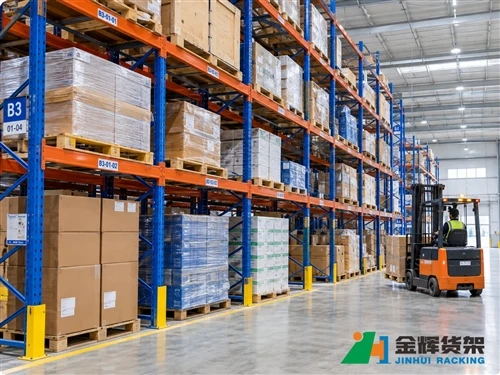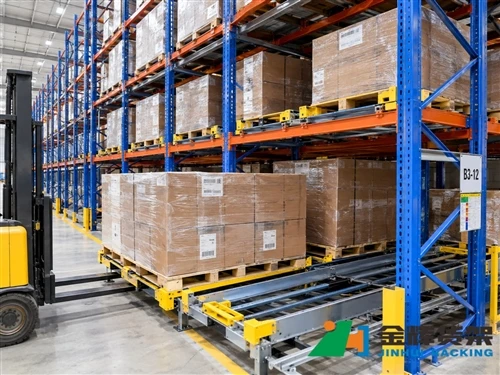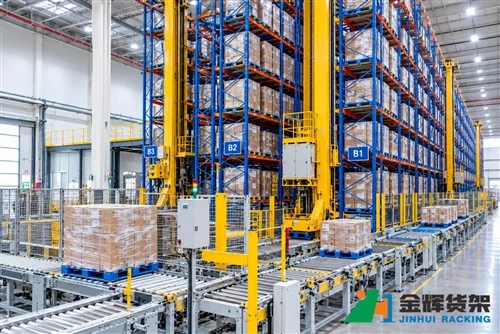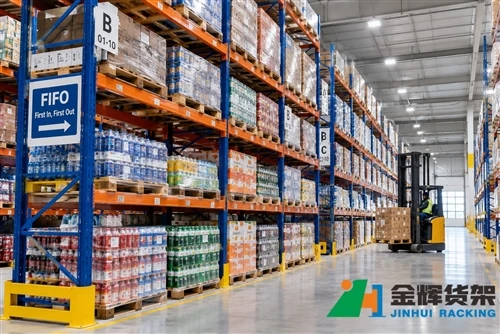
Warehouses often handle pallets with different dimensions, heights, and base constructions. These variations may come from different suppliers, product packaging requirements, or customer-specific shipping needs. While using one standard pallet size can simplify warehouse operations, many facilities need to accommodate several pallet formats within the same storage area.
The challenge is not simply finding an empty rack position. Different pallet sizes can affect storage clearances, beam arrangements, load stability, forklift access, and the amount of usable space in each bay. Without clear storage rules, a warehouse may experience wasted space, inconsistent pallet placement, and avoidable handling difficulties.
This guide explains how to organize mixed pallet sizes in a warehouse racking system, assess storage compatibility, and create practical location rules without compromising safe operation.
Why Mixed Pallet Sizes Create Warehouse Storage Challenges
Different pallet formats are common in warehouses that receive goods from multiple suppliers or store products with different packaging requirements. A pallet that works well for one product group may not be suitable for another, even when both products are stored in the same building.
Common reasons for mixed pallet sizes include:
- Different suppliers: Incoming goods may arrive on pallets with different footprints and base designs.
- Product-specific packaging: Some products require larger or smaller pallet bases to support the load.
- International shipments: Imported goods may use pallet formats that differ from those used for domestic distribution.
- Repacking operations: Products may be transferred to different pallets before storage or shipment.
- Changing order requirements: Customer orders may require different pallet configurations for transportation.
These variations make it important to define which pallet types can be stored in each rack location. A position should not be treated as suitable for every pallet simply because the pallet appears to fit.
Step 1: Identify and Classify Every Pallet Type
Before changing the storage layout, collect accurate information about the pallets and their loads. Measurements should reflect the actual conditions in which the pallets enter storage, including packaging that extends beyond the pallet base.
| Item to Check | Information Required | Storage Purpose |
|---|---|---|
| Pallet footprint | Actual length and width | Evaluate horizontal fit and clearance. |
| Loaded height | Total height of the pallet and goods | Plan vertical clearance and storage levels. |
| Loaded weight | Maximum expected weight of a complete pallet | Verify compatibility with the approved rack configuration. |
| Pallet base | Material, runners, blocks, and support arrangement | Check whether the pallet can be supported correctly. |
| Load condition | Stability, packaging, and possible overhang | Identify interference or placement concerns. |
| Handling method | Forklift or other material-handling equipment | Confirm practical access and retrieval requirements. |
After collecting the information, group similar pallets into manageable categories. Depending on the warehouse, categories may be based on footprint, loaded height, pallet construction, or handling requirements. The purpose is to establish useful storage rules, not to create an unnecessarily complicated classification system.
Step 2: Check Whether the Pallet Fits the Rack Position
Physical fit is only the first part of rack compatibility. The pallet, its load, and the rack configuration must work together under normal storage and handling conditions.
Horizontal Clearance
Pallets with different widths occupy different amounts of space across a rack bay. A smaller pallet may leave unused space, while a wider pallet may reduce the clearance available beside adjacent loads.
Check the planned number of pallets per level, the outside dimensions of the loaded pallets, and the clearances required for placement and retrieval. Do not assume that a pallet is suitable merely because it can be inserted between the uprights.
Vertical Clearance
Different loaded heights can make uniform beam spacing inefficient. If every level is arranged around the tallest pallet, shorter loads may leave excessive unused space. Conversely, insufficient clearance can make taller pallets difficult to place or retrieve.
Measure the complete loaded height and account for the clearance needed during forklift operation. Any beam-level adjustment must remain within the rack manufacturer's approved configuration and applicable safety requirements.
Pallet Support and Load Stability
Different pallet base designs may require different support considerations. The position of runners, blocks, or other load-bearing areas should be compatible with the intended rack support arrangement.
Also check whether the load is stable and whether goods extend beyond the pallet footprint. Overhanging products may interfere with neighboring loads or rack components, even when the pallet itself appears to fit.
If compatibility is uncertain, confirm the proposed arrangement with the rack supplier before using the location.
Step 3: Assign Storage Locations by Pallet Category
Once the pallet types and rack compatibility have been reviewed, establish clear rules for where each category can be stored. This helps operators choose suitable locations instead of relying on whichever space happens to be empty.
Group Similar Pallets Together
Where inventory volume allows, reserve specific rack zones for pallets with similar footprints or loaded heights. For example, the main storage area may serve the most frequently used pallet format, while another designated area accommodates less common formats.
This approach can simplify location assignment, reduce inconsistent loading practices, and make it easier to identify unsuitable placements. The final arrangement should reflect inventory quantities, picking frequency, available space, and the approved rack design.
Keep Designated Locations for Non-Standard Pallets
Some pallets may be received only occasionally. Rather than placing these loads into arbitrary empty positions, identify suitable locations in advance and define the pallet types those locations can accept.
Flexible storage locations should still have clear restrictions. They must not become a reason to bypass clearance, load, or support requirements.
Consider Inventory Movement
Storage assignment should reflect how frequently products are accessed. Frequently picked products may need locations that support efficient retrieval, while slower-moving goods may be placed in other suitable areas.
However, picking convenience must never override physical compatibility. Every assigned location must be appropriate for the pallet, load, and rack configuration.
Using Selective Pallet Racking for Different Pallet Formats
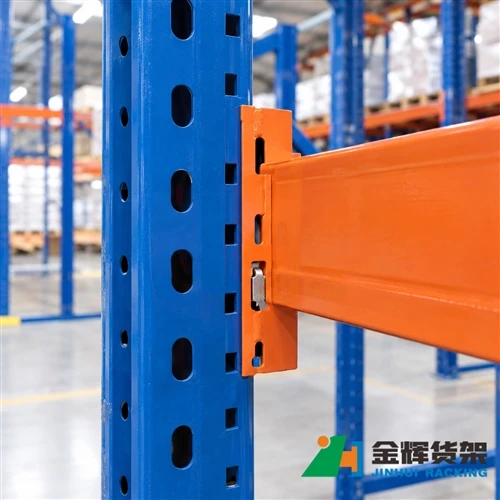
Selective pallet racking can be useful when a warehouse needs direct access to individual pallet positions and handles a wide range of products. Its configuration can be planned around different pallet categories, provided the rack design, support arrangements, clearances, and load conditions are properly evaluated.
For warehouses with many SKUs, designated bays or storage levels may help separate pallet formats and simplify daily operations. The suitable arrangement depends on actual pallet dimensions, loaded heights, maximum weights, handling equipment, and site conditions.
Explore JINHUI Selective Pallet Racking Systems for applications requiring direct pallet access. You can also review our pallet racking solutions for different warehouse storage requirements.

Organizing different pallet formats into suitable storage locations helps improve space utilization while maintaining consistent handling and rack compatibility requirements.
Common Mistakes to Avoid
Treating Every Empty Position as Interchangeable
An empty position may not have the correct clearances or support arrangement for a different pallet type. Operators should follow defined location rules rather than making assumptions based on appearance alone.
Using the Same Beam Spacing for Every Load
Uniform beam spacing may leave unused vertical space or fail to provide sufficient clearance for taller loads. Review actual loaded heights and use only approved rack configurations.
Ignoring Load Overhang
Products extending beyond a pallet can create interference with adjacent loads and rack components. Include overhang in the pallet assessment and define how such loads should be handled.
Changing Rack Components Without Approval
Moving beams or changing the intended loading arrangement can affect rack performance. Never adjust the configuration solely to make a different pallet fit. Consult the rack manufacturer before making changes.
Failing to Update Storage Rules
If location records do not reflect the actual pallet restrictions, operators may place incompatible loads in a position. Keep warehouse location information consistent with the approved physical arrangement.
A Practical Checklist for Mixed Pallet Storage
Before introducing a new pallet format into an existing warehouse racking system, confirm the following:
- Actual pallet length, width, and complete loaded height have been recorded.
- Maximum loaded weight and load stability have been assessed.
- Pallet base construction and support requirements have been checked.
- Horizontal and vertical clearances are suitable for the intended position.
- The pallet and load are compatible with the approved rack configuration.
- Forklift access and placement requirements have been considered.
- Suitable locations have been assigned to each pallet category.
- Storage rules have been updated and communicated to warehouse operators.
- Any proposed rack changes have been reviewed by the appropriate supplier or qualified professional.
Conclusion
Handling mixed pallet sizes requires a consistent approach to pallet identification, rack compatibility, and storage location management. Different footprints, loaded heights, base constructions, and weights can affect how efficiently and safely pallets are stored.
By classifying pallet types, assigning suitable locations, checking clearances, and following the rack manufacturer's requirements, warehouse teams can reduce avoidable storage gaps and improve day-to-day handling consistency.
JINHUI provides pallet racking solutions for different warehouse storage requirements.
For project discussions, please contact our team:
Website: www.jinhui-rack.com
Contact page: Contact Us
Email: info@jhrack.com
WhatsApp: +86 185 0252 7163