Pallet Rack Wire Decking: Types, Support Requirements and Installation Checks
Pallet rack wire decking is a common accessory used in warehouse storage systems. Installed across rack beams, it provides a supporting surface for suitable palletized goods and can help prevent smaller items from falling through open rack levels. It is also frequently selected for warehouses that require visible storage levels and a practical alternative to solid shelving surfaces.
However, wire decking is not a universal component that fits every pallet rack. Its dimensions, wire configuration, support channels, load rating, and installation method must match the rack beams and the intended storage application.
Understanding the differences between wire decking designs and their support requirements helps warehouse operators select compatible components and reduce installation mistakes.
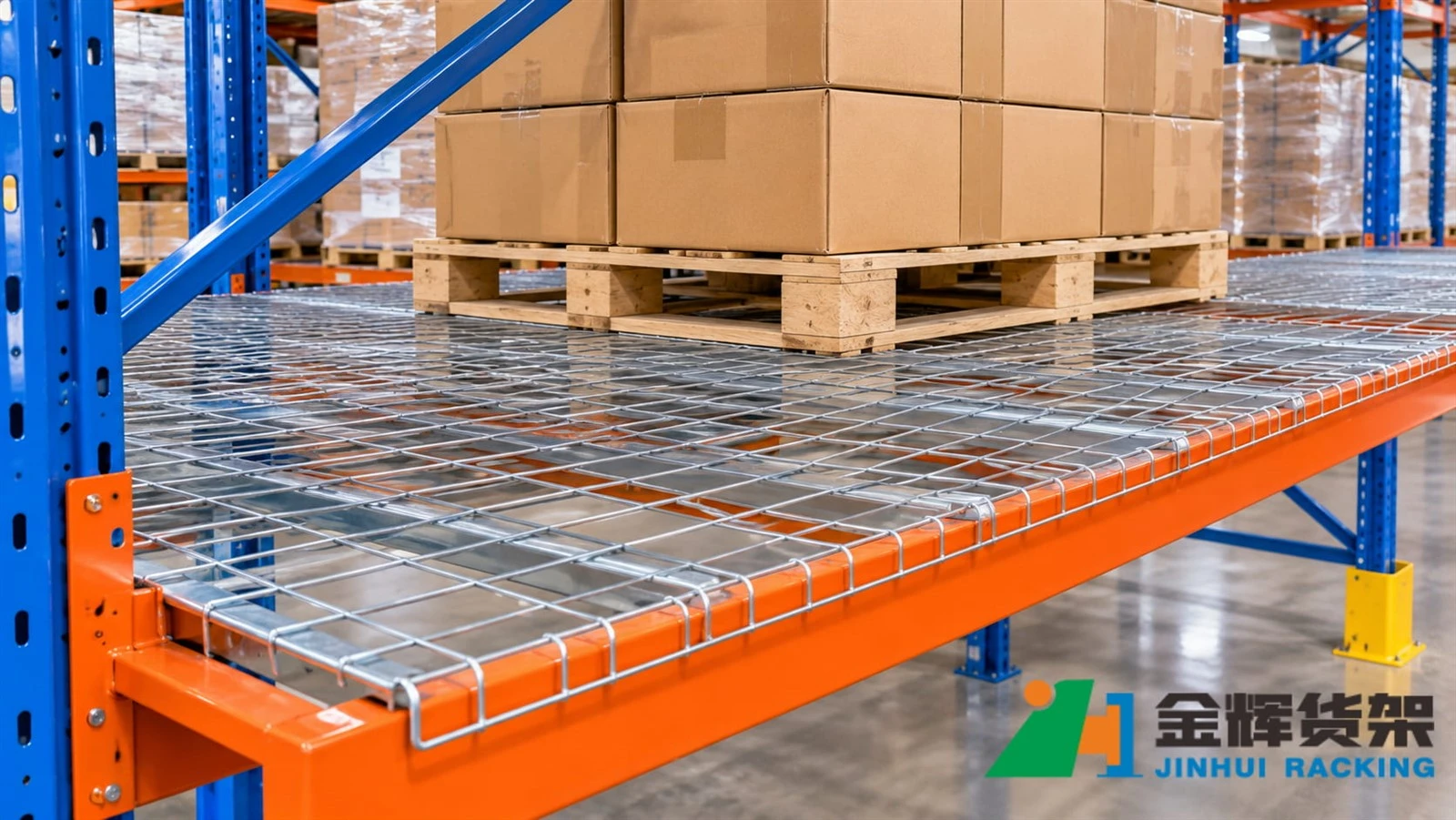
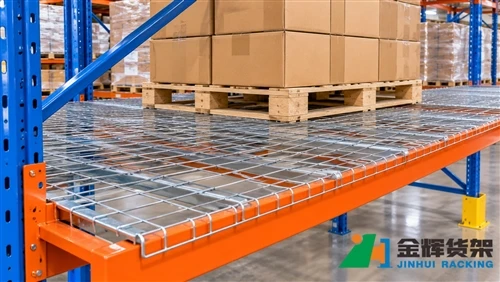
Wire mesh decking installed across pallet rack beams to provide a supporting surface for suitable pallet loads.
1. What Is Pallet Rack Wire Decking?
Pallet rack wire decking is a metal mesh panel designed to sit on or attach to the horizontal beams of a pallet racking system. It is commonly manufactured from welded steel wire with supporting channels or formed reinforcement members underneath.
The decking creates a more continuous supporting surface across the rack bay. Depending on its design, it may be used to support pallets, cartons, containers, and other compatible stored materials.
Common purposes include:
- Providing additional support for compatible pallet configurations.
- Reducing the possibility of small items falling through open rack levels.
- Creating a visible and ventilated storage surface.
- Supporting selected non-standard storage arrangements when properly designed.
- Helping organize storage locations within a pallet rack bay.
Wire decking is an accessory rather than a replacement for the rack's structural beams and frames. Its suitability depends on the decking specification, beam arrangement, support conditions, and intended load.
2. Common Types of Pallet Rack Wire Decking
Wire decking is available in different configurations. Two common designs are waterfall wire decking and flush-style wire decking. The correct choice depends on the beam profile, installation method, storage requirements, and manufacturer specifications.
2.1 Waterfall Wire Decking
Waterfall wire decking has formed edges that extend over or around the supporting rack beams. The turned-down edge helps position the panel on the beam and may provide additional restraint against unintended movement, depending on the design.
Typical characteristics include:
- Downturned front and rear edges.
- Compatibility with specified step beams or other approved beam profiles.
- Decking panels that sit across the beam span.
- Support channels beneath the wire mesh in many designs.
Waterfall decking is widely used in conventional pallet racking, but the edge geometry must match the beam dimensions and intended installation arrangement.
2.2 Flush Wire Decking
Flush-style wire decking is designed to sit within or align with a specified support arrangement rather than relying on the same downturned edge geometry as a typical waterfall panel.
Depending on the system, it may be supported by step beams, dedicated ledges, brackets, or other compatible components.
Before selecting this design, confirm the support details and the required clearances. A flush appearance does not automatically mean that the panel is compatible with every beam type.
2.3 Wire Decking with Different Support Channel Arrangements
Wire decking panels may include different numbers, shapes, and positions of support channels. These members help transfer the applied load to the supporting beams.
Support arrangements vary by panel width, depth, design, and rated application. Therefore, the number of channels alone should not be used to determine the load capacity of a decking panel.
3. How to Match Wire Decking with Pallet Rack Beams
Correct compatibility is essential when installing wire decking. A panel may have suitable overall dimensions but still fail to fit the beam profile or provide the intended support.
3.1 Check the Beam Type
Identify the rack beam profile before selecting decking. Common beam designs may include step beams and other profiles with different support surfaces.
Confirm:
- Beam width and depth.
- Step or ledge dimensions, where applicable.
- Beam orientation and installation arrangement.
- Available support surface for the decking panel.
- Any required retaining or securing features.
3.2 Confirm the Rack Bay Dimensions
Wire decking must fit the intended rack bay. Measure the relevant clear span, beam spacing, and required panel dimensions according to the decking manufacturer's measurement instructions.
Do not assume that a panel described as suitable for a particular nominal rack width will fit every rack using that nominal dimension. Actual beam geometry and installation details should be checked.
3.3 Review the Panel Support Arrangement
The decking support channels should rest on the intended beam support surfaces. The panel should not be installed in a way that leaves critical support members suspended, incorrectly positioned, or unsupported.
Check the panel orientation and confirm that all specified support points engage correctly with the rack structure.
4. Wire Decking Load Capacity and Pallet Compatibility
One of the most important considerations when selecting wire decking is its load capacity. The panel must be suitable for the intended load and the way that load is transferred through the decking to the rack beams.
Several factors influence the suitability of a wire decking panel:
- Panel design: Wire diameter, mesh arrangement, support channels, and manufacturing details.
- Panel dimensions: Width, depth, and span between supporting members.
- Load distribution: Whether the load is distributed or concentrated at specific contact points.
- Pallet construction: Pallet runners, bottom boards, support direction, and contact area.
- Beam arrangement: The location and configuration of the supporting beams.
- Installation condition: Correct positioning and full engagement with the intended support surfaces.
A uniformly distributed load and a concentrated load can create different demands on a decking panel. A panel rating established under one loading condition should not automatically be applied to another.
Warehouse operators should review the manufacturer's stated load rating and test conditions. They should also confirm that the rack beams and complete rack structure are suitable for the resulting loads.
Adding wire decking does not automatically increase the rated capacity of the pallet rack. The allowable system capacity remains subject to the approved rack design and all relevant component limitations.
5. Choosing Wire Decking for Different Storage Applications
The right wire decking configuration depends on the stored products, pallet type, handling process, and warehouse operating environment.
5.1 Standard Wooden Pallets
For conventional wooden pallets, check the orientation of the pallet runners and bottom boards. The contact points should be compatible with the wire decking design and its rated support conditions.
Particular attention should be given to pallet condition, uneven bottom boards, and concentrated contact loads.
5.2 Plastic Pallets
Plastic pallets may have different bottom geometries from wooden pallets. Some designs use runners, while others use feet or molded support structures.
Confirm that the pallet's contact pattern is compatible with the decking. A panel suitable for one pallet design should not automatically be assumed suitable for every plastic pallet.
5.3 Cartons and Small Containers
Wire decking can provide a more continuous surface for selected cartons and containers that would otherwise be unsuitable for direct placement on open beams.
However, mesh opening dimensions and the size of the stored items should be reviewed. Very small items may still require additional trays, containers, or a different storage surface.
5.4 Mixed Storage Applications
Warehouses storing different pallet types and product sizes may need more than one decking configuration. A panel should be selected according to the most demanding intended application rather than the lightest product stored on the rack.
6. Wire Decking Installation Checks
Proper installation helps ensure that the decking is supported as intended. Before placing inventory on a newly installed panel, inspect the following details.
6.1 Confirm the Correct Panel Orientation
Install the panel in the direction specified by its manufacturer. Some designs have particular front, rear, or support-channel orientations that must be followed.
6.2 Check Seating on Both Supporting Beams
Verify that the panel rests correctly on the intended supporting surfaces. Look for uneven seating, rocking, gaps, or interference with beam components.
6.3 Check the Position of Support Channels
Confirm that the support channels are positioned as intended and make proper contact with the supporting beams. A panel should not be considered correctly installed merely because its outer edges appear to fit.
6.4 Verify Retaining Features
Where the product includes retaining tabs, clips, or other securing features, check that they are installed and engaged according to the manufacturer's instructions.
6.5 Inspect for Damage
Look for bent wires, damaged welds, deformed channels, corrosion, and other defects that could affect the panel's performance.
6.6 Confirm Clearance with Adjacent Components
Check that the decking does not interfere with beam connectors, rack bracing, pallet supports, or other accessories. The completed installation should allow the intended pallet to be placed and removed without unintended contact.
7. Common Wire Decking Installation Mistakes
Incorrect selection or installation can reduce the effectiveness of wire decking and create problems during daily warehouse operations.
- Using incompatible panel dimensions: A panel that does not match the rack bay may not engage properly with the supporting beams.
- Ignoring beam profiles: Different beam designs may require different decking edge and support arrangements.
- Incorrect support-channel positioning: Support members may not transfer loads to the intended beam locations.
- Assuming all pallets are compatible: Different pallet bottom designs create different contact patterns.
- Overlooking concentrated loads: A general panel rating may not cover localized loading conditions.
- Ignoring damaged welds or wires: Visible damage should be assessed before the panel is returned to service.
- Mixing unverified decking types: Panels with different specifications should not be treated as interchangeable without confirmation.
- Assuming decking increases rack capacity: The complete rack system must still comply with its approved structural load limits.
8. Inspection and Maintenance of Wire Decking
Wire decking should be included in routine warehouse rack inspections. The inspection frequency and procedures should follow applicable requirements and the warehouse's risk-management program.
Important inspection points include:
- Wire condition: Check for broken, bent, or displaced wires.
- Weld integrity: Look for visible separation or damage at welded intersections.
- Support channels: Inspect for deformation, corrosion, or damage.
- Panel seating: Confirm that the panel remains correctly positioned on its supports.
- Retaining features: Check clips, tabs, and other securing components where provided.
- Corrosion and coating: Monitor surface deterioration, especially in humid or demanding environments.
- Beam condition: Inspect the supporting beams and connections for visible damage or displacement.
If a panel is damaged, remove it from use when necessary and obtain an appropriate assessment. Do not attempt unauthorized welding, straightening, or other modifications that may change its structural performance.
Replacement panels should match the approved dimensions, support arrangement, and load requirements of the installation.
9. Wire Decking vs. Solid Rack Shelves
Wire decking and solid shelves can both provide a storage surface, but they serve different applications and have different characteristics.
| Comparison | Wire Decking | Solid Shelving |
|---|---|---|
| Surface | Open wire mesh | Continuous or mostly continuous surface |
| Visibility | Generally allows visibility through the mesh | Depends on shelf material and construction |
| Small Items | May require suitable containers or trays | May provide a more suitable surface for smaller items |
| Support | Depends on mesh and support-channel design | Depends on shelf construction and supporting structure |
| Selection | Must match beam profile, panel dimensions, and load requirements | Must match rack configuration and intended storage application |
Neither option is automatically better for every warehouse. The decision should reflect the stored products, pallet design, operational requirements, and the manufacturer's approved specifications.
10. Practical Checklist Before Ordering Wire Decking
Before purchasing replacement or new wire decking, warehouse operators and project teams should confirm the following information:
- Rack identification: Confirm the rack manufacturer, beam type, and relevant system details.
- Bay dimensions: Measure the required panel width and depth using the manufacturer's reference points.
- Beam compatibility: Verify the support surface and edge arrangement.
- Decking specification: Review wire configuration, support channels, material, and finish.
- Load requirement: Confirm the intended load rating and the conditions under which it applies.
- Pallet compatibility: Check the bottom structure, contact points, and load distribution.
- Installation details: Confirm panel orientation, support positioning, and retaining features.
- Inspection access: Ensure that the installed panels do not prevent necessary inspection of rack components.
Providing accurate measurements, photographs, beam profiles, and pallet details to the supplier can help reduce compatibility problems before delivery.
Frequently Asked Questions
What is waterfall wire decking?
Waterfall wire decking is a mesh panel with formed edges that extend over or around the supporting rack beams. The edge design helps position the panel, but the actual fit depends on the beam profile and decking specification.
Can wire decking be installed on any pallet rack?
No. The panel must be compatible with the rack beam profile, bay dimensions, support arrangement, and intended loading conditions. Confirm compatibility before ordering.
Does wire decking increase pallet rack load capacity?
Not automatically. Wire decking provides an additional supporting surface, but it does not increase the approved capacity of the complete rack system. Both the decking rating and the rack's structural limits must be observed.
Can wire decking support plastic pallets?
Some wire decking designs may be suitable for selected plastic pallets. Compatibility depends on the pallet's bottom geometry, contact points, load distribution, and the decking manufacturer's specifications.
How often should wire decking be inspected?
Inspection frequency should follow applicable local requirements, manufacturer guidance, and the warehouse's risk assessment. Panels should also be checked after reported impacts or other events that may have caused damage.
Conclusion
Pallet rack wire decking is a practical accessory for creating a supporting surface across rack beams. However, choosing the right panel requires more than matching its nominal dimensions. Beam compatibility, support-channel arrangement, pallet construction, load distribution, and installation details all influence suitability.
By confirming the rack configuration before ordering, following the manufacturer's installation instructions, and including decking in routine inspections, warehouse operators can manage the accessory more effectively throughout its service life.
The most important principle is to treat wire decking as part of the complete rack installation. Its specification and load conditions should always be considered together with the beams, frames, pallets, and stored goods.
Contact Us
Looking for pallet racking systems or compatible storage accessories for your warehouse? JINHUI RACK can help you discuss rack configurations and project requirements for different storage applications.
Share your rack beam dimensions, bay measurements, pallet specifications, and storage requirements with our team to discuss a suitable solution.
Email: info@jhrack.com
WhatsApp: +86 185 0252 7163