Why Choosing the Right Pallet Racking System Matters
Warehouse storage decisions directly influence operational efficiency, inventory management, and long-term business costs. Selecting the wrong racking system can lead to wasted space, inefficient material handling, and unnecessary limitations as business requirements change.
Heavy duty selective pallet racking and push back racking are both widely used in industrial warehouses, but they are designed with different priorities in mind. Selective pallet racking focuses on accessibility and flexibility, while push back racking is designed to increase storage density by allowing multiple pallets to be stored in depth.
For warehouses managing many different products and frequent pallet movements, accessibility is often the most important factor. However, for operations with limited floor space and large quantities of similar inventory, higher-density storage may provide greater value.
Understanding the differences between these two systems helps warehouse managers make better decisions based on inventory characteristics, forklift operations, and future expansion plans.

What Is Heavy Duty Selective Pallet Racking?
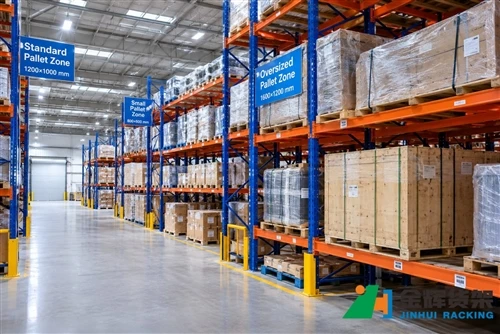
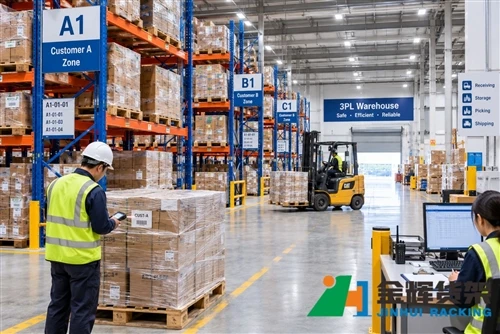
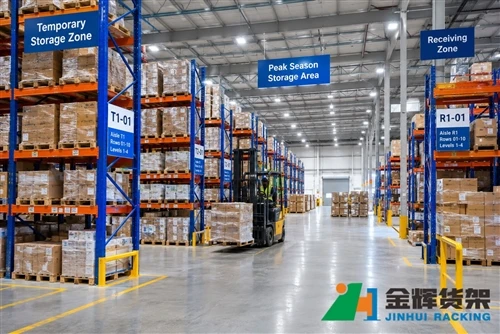
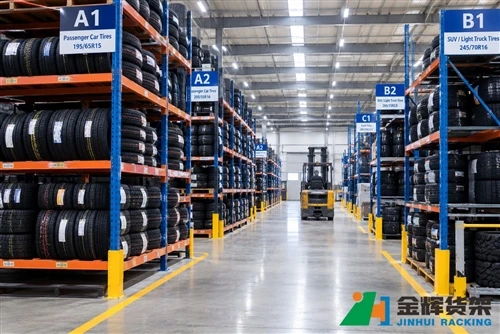
Heavy duty selective pallet racking is the most commonly used pallet storage system in warehouses around the world. Its main advantage is direct access to every pallet position, allowing operators to retrieve any stored pallet without moving other inventory.
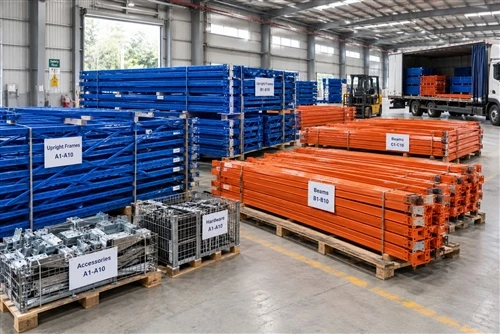
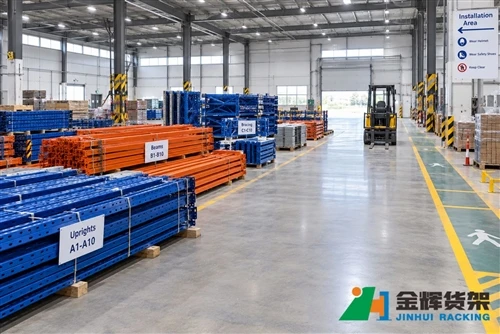
The system consists mainly of:
- Upright frames.
- Horizontal load beams.
- Diagonal and horizontal bracing.
- Base plates and anchor bolts.
- Safety locking mechanisms.
- Optional accessories such as wire decking and pallet supports.
This modular structure allows the rack layout to be customized according to warehouse dimensions, pallet sizes, forklift types, and required load capacities.
The Heavy Duty Selective Pallet Racking System from Jinhui Rack is designed for demanding warehouse environments where strength, flexibility, and easy pallet access are essential.
What Is Push Back Pallet Racking?
Push back pallet racking is a high-density storage system designed to store multiple pallets deep within each lane. Instead of accessing every pallet directly from an aisle, pallets are placed on nested carts that move along inclined rails.
When a new pallet is loaded, it pushes previously stored pallets backward. When the front pallet is removed, the pallets behind automatically move forward into position.
This design allows warehouses to store more pallets in less floor space compared with traditional selective racking.
Push back racking is commonly used for:
- Cold storage facilities.
- Food distribution centers.
- Beverage warehouses.
- Bulk inventory storage.
- Seasonal product storage.

Key Difference Between Selective and Push Back Racking
The primary difference between these two systems is how pallets are accessed.
Selective pallet racking provides a dedicated access point for every pallet location. This makes inventory control simple and efficient, especially when products frequently enter and leave the warehouse.
Push back racking stores pallets several positions deep, which improves storage density but reduces direct access. Operators must remove front pallets before reaching products stored further inside the lane.
The choice depends on whether your warehouse prioritizes:
- Maximum accessibility.
- Maximum storage density.
- Fast inventory turnover.
- Reduced warehouse footprint.
Storage Density Comparison
One of the biggest advantages of push back racking is improved storage density. Because multiple pallets share the same storage lane, fewer aisles are required compared with selective pallet racking.
This allows companies to increase pallet capacity within the same warehouse area.
However, higher density does not always mean better efficiency. Warehouses with a large number of SKUs may find that reduced accessibility creates additional handling time.
Selective pallet racking uses more aisle space but provides easier inventory management and faster pallet retrieval.
Accessibility Comparison
Accessibility is where selective pallet racking has a significant advantage.
With selective racks, forklift operators can immediately reach any pallet location. This is especially important for warehouses handling products with different demand levels or frequent order changes.
Push back racking is more suitable when products are stored in larger quantities and pallet movement is less frequent.
| Comparison Factor | Selective Pallet Racking | Push Back Racking |
|---|---|---|
| Pallet Access | Direct access to every pallet | Access from the front of each lane |
| Storage Density | Medium | High |
| SKU Flexibility | Excellent | Better for fewer SKUs |
| Inventory Rotation | Supports FIFO | Usually LIFO |
| Warehouse Flexibility | Very High | Moderate |
FIFO and Inventory Management Considerations
Inventory rotation plays an important role when choosing between selective and push back racking.
Selective pallet racking naturally supports FIFO (First In, First Out) inventory management because every pallet is independently accessible.
Push back racking generally operates using LIFO (Last In, First Out) principles because pallets are stored and retrieved from the same side of the lane.
For industries where product expiration dates, batch tracking, or strict inventory rotation are important, selective pallet racking is often the preferred choice.
Forklift Operation Comparison
Forklift operation is one of the most important factors when selecting a warehouse storage system. The way forklifts interact with the racking structure directly affects handling efficiency, operator safety, and long-term maintenance requirements.
Heavy duty selective pallet racking provides open access aisles where forklifts can move freely and reach individual pallet positions. Operators can quickly identify and retrieve the required pallet without moving other inventory.
Push back racking requires forklifts to load and unload pallets from the front of each storage lane. Although this reduces the number of aisles required, operators need greater precision because pallets travel along inclined rails inside the rack structure.
For warehouses with high daily pallet movement, selective pallet racking often provides faster and simpler forklift operations.
Cost Comparison: Selective Pallet Racking vs Push Back Racking
The total cost of a pallet racking system includes more than the initial equipment price. Warehouse managers should also consider installation, maintenance, labor efficiency, and future flexibility.
Heavy duty selective pallet racking usually has a lower initial investment because of its simple structure and straightforward installation process. Additional bays, beam levels, or accessories can also be added easily as warehouse requirements change.
Push back racking generally requires a higher investment because it includes additional components such as carts, rails, and specialized structural elements. However, the increased storage density may justify the investment in warehouses where floor space is limited.
The better financial choice depends on warehouse priorities:
- Select selective pallet racking when flexibility and accessibility are more important.
- Select push back racking when maximizing pallet capacity is the main goal.
- Consider long-term operating costs rather than only purchase price.
Maintenance Requirements
Both systems require regular inspections to maintain safe warehouse operations, but their maintenance requirements are different.
Selective pallet racking has a relatively simple structure, making inspections and replacement of individual components easier. Damaged beams or uprights can usually be identified and replaced without affecting the entire system.
Push back racking requires additional attention because moving carts and rail systems must remain properly aligned. Damaged rails or mechanical components may affect the movement of multiple pallets within a storage lane.
Regardless of the system selected, regular inspections should include:
- Checking upright frames for forklift impact damage.
- Inspecting beams and connectors.
- Verifying safety locks.
- Checking rack alignment.
- Confirming load capacity labels are visible.
Which Industries Should Choose Selective Pallet Racking?
Heavy duty selective pallet racking is the preferred choice for many industries because it provides maximum flexibility and easy inventory management.
Typical applications include:
- Manufacturing warehouses.
- Automotive parts storage.
- Retail distribution centers.
- E-commerce fulfillment facilities.
- Third-party logistics warehouses.
- Industrial spare parts storage.
These industries usually handle a large number of SKUs and require fast access to individual pallets.
Which Industries Should Choose Push Back Racking?
Push back racking is better suited for operations where storage density is more important than individual pallet accessibility.
Common applications include:
- Cold storage warehouses.
- Frozen food distribution.
- Beverage storage.
- Bulk product warehouses.
- Seasonal inventory storage.
These environments often store large quantities of similar products, making high-density storage more valuable than direct access.
Advantages and Disadvantages Comparison
| System | Advantages | Limitations |
|---|---|---|
| Heavy Duty Selective Pallet Racking |
|
|
| Push Back Pallet Racking |
|
|
How to Choose the Right System for Your Warehouse
The best storage solution depends on your warehouse operation rather than simply the amount of storage space available.
Before choosing between selective pallet racking and push back racking, consider the following questions:
- How many different SKUs are stored?
- How frequently are pallets moved?
- Is FIFO inventory management required?
- Is warehouse floor space limited?
- What type of forklift equipment is used?
- Will inventory requirements change in the future?
If your warehouse requires flexibility, fast access, and easy inventory management, heavy duty selective pallet racking is usually the better option.
If your main goal is maximizing pallet capacity in a limited space, push back racking may provide better results.
Frequently Asked Questions
Is selective pallet racking better than push back racking?
Neither system is universally better. Selective pallet racking is better for accessibility and flexibility, while push back racking is better for high-density storage.
Which system costs less?
Selective pallet racking usually has a lower initial cost because of its simpler structure. However, push back racking may provide better value when warehouse space is expensive and storage density is the priority.
Can selective pallet racking be converted into push back racking?
Generally, the two systems use different structural designs. Conversion usually requires a new engineering design rather than simple modification.
Which system is easier to maintain?
Selective pallet racking is usually easier to inspect and maintain because each pallet position is independently accessible and components are simpler.
Which industries commonly use selective pallet racking?
Manufacturing, logistics, automotive, retail, and e-commerce warehouses commonly use heavy duty selective pallet racking because of its flexibility.
Conclusion
Heavy duty selective pallet racking and push back racking are both effective warehouse storage solutions, but they are designed for different operational needs.
Selective pallet racking provides unmatched accessibility, flexibility, and inventory control, making it the preferred choice for warehouses handling diverse products and frequent pallet movement.
Push back racking delivers higher storage density and works well for businesses storing large quantities of similar products.
By evaluating inventory requirements, warehouse space, forklift operations, and future growth plans, companies can select the storage system that delivers the best long-term performance.
Choose the Right Warehouse Storage Solution with Jinhui Rack
Jinhui Rack provides customized warehouse storage solutions designed for different industries and operating requirements. From heavy duty selective pallet racking to high-density storage systems, our engineering team helps customers create safer and more efficient warehouses.
Learn more about our Heavy Duty Selective Pallet Racking System and discover a solution designed around your warehouse needs.
WhatsApp
+8618502527163
Email
info@jhrack.com