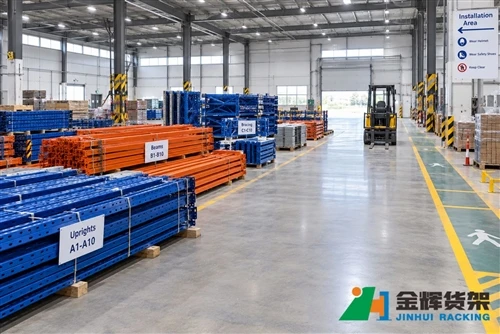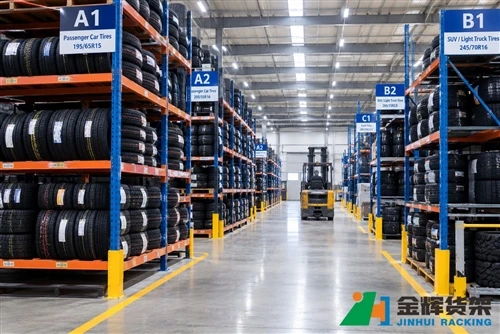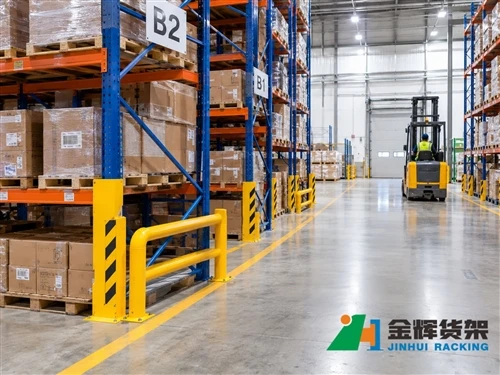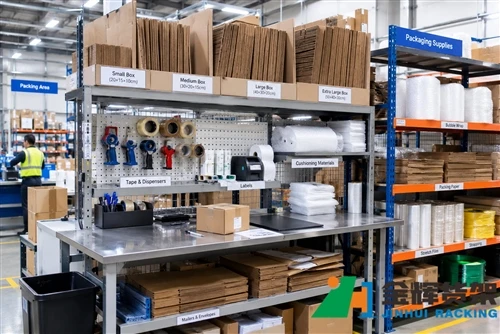
A tire warehouse must manage products that look similar but differ in diameter, width, construction, vehicle application, brand, and product code. During seasonal demand changes, the number of tire models stored in the same facility can also shift significantly.
Without a clear storage plan, warehouse employees may spend too much time locating the correct tire, replenishing picking areas, or separating products with similar appearances. Poorly organized stock can also occupy valuable space and make inventory counts less reliable.
Effective tire warehouse storage starts with accurate product classification and a layout that reflects how tires are received, stored, picked, and shipped. This guide explains how to organize tire inventory, choose suitable storage arrangements, manage seasonal stock, and improve everyday warehouse operations.
Why Tire Warehouses Need a Specialized Storage Plan
Tires have a rounded shape and come in a wide range of sizes. Unlike uniform cartons, they may not fit efficiently into standard pallet configurations without considering their dimensions, packaging, and handling method.
A tire warehouse may handle passenger car tires, light truck tires, commercial vehicle tires, or other product categories. Each group can have different storage and handling requirements.
Common challenges include:
- Many tire sizes and product codes that are difficult to distinguish visually.
- Seasonal changes in demand and stock levels.
- Different packaging and handling requirements.
- Bulky inventory that can occupy substantial floor space.
- Frequent picking of individual tires or small quantities.
- The need to identify older stock and manage product rotation.
A well-planned storage system should make each tire easy to identify, place in a suitable location, and retrieve without unnecessary movement. It should also accommodate changes in product mix and stock volume without requiring a complete warehouse reorganization every season.
Step 1: Classify Tires Before Assigning Storage Locations
Start by establishing a consistent classification system. Tire size alone may not be sufficient to identify a product because several models can share similar dimensions while differing in brand, tread pattern, construction, or application.
Useful classification fields may include:
- Product category, such as passenger car, light truck, or commercial vehicle tires.
- Tire size and the full product designation.
- Brand and product model.
- Seasonal category, where applicable.
- Stock keeping unit (SKU) or internal product code.
- Quantity available and stock movement history.
- Supplier, batch, or other traceability information when required.
Use the manufacturer's product information and the warehouse's inventory records as the source of truth. Do not rely on visual similarity alone when identifying products.
Separate Product Families
Group related products into clearly defined storage zones. For example, passenger car tires may occupy a different zone from commercial vehicle tires, while seasonal products may have separate location ranges.
The exact arrangement depends on the inventory mix. A warehouse with many tire models may need more detailed SKU-based locations, while a facility handling a limited range of products may benefit from broader product-family zones.
Make Every Location Easy to Identify
Assign each storage position a unique location code and connect it to the warehouse inventory system or stock records. Labels should be readable from the normal picking approach and should not be confused with product labels.
A clear location system helps employees distinguish between the product identity and the place where the product is stored. This is particularly useful when similar tire models are held in neighboring positions.
Step 2: Choose a Storage Method That Matches the Tires
The appropriate storage arrangement depends on tire dimensions, product packaging, storage volume, handling equipment, and the way orders are picked. There is no single storage method that suits every tire warehouse.
| Storage Method | Potential Application | Key Consideration |
|---|---|---|
| Designated floor storage | Suitable for selected operations with manageable stock levels and adequate floor space. | Maintain stable arrangements, clear access, and defined storage boundaries. |
| Shelving or compartment storage | Useful for smaller quantities, individual tire picking, or organized product ranges. | Check compartment dimensions, accessibility, and suitability for the stored tires. |
| Dedicated tire racks | May suit warehouses that need organized storage for multiple tire sizes and product groups. | Confirm the rack configuration, support arrangement, and load requirements. |
| Pallet racking | May suit tires stored in compatible palletized loads or approved handling units. | Verify the loaded pallet dimensions, weight, load stability, and rack design. |
| Mixed storage configuration | Can accommodate different product categories or handling methods within one facility. | Coordinate zones, equipment access, and inventory records across the system. |
For example, a distributor may use dedicated locations for individual tire picking and separate pallet storage for reserve inventory. This can help keep frequently requested products accessible while maintaining organized bulk stock.
Any rack or storage structure must be suitable for its intended load and use. Confirm the tire arrangement, support conditions, and handling method with the responsible supplier or qualified designer before implementation.
Step 3: Organize the Layout Around Receiving, Storage, and Picking
A tire warehouse should be planned around the complete movement of products rather than storage capacity alone. Tires may pass through receiving, identification, storage, replenishment, order picking, consolidation, and dispatch.
Create a Receiving and Identification Area
Newly received tires should be checked against the delivery documentation and inventory records before being assigned to storage locations. This helps identify discrepancies and reduces the risk of similar products being placed in the wrong zone.
Provide sufficient space for checking, labeling, and staging incoming goods without blocking established vehicle routes or access to stored inventory.
Separate Reserve Stock From Picking Stock
Reserve inventory supports replenishment, while picking locations provide access to products needed for current orders. Separating these functions can make the workflow easier to manage when the warehouse handles both bulk quantities and frequent small-order picking.
Frequently requested tire models may be assigned convenient picking positions, subject to the storage system's design and safe handling requirements. Less frequently requested products can occupy other suitable locations.
Keep Dispatch Staging Organized
Orders awaiting shipment should be staged in designated areas and identified by order, route, customer, or another suitable reference. This reduces the likelihood of products from different orders becoming mixed.
Staging space should be sized according to actual shipping patterns and should not extend into rack access areas, emergency routes, or forklift aisles.
Step 4: Manage Seasonal Tire Inventory
Some tire businesses experience substantial changes in demand during seasonal transitions. These changes can affect both the quantity of inventory held and the product categories that need the most accessible storage positions.
A warehouse that prepares for seasonal demand can reduce last-minute relocation and make high-demand products easier to retrieve.
Review Historical Demand
Use sales records, previous seasonal peaks, customer orders, and purchasing plans to estimate which tire categories are likely to move more frequently. The forecast should reflect the actual market and customer base rather than assuming that every tire category follows the same pattern.
Plan Seasonal Storage Zones
Where seasonal inventory is significant, define location ranges for the relevant product groups. These zones can be adjusted as stock changes, provided that location records are updated at the same time.
Do not move products between zones informally. Unrecorded relocation can make inventory difficult to find even when the physical stock remains in the building.
Prepare for the Transition Period
Before a seasonal change, review incoming shipments, current stock, expected orders, and available storage capacity. Identify products that need additional picking access and those that can move to reserve locations.
After the peak period, review remaining inventory and adjust the layout according to actual demand. This helps prevent temporary seasonal arrangements from becoming inefficient permanent storage practices.
Step 5: Establish Inventory Rotation and Traceability
Accurate inventory records are essential when a warehouse holds many tire models that appear similar. Product rotation should follow the company's inventory policy and any relevant supplier, manufacturer, or customer requirements.
Depending on the product and business process, the warehouse may use receipt date, batch information, production date, or other traceability fields to guide stock selection. A first-in, first-out approach may be appropriate for some operations, but it should not replace product-specific requirements or customer instructions.
Record Stock Movements
Update inventory records whenever tires are received, moved, picked, returned, or dispatched. Each transaction should connect the product code, quantity, and relevant storage location.
For facilities using barcode scanning or warehouse management software, location and product scans can help reduce manual entry errors. Smaller operations can use a controlled stock-record process, provided that movements are recorded consistently.
Check Physical Inventory
Conduct regular inventory checks according to the value, turnover, and operational importance of each product group. Investigate discrepancies instead of adjusting quantities without understanding their cause.
Common causes include incorrect location assignments, unrecorded movements, similar product codes, picking mistakes, and receiving discrepancies. Resolving these issues improves confidence in both inventory quantities and location records.
Step 6: Protect Tires During Storage and Handling
Storage conditions and handling practices can affect tire condition. Follow the tire manufacturer's guidance for storage orientation, environmental conditions, stacking, and handling. Requirements may differ according to tire type, construction, packaging, and storage duration.
Use an Appropriate Storage Arrangement
Do not assume that every tire can be stored in the same orientation or stacked to the same height. Confirm the approved arrangement for the specific product and avoid stacking methods that may cause instability, deformation, or difficult retrieval.
Where racks are used, verify that the support surfaces and compartments suit the tire dimensions and the intended loading method. Do not overload a storage structure or place tires where they may fall into an aisle.
Keep Storage Areas Suitable for the Product
Protect tires from conditions that may damage them, following the manufacturer's recommendations. Keep storage areas orderly and address sources of moisture, contamination, excessive heat, or other unsuitable conditions where relevant.
Maintain access to the stored products so employees can inspect, identify, and retrieve them without moving unstable stacks or disturbing adjacent inventory.
Use Suitable Handling Equipment
Select handling equipment and procedures according to tire dimensions, load weight, packaging, and the storage arrangement. Operators should be trained to handle products without damaging tires, neighboring stock, or storage structures.
When palletized loads are used, confirm that the pallets and load configuration are suitable for the intended rack and handling equipment.
Step 7: Improve Space Utilization Without Sacrificing Access
Bulky products can make warehouse space utilization challenging. However, maximizing the number of stored tires does not automatically produce the most efficient operation.
Storage planning should balance capacity, product accessibility, handling time, and the space required for safe movement.
Review Vertical Storage Opportunities
Where building height permits, suitable shelving or racking may help use vertical space more effectively. The selected arrangement must account for tire dimensions, safe access, handling equipment, and the structural capacity of the storage system.
Do not increase storage height simply to add more positions. Verify the complete configuration, including the stability of stored loads, required clearances, and the equipment used to access upper locations.
Reduce Unnecessary Travel
Position frequently picked products where they can be accessed efficiently without interfering with receiving, replenishment, or dispatch. Review picking routes and identify repeated journeys that could be reduced through better product grouping or location assignment.
At the same time, avoid placing fast-moving stock where it creates congestion around entrances, intersections, or other high-traffic areas.
Review Storage Density Regularly
As the product mix changes, some zones may become overcrowded while others have unused capacity. Review actual occupancy and product movement before reallocating storage positions.
A flexible layout makes it easier to accommodate new tire models and seasonal inventory changes without creating unnecessary relocation work.
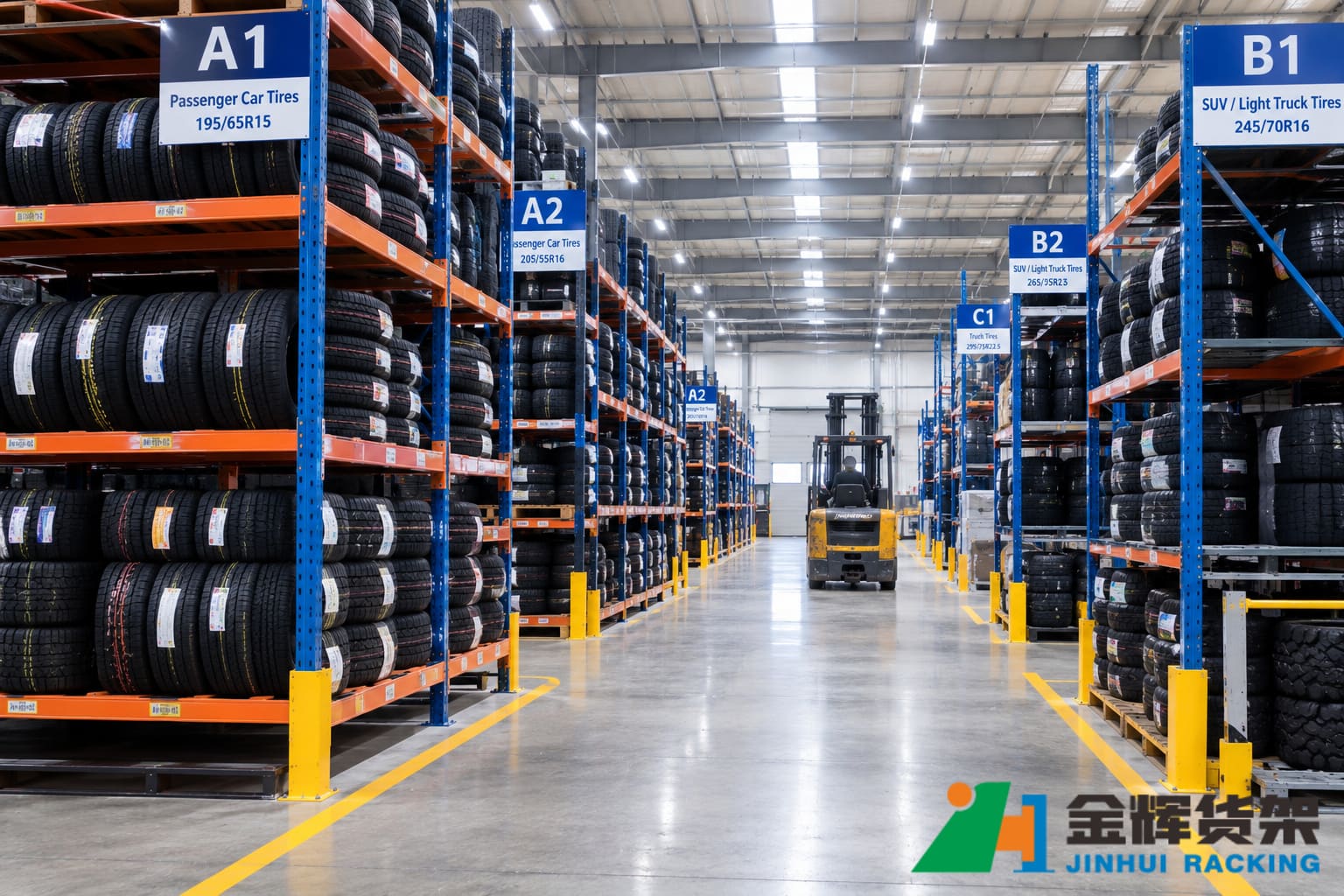
Clearly identified tire storage zones and suitable handling access help warehouse teams locate products, control inventory, and manage seasonal stock changes.
Common Tire Warehouse Storage Mistakes
Relying on Visual Identification Alone
Tires with similar appearances may have different sizes, models, or product codes. Use clear labels and inventory records rather than relying on visual recognition alone.
Mixing Seasonal and Regular Inventory Without Clear Locations
When products move between seasonal and regular storage, unrecorded relocation can make them difficult to find. Update location records whenever stock is moved.
Using an Unsuitable Stacking Method
Different tires may have different storage requirements. Follow the manufacturer's guidance and avoid assuming that one stacking or orientation method suits every product.
Focusing on Capacity Only
A high-density arrangement may reduce accessibility or increase handling time if the product mix and retrieval process are not considered. Evaluate storage capacity alongside picking needs and safe access.
Ignoring Inventory Changes
A layout that works during one period may not suit another. Review product movement, seasonal demand, and storage occupancy regularly so that the warehouse can adjust before congestion becomes a problem.
Tire Warehouse Storage Planning Checklist
Before reorganizing a tire warehouse, review the following items:
- Product categories, sizes, and SKUs are clearly defined.
- Storage locations are labeled and linked to inventory records.
- The storage method is suitable for the tire type and handling process.
- Reserve inventory and picking stock are organized appropriately.
- Seasonal demand and product rotation requirements are considered.
- Receiving and dispatch staging areas are clearly defined.
- Storage conditions follow manufacturer recommendations.
- Racks, shelving, pallets, and stored loads are compatible with the intended use.
- Forklift and pedestrian routes remain clear.
- Stock movements and physical inventory checks follow a consistent process.
- The layout can adapt to changes in demand and product range.
Conclusion
Organizing tire warehouse storage requires more than finding enough space for bulky products. A practical system combines accurate product classification, suitable storage arrangements, seasonal inventory planning, reliable location records, and safe handling procedures.
By assigning clear storage locations, separating reserve stock from picking inventory, reviewing product movement, and following manufacturer storage guidance, tire distributors and warehouse operators can make inventory easier to locate and manage.
JINHUI provides warehouse pallet racking solutions for industrial storage applications. For a tire storage project, share the warehouse layout, tire dimensions, packaging or pallet details, expected load, storage quantity, and handling equipment so the appropriate storage configuration can be evaluated.
Website: www.jinhui-rack.com
Contact page: Contact Us
Email: info@jhrack.com
WhatsApp: +86 185 0252 7163