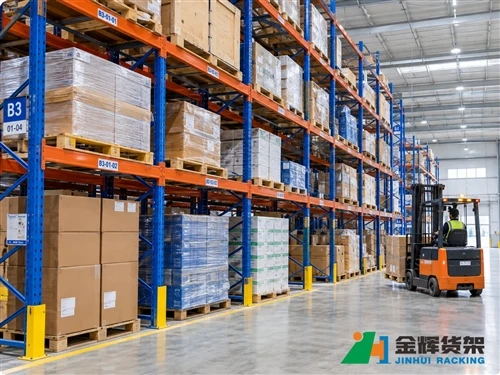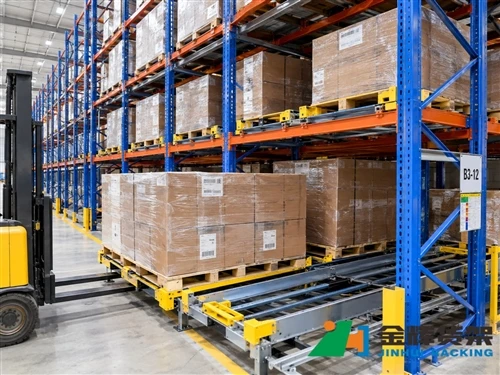
Forklifts are essential for moving pallets through warehouses, distribution centers, and manufacturing facilities. However, frequent loading, unloading, turning, and reversing can expose pallet racking to accidental impacts. Damage to rack components may affect the storage system's condition and create risks for employees and inventory.
Pallet rack safety accessories can help protect vulnerable areas, separate vehicle routes from storage structures, and reduce the consequences of everyday handling mistakes. Common solutions include upright protectors, rack end barriers, safety guards, and other protective components selected for the warehouse layout.
Choosing the right protection involves more than adding guards to every rack. Warehouse operators should identify where impacts are most likely, understand how forklifts move through the facility, and select compatible protection that does not interfere with loading operations.
This guide explains how to plan pallet rack protection around forklift traffic, coordinate different safety accessories, and maintain a practical balance between rack protection and warehouse efficiency.
Why Pallet Racking Needs Protection From Forklift Impacts
Pallet racking is designed to support specified loads in a defined configuration. During normal warehouse operations, forklifts repeatedly approach rack aisles, position pallets, turn around aisle ends, and move away from storage locations. These movements create opportunities for accidental contact with the rack structure.
Common situations that may lead to rack impacts include:
- Turning too close to an exposed upright.
- Approaching a rack bay at an incorrect angle.
- Reversing with limited visibility.
- Positioning a pallet before the forklift is properly aligned.
- Operating in a congested aisle or at a busy intersection.
- Moving pallets near rack row ends or loading areas.
Repeated contact can damage protective coatings or deform structural components. The severity depends on the location and extent of the impact, the component involved, and the condition of the rack.
Protection accessories can reduce exposure to certain impacts, but they do not make a rack immune to damage. Correct forklift operation, suitable aisle planning, appropriate rack design, and prompt assessment of suspected damage remain essential.
Step 1: Identify the Highest-Risk Areas in the Warehouse
Before selecting protective equipment, review how forklifts actually move through the warehouse. A map of the rack layout is useful, but observing daily operations can reveal risks that are not obvious from drawings alone.
Rack Row Ends
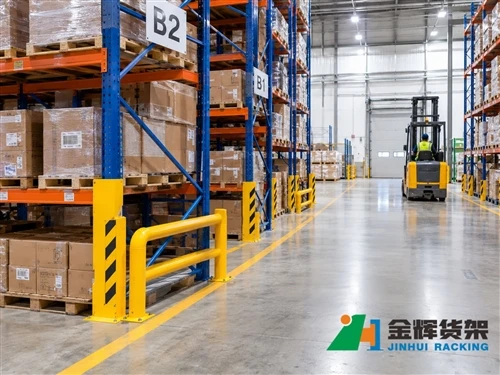
Rack row ends are often exposed to turning and maneuvering movements. A forklift passing between aisles may approach the end of a rack from different directions, especially when the route is narrow or traffic is heavy.
Consider whether the rack end requires a larger barrier that separates vehicle movement from the storage structure. The barrier position must account for the forklift's turning path, load dimensions, and available clearance.
Exposed Uprights Along Aisles
Lower upright sections may be vulnerable where forklifts repeatedly enter and leave storage locations. Risk can increase when pallet positions are close to turning areas or when the operator has limited visibility.
Upright protection may be appropriate at exposed locations, provided that the selected protector is compatible with the rack and installed according to the relevant design requirements.
Cross-Aisles and Intersections
Intersections can bring forklifts, pedestrians, and pallet movements together. Rack protection in these areas should be considered alongside traffic separation, visibility, route markings, and pedestrian access.
A protective barrier may help establish a physical boundary, but it should not obstruct sightlines or create a new collision point. Review the full movement path before deciding where to install it.
Loading and Dispatch Areas
Loading areas often experience changing traffic patterns as pallets move between storage, staging, and shipping. Where racking is close to these activities, consider the potential for impacts from turning vehicles, temporary staging, and congested access routes.
Protection should be coordinated with the loading process so that employees can still move goods safely and equipment can access the required locations.
Step 2: Understand the Different Functions of Rack Safety Accessories
Different accessories address different hazards. Selecting a component according to its intended function helps avoid gaps in protection or the mistaken use of one product as a substitute for another.
| Accessory | Primary Purpose | Planning Consideration |
|---|---|---|
| Upright protector | Helps protect an exposed rack upright from certain forklift contacts. | Check compatibility with the upright profile, installation method, and available clearance. |
| Rack end barrier | Creates a protective boundary near exposed rack row ends. | Review forklift turning paths, load overhang, and aisle access. |
| Safety guard or barrier | Separates vulnerable structures or designated areas from vehicle movement. | Confirm that the guard's position and intended performance suit the risk. |
| Beam safety lock or pin | Helps prevent unintended beam disengagement from a compatible connection. | Use the specified component for the rack system; it is not an impact barrier. |
| Rack safety mesh | Helps reduce the risk of stored items falling toward a protected area when correctly specified. | Assess load characteristics, mounting arrangement, and the hazard behind the rack. |
These accessories should not be treated as interchangeable. For example, a beam safety pin does not protect an upright from forklift impact, and a column protector does not automatically provide fall protection for people working behind the rack.
For additional guidance on a specific component, see JINHUI's article on pallet rack column guards and upright protection.
Step 3: Match the Protection Method to the Risk
The best protection strategy depends on the location, frequency, and likely direction of impact. A compact upright protector may suit an exposed column in a relatively open aisle, while a rack row end near a busy turning area may require a different protective arrangement.
Use Local Protection for Exposed Uprights
Where the main concern is contact with a specific upright, a compatible upright protector may help reduce direct exposure. Confirm the protector's dimensions, attachment method, and relationship to the rack base and floor anchors.
Protection should not hide existing damage or make it difficult to inspect the rack. If a forklift has already struck an upright, assess the rack and protector rather than assuming that the accessory absorbed the impact without consequence.
Consider Barriers for Rack Ends
Rack end barriers may be useful where vehicles turn near exposed rack rows. They create a separate boundary that can help prevent a vehicle from approaching the rack directly.
However, barriers require sufficient space. If positioned too close to an aisle, they may reduce maneuvering clearance or cause forklifts to approach the rack at awkward angles. Review the complete route, including the loaded forklift's turning envelope.
Protect Pedestrian and Work Areas Separately
Where employees walk or work close to forklift routes, consider the need for suitable pedestrian barriers and traffic controls. Rack protection alone does not establish a safe pedestrian route.
Likewise, where stored goods could fall toward a walkway or work area, evaluate the need for an appropriate load-retention or fall-protection system. The protective function must match the actual hazard.
Step 4: Check Compatibility With the Existing Rack System
Protective accessories should be selected for the rack configuration rather than chosen solely by appearance or nominal size. Different upright profiles, base arrangements, and installation conditions can affect compatibility.
Before ordering accessories, confirm:
- The rack manufacturer and system configuration, where known.
- Upright profile and the dimensions of the area requiring protection.
- Base plate and floor-anchor positions.
- Available aisle and turning clearance.
- The intended mounting or fixing method.
- Whether the accessory affects access to rack components or inspection points.
- Whether the accessory is intended for localized contact, vehicle separation, or another specific hazard.
Do not drill, weld, cut, or modify rack components to accommodate a guard without approval from the responsible rack designer or qualified professional. Unauthorized modifications may affect the structural integrity or performance of the system.
When upgrading an existing warehouse, provide the supplier with photographs, rack details, a layout drawing, and information about the forklifts and loads involved. These details can help identify a suitable protection arrangement.
Step 5: Coordinate Rack Protection With Forklift Aisle Design
Protective equipment occupies space and changes the geometry around a rack. Even a correctly selected barrier can create operational problems if its position is not coordinated with the aisle layout.
Review the Forklift and Load Dimensions
Consider the forklift model, load width, pallet dimensions, turning requirements, and the way operators enter storage positions. The usable aisle must support the actual equipment and its operating method.
Do not assume that the aisle is still suitable after a barrier is added. Reassess the available clearance and confirm that the revised arrangement remains practical for the intended forklift operation.
Keep Routes Predictable
Clearly defined traffic routes help operators anticipate turning points and potential conflicts. Where possible, avoid unnecessary sharp turns near exposed rack ends and keep temporary pallet staging out of designated vehicle routes.
Floor markings, signs, mirrors, and traffic-management procedures may support the protection strategy. Their suitability depends on the building layout and the way vehicles and pedestrians use the area.
Preserve Access to Storage Locations
Rack guards should not prevent forks from reaching the pallet position or obstruct routine loading and unloading. Confirm that the proposed accessory leaves the necessary operating space while still addressing the identified risk.
A practical design balances physical protection with access, visibility, and maneuverability. The objective is to reduce the chance of an impact without introducing new operational hazards.
Step 6: Do Not Treat a Protector as a Repair for Damaged Racking
Installing a guard over a damaged rack component does not restore the component's original structural condition. Protection accessories are intended to reduce exposure to certain hazards, not to conceal damage or replace an engineering assessment.
If a rack is struck, warehouse staff should follow the site's damage-reporting procedure. Depending on the location and severity, the affected storage area may need to be isolated, unloaded, or taken out of service while the condition is evaluated.
Do not attempt to straighten, weld, or otherwise modify damaged structural components without an approved procedure. The decision to repair or replace a component should be based on an appropriate assessment of the rack and its condition.
For broader inspection practices, refer to JINHUI's pallet rack inspection guide.
Step 7: Build Protection Into Daily Warehouse Operations
Physical accessories are only one part of a rack protection program. Daily operating practices influence how often forklifts approach vulnerable areas and how quickly damage is identified.
Train Forklift Operators
Training should address controlled approach speeds, correct pallet alignment, visibility, turning, reversing, and the importance of avoiding rack contact. Operators should know how to report an impact even when the damage is not immediately obvious.
Keep Aisles Clear
Temporary pallets, empty packaging, and equipment left in the aisle can force forklifts to make unexpected maneuvers. Keep designated routes clear and ensure that staging areas do not encroach on the space needed for safe operation.
Report Impacts Promptly
Make the reporting process clear and easy to follow. Record the affected location, the observed condition, and any immediate actions taken. A damaged protector or barrier should also be checked because it may no longer provide its intended function.
Review Repeated Impact Locations
If the same rack area is struck repeatedly, replacing a damaged protector may not address the underlying cause. Review the turning path, aisle width, visibility, staging practices, and operator movements to identify the reason for repeated contact.
Step 8: Evaluate Rack Protection as Part of a Complete System
Rack protection should be considered alongside the storage system, floor conditions, loading practices, and warehouse traffic. A guard that works in one layout may not be suitable in another.
When planning a new installation or modifying an existing warehouse, review the following:
- Rack type, dimensions, and intended loading conditions.
- Forklift model and typical handling movements.
- High-risk turning points and exposed rack ends.
- Locations where pedestrians work near vehicle routes.
- Existing floor conditions and anchor locations.
- Required clearance for loading and unloading.
- Protection for stored goods where a falling-load hazard exists.
- Inspection and maintenance access.
For warehouses installing or upgrading a storage system, JINHUI pallet racking systems can be considered as part of a project-specific design. Rack configuration, accessory compatibility, load requirements, and operating conditions should be evaluated together.
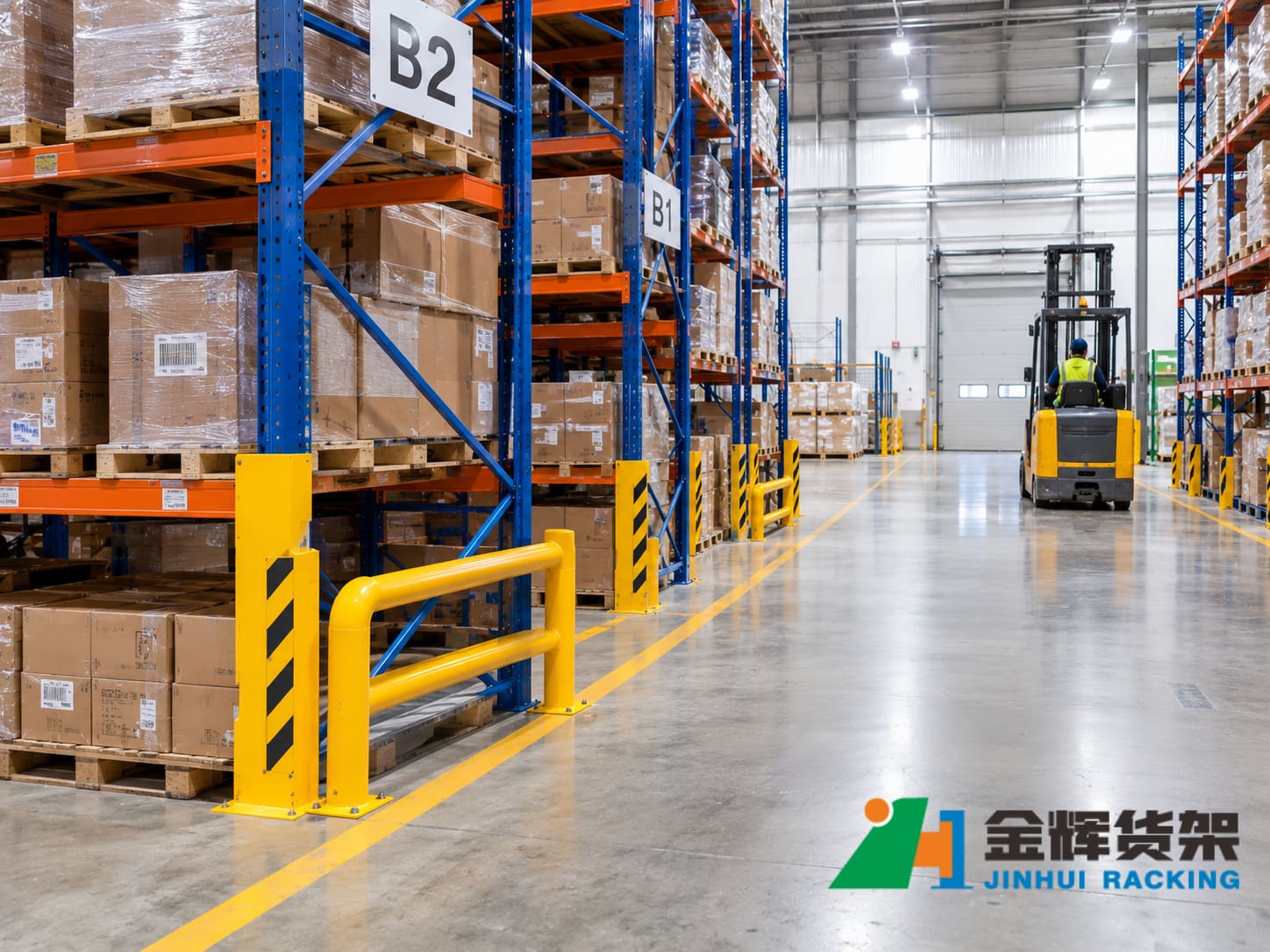
Upright protectors and rack end barriers can help protect vulnerable rack locations when correctly selected and positioned for the warehouse traffic layout.
Common Mistakes When Planning Pallet Rack Protection
Installing the Same Protector Everywhere
Different locations have different exposure levels and clearance constraints. A uniform approach may leave high-risk areas insufficiently protected or place unnecessary obstacles in areas with limited maneuvering space.
Choosing Accessories by Appearance Alone
Two products that look similar may have different mounting methods or intended uses. Confirm the specifications and compatibility before installation.
Reducing Aisle Clearance Without Reassessment
Barriers and guards occupy space. Check the revised aisle geometry and forklift turning path before returning the area to normal operation.
Assuming Protection Eliminates the Need for Inspections
Protective accessories may themselves become damaged, loose, or displaced. Continue inspecting the rack and its protective components according to the warehouse's procedures.
Covering Up Existing Rack Damage
A protector should not be used to hide a bent upright or other damaged structural component. Assess the condition and follow the approved repair or replacement process.
Pallet Rack Protection Planning Checklist
Use this checklist when reviewing rack protection in an existing warehouse or planning a new installation:
- High-risk rack locations have been identified through layout review and operational observation.
- Exposed uprights and rack ends have been evaluated for suitable protection.
- Protective accessories are compatible with the rack configuration.
- Forklift turning paths and loaded vehicle dimensions have been considered.
- Barriers do not obstruct access to pallet positions or required routes.
- Pedestrian routes and falling-load hazards have been assessed separately.
- Installation methods follow the relevant design and supplier requirements.
- Employees know how to report impacts and suspected rack damage.
- Protectors, barriers, and rack components remain accessible for inspection.
- Repeated impacts trigger a review of the underlying operating conditions.
Conclusion
Pallet rack safety accessories can play an important role in reducing exposure to forklift impacts, especially around exposed uprights, rack row ends, and busy warehouse intersections. However, effective protection depends on identifying the actual risk and selecting accessories that match the rack system and the operating environment.
Upright protectors, rack end barriers, safety guards, and load-retention components serve different purposes. They should be coordinated with forklift routes, aisle clearance, pedestrian access, and the warehouse's inspection procedures rather than installed as isolated products.
For a new warehouse project or an existing rack upgrade, provide the rack layout, pallet dimensions, forklift information, and details of high-risk areas before selecting protective accessories. This helps the project team evaluate a protection arrangement that supports both safe operation and practical access to stored goods.
JINHUI provides warehouse pallet racking solutions for industrial storage applications. Contact our team to discuss your rack configuration, warehouse layout, and project requirements.
Website: www.jinhui-rack.com
Contact page: Contact Us
Email: info@jhrack.com
WhatsApp: +86 185 0252 7163