What Are Pallet Rack Column Guards?
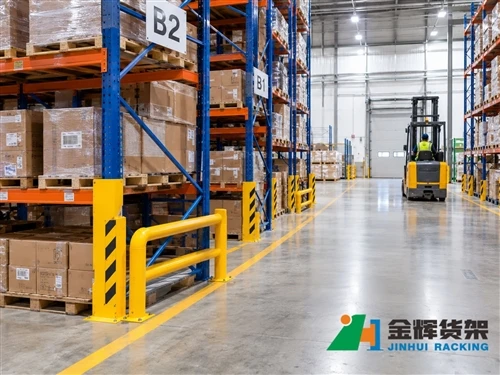
Pallet rack column guards are protective accessories installed around the lower sections of rack upright frames to reduce the risk of damage caused by forklifts, pallet trucks, and other material-handling equipment.
In a busy warehouse, forklift impact is one of the most common risks to pallet rack uprights. A properly selected column guard can absorb or deflect part of the impact and help protect the rack frame, floor anchors, and surrounding storage area.
Quick answer: Choose a pallet rack column guard based on the rack upright profile, forklift traffic, likely impact area, warehouse layout, and the manufacturer's rack design. A guard should protect the upright without interfering with pallets, forklifts, anchors, or required operating clearances.
For a broader understanding of selective pallet racking components and design, see JINHUI Selective Pallet Racking Systems.
Why Is Upright Protection Important in a Warehouse?
The lower portion of a pallet rack upright is particularly exposed because forklifts operate close to the rack structure during loading and unloading.
Even when forklift operators are trained, accidental contact can occur when entering an aisle, turning, positioning a pallet, or reversing from a storage location.
Repeated impacts can potentially cause:
- Upright dents or deformation
- Damage to protective coatings
- Damage around the base plate or anchor area
- Reduced structural integrity after significant impact
- Unplanned rack repair or replacement costs
- Increased safety risks if damage is not identified and controlled
Column guards should therefore be considered part of a warehouse rack protection strategy rather than simply an optional accessory.
Common Types of Pallet Rack Column Guards
Different warehouses require different levels of protection. The best solution depends on forklift traffic, rack configuration, available aisle space, and the location of potential impact.
| Guard Type | Typical Function | Best Application | Key Consideration |
|---|---|---|---|
| Steel Column Guard | Provides rigid protection around the upright | High forklift traffic areas | Must be correctly matched to the upright and installation area |
| Upright Protector | Protects the lower section of the rack frame | Standard pallet rack aisles | Check compatibility with the upright profile |
| End-of-Aisle Guard | Protects rack ends exposed to vehicle movement | Rack row ends and turning areas | Requires sufficient clearance for forklift operation |
| Barrier Protection | Creates a larger physical separation from traffic | High-risk forklift routes | Requires more floor space than a compact column guard |
Where Should Pallet Rack Column Guards Be Installed?
Protection should focus on locations where forklifts or pallet-handling equipment are most likely to contact the rack.
Typical protection points include:
- The front face of rack uprights
- Rack row ends
- Forklift turning areas
- Loading and unloading zones
- Locations close to dock or staging areas
- High-traffic warehouse aisles
- Areas where forklifts frequently reverse or reposition pallets
For long rack rows, it may not be necessary to treat every location identically. A project review should identify the actual traffic path and determine where higher levels of protection are justified.

How to Choose the Right Pallet Rack Column Guard
There is no single column guard that is suitable for every pallet racking installation. The guard should be selected together with the rack structure and warehouse operating conditions.
1. Check the Rack Upright Profile
Start by confirming the dimensions and shape of the rack upright. The guard needs to fit the upright properly and provide effective protection without interfering with the rack structure.
Do not select a guard based only on a nominal rack size. Different manufacturers and rack series can use different upright profiles, hole patterns, base plates, and connection arrangements.
2. Consider Forklift Traffic
The intensity and direction of forklift traffic directly affect the protection requirement.
| Warehouse Condition | Protection Priority | Recommended Approach |
|---|---|---|
| Low forklift traffic | Basic | Protect exposed rack uprights and monitor impact areas |
| Regular forklift traffic | Medium | Use dedicated upright protection in active aisles |
| Heavy forklift traffic | High | Consider stronger upright and end-of-aisle protection |
| High-risk turning areas | Very high | Consider additional barriers or reinforced protection |
3. Check Forklift Operating Clearance
A rack guard should reduce impact risk without creating a new obstruction for the forklift.
Before installation, check:
- Forklift turning radius
- Aisle width
- Forklift mast and load dimensions
- Pallet dimensions
- Rack face clearance
- Emergency access routes
- Pedestrian movement areas
This is especially important in narrow aisles, where even a relatively small change to the usable aisle space can affect forklift operation.
For more information on this relationship, see How to Protect Pallet Racking from Forklift Impact.
4. Check the Base Plate and Anchor Arrangement
The lower part of the rack frame includes the upright, base plate, and anchoring system. A protective guard should not prevent proper inspection, installation, or maintenance of these components.
The final arrangement should allow the rack anchoring system to function as designed and should not conceal important damage or create an installation condition that was not considered in the original rack design.
5. Consider the Warehouse Environment
Warehouse conditions can influence the appropriate protection material and configuration.
For example, cold storage, humid environments, food warehouses, outdoor loading areas, and chemically exposed environments may require additional consideration of corrosion resistance and cleaning requirements.
Column Guards vs End-of-Aisle Barriers
Column guards and end-of-aisle barriers both protect warehouse racking, but they address different risk areas.
| Feature | Column Guard | End-of-Aisle Barrier |
|---|---|---|
| Main Purpose | Protect an individual rack upright | Protect the end of a rack row |
| Protection Area | Localized | Wider protection zone |
| Floor Space | Generally more compact | Usually requires more space |
| Typical Risk | Direct contact with upright | Forklift impact at rack ends and turning areas |
| Best Use | Individual exposed uprights | High-risk traffic and row-end areas |
In some warehouse layouts, using both types of protection can provide a more comprehensive solution.
How Rack Layout Affects Column Protection
Rack protection should be considered during warehouse layout planning rather than added after the system is installed.
The rack depth, aisle width, pallet dimensions, forklift type, and traffic direction all influence the likelihood of impact.
For example, a warehouse using narrow aisles may require more careful protection planning because forklift operating tolerances are tighter. Similarly, racks located close to loading docks or cross-aisles may experience more vehicle movement than racks in low-traffic storage zones.
When reviewing rack depth and pallet clearance, see How to Choose the Right Pallet Rack Depth for Your Warehouse.
Common Mistakes When Installing Rack Column Guards
Using a Guard That Does Not Match the Upright
A guard that does not fit the rack upright correctly may provide incomplete protection or create installation problems.
Ignoring Forklift Clearance
Adding protection without reviewing the forklift operating path can reduce usable clearance and create new collision risks.
Protecting Only the Rack Front
In many warehouses, rack ends, intersections, and turning zones may also be exposed to impact. Protection should follow the actual traffic pattern rather than simply protecting the most visible upright.
Assuming a Guard Makes a Damaged Rack Safe
A column guard is a preventive protection device. It should not be used to hide, cover, or compensate for a structurally damaged rack upright.
If a rack has already experienced a significant impact, the damaged component should be assessed according to the applicable inspection and engineering requirements before continued use.
How Column Guards Support Pallet Rack Safety
Column protection works best as part of a broader warehouse rack safety program.
- Use appropriate forklift operating procedures.
- Keep aisles clear and maintain defined traffic routes.
- Inspect rack uprights and beams regularly.
- Identify and isolate significantly damaged rack components.
- Use suitable rack protection in high-risk areas.
- Do not exceed the rated load capacity of the rack.
- Follow the rack manufacturer's installation and maintenance requirements.
- Apply local warehouse safety and engineering requirements.
When Should You Add or Upgrade Rack Column Protection?
Consider reviewing rack protection when:
- Forklift traffic has increased.
- The warehouse layout has changed.
- Aisles have become narrower because of new storage requirements.
- New forklifts or material-handling equipment have been introduced.
- Rack rows have been extended.
- Repeated impact marks are found on rack uprights.
- Loading or staging areas have moved closer to the rack system.
- The warehouse has experienced a rack impact incident.
Protection should be reviewed whenever the warehouse operating conditions change significantly.
Pallet Rack Column Guard Selection Checklist
| Check Item | What to Confirm |
|---|---|
| Rack upright | Profile, dimensions, and compatibility with the guard |
| Forklift traffic | Traffic volume, direction, turning points, and impact risk |
| Aisle clearance | Guard installation does not compromise forklift operation |
| Base plate and anchors | Protection does not interfere with anchoring or inspection |
| Rack ends | Additional end-of-aisle protection where required |
| Warehouse environment | Corrosion, cleaning, temperature, and operating conditions |
| Safety requirements | Applicable local regulations and manufacturer requirements |
Frequently Asked Questions
Are pallet rack column guards necessary?
They are not automatically required for every rack installation, but they can significantly reduce the risk of forklift impact to exposed rack uprights. Their suitability depends on the warehouse layout, traffic pattern, rack configuration, and applicable safety requirements.
What is the difference between a column guard and an upright protector?
The terms are often used interchangeably in the warehouse racking industry. In practice, both generally refer to protection designed to reduce impact risk around the lower portion of a rack upright. The exact design and installation method can vary by manufacturer.
Can a column guard protect a damaged rack upright?
No. A protective guard is not a substitute for inspection or repair of structural damage. A rack that has been impacted should be assessed before deciding whether it can remain in service.
Should rack ends have additional protection?
Rack ends are often exposed to forklift traffic, turning movements, and cross-aisle activity. Depending on the warehouse layout, additional end-of-aisle protection may be appropriate.
How do I choose the correct column guard for my pallet rack?
Confirm the upright profile, potential impact direction, forklift traffic, aisle clearance, base plate and anchor arrangement, warehouse environment, and applicable safety requirements. For a project-specific solution, the rack manufacturer or qualified engineering team should review the actual rack and warehouse layout.
Get the Right Pallet Rack Protection for Your Warehouse
Choosing the right pallet rack column guards is not simply a matter of selecting the strongest accessory. The protection should match the rack structure, forklift operation, warehouse layout, and project safety requirements.
JINHUI RACK can support customized warehouse racking projects by reviewing warehouse dimensions, pallet specifications, forklift requirements, rack configuration, and accessory requirements. The company's selective pallet racking solutions also include accessory selection and project design support.
Ready to improve your pallet rack protection? Send us your warehouse layout, rack dimensions, pallet size, pallet weight, and forklift information. Our team can help you evaluate the appropriate rack protection and storage solution for your project.
WhatsApp: +86 185 0252 7163
Email: info@jhrack.com
Website: https://www.jinhui-rack.com/
Contact JINHUI RACK today for a customized warehouse racking and protection solution.