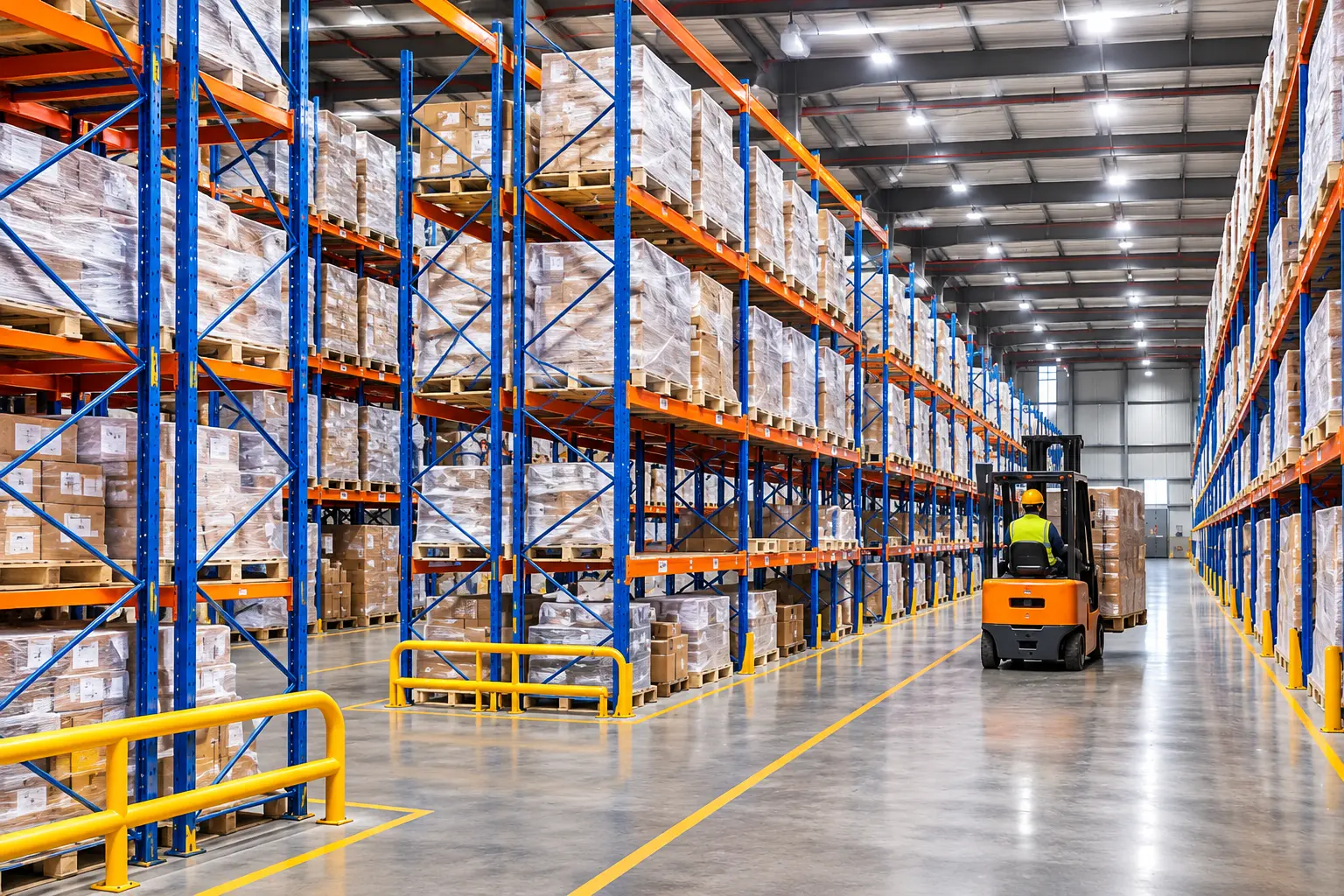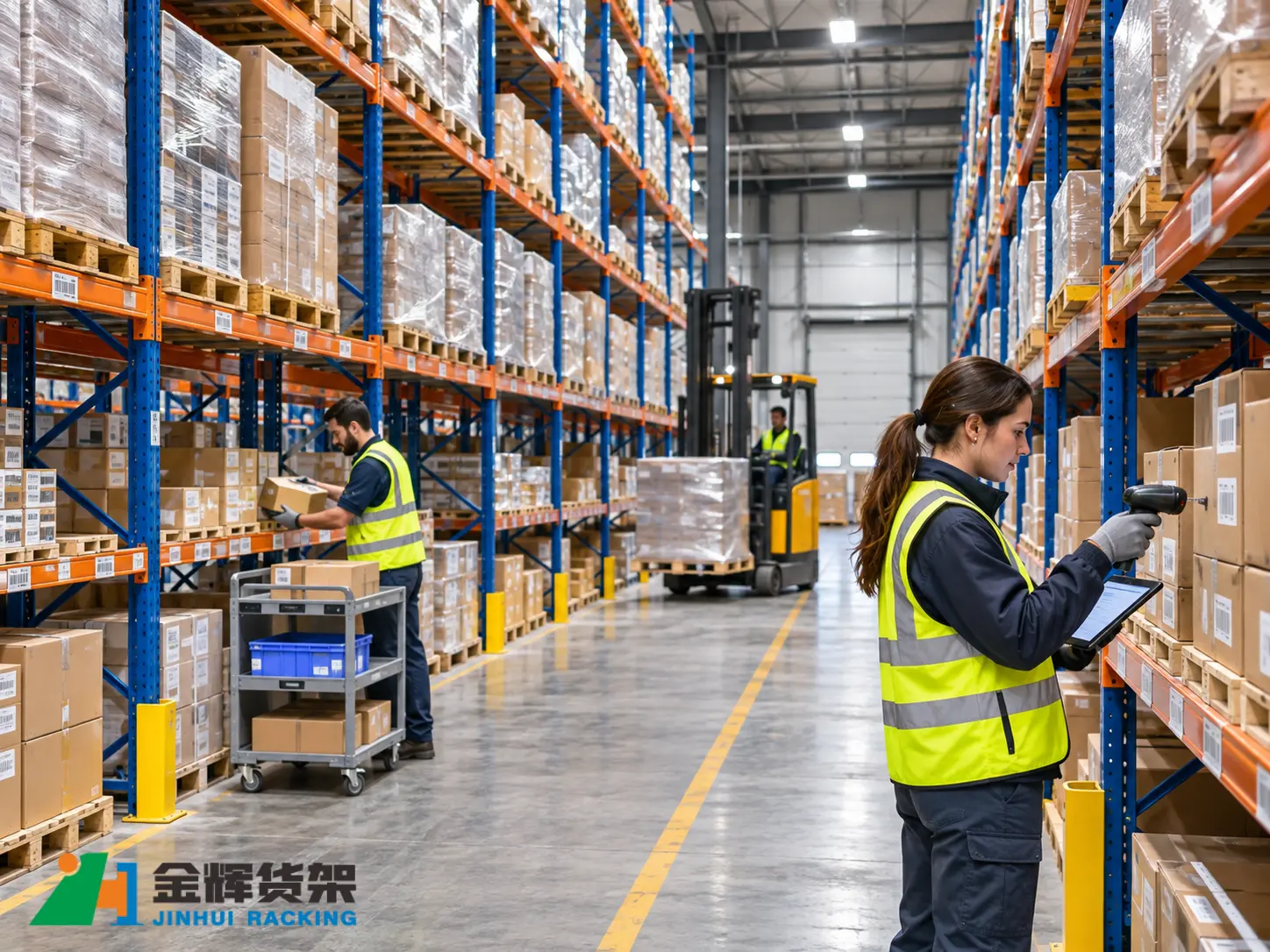
Choosing the correct pallet rack depth is essential when designing an efficient warehouse storage system. Rack depth needs to match the pallet dimensions, load characteristics, required clearance, forklift operating conditions, and overall warehouse layout.
A rack that is too shallow may provide insufficient support for the pallet, while a rack that is unnecessarily deep can waste storage space and make pallet handling more difficult. For this reason, pallet rack depth should be determined as part of the overall rack design rather than selected as an isolated dimension.
For warehouses using selective pallet racking, the relationship between pallet dimensions and rack depth is especially important because operators need direct access to individual pallet positions from the aisle.
Quick Answer
The right pallet rack depth depends primarily on pallet dimensions, load overhang, beam configuration, rack frame geometry, and the required operating clearance. The rack should provide stable pallet support without creating excessive unused space behind or around the load.
What Is Pallet Rack Depth?
Pallet rack depth refers to the front-to-back dimension of a pallet rack frame or storage position.
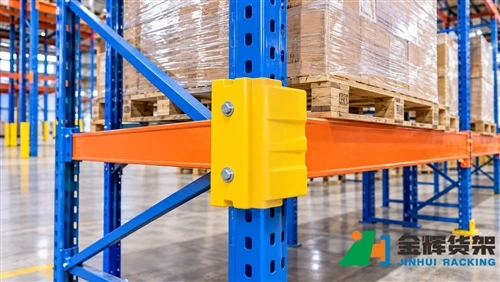
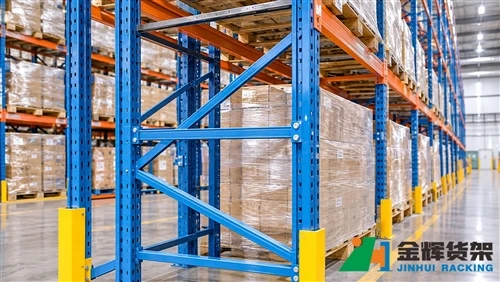
In a typical selective pallet racking system, pallets are stored between two upright frames and supported by horizontal beams. The rack depth determines how far the pallet extends from the front of the rack toward the back.
Rack depth should not simply be interpreted as the pallet depth. The two dimensions are related, but they are not necessarily identical.
A properly designed pallet rack normally allows the pallet to sit securely on the supporting beams while maintaining suitable positioning and clearance.
Why Pallet Rack Depth Matters
Rack depth affects several aspects of warehouse operation at the same time.
- Pallet stability
- Available storage space
- Pallet positioning
- Forklift access
- Load overhang
- Storage density
- Rack footprint
- Warehouse aisle layout
If rack depth is poorly selected, the warehouse may experience either wasted space or insufficient pallet support.
For example, a rack designed significantly deeper than the stored pallet may create unused space behind the pallet. Conversely, a rack that is too shallow may not provide the required pallet support.
This is why pallet dimensions should be one of the first pieces of information collected when designing a pallet racking system.

Pallet rack depth should be coordinated with the actual pallet dimensions and load characteristics.
Start With the Pallet Dimensions
The most important starting point when selecting rack depth is the pallet itself.
Before specifying a rack, warehouse operators should identify:
- Pallet length
- Pallet width
- Loaded pallet dimensions
- Maximum pallet weight
- Load overhang
- Pallet type
- Variation between different pallet sizes
It is important to measure the loaded pallet, not only the empty pallet.
Products may extend beyond the pallet footprint, especially when cartons, bags, drums, or other goods are stacked on the pallet.
For warehouses with multiple pallet types, the rack configuration should be designed around the actual range of loads that will be stored.
Pallet Depth Is Not Always the Same as Rack Depth
One common misunderstanding in warehouse planning is assuming that pallet depth and rack depth should always be exactly the same.
In practice, the rack needs to accommodate the pallet while providing appropriate support and positioning.
The exact relationship depends on the pallet design, beam arrangement, rack frame configuration, load overhang, and applicable engineering requirements.
For example, if the pallet is deeper than the rack frame, part of the pallet may extend beyond the frame. If the rack is significantly deeper than the pallet, unused space may remain behind the stored load.
Neither situation should be evaluated only from a simple dimensional perspective. The complete rack system needs to be engineered for the intended pallet and load.
How Pallet Overhang Affects Rack Depth
Load overhang is an important consideration when determining pallet rack depth.
Some pallets may be loaded so that the products extend slightly beyond the pallet edges. Other loads may remain completely within the pallet footprint.
The designer should understand:
- Whether the pallet itself overhangs the rack
- Whether the product extends beyond the pallet
- Whether front or rear overhang is expected
- How much clearance is available between adjacent loads
Overhang should be considered during rack design rather than treated as an installation adjustment.
Unexpected overhang can reduce usable aisle clearance and may create difficulties during forklift pallet retrieval.
How Rack Depth Affects Warehouse Storage Density
Increasing rack depth can sometimes appear to be an easy way to increase storage capacity, but deeper racks do not automatically produce a more efficient warehouse.
Storage efficiency depends on the relationship between rack depth, pallet size, aisle width, rack height, and warehouse layout.
For example, a deeper rack may slightly increase the amount of storage space used by each rack row, but it can also reduce the amount of floor space available for aisles or other operational areas.
Warehouse planning should therefore evaluate the complete footprint.
A useful way to think about the relationship is:
Rack Depth + Aisle Width + Rack Depth = Storage Module
For a back-to-back selective rack arrangement, the depth of both rack rows and the aisle between them determine the overall footprint of the storage module.
Single-Row and Back-to-Back Rack Depth
Pallet racks are frequently arranged in back-to-back rows to improve the use of warehouse floor space.
In this configuration, two rack rows share a common back-to-back arrangement while forklifts operate in aisles on both sides.
The overall footprint depends on:
- Depth of each rack row
- Back-to-back clearance
- Forklift aisle width
- Rack row length
- Building columns and obstacles
For a large distribution warehouse, small changes in rack depth can therefore affect the layout across hundreds of pallet positions.
Our previous article about pallet rack row length explains another important dimension that should be considered together with rack depth.
Rack Depth and Forklift Access
Rack depth also needs to work with the material handling equipment used in the warehouse.
Forklift operators need enough room to approach the rack, enter the pallet position, and retrieve the load without contacting the rack structure or adjacent pallets.
The selected rack depth should therefore be evaluated together with:
- Forklift type
- Fork length
- Pallet dimensions
- Aisle width
- Load weight
- Operator visibility
A deeper rack does not necessarily require a wider aisle, but the complete rack and forklift configuration must provide sufficient operating clearance.
This is particularly important in high-density warehouses where aisles are designed to minimize unused floor space.
How Pallet Rack Depth Relates to Aisle Width
Rack depth and aisle width should be considered together during warehouse layout planning.
A warehouse may use relatively deep racks while maintaining an efficient layout if the forklift equipment and operating requirements are appropriate.
However, reducing aisle width too aggressively can make pallet handling difficult and may reduce operational efficiency.
The objective is not simply to minimize aisle width. The objective is to create the best balance between:
- Storage capacity
- Forklift maneuverability
- Pallet accessibility
- Operator safety
- Warehouse throughput
Our guide on warehouse aisle width and pallet racking can be used alongside this article when planning the complete storage layout.
How Rack Depth Affects Pallet Accessibility
Selective pallet racking is commonly chosen because each pallet position can be accessed directly from the operating aisle.
Maintaining the correct rack depth helps preserve this accessibility.
If pallets are positioned too far toward the back of the rack, forklift operators may have difficulty engaging the pallet correctly.
If pallets extend excessively into the aisle, they can reduce operating clearance and potentially interfere with forklift movement.
Correct pallet positioning is therefore just as important as the nominal rack dimensions.
Correct rack depth helps maintain pallet support while leaving sufficient operating space in the forklift aisle.
Different Pallets May Require Different Rack Configurations
Not every warehouse uses the same pallet dimensions.
Some facilities may handle standardized pallets throughout the building, while others store products on several pallet sizes.
When pallet dimensions vary significantly, several approaches may be considered:
- Using different rack depths in different warehouse zones
- Creating dedicated storage areas for specific pallet sizes
- Using a standardized rack configuration where practical
- Adjusting beam and frame configurations to accommodate different loads
The best approach depends on the inventory profile and how frequently each pallet type is handled.
Trying to force every pallet type into one rack configuration may create unnecessary empty space or operational problems.
Rack Depth for High-Density Storage
High-density warehouses often focus heavily on maximizing the number of pallet positions within a limited footprint.
However, storage density should not be evaluated by rack depth alone.
Other factors include:
- Rack height
- Aisle width
- Number of rack rows
- Storage level spacing
- Pallet dimensions
- Inventory turnover
- Required pallet accessibility
For example, increasing rack height may create additional pallet positions without increasing the rack footprint. In another warehouse, changing the rack layout may provide a better result than simply making the racks deeper.
This is why rack design should be based on the warehouse's complete storage objective.
Rack Depth and Beam Configuration
The rack beam arrangement also needs to work with the selected rack depth.
Horizontal beams support the pallets and transfer the load to the upright frames. Their location, length, and capacity need to correspond with the intended pallet arrangement.
Beam selection should consider:
- Pallet weight
- Number of pallets per bay
- Pallet dimensions
- Beam span
- Number of storage levels
- Required safety factors
Rack depth should therefore be specified together with the beam and upright system rather than purchased as an independent dimension.
How to Choose Pallet Rack Depth Step by Step
Step 1: Measure the Pallet
Record the actual pallet length and width.
Step 2: Measure the Loaded Pallet
Determine whether the stored products extend beyond the pallet footprint.
Step 3: Determine Maximum Load Weight
Identify the maximum pallet load that the rack will need to support.
Step 4: Determine Pallet Orientation
Confirm how the pallet will be positioned within the rack and how the forklift will approach the load.
Step 5: Determine the Required Rack Depth
Use the pallet dimensions, support requirements, and load configuration to establish an appropriate rack depth.
Step 6: Check Forklift Requirements
Confirm that the forklift can safely access the pallet at the selected rack depth.
Step 7: Check Aisle Requirements
Evaluate the rack depth together with the required forklift aisle width.
Step 8: Review the Complete Warehouse Layout
Check the relationship between rack depth, row length, columns, doors, receiving areas, shipping areas, and pedestrian routes.
Step 9: Consider Future Storage Requirements
If pallet dimensions or product packaging may change, leave sufficient flexibility in the rack design.
Common Mistakes When Selecting Pallet Rack Depth
1. Matching Rack Depth to the Empty Pallet Only
The loaded pallet may have a larger effective footprint than the empty pallet.
2. Making the Rack Excessively Deep
Extra depth can create unused space and increase the warehouse footprint.
3. Ignoring Load Overhang
Products extending beyond the pallet should be included in the storage design.
4. Looking at Rack Depth Without Aisle Width
The storage module includes both rack space and operating space.
5. Using One Configuration for Every Pallet Type
Significantly different pallet dimensions may require different storage zones or configurations.
6. Ignoring Future Inventory Changes
A rack configuration designed around one pallet size may become less efficient if the warehouse later handles different products.
Pallet Rack Depth and Selective Pallet Racking
Selective pallet racking is a practical option for warehouses that require direct access to individual pallet positions.
Its modular structure allows rack dimensions and beam levels to be configured according to the warehouse's pallet sizes, load requirements, and storage objectives.
For standard warehouse applications, the system can be designed around the most common pallet dimensions while maintaining suitable aisle access.
For facilities with different inventory categories, rack configurations can also be organized into dedicated storage zones.
Jinhui Rack provides industrial pallet racking systems for warehouses that require different storage capacities, rack dimensions, and layout configurations.
Consistent rack depth and pallet alignment help create an organized and efficient selective storage layout.
Final Thoughts
The right pallet rack depth should provide stable pallet support while making efficient use of warehouse space and maintaining practical forklift access.
Rack depth should be determined from the actual pallet and load dimensions rather than selected simply because it is a common rack size.
Warehouse operators should consider pallet dimensions, load overhang, rack configuration, forklift requirements, aisle width, storage density, and future inventory changes before finalizing the design.
When these factors are evaluated together, pallet rack depth can contribute to a more efficient storage layout without sacrificing accessibility or operational safety.
Need help choosing the right pallet rack depth?
Share your pallet dimensions, maximum load weight, warehouse dimensions, forklift type, and required pallet positions with Jinhui Rack. Our team can help evaluate a suitable rack depth and overall storage configuration.
Talk to Jinhui Rack
Send us your pallet size, load capacity, warehouse dimensions, and storage requirements for a pallet racking solution designed around your actual operating conditions.
WhatsApp: +86 185 0252 7163
Email: info@jhrack.com