Pallet Rack Pallet Support Bars: Installation, Compatibility and Inspection Checks
Pallet support bars are supplementary components used in some pallet racking systems to provide additional support beneath stored pallets. They are commonly installed across a pair of rack beams to help support pallet runners, improve load positioning, or accommodate pallet types that require additional support.
Although these components may look simple, their dimensions, positioning, connection method, and compatibility with the rack system are important. Incorrectly selected or installed support bars may not provide the intended support and can introduce unexpected loading conditions.
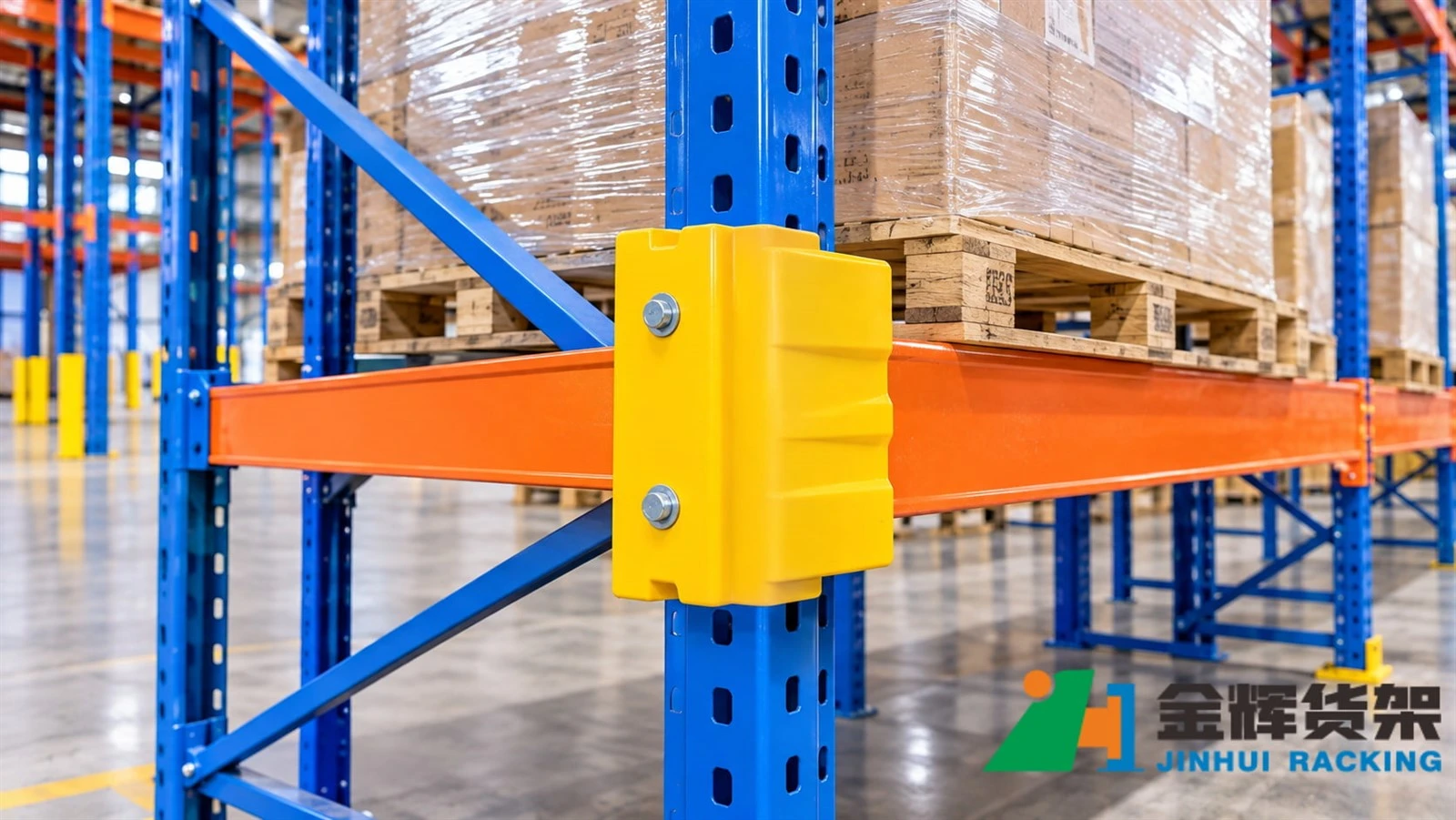
Pallet support bars provide additional support beneath pallets when specified for the rack configuration.
1. What Are Pallet Rack Pallet Support Bars?
Pallet support bars are steel members installed between or across rack beams to provide an additional supporting surface for pallets. Their exact arrangement depends on the rack design and the type of pallet being stored.
Common configurations may include:
- Transverse support bars: Members positioned across the depth of a storage bay to support pallet runners or contact areas.
- Longitudinal support members: Members arranged along the storage direction where specified by the rack design.
- Dedicated pallet support components: Specially designed supports with end fittings or fixing details compatible with a particular beam system.
Terminology and construction vary among manufacturers. Pallet support bars should be identified by their actual design and installation arrangement rather than by appearance alone.
2. Why Are Pallet Support Bars Used?
2.1 Supporting pallet runners
Some pallets have bottom runners or support blocks that require suitable contact points. Support bars can provide additional bearing locations when the rack configuration is designed for this arrangement.
2.2 Accommodating specific pallet designs
Different pallet types have different bottom structures. A pallet with narrow runners, unusual dimensions, or a particular entry configuration may require additional support depending on its design and the rack layout.
2.3 Helping maintain pallet positioning
When correctly designed and installed, support bars can help provide a more suitable support arrangement beneath a pallet. They should not be assumed to act as pallet stops or fall-prevention devices unless they have been specifically designed for that function.
2.4 Supporting selected storage configurations
Some storage applications use support bars as part of a defined rack configuration. Their number, spacing, orientation, and connection details should follow the approved drawings and component specifications.
3. Pallet Support Bars vs. Wire Decking
Pallet support bars and wire decking are both used to provide additional support within pallet rack bays, but they have different structures and applications.
| Comparison | Pallet support bars | Wire decking |
|---|---|---|
| Structure | Individual steel support members | Welded wire mesh panel |
| Support surface | Defined contact lines or points | Broader mesh support surface |
| Typical purpose | Support specific pallet bottom structures | Provide a more continuous supporting surface |
| Installation | Positioned and secured according to the support design | Installed across compatible beam supports |
| Compatibility | Depends on pallet geometry and rack configuration | Depends on panel dimensions, beam design, and support requirements |
Neither option is automatically suitable for every pallet. The correct selection depends on pallet construction, load distribution, rack design, and the manufacturer's specifications.
4. Important Factors When Selecting Pallet Support Bars
4.1 Rack beam compatibility
Support bars must be compatible with the beam profile, beam spacing, and intended installation arrangement. Their end fittings or bearing details should match the approved design.
A support bar that appears to fit between two beams may still have unsuitable contact, retention, or load-transfer characteristics.
4.2 Pallet dimensions and bottom structure
Confirm the pallet length, width, runner arrangement, and bottom-board spacing. The support positions should correspond to suitable pallet contact areas.
Particular attention is needed when the warehouse handles multiple pallet types. A support arrangement designed for one pallet configuration may not provide appropriate support for another.
4.3 Load distribution
Review the pallet gross weight and how the load is distributed across the pallet base. Support bars should be selected as part of the complete rack loading design, not simply chosen according to the apparent weight of an individual pallet.
4.4 Support bar dimensions and material
Length, cross-sectional shape, thickness, material, and connection details all influence the performance of a support bar. Replacement components should match the approved specifications.
4.5 Operating environment
Warehouse conditions may influence material selection and maintenance requirements. Corrosion exposure, temperature conditions, handling practices, and cleaning procedures should be considered where relevant to the application.
5. Installation Checks for Pallet Support Bars
Correct installation is important to ensure that support bars provide the intended pallet support. The following points should be checked against the manufacturer's installation instructions.
5.1 Confirm the installation layout
Before installation, compare the proposed support arrangement with the approved rack drawings. Confirm the number of bars, orientation, spacing, and intended bearing locations.
5.2 Check the beam contact points
Verify that the support bars sit on the intended beam surfaces or approved connection points. They should not be positioned on unsuitable edges or areas that were not designed to carry the transferred load.
5.3 Verify the fixing or retention method
Where support bars use hooks, clips, brackets, or other retaining details, confirm that these components are correctly engaged and compatible with the rack system.
5.4 Confirm the support spacing
Measure or verify the spacing between support bars according to the approved arrangement. The spacing should suit the pallet's bottom structure and intended load distribution.
5.5 Check for interference
Confirm that the installed supports do not interfere with pallet entry, forklift handling, beam connectors, or other rack components. Also check that pallets can be placed and retrieved without catching on improperly positioned members.
5.6 Conduct an installation review
Before the storage bay returns to operation, inspect the completed installation and confirm that the components match the approved design. Any uncertainty about compatibility or support capacity should be resolved before loading.
6. Common Pallet Support Bar Problems
Support bars should be included in routine rack inspections. The following conditions may indicate installation problems, impact damage, or deterioration.
| Observed condition | Possible concern | Recommended response |
|---|---|---|
| Bent support bar | Impact or excessive loading | Control the affected storage position and arrange assessment. |
| Missing support bar | Incomplete support arrangement | Compare the installation with the approved layout. |
| Displaced support bar | Incorrect positioning or failed retention | Check the fixing method and component compatibility. |
| Cracked or damaged connection | Potential loss of secure support | Restrict use where necessary and obtain technical assessment. |
| Visible corrosion | Possible material deterioration | Assess the extent and impact of corrosion. |
| Uneven support arrangement | Incorrect spacing or installation | Verify the original support layout and pallet dimensions. |
7. How to Inspect Pallet Support Bars
A practical inspection should consider the support bars, their connections, and the pallet contact conditions together.
7.1 Inspect the full length of each bar
Look for bending, twisting, cracks, dents, corrosion, and other visible damage. Check both ends and the central portion of each accessible support member.
7.2 Check the connection and retention points
Verify that the support bars remain in their intended positions and that specified hooks, clips, or brackets are present and correctly engaged.
7.3 Review pallet contact conditions
Check whether the pallet runners or bottom support structure rest on the intended contact areas. Look for evidence of unstable positioning, damaged pallet boards, or repeated contact damage.
7.4 Look for impact marks
Forklift handling and pallet placement can cause accidental contact with support bars. Inspect for impact dents, displaced members, and damaged fixing details.
7.5 Verify that no unauthorized changes have been made
Check for additional welded plates, drilled holes, improvised spacers, or substituted components. Any modification to a structural support arrangement requires appropriate technical review.
8. Common Mistakes to Avoid
- Using incompatible support bars: Similar-looking components may have different dimensions or connection details.
- Assuming all pallets are identical: Different pallet bottom structures may require different support arrangements.
- Changing support spacing without approval: Altered positions may create unsuitable pallet contact conditions.
- Ignoring damaged bars: Bent or displaced members should be assessed rather than left in service without review.
- Using support bars as a substitute for a different system: They should not automatically replace wire decking, pallet stops, or other components with different functions.
- Exceeding approved loading conditions: Additional support members do not automatically increase the rated capacity of the rack beams or complete storage system.
9. Maintenance and Replacement Recommendations
Regular maintenance helps warehouse operators identify support bar problems and maintain the intended storage arrangement.
- Include pallet support bars in routine rack inspections.
- Check support components after reported forklift impacts.
- Keep installation drawings and component specifications accessible.
- Use compatible replacement components approved for the rack system.
- Review pallet dimensions when introducing new pallet types.
- Record missing, bent, displaced, or corroded support bars.
- Train warehouse staff to report damage instead of attempting improvised repairs.
Inspection frequency should reflect the warehouse operating environment, applicable requirements, and the manufacturer's recommendations.
10. Information to Confirm Before Ordering Replacement Support Bars
Before selecting replacement components, confirm the following details:
- Rack manufacturer and system identification.
- Beam profile, length, and spacing.
- Support bar length and cross-sectional profile.
- End fitting or connection design.
- Required number and positioning of support bars.
- Pallet dimensions and bottom runner arrangement.
- Approved storage loads and loading configuration.
- Any previous modifications or damage to the support system.
Providing these details helps ensure that the replacement components are compatible with the existing rack design and intended pallet application.
Conclusion
Pallet rack pallet support bars provide additional support for selected pallet configurations when they are correctly designed and installed. Their effectiveness depends on compatibility with the rack beams, pallet dimensions, support spacing, connection details, and approved loading conditions.
By checking component condition, installation position, pallet contact points, and fixing arrangements, warehouse operators can identify potential support problems and maintain a more reliable storage system. Damaged or incompatible components should be assessed and replaced according to the manufacturer's specifications rather than modified through improvised repairs.
Contact Us
Looking for pallet racking solutions or technical support for your warehouse storage project? Contact Jinhui Rack to discuss your pallet dimensions, storage requirements, and rack configuration.
Email: info@jhrack.com
WhatsApp: +86 185 0252 7163