Choosing the right pallet rack beam spacing is an important part of designing an efficient warehouse storage system. The vertical distance between pallet rack beams determines how much space is available for each pallet load and directly affects the number of storage levels that can be installed within the available warehouse height.
Beam spacing should not be selected simply by using an identical distance throughout the warehouse. The correct spacing depends on pallet height, load characteristics, rack height, forklift operation, required clearance, and the way inventory is organized.
For warehouses storing pallets with different product heights, adjustable beam levels can provide greater flexibility. However, beam positions still need to remain within the engineered requirements of the pallet racking system.
Quick Answer
The right pallet rack beam spacing should accommodate the maximum loaded pallet height while providing sufficient clearance for forklift placement and retrieval. Efficient spacing uses the available vertical space without creating unnecessary gaps between storage levels.
What Is Pallet Rack Beam Spacing?
Pallet rack beam spacing refers to the vertical distance between horizontal beams or between the supporting levels of a pallet rack system.
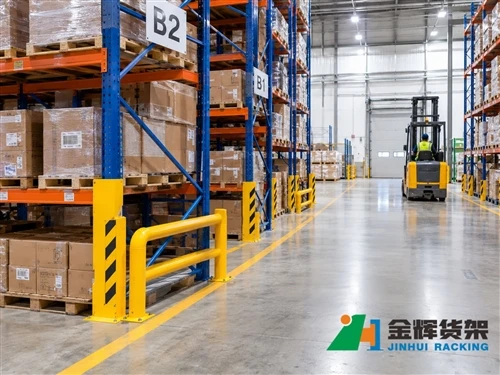
In a typical selective pallet racking system, horizontal beams connect the upright frames and support pallets at different storage levels.
The vertical spacing between these beams determines the usable storage height available for each pallet position.
For example, a warehouse may have floor-level pallet storage followed by several elevated beam levels. Each level needs enough vertical space for the intended palletized load, forklift operation, and required clearance.
The objective is to create enough space for safe pallet handling while avoiding excessive unused vertical space.
Why Beam Spacing Matters in Warehouse Storage
Beam spacing has a direct effect on both storage capacity and warehouse operations.
If beam levels are spaced too far apart, valuable vertical space may remain unused. If they are spaced too closely, pallets may not fit comfortably or forklift operators may have difficulty positioning the loads.
Correct beam spacing can help warehouses:
- Use vertical warehouse space more efficiently
- Accommodate different pallet heights
- Increase the number of practical storage levels
- Maintain suitable pallet clearance
- Improve forklift access
- Reduce wasted space between storage levels
- Create a more organized storage system
For this reason, beam spacing should be considered during the initial rack design rather than adjusted after the system has been installed.

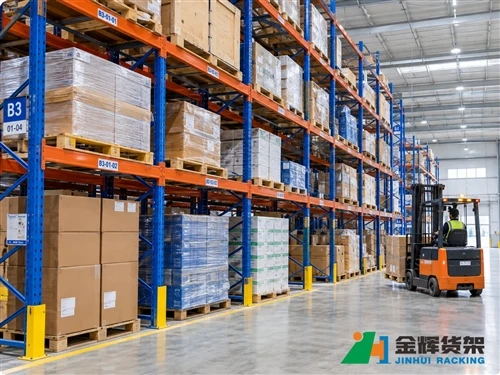
Beam levels should provide enough vertical clearance for the palletized loads while making efficient use of warehouse height.
Start With the Actual Loaded Pallet Height
The first factor to consider when determining beam spacing is the height of the loaded pallet.
The empty pallet itself is only part of the calculation. Products stacked on the pallet may significantly increase the total height.
Warehouse operators should identify:
- Empty pallet height
- Product height
- Total loaded pallet height
- Maximum expected load height
- Variation between different SKUs
- Potential changes in packaging or product dimensions
Using only the average pallet height may create problems when an unusually tall load needs to be stored.
For warehouses with highly variable inventory, the maximum practical load height should be considered when establishing the beam configuration.
Beam Spacing Should Include Operating Clearance
Beam spacing is not simply the height of the pallet.
There needs to be sufficient vertical space between the top of the stored load and the beam or structure above it to allow the forklift operator to place and retrieve the pallet.
Without adequate clearance, the forklift may have difficulty entering the pallet position or removing the load without contacting the rack or another stored pallet.
The exact clearance required depends on the pallet dimensions, load characteristics, forklift type, handling method, and rack configuration.
Therefore, beam spacing should be established as part of the complete storage and handling design.
How Beam Spacing Affects the Number of Storage Levels
Warehouse clear height places an upper limit on how many practical storage levels can be installed.
If the available building height allows additional levels, optimized beam spacing can help make better use of that space.
For example, consider a warehouse where the available rack height allows either three or four practical pallet levels.
If the beam spacing is unnecessarily large, the fourth level may not fit within the available vertical space.
If the spacing is carefully planned around the actual pallet loads, an additional storage level may become possible.
This can increase pallet positions without increasing the warehouse floor footprint.
However, adding another beam level also increases the total rack load and may change forklift requirements. Therefore, storage-level calculations should always be reviewed together with rack capacity and handling equipment.
Different Pallet Heights May Need Different Beam Spacing
Not every warehouse stores identical pallets.
A distribution center may handle consumer goods, industrial components, packaged materials, or other products with significantly different pallet heights.
For example, one SKU may use a relatively low palletized load while another SKU may be considerably taller.
If all beam levels are installed with exactly the same spacing, the warehouse may end up with unused vertical space above shorter loads.
In some applications, different sections of the warehouse can therefore be configured with different beam positions.
This creates a more flexible storage layout while maintaining direct access to individual pallet positions.
Adjustable Beam Levels in Selective Pallet Racking
One of the advantages of selective pallet racking is the ability to configure beam levels according to the storage requirements.
Depending on the rack system, beams can be installed at different vertical positions to accommodate different pallet heights and storage objectives.
This adjustability is particularly useful for warehouses where inventory dimensions are not completely standardized.
However, warehouse operators should not move beams randomly simply to create additional space. Beam positions need to follow the rack manufacturer's configuration and engineering requirements.
The rack should be treated as an engineered storage structure rather than a collection of independent components.
How Pallet Load Weight Relates to Beam Spacing
Beam spacing and load capacity are closely connected.
The number of storage levels affects how much total load is carried by the upright frames. Beam capacity also needs to be appropriate for the pallet loads stored on each level.
Important factors include:
- Load weight per pallet
- Number of pallets per beam level
- Beam span
- Number of beam levels
- Overall rack height
- Upright frame capacity
- Warehouse operating conditions
Adding more beam levels may increase pallet positions, but it does not mean the rack can automatically support the same load at every configuration.
For heavy-duty applications, beam capacity and upright frame capacity should be evaluated together.
Our previous article on pallet rack load capacity provides additional information about the relationship between rack configuration and load requirements.
Beam Spacing and Forklift Operation
Forklift operation is another major consideration.
As the storage level becomes higher, the forklift needs to position the pallet accurately at the corresponding beam level.
Beam spacing should therefore provide sufficient room for:
- Fork entry
- Pallet positioning
- Load retrieval
- Operator visibility
- Mast movement
- Safe placement of the pallet
The forklift's lifting capability also needs to match the highest storage level.
A rack may have sufficient physical height for several storage levels, but if the available forklift cannot safely handle the required load at the upper level, that configuration may not be practical.
Beam Spacing and Pallet Rack Height
Beam spacing should always be considered together with overall pallet rack height.
A taller rack creates more potential vertical storage space, but the available height needs to be divided into practical storage levels.
For example, a warehouse may have enough clear height for a tall selective rack, but the actual number of storage levels will depend on pallet height and the required clearance at each level.
This is why rack height and beam spacing should be developed as part of the same design process.
Our previous article, How to Choose the Right Pallet Rack Height, explains the broader considerations involved in using available vertical warehouse space.
How Beam Spacing Affects Storage Efficiency
One of the main goals of adjustable beam spacing is to reduce unnecessary empty space.
Consider a warehouse storing pallets with different heights.
If the shortest and tallest pallet loads are stored using exactly the same vertical spacing, shorter loads may leave a large amount of unused space above them.
By organizing inventory according to load height, warehouse operators may be able to create more efficient vertical storage zones.
For example:
- Low-profile pallet loads can use lower beam spacing
- Medium-height pallet loads can use standard storage levels
- Taller pallet loads can be assigned to areas with greater vertical clearance
This approach can be especially useful in warehouses with a wide SKU range.
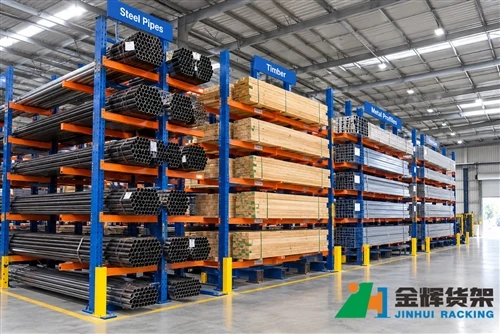
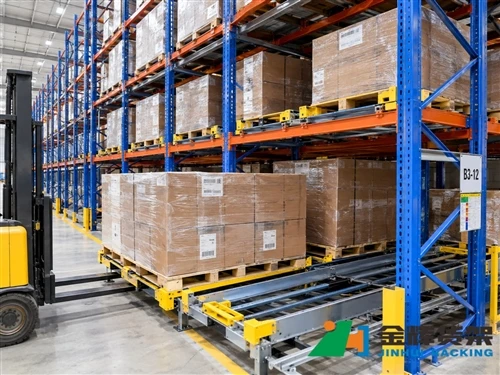
Different pallet load heights can influence beam-level positioning and warehouse storage zoning.
Consider Pallet Load Stability
Pallet height is not the only characteristic that matters.
Load stability should also be considered when determining the storage configuration.
Tall or unstable loads may require additional attention during pallet placement and retrieval. A load that is technically within the available vertical dimension may still be unsuitable if it is unstable or difficult to handle safely.
Warehouse operators should therefore consider:
- Load shape
- Load center
- Packaging stability
- Wrapping or securing method
- Pallet condition
- Forklift handling method
The objective is to create storage positions that are practical for the actual inventory rather than designing around dimensions alone.
Beam Spacing for Mixed-SKU Warehouses
Mixed-SKU warehouses often benefit from a more flexible approach to beam-level planning.
Instead of assigning identical storage characteristics to every rack bay, warehouse managers can analyze inventory and determine which products require more vertical space.
For example, a warehouse may divide storage into:
- Standard pallet loads
- Low-height pallet loads
- Oversized pallet loads
- High-value products
- Fast-moving inventory
- Reserve inventory
This can allow beam positions to be coordinated with actual inventory characteristics.
Our previous article on SKU variety and pallet rack layout covers how product diversity can influence the overall storage design.
Beam Spacing in Back-to-Back Rack Rows
In many industrial warehouses, selective pallet racks are installed in back-to-back rows to make efficient use of floor space.
Although the two rack rows share a common footprint, each storage position still needs to provide appropriate vertical clearance for the pallets stored on that level.
The overall design should coordinate:
- Rack depth
- Beam spacing
- Rack height
- Aisle width
- Pallet dimensions
- Forklift requirements
This creates a complete storage module rather than treating each rack dimension independently.
Common Mistakes When Choosing Beam Spacing
1. Using the Same Spacing for Every Pallet
Uniform spacing may be convenient, but it can create unnecessary empty vertical space when pallet heights vary.
2. Measuring Only the Empty Pallet
The loaded pallet is what actually occupies the storage position.
3. Ignoring Forklift Clearance
The forklift needs sufficient room to place and retrieve the pallet safely.
4. Adding Beam Levels Without Checking Capacity
More storage levels can increase the total rack load and may require a different structural configuration.
5. Maximizing Vertical Space Without Considering Operations
A theoretical increase in storage capacity is not useful if upper-level pallet handling becomes inefficient.
6. Changing Beam Positions Without Checking the Rack Design
Beam positions should follow the rack manufacturer's permitted configuration and engineering requirements.
How to Determine the Right Pallet Rack Beam Spacing
Step 1: Measure the Loaded Pallet Height
Record the actual height of the palletized product rather than relying only on the empty pallet dimensions.
Step 2: Identify the Maximum Load Height
Determine the tallest pallet load expected in each storage zone.
Step 3: Determine the Required Storage Levels
Calculate how many pallet levels are needed based on inventory volume and available warehouse height.
Step 4: Check Required Operating Clearance
Allow enough vertical space for forklift pallet placement and retrieval.
Step 5: Check Rack Load Capacity
Review beam and upright capacities for the intended number of levels and pallet loads.
Step 6: Check Forklift Reach
Confirm that the material handling equipment can safely access the highest storage position.
Step 7: Review Fire Protection and Building Conditions
Coordinate the rack configuration with overhead services, fire protection systems, structural conditions, and applicable requirements.
Step 8: Organize Pallets by Height Where Practical
Grouping similar pallet loads can make beam-level planning more efficient.
Step 9: Consider Future Inventory
Leave sufficient flexibility for changes in pallet dimensions, product packaging, and storage requirements.
Why Professional Pallet Rack Design Matters
Beam spacing may look like a simple measurement, but it is connected to nearly every major component of a pallet racking system.
A change in beam spacing can affect the number of storage levels, total rack height, forklift operation, load capacity, and storage density.
For this reason, professional rack design should evaluate the entire system rather than treating beam spacing as an isolated dimension.
Jinhui Rack provides industrial pallet racking systems that can be configured according to warehouse dimensions, pallet sizes, load requirements, and storage objectives.
Selective Pallet Racking With Adjustable Beam Levels
Selective pallet racking is widely used when warehouses need direct access to individual pallet positions and flexibility in storage configuration.
Adjustable beam levels allow the rack system to be configured around different pallet heights and storage requirements.
For warehouses with changing inventory, this flexibility can be particularly valuable because the storage system does not have to rely on one fixed vertical configuration for every product.
However, any changes to beam locations should be made according to the rack system's engineering specifications and operating requirements.
Adjustable beam levels provide flexibility for warehouses storing pallets with different load heights.
Final Thoughts
The right pallet rack beam spacing should balance pallet dimensions, storage capacity, forklift access, rack load capacity, and available warehouse height.
Spacing that is too large can waste valuable vertical space, while spacing that is too small can create clearance and handling problems.
The best approach is to begin with the actual loaded pallet dimensions, determine the required storage levels, evaluate forklift requirements, and then coordinate beam positions with the rack's structural capacity.
For warehouses with mixed inventory, organizing pallets according to load height can also help make better use of available vertical space.
Ultimately, beam spacing should be treated as part of the complete pallet rack design. When rack height, depth, beam levels, pallet dimensions, load capacity, and forklift operation are considered together, the warehouse can achieve a more practical and efficient storage configuration.
Need help choosing the right pallet rack beam spacing?
Share your pallet dimensions, maximum load weight, warehouse clear height, required pallet positions, and forklift information with Jinhui Rack. Our team can help develop a pallet racking configuration based on your actual warehouse requirements.
Talk to Jinhui Rack
Send us your pallet size, load capacity, warehouse dimensions, and storage requirements for a pallet racking solution designed around your actual operating conditions.
WhatsApp: +86 185 0252 7163
Email: info@jhrack.com