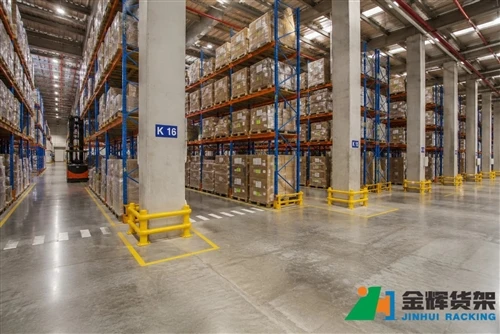
Knowing how much weight a pallet rack can safely support is one of the most important considerations when planning a warehouse storage system.
A pallet racking system is not defined by one universal load rating. Its capacity depends on the complete rack configuration, including the upright frames, beams, beam spacing, pallet loads, number of storage levels, rack dimensions, and the way the system is installed and used.
For warehouse managers and purchasing teams, understanding pallet rack load capacity makes it easier to select an appropriate storage system, avoid unsuitable configurations, and communicate accurate requirements to a pallet rack manufacturer.
Quick Answer
Pallet rack load capacity depends on the complete rack configuration rather than a single component. Important factors include the weight of each pallet, beam span, beam capacity, upright frame capacity, number and height of storage levels, rack dimensions, load distribution, and site conditions. The final allowable capacity should be confirmed by the rack manufacturer or a qualified engineer for the actual configuration.
What Is Pallet Rack Load Capacity?
Pallet rack load capacity refers to the amount of weight a rack system is designed to support under its specified configuration and operating conditions.
In a conventional selective pallet rack system, capacity may need to be considered at several levels:
- Individual pallet load
- Beam level capacity
- Upright frame capacity
- Complete rack bay capacity
- Total rack row configuration
These capacities are related, but they are not necessarily the same.
For example, a rack beam may be capable of supporting a certain distributed load, while the upright frame and overall rack configuration impose additional limitations.
This is why warehouse operators should avoid judging rack capacity only by looking at beam thickness or upright size.
Why Pallet Weight Matters When Selecting a Rack
The first piece of information needed when planning pallet racking is usually the expected pallet load.
A warehouse may store pallets weighing:
- 500 kg
- 800 kg
- 1,000 kg
- 1,500 kg
- 2,000 kg or more
The actual requirement depends on the products, pallet type, packaging method, and warehouse operation.
Importantly, the maximum pallet weight should be considered rather than only the average pallet weight.
If most pallets weigh 800 kg but some pallets reach 1,200 kg, the rack design should account for the actual maximum load required by the operation.
Beam Capacity and Pallet Rack Capacity Are Not the Same Thing
Warehouse buyers sometimes use the terms "beam capacity" and "rack capacity" interchangeably, but they describe different aspects of the system.
The beam supports the pallet load between the upright frames.
The upright frames transfer the loads down toward the floor.
Therefore, the complete rack system needs to be considered when determining allowable storage capacity.
A beam's capacity can be influenced by factors such as:
- Beam length
- Beam profile
- Steel specification
- Beam connection
- Load distribution
- Number of pallet positions
- Required deflection limits
For this reason, changing the beam length or configuration can change the rated capacity.
How Beam Span Affects Pallet Rack Capacity
Beam span is an important consideration in pallet rack design.
A longer beam span generally changes the structural loading behavior of the beam compared with a shorter span under the same type of load.
For example, a rack designed around two pallet positions may use a different beam length from a rack designed for three pallet positions.
The number of pallets stored across one beam level therefore needs to be considered together with:
- Pallet dimensions
- Pallet weight
- Beam length
- Required clearances
- Rack frame spacing
This is one reason why pallet dimensions should be provided to the manufacturer before the rack configuration is finalized.
Our previous article, How Pallet Size Affects Pallet Racking Design, explains how pallet dimensions can influence beam selection, rack depth, and storage configuration.
How Many Pallets Are Stored on Each Beam Level?
The number of pallet positions on a beam level directly affects how the load is distributed.
For example, a rack bay may be designed for:
- Two pallets per level
- Three pallets per level
- Four pallets per level
The required beam length changes accordingly.
However, the number of pallets should never be increased simply because there appears to be enough physical space.
The beam span, pallet dimensions, load weight, required clearances, and manufacturer's rated configuration all need to be considered.
How Storage Levels Affect Rack Capacity
The number of storage levels also affects the structural requirements of a pallet rack system.
A rack with three beam levels and a rack with five beam levels may have very different load requirements even when each pallet weighs the same.
As additional storage levels are added, the cumulative load transferred through the upright frames increases.
Rack height can also affect the structural behavior of the system.
Therefore, warehouse planners should provide the manufacturer with the required number of levels and the approximate elevation of each level rather than specifying only the total rack height.

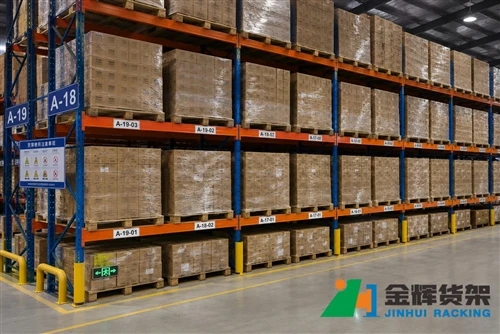
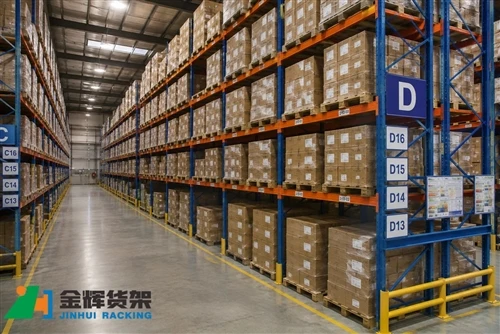
Pallet rack capacity depends on the complete configuration, including pallet loads, beam levels, rack dimensions, and upright frames.
How Upright Frames Affect Pallet Rack Capacity
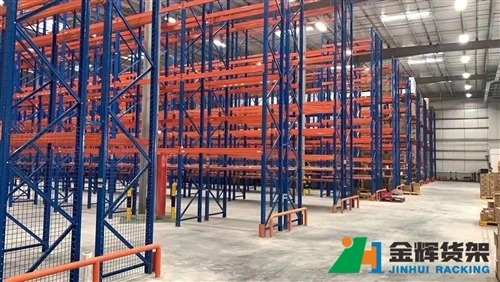
The upright frame is one of the primary structural components of a pallet racking system.
It transfers vertical loads from the beams toward the warehouse floor and contributes to the overall stability of the rack.
Important upright-related factors can include:
- Upright height
- Upright depth
- Frame configuration
- Steel profile
- Bracing arrangement
- Beam elevations
- Total accumulated load
The frame should therefore be selected based on the complete rack configuration rather than simply choosing the largest-looking upright.
Why Rack Height Matters
Rack height is another important factor in pallet racking design.
A low-level rack and a tall warehouse rack can experience different structural conditions.
As rack height increases, the designer may need to consider additional factors related to stability, building conditions, seismic requirements where applicable, and the interaction between the rack and the warehouse environment.
This means that a rack configuration that works at one height should not automatically be assumed to have the same allowable capacity at another height.
Distributed Load vs. Concentrated Load
Pallet rack beams are generally designed around specific loading assumptions.
How the pallet transfers its weight to the beams can influence the structural behavior of the system.
A pallet may distribute its load through several contact points, depending on its construction and the use of pallet supports or other components.
Unevenly distributed or concentrated loads may create different loading conditions from a uniformly distributed load.
For this reason, the actual pallet construction and storage method should be communicated to the rack supplier.
How Pallet Type Can Affect Rack Design
Not all pallets have the same construction.
Common pallet materials include:
- Wood
- Plastic
- Metal
- Composite materials
Pallet dimensions, deck design, stringers, block arrangement, and overall rigidity can affect how the pallet interacts with the rack beams.
A pallet suitable for floor stacking is not automatically suitable for every type of pallet rack application.
The pallet itself should therefore be evaluated together with the proposed rack configuration.
Why Load Distribution Matters
Warehouse operators should distribute pallet loads according to the rack system's specified operating requirements.
For example, if a rack bay is designed for a particular number of pallets per level, placing significantly heavier pallets in one location than anticipated can change the loading condition.
Warehouse staff should understand the rack's capacity information and avoid making assumptions based only on available physical space.
A pallet position that looks large enough is not necessarily capable of supporting an arbitrary load.
What Information Does a Pallet Rack Manufacturer Need?
When requesting a pallet racking quotation, providing complete information can help the manufacturer develop a more accurate solution.
Useful information includes:
- Pallet length
- Pallet width
- Pallet height
- Maximum pallet weight
- Number of pallets per bay
- Required number of storage levels
- Required rack height
- Required rack depth
- Forklift type
- Warehouse dimensions
- Building column locations
- Floor conditions
- Seismic requirements where applicable
The more complete the information, the easier it is to develop a rack configuration that matches the actual application.
How to Calculate Pallet Rack Capacity
At a conceptual level, warehouse planners can estimate the storage demand by multiplying the number of pallet positions by the expected pallet weight.
For example, if a rack level contains three pallet positions and each pallet weighs 1,000 kg, the nominal stored load at that level is:
3 × 1,000 kg = 3,000 kg
If a bay contains four loaded levels with the same configuration, the total stored product weight would be:
4 × 3,000 kg = 12,000 kg
However, this calculation is only an estimate of the stored product weight.
It is not a structural capacity calculation.
The allowable rack capacity must be determined from the actual structural design, component specifications, load distribution, connections, installation conditions, and applicable engineering requirements.
Important: Do not use a simple pallet-count × pallet-weight calculation as proof that an existing rack is safe for a new load. Structural capacity should be confirmed for the actual rack configuration by the manufacturer or a qualified engineer.
Why You Should Not Estimate Rack Capacity by Steel Thickness Alone
It can be tempting to compare racks simply by looking at steel thickness.
However, rack performance depends on much more than material thickness.
Two racks with similar-looking steel components can have different capacities because of differences in:
- Component geometry
- Beam profile
- Upright profile
- Beam length
- Connection design
- Bracing
- Rack height
- Load distribution
For purchasing decisions, a rack should therefore be compared according to its engineered capacity and complete configuration rather than one dimensional specification.
How Rack Configuration Changes Can Affect Capacity
Warehouse managers sometimes modify pallet racks after installation.
Examples include:
- Moving beams to different heights
- Adding additional beam levels
- Replacing beams with longer beams
- Changing pallet positions
- Increasing pallet weight
- Changing pallet dimensions
These changes can affect the original design assumptions.
Before making a significant configuration change, the rack should be reviewed to determine whether the modified arrangement is appropriate.
Do More Beam Levels Always Mean More Storage Efficiency?
Adding storage levels can increase the number of pallet positions, but it does not automatically improve overall warehouse efficiency.
Additional levels may require higher lifting equipment, different operating procedures, and greater attention to pallet placement.
The warehouse should balance:
- Storage density
- Accessibility
- Forklift capability
- Picking frequency
- Inventory turnover
- Building height
This is especially important when designing a high-density storage solution.
Pallet Rack Capacity and Fast-Moving Inventory
Fast-moving products are frequently accessed and may be placed in lower or more accessible rack positions depending on the warehouse workflow.
Heavy pallets should also be stored according to the rack's specified capacity and operational requirements.
Storage planning should therefore consider both product weight and inventory movement.
A warehouse should not simply place the heaviest products wherever the largest empty space happens to be available.
Pallet Rack Capacity for Different Warehouse Applications
Different industries can have very different pallet load requirements.
Manufacturing Warehouses
Manufacturing facilities may store raw materials, components, finished products, and production supplies. Pallet weights can vary significantly between product categories.
Our article on pallet racking for manufacturing warehouses discusses other factors that should be considered when developing a manufacturing storage layout.
3PL Warehouses
Third-party logistics facilities often handle products from multiple customers, which means pallet dimensions and weights can vary considerably.
This makes accurate load information particularly important when assigning storage locations.
Distribution Centers
Distribution centers may experience high inventory turnover and frequent forklift movements. Rack capacity must be considered together with accessibility and operational flow.
How Pallet Rack Capacity Relates to Warehouse Safety
Rack capacity is directly connected with safe warehouse operation.
Warehouse employees should know the rated capacity of the rack system and avoid exceeding the specified limits.
Rack load information should be clearly communicated to operators where required by the applicable warehouse safety practices.
It is also important to inspect racks regularly for damage.
Our previous guide, Pallet Rack Inspection Checklist, covers common areas that warehouse teams should monitor during rack inspections.
What Happens If Pallet Rack Capacity Is Exceeded?
Exceeding the specified rack capacity can increase structural stress and may create unsafe operating conditions.
Potential problems can include:
- Beam deformation
- Upright damage
- Connection problems
- Excessive deflection
- Reduced structural safety margin
- Potential rack instability
Warehouse operators should never intentionally exceed the manufacturer's specified capacity in an attempt to increase storage density.
How Rack Damage Can Affect Load Capacity
A rack's original design capacity assumes that its structural components are in an appropriate condition.
Damage caused by forklift impact, corrosion, unauthorized modifications, or other incidents can affect the condition of the system.
For this reason, rack capacity should not be considered independently from rack condition.
If significant damage is found, the affected area should be evaluated before it continues to carry stored loads.
Should You Choose a Rack With a Higher Capacity Than You Currently Need?
It can be useful to consider future inventory requirements when selecting rack capacity, but choosing a substantially higher capacity without a clear operational reason may not always be the most economical solution.
A better approach is to provide realistic information about:
- Current maximum pallet weight
- Expected future pallet weight
- Inventory growth
- Required storage levels
- Potential changes in product types
The manufacturer can then recommend an appropriate configuration based on the actual application.
How to Prepare for a Pallet Rack Capacity Review
If an existing warehouse wants to determine whether its current racks can support a new product or heavier pallet, collect the following information:
- Identify the rack manufacturer if known.
- Record the rack model and component specifications.
- Measure the rack height and depth.
- Record beam lengths and elevations.
- Determine the maximum pallet weight.
- Confirm the pallet dimensions.
- Check the number of pallets stored per level.
- Review any previous rack modifications.
- Inspect visible components for damage.
- Ask the manufacturer or qualified engineer to confirm the proposed loading condition.
This process is much more reliable than estimating capacity based only on the appearance of the rack.
Common Pallet Rack Capacity Mistakes
Using Average Pallet Weight
Average weight may hide unusually heavy pallets. The maximum expected load should be considered.
Ignoring Beam Span
Changing the number of pallet positions can change the required beam length and structural conditions.
Adding Storage Levels Without Review
Additional beam levels increase the cumulative load on the rack frame.
Changing Pallet Dimensions
A different pallet size may change the storage configuration and load distribution.
Assuming All Racks Have the Same Capacity
Rack capacity varies according to the specific configuration and components.
Ignoring Rack Damage
An undamaged rack and a rack with significant structural damage should not be treated as equivalent systems.
FAQ About Pallet Rack Load Capacity
What is the typical pallet rack load capacity?
There is no single standard capacity for all pallet racks. Industrial pallet racking can be designed for different pallet weights and configurations depending on the application.
How is pallet rack beam capacity determined?
Beam capacity depends on factors such as beam profile, span, material properties, connection conditions, load distribution, and the applicable design requirements.
Does a taller rack have lower capacity?
Rack capacity cannot be determined from height alone. A taller rack may require a different structural configuration, and the allowable capacity must be established for the complete system.
Can I add heavier pallets to an existing rack?
Not without confirming that the existing rack configuration is designed for the new load. The manufacturer or a qualified engineer should review the proposed loading condition.
Does pallet size affect rack load capacity?
Pallet size can affect beam span, rack depth, pallet positioning, load distribution, and the overall rack configuration. Weight and dimensions should therefore be considered together.
Can I calculate rack capacity from the number of pallets?
The number of pallets can be used to estimate total stored product weight, but this is not a structural capacity calculation. The allowable rack capacity must be confirmed from the actual engineered configuration.
Final Thoughts
Pallet rack load capacity should always be evaluated as part of the complete storage system.
Pallet weight, beam span, upright frames, storage levels, rack height, pallet dimensions, load distribution, and installation conditions all contribute to the final configuration.
For warehouse managers, the most reliable approach is to provide accurate storage requirements to a qualified pallet rack manufacturer and have the proposed configuration reviewed before installation or modification.
This is especially important when introducing heavier products, increasing storage levels, changing pallet dimensions, or expanding an existing warehouse.
The right pallet rack is not simply the rack that holds the most weight. It is the rack engineered for your actual pallet loads, storage layout, operating equipment, and warehouse conditions.
Need a Pallet Racking System Designed for Your Load Requirements?
Jinhui Rack provides customized pallet racking solutions for warehouses, distribution centers, manufacturing facilities, 3PL operations, and industrial storage applications.
Share your pallet dimensions, maximum pallet weight, required storage levels, warehouse dimensions, and forklift information with our team. We can help evaluate the appropriate pallet rack configuration for your application.
WhatsApp: +86 185 0252 7163
Email: info@jhrack.com