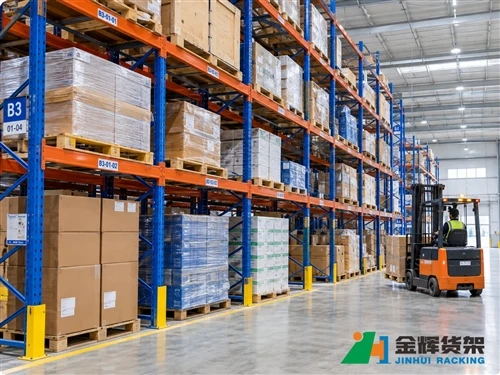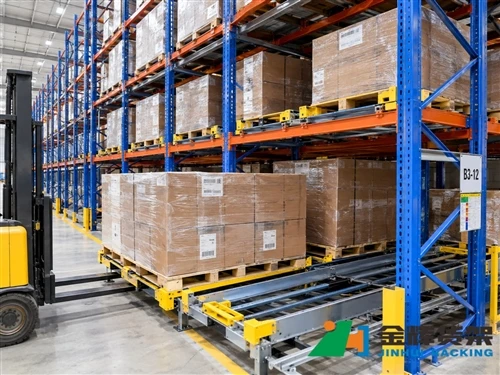
Warehouse productivity depends on more than how efficiently products are stored and retrieved. Packaging materials also play an important role in daily order fulfillment. If cartons, tape, labels, cushioning materials, and other supplies are difficult to locate, packing employees may spend valuable time searching for materials or waiting for replenishment.
These delays can become more noticeable during busy shipping periods, when several packing stations need different supplies at the same time. Poorly organized packaging materials can also create clutter, obstruct walkways, and make it harder to maintain accurate inventory records.
A practical packaging material storage system helps warehouse teams keep frequently used supplies accessible, separate different material types, and replenish packing stations before shortages interrupt work. This guide explains how to classify packaging materials, organize storage locations, manage replenishment, and improve the connection between storage and order packing.
Why Warehouse Packaging Materials Need a Dedicated Storage Plan
Packaging supplies are often treated as secondary inventory because they are not the main products being sold. However, they directly affect the warehouse's ability to prepare orders for shipment.
Common packaging materials include:
- Shipping cartons in different sizes.
- Adhesive tape and dispensers.
- Bubble wrap, foam, and other cushioning materials.
- Paper padding and protective wrapping.
- Shipping labels, document pouches, and printed inserts.
- Stretch film, strapping, and pallet protection supplies.
- Mailers, bags, and other application-specific packaging.
These materials differ in size, shape, consumption rate, and storage requirements. Cartons may occupy substantial space when stored flat, while tape and labels may require smaller, clearly identified locations. Protective materials may need convenient dispensing access near the packing area.
Keeping all supplies in one crowded location is rarely the most practical solution. A better approach is to organize materials according to their physical characteristics, usage frequency, and relationship to the packing process.
Step 1: Classify Packaging Materials Before Assigning Locations
Start by listing the packaging materials used in daily operations. Record the material type, dimensions, quantity on hand, average consumption, and the packing activities for which each item is required.
| Material Type | Storage Consideration | Operational Priority |
|---|---|---|
| Shipping cartons | Group by size and keep stacks stable and accessible. | Provide convenient access to frequently used sizes. |
| Tape and labels | Use clearly identified bins, shelves, or dispensers. | Prevent small supplies from becoming mixed or misplaced. |
| Cushioning materials | Allocate suitable space based on material volume and handling needs. | Keep commonly used protective materials near relevant packing stations. |
| Stretch film and strapping | Store rolls and tools in designated locations that support safe handling. | Reduce unnecessary trips during pallet preparation. |
| Specialized packaging | Separate fragile-item, oversized-item, or product-specific supplies. | Make the correct packaging easy to identify for each order type. |
The classification system should be detailed enough to guide daily work without creating unnecessary complexity. Begin with the supplies used most frequently, then introduce more specific categories when they help reduce errors or improve control.
Step 2: Separate Bulk Storage From Packing Station Supplies
One of the most useful improvements is to distinguish between reserve packaging inventory and the smaller quantities available at individual packing stations.
Bulk Storage Area
The bulk storage area holds reserve cartons, larger quantities of tape, cushioning materials, and other supplies that are not needed immediately at a workstation. Its purpose is to keep replenishment inventory organized and protect it from unnecessary handling.
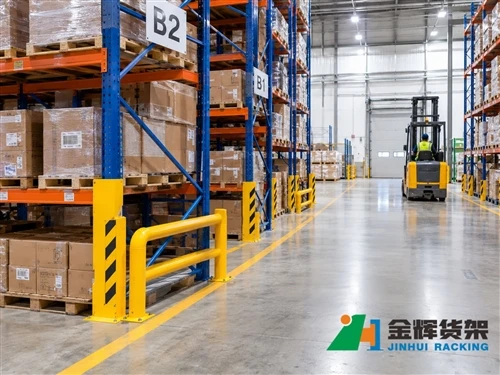
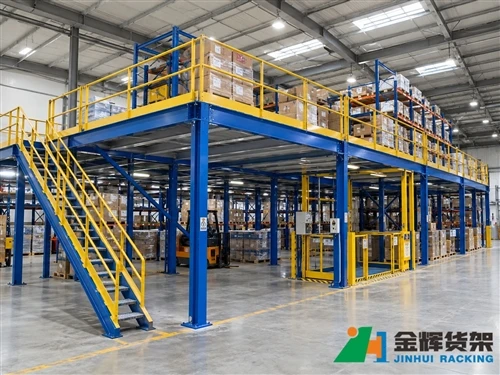
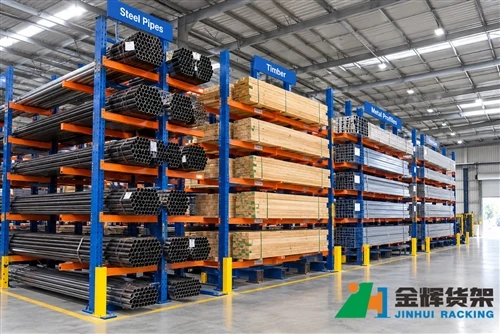
Assign clear locations to different material types and sizes. Use suitable shelving, bins, racks, or designated floor locations according to the packaging materials and their handling requirements.
Large or bulky carton stocks should be stored in a way that maintains stable stacks and leaves access routes clear. Avoid placing packaging supplies where they obstruct warehouse traffic, emergency access, or the movement of goods.
Point-of-Use Storage
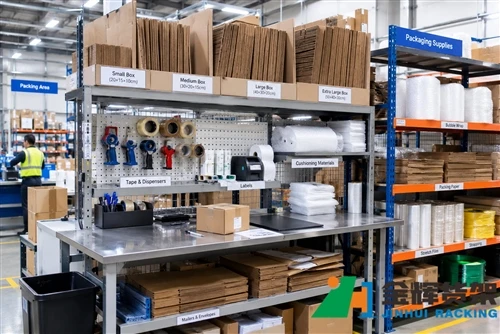
Each packing station should have a practical quantity of the supplies needed for its normal workload. Common carton sizes, tape, labels, and frequently used cushioning materials should be easy to reach without forcing employees to leave the station repeatedly.
However, keeping excessive supplies at every workstation can consume valuable space and create clutter. Establish a defined quantity for each station and replenish it according to actual consumption.
Connect the Two Areas
Bulk storage and packing stations should operate as parts of one replenishment process. When station supplies fall below the defined level, staff should know where to obtain replacements and how to record the movement when required.
This arrangement reduces unplanned searching and helps warehouse managers distinguish between total packaging inventory and the quantities currently available for immediate use.
Step 3: Position Packaging Supplies According to Usage Frequency
Not every packaging material needs to be equally close to every packing station. Storage locations should reflect how often materials are used and which activities require them.
Frequently used supplies should normally be placed in convenient locations. Materials used only for occasional or specialized orders can be stored in designated secondary locations, provided that employees can identify and retrieve them when needed.
When deciding where to position supplies, consider:
- How often the material is used during a typical shift.
- How much space it occupies.
- Whether employees need to handle it frequently.
- Which packing stations use the material.
- Whether the material is associated with a particular product or shipping method.
- How replenishment materials can reach the station without disrupting operations.
For example, if several stations use the same standard carton sizes, a shared nearby supply location may work better than storing large quantities at every workstation. If a specialized station handles fragile goods, keeping its protective packaging nearby may reduce unnecessary movement.
The right arrangement depends on order profiles, available space, and the actual workflow. Review the layout after observing how employees move between storage, packing, and dispatch areas.
Step 4: Make Carton Storage Easy to Identify and Replenish
Cartons can take up a substantial amount of space, especially when a warehouse uses many sizes. If carton stacks are not clearly identified, employees may select the wrong size or spend time opening packages to confirm their contents.
Group Cartons by Dimensions
Assign a clear reference to each carton type. Depending on the operation, identification may include carton dimensions, product code, or a unique stock number.
Store similar carton types together where practical, but avoid grouping visually similar cartons without clear labels. The outside dimensions, internal dimensions, and intended application may differ, so employees should use the warehouse's defined identification system.
Keep Stacks Stable and Accessible
Carton stacks should be arranged according to the packaging supplier's handling recommendations and the warehouse's safe storage procedures. Do not allow stacks to lean into walkways or block access to other supplies.
Use suitable shelving or designated storage areas when needed to maintain order and improve access. The storage arrangement should also allow employees to remove cartons without destabilizing the remaining stock.
Monitor High-Consumption Sizes
Track which carton sizes are used most often and check whether the available quantity is sufficient for expected packing activity. A shortage of one common size can interrupt operations even when the warehouse has plenty of other packaging materials.
Review consumption patterns regularly and adjust the quantities held at packing stations and in bulk storage as demand changes.
Step 5: Establish a Simple Replenishment System
Packaging supplies should be replenished before a station runs out of essential materials. A simple, consistent process is often more useful than relying on employees to notice shortages at the last moment.
Set Minimum and Target Quantities
For each frequently used packaging item, define a minimum quantity that triggers replenishment and a target quantity for restoring the station's supply. These quantities should reflect actual consumption, available storage space, replenishment lead time, and expected workload.
For example, a packing station that consumes cartons rapidly may need more frequent replenishment than a station handling occasional specialized orders. The quantities should be based on observed usage rather than an arbitrary rule applied to every material.
Use Clear Replenishment Signals
A signal may be a visual stock marker, a designated empty bin, a replenishment card, or a digital inventory alert. Choose a method that fits the warehouse's existing process and is easy for employees to follow.
Every signal should identify the material, its storage location, and the quantity required. This helps the replenishment worker deliver the correct supplies without repeatedly asking packing employees for clarification.
Assign Responsibility
Define who checks station supplies, who retrieves reserve inventory, and who records stock movements when necessary. Clear responsibilities reduce the chance that several employees assume someone else will handle a shortage.
For larger operations, packaging replenishment can be included in routine warehouse checks or integrated with the site's inventory management process.
Step 6: Organize the Packing Station Around the Work Sequence
Packaging material storage works best when it supports the order packing process from start to finish. The station should allow employees to prepare an order, select suitable packaging, protect the product, close the package, apply shipping information, and move the completed order onward.
A practical packing station may include:
- A defined area for the order being packed.
- Accessible storage for commonly used cartons.
- Dispensers or holders for tape and protective materials.
- A suitable location for labels and shipping documents.
- Space for tools used in the approved packing process.
- A designated area for completed packages awaiting the next step.
Arrange supplies in the order they are typically used, while keeping frequently handled materials within convenient reach. Ensure that tools, cartons, and protective materials do not obstruct the working surface or access routes.
The goal is not to fill every available surface with supplies. A well-organized station keeps essential materials accessible while leaving enough room to handle orders safely and consistently.
Step 7: Keep Packaging Inventory Accurate
Packaging materials are easy to overlook during inventory checks because they are consumed gradually and may be stored in several locations. Without consistent records, a warehouse may reorder supplies it already has or discover shortages only when packing is underway.
For each important material, maintain a record of:
- Material description and stock reference.
- Storage location.
- Quantity available.
- Minimum replenishment level, where applicable.
- Recent consumption or replenishment activity.
- Supplier or purchasing reference when needed.
Choose an inventory control method that matches the scale of the operation. Smaller warehouses may use a straightforward stock sheet and routine checks, while larger facilities may track packaging supplies through warehouse or inventory management software.
Periodically compare recorded quantities with the physical stock. Investigate recurring differences, misplaced materials, and unexplained consumption so that replenishment decisions become more reliable.
Step 8: Keep Packaging Storage Clean, Safe, and Adaptable
Packaging materials should be stored in a way that supports safe handling and preserves their condition. Cartons and paper-based supplies may be vulnerable to moisture or crushing, while rolls and tools may require specific storage arrangements.
Keep packaging materials away from areas where leaks, contamination, vehicle impacts, or other hazards could damage them. Follow the supplier's storage guidance and any applicable site procedures for materials that require special handling.
Maintain clear walkways and do not allow empty cartons, discarded wrapping, or unused supplies to accumulate around packing stations. Regular housekeeping makes it easier to identify shortages and reduces unnecessary obstructions.
As order volumes and product ranges change, review the packaging layout. A carton size that was rarely used previously may become a high-consumption item, while an old supply may no longer justify a prime storage location.
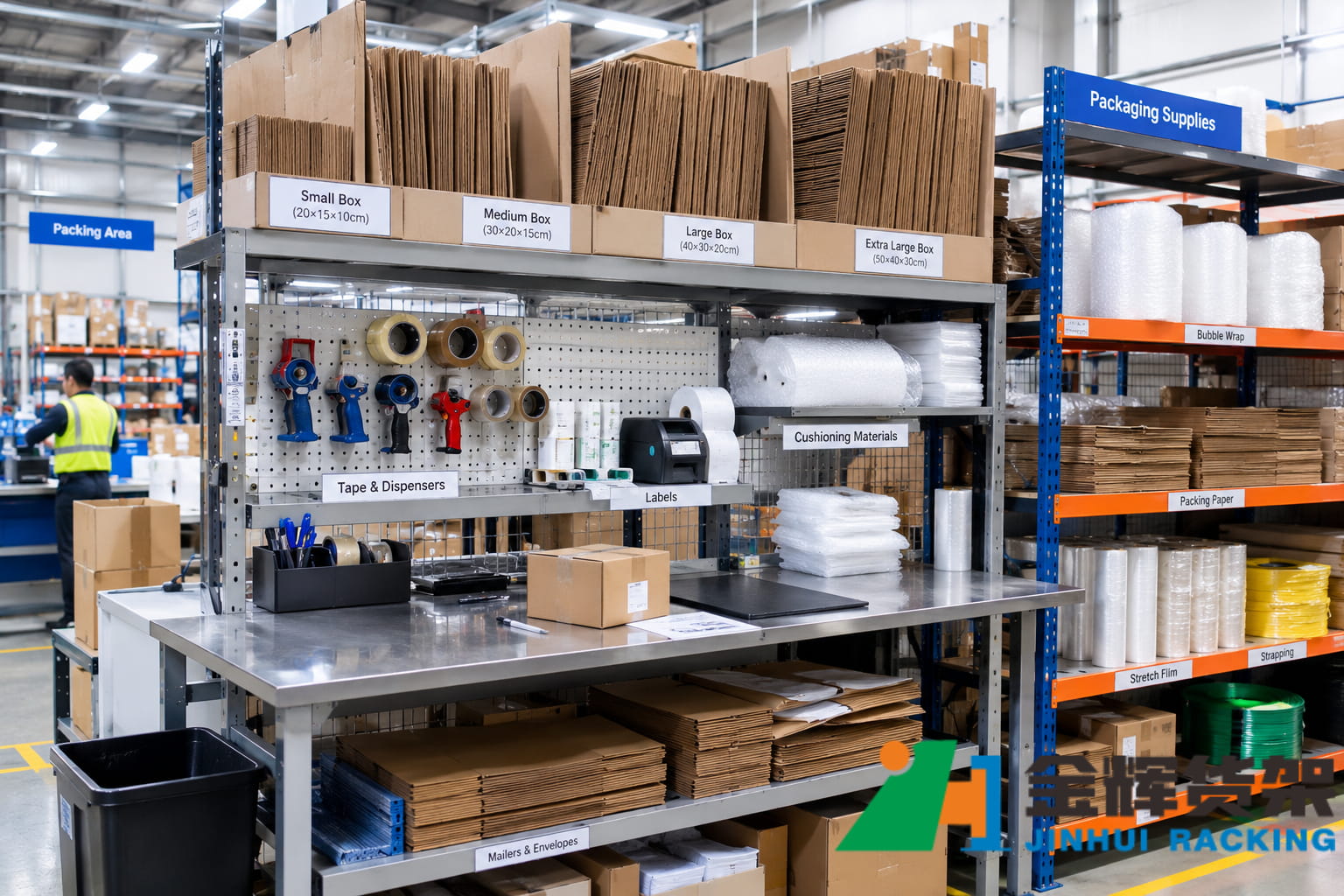
Clearly identified packaging supplies and organized point-of-use storage help packing employees find materials quickly and maintain a consistent workflow.
Common Packaging Material Storage Mistakes
Keeping All Supplies at Every Packing Station
Duplicating large quantities of every packaging item across all stations consumes space and makes inventory harder to control. Keep frequently used supplies at the point of use and hold reserve stock in a clearly identified bulk storage area.
Using Unclear Labels
Labels such as "small carton" or "large box" may be insufficient when several sizes are similar. Use a consistent stock reference and the relevant dimensions or specifications needed to distinguish each item.
Replenishing Only After a Shortage Occurs
Waiting until a station runs out of tape or cartons can interrupt order processing. Use minimum quantities and a clear replenishment signal to make shortages easier to anticipate.
Ignoring Slow-Moving Supplies
Specialized packaging may remain unused for long periods. Review its quantity and storage location periodically so that slow-moving materials do not occupy the most convenient space needed for frequently used supplies.
Allowing Packing Areas to Become Cluttered
Excess cartons, empty packaging, and tools left in the wrong locations can reduce usable workspace. Define storage positions and include housekeeping in routine station checks.
Warehouse Packaging Materials Checklist
Use the following checklist to review the current storage and replenishment process:
- Packaging materials are classified by type, size, and intended use.
- Bulk reserve stock is separated from supplies used at packing stations.
- Carton sizes and other important supplies have clear identification.
- Frequently used materials are conveniently positioned for the packing workflow.
- Minimum and target quantities are defined for essential supplies.
- Employees know how to request and complete replenishment.
- Inventory records reflect stock movements and physical quantities.
- Storage stacks, shelves, and work areas are kept orderly.
- Walkways and access routes remain clear.
- Storage locations are reviewed when order volumes or packaging needs change.
Conclusion
Organizing warehouse packaging materials is a practical way to support faster and more consistent order packing. The most effective approach combines clear material classification, suitable bulk storage, convenient point-of-use supplies, reliable replenishment, and accurate inventory records.
Rather than placing every packaging item wherever space is available, warehouse teams should assign defined locations and manage supplies according to actual consumption. This makes it easier for employees to find the right materials, reduces avoidable interruptions, and helps keep packing stations orderly.
JINHUI provides warehouse storage and racking solutions for different operational requirements. If you are planning to improve your warehouse storage arrangement, share your facility layout, inventory characteristics, and storage objectives so the appropriate solution can be evaluated for your application.
Website: www.jinhui-rack.com
Contact page: Contact Us
Email: info@jhrack.com
WhatsApp: +86 185 0252 7163