What Is Warehouse Racking Fire Clearance?
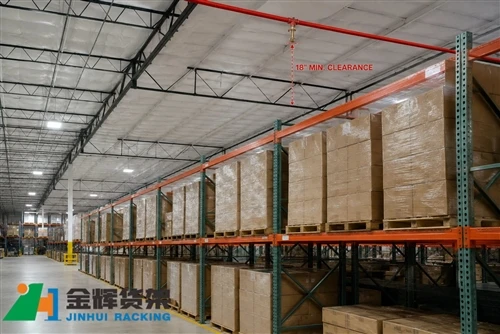
Warehouse racking fire clearance is the required open space between stored goods and fire protection equipment, building elements, or other obstructions that could affect fire suppression performance.
For pallet racking systems, the most important consideration is usually the vertical clearance between the top of stored goods and ceiling-level sprinkler deflectors. However, fire protection planning also needs to consider storage height, commodity type, rack configuration, aisle arrangement, flue spaces, sprinkler type, and local fire code requirements.
Quick answer: Do not design pallet rack storage to a fixed clearance number without checking the actual sprinkler system and applicable fire requirements. In the United States, an 18-inch minimum vertical clearance is a common OSHA requirement for sprinkler clearance, but specific sprinkler designs and high-challenge storage conditions can require different or greater clearances.
For warehouse projects outside the United States, the applicable local fire code, sprinkler standard, authority having jurisdiction, and fire protection engineer should be used to determine the final requirement.
Why Fire Clearance Matters for Pallet Racking
Pallet racking allows warehouses to use vertical space efficiently, but increasing storage height also changes the relationship between stored goods and the fire protection system.
If pallets or cartons are stored too close to sprinkler heads, the stored materials can obstruct the intended spray pattern. This can reduce the ability of the sprinkler system to control a developing fire.
OSHA explains that obstructions can interfere with sprinkler discharge patterns and create areas where fire protection may be inadequate.
For this reason, fire clearance should be considered during pallet rack layout planning rather than after the storage system has already been installed.
How Much Clearance Is Required Above Pallet Rack Storage?
There is no single clearance value that applies to every warehouse and every storage configuration.
For example, OSHA's general sprinkler provisions in the United States specify a minimum vertical clearance of 18 inches (45.7 cm) between sprinklers and stored materials in the circumstances covered by that requirement.
However, this should not be interpreted as a universal design rule for every pallet rack application.
| Design Factor | Why It Affects Fire Clearance |
|---|---|
| Sprinkler type | Different sprinkler systems have different design and clearance requirements. |
| Storage height | Higher storage can create more demanding fire protection conditions. |
| Commodity type | Cartons, plastics, chemicals, and other commodities can present different fire hazards. |
| Rack configuration | Single-row, double-row, and multiple-row racks can have different protection requirements. |
| Ceiling height | The distance between storage and the roof or ceiling can affect sprinkler design. |
| In-rack sprinklers | Additional sprinkler protection may change how storage and sprinkler clearances are designed. |
| Local fire code | The authority having jurisdiction may impose requirements beyond general warehouse practices. |
The final clearance should therefore be confirmed against the actual fire protection design rather than calculated from rack height alone.
How to Calculate the Available Fire Clearance
A simple planning calculation can help identify whether the proposed rack storage height may conflict with the sprinkler system.
Available Fire Clearance = Sprinkler Reference Height − Top of Stored Load
For example, if the relevant sprinkler reference point is 30 ft above the warehouse floor and the top of the stored load reaches 28 ft, the available vertical clearance is:
30 ft − 28 ft = 2 ft
This calculation is useful for preliminary layout checking, but it does not determine whether the storage arrangement is compliant. The required clearance depends on the fire protection design and applicable regulations.
| Item | Example Value |
|---|---|
| Sprinkler reference height | 30 ft |
| Top of stored load | 28 ft |
| Available clearance | 2 ft |
| Final compliance decision | Must be checked against the applicable fire protection design |
What Determines the Top of Storage Height?
The top of storage is not necessarily the top of the pallet rack itself.
For fire clearance planning, the important measurement is generally related to the highest stored commodity or load, not simply the height of the upright frame.
For example, consider a rack with a 9-meter upright frame. If the highest palletized load reaches 8.5 meters, the relevant storage height may be based on the top of that load rather than the unused section of upright above it.
Therefore, warehouse planners should consider:
- Rack upright height
- Beam elevations
- Pallet height
- Product height above the pallet
- Load deformation or unstable packaging
- Maximum planned storage height
- Clearance to sprinkler deflectors and other fire protection equipment
When selecting rack height, do not use every available centimeter of vertical space simply because the rack can physically fit.
For additional rack-height planning guidance, see How to Choose the Right Pallet Rack Height for Your Warehouse.
How Pallet Rack Height Affects Fire Protection
Increasing rack height can increase storage capacity, but it may also change the fire protection requirements of the warehouse.
A taller rack can result in:
- Less clearance between storage and ceiling sprinklers
- Greater vertical fire development potential
- Different sprinkler design requirements
- Potential need for in-rack sprinkler protection
- More complicated fire protection engineering
- Greater importance of maintaining rack flue spaces
This means that rack height should be selected together with the warehouse's fire protection system.
A storage rack should not simply be made taller after the sprinkler system has already been designed without checking whether the change affects fire protection requirements.
Why Storage Commodity Type Matters
Fire protection design is not based only on the physical rack.
The stored commodity, packaging, storage arrangement, and storage height can all affect the fire hazard classification used for sprinkler design.
| Storage Factor | Examples | Why It Matters |
|---|---|---|
| Product material | Paper goods, textiles, plastics, metal products | Different materials can have different fire characteristics. |
| Packaging | Cartons, plastic wrapping, containers | Packaging contributes to the overall combustible load. |
| Storage height | Low, medium, or high rack storage | Higher storage can require different protection strategies. |
| Storage arrangement | Open rack, solid shelf, dense storage | Rack geometry can influence fire and sprinkler behavior. |
| Pallet configuration | Wood, plastic, steel pallets | Pallet material and configuration can affect combustible loading. |
This is why two warehouses using the same pallet rack may still require different fire protection designs.
Fire Clearance Between Storage and Sprinkler Heads
The space between the highest stored material and the sprinkler system should remain clear enough for the sprinkler system to operate as designed.
Storage should not be allowed to gradually grow upward until pallets or cartons approach sprinkler deflectors.
Warehouse operators should clearly define the maximum allowable storage height and communicate it to forklift operators, warehouse managers, and inventory teams.
A practical warehouse control system can include:
- Maximum storage height markings
- Rack location labels
- Warehouse storage-height rules
- Regular visual inspections
- Operator training
- Inventory controls for oversized products
What Are Flue Spaces in Pallet Racking?
Flue spaces are vertical or horizontal open spaces within or between rack storage arrangements that can help maintain pathways for heat and fire development and allow sprinkler water to reach the storage arrangement as designed.
In-rack fire protection design can depend on maintaining specific flue spaces between stored loads and rack components.
For example, NFPA 13 provisions for rack storage include requirements concerning flue spaces and in-rack sprinkler arrangements for certain storage configurations.
This means that pallets should not simply be pushed together or positioned in a way that unintentionally closes a required fire protection space.

How Rack Layout Affects Fire Clearance
Fire clearance should be considered together with the overall warehouse layout.
A rack layout affects:
- Storage height
- Aisle width
- Rack row arrangement
- Ceiling sprinkler locations
- Fire access routes
- Emergency exits
- Potential fire department access
For example, increasing rack height may create more pallet positions, but if the new configuration conflicts with sprinkler protection or local fire requirements, the additional storage capacity may not be practical.
For more information about warehouse aisle planning, see How Warehouse Aisle Width Affects Pallet Racking Capacity and Forklift Access.
Fire Clearance and Pallet Rack Depth
Rack depth also affects how stored loads are positioned inside the rack.
If pallets extend beyond the intended storage position, they may alter the planned relationship between the rack structure, stored goods, and required clearances.
When rack depth is being selected, consider pallet dimensions, load dimensions, pallet overhang, rack support geometry, and fire protection requirements together.
See How to Choose the Right Pallet Rack Depth for Your Warehouse for more information on rack depth planning.
Can Pallet Racks Be Installed Directly Under Sprinklers?
Yes, pallet racks are commonly installed in warehouses equipped with ceiling sprinkler systems. The important issue is not whether the rack is below a sprinkler, but whether the complete storage configuration maintains the clearance and protection conditions required by the sprinkler design.
The rack upright itself may extend higher than the stored goods, but the stored load should not obstruct sprinkler discharge beyond what the approved fire protection design permits.
Rack installation should therefore be coordinated with the existing sprinkler layout before finalizing the storage height.
When Are In-Rack Sprinklers Considered?
In-rack sprinklers may be required or considered when ceiling-level sprinkler protection alone cannot provide the required level of fire protection for a particular storage arrangement.
The need for in-rack sprinklers depends on factors such as:
- Commodity classification
- Storage height
- Ceiling height
- Rack configuration
- Sprinkler type
- Storage arrangement
- Applicable fire protection standard
In-rack sprinkler design should be completed by a qualified fire protection professional. Rack manufacturers should not independently assume that a particular storage height is acceptable simply because the rack structure can physically support it.
Common Warehouse Racking Fire Clearance Mistakes
1. Using a Universal Clearance Number
One of the most common mistakes is assuming that one clearance value applies to every warehouse.
Fire protection requirements vary according to the sprinkler system, storage arrangement, commodity, storage height, and local regulations.
2. Measuring the Rack Instead of the Stored Load
The top of the rack frame and the top of the stored product are not always at the same height. Fire clearance planning needs to consider the actual storage condition.
3. Adding Higher Beams Without Checking Sprinklers
Moving beam levels upward can increase storage capacity, but the new load position may reduce the clearance available to ceiling sprinklers.
4. Storing Oversized Products Above the Planned Height
Even if the original rack design is compliant, oversized cartons or irregular loads can reduce the intended fire clearance.
5. Blocking Flue Spaces
Improper pallet positioning or changes to the rack configuration can close spaces that were considered in the fire protection design.
6. Ignoring Warehouse Changes
Changing the rack height, commodity, packaging, storage density, or sprinkler system can change the fire protection conditions.
How to Plan Pallet Racking Around a Sprinkler System
For a new warehouse project, fire protection should be reviewed before the rack layout is finalized.
A practical planning sequence is:
- Measure the warehouse floor and clear height.
- Record the existing sprinkler locations and system type.
- Identify pallet dimensions and maximum load height.
- Identify the stored commodity and packaging.
- Determine the required pallet storage height.
- Develop the initial rack layout.
- Check the relationship between storage height and sprinkler protection.
- Review aisle widths and forklift access.
- Check local fire code and authority requirements.
- Finalize the rack and fire protection design together.
This approach is much safer than installing the racks first and trying to solve fire clearance issues afterward.
Warehouse Racking Fire Clearance Checklist
| Check Item | What to Confirm |
|---|---|
| Warehouse clear height | Measure the actual floor-to-ceiling or roof structure height. |
| Sprinkler system | Identify sprinkler type, location, and approved protection design. |
| Maximum storage height | Confirm the highest planned stored load. |
| Commodity | Identify product material and packaging characteristics. |
| Rack configuration | Check single-row, double-row, or multiple-row arrangement. |
| Flue spaces | Ensure required spaces are maintained where applicable. |
| Aisles | Maintain practical forklift and emergency access. |
| Local fire requirements | Confirm requirements with the applicable authority or fire protection professional. |
| Future changes | Consider whether future higher loads or different commodities may change the design. |
Frequently Asked Questions
What is the minimum fire clearance above pallet rack storage?
There is no single universal value for every warehouse. In the United States, OSHA's general sprinkler requirements include an 18-inch minimum vertical clearance between sprinklers and stored material in applicable situations, but specific sprinkler designs and high-hazard storage conditions may require different or greater clearances.
Can I store pallets closer to the ceiling if I have a high rack?
Do not assume that a taller rack automatically allows storage closer to the ceiling. The maximum storage height must be compatible with the approved fire protection design and applicable local requirements.
Does rack height affect sprinkler requirements?
Yes. Storage height is an important factor in fire protection design. Increasing rack height can change the relationship between stored goods and ceiling sprinklers and may affect the required protection strategy.
Do pallet racks need in-rack sprinklers?
Not every pallet rack requires in-rack sprinklers. Their use depends on the storage height, commodity, rack configuration, sprinkler system, and applicable fire protection design.
Can I change pallet types without checking fire clearance?
You should review significant changes in pallet size, load height, packaging, or commodity because they can change the actual top-of-storage height or the fire hazard characteristics of the stored goods.
Who should approve the final warehouse fire clearance?
The final fire protection arrangement should be reviewed according to the applicable local regulations and, where required, by a qualified fire protection professional or the authority having jurisdiction. A rack manufacturer can provide rack dimensions and layout information, but fire protection approval should not be assumed from the rack design alone.
Get a Pallet Racking Layout Designed Around Your Warehouse
Fire clearance should be considered from the beginning of a warehouse racking project. Rack height, pallet dimensions, storage load, sprinkler locations, aisle width, and warehouse structure all need to work together.
JINHUI RACK provides customized pallet racking solutions based on warehouse dimensions, pallet specifications, load requirements, forklift operation, and storage capacity requirements. The company offers selective pallet racking and other warehouse storage systems for different applications.
If you are planning a new warehouse, increasing rack height, changing storage density, or adding pallet racking below an existing sprinkler system, send us your warehouse layout and storage information for a project review.
WhatsApp: +86 185 0252 7163
Email: info@jhrack.com
Website: https://www.jinhui-rack.com/
Contact JINHUI RACK today for a warehouse racking layout that balances storage capacity, forklift access, rack safety, and fire protection requirements.