Pallet Rack Repair vs Replacement: How to Decide After Damage
When pallet racking is damaged by forklift impact, overloading, corrosion, or improper modification, warehouse managers need to decide whether the rack can be repaired or whether damaged components should be replaced.
The safest approach is not to judge the rack only by its appearance. The decision should consider the type and location of damage, the affected component, the original rack design, current loading conditions, and whether the damaged part can be restored to an approved structural condition.
Quick answer: Minor non-structural issues may sometimes be corrected, but bent, twisted, cracked, severely corroded, or structurally compromised rack components should normally be isolated and evaluated for replacement. The final decision should be based on the rack manufacturer's specifications or a qualified engineering assessment.

Why Damaged Pallet Racking Should Be Evaluated Immediately
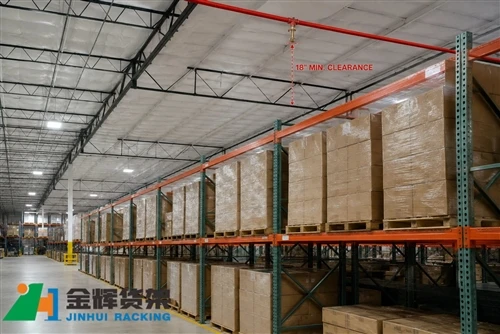
Pallet racks are structural storage systems that transfer pallet loads through beams, upright frames, bracing, base plates, anchors, and the warehouse floor.
When one of these components is damaged, the original design assumptions may no longer apply.
For example, a forklift impact may bend an upright frame near the floor. Even if the rack remains standing and appears stable, the damaged section may have reduced structural performance.
Similarly, a deformed beam may continue to hold a pallet temporarily but should not automatically be considered safe for its original rated load.
For this reason, damaged racks should be identified, assessed, and dealt with before normal storage operations continue.
Repair or Replacement: What Is the Difference?
Repair and replacement are not always the same process.
A repair attempts to restore the existing component or system to an acceptable condition. Replacement removes a damaged component and installs a new component that is compatible with the rack system.
| Situation | Typical Approach | Why It Matters |
|---|---|---|
| Minor cosmetic damage | Inspect and monitor | May not affect structural performance, but should still be documented |
| Bent upright frame | Usually component replacement or engineered repair | Uprights are major structural members |
| Deformed beam | Usually replace the damaged beam | Beam geometry directly affects load-carrying performance |
| Cracked structural component | Remove from service and evaluate immediately | Cracks can indicate significant structural damage |
| Severe corrosion | Replace affected components after assessment | Material loss can reduce structural strength |
| Missing or damaged connector | Replace with the correct compatible component | Connections are part of the rack's structural system |
| Unauthorized modification | Engineering or manufacturer review | Changing components can alter the original design assumptions |
When Should a Pallet Rack Component Be Replaced?
Replacement should be strongly considered when a structural component has significant deformation, cracking, severe corrosion, or other damage that could affect its intended function.
Common examples include:
- Severely bent upright frames
- Twisted or buckled columns
- Deformed pallet rack beams
- Cracked welds or structural members
- Severe corrosion or material loss
- Damaged beam connectors
- Missing structural bracing
- Damaged base plates
- Damaged or missing floor anchors
The exact replacement decision depends on the rack design and the severity and location of the damage. A warehouse should not assume that a component is safe simply because the damage appears small.
Upright Damage Is Especially Important
Upright frames transfer the loads from the rack beams toward the warehouse floor. Because they are primary structural members, damage to an upright deserves particular attention.
Typical forklift-related damage may appear near the lower portion of the upright where forklifts operate.
Warning signs include:
- Visible bending
- Twisting or buckling
- Permanent deformation
- Damaged bracing connections
- Cracked or distorted components
- Damage around the base plate
If the upright is structurally deformed, simply straightening it on site should not be treated as an automatic solution. The component's original structural properties may not be restored by visually making it look straight.
For warehouses that experience frequent forklift traffic, appropriate rack protection can also reduce the probability of repeated impact damage.
When Can a Damaged Beam Be Reused?
Pallet rack beams are designed to support pallet loads between upright frames. Their performance depends on the beam profile, span, connection, loading arrangement, and complete rack configuration.
A beam with visible deformation should therefore be evaluated before it is returned to normal service.
Check for:
- Permanent bending
- Twisting
- Damaged beam connectors
- Damaged safety locks
- Cracked welds
- Visible impact marks
- Corrosion affecting the structural section
If the beam has significant structural deformation, replacing it with a compatible component is generally more reliable than attempting an improvised field repair.
The replacement beam should match the required span, profile, connection type, load rating, and rack configuration.
What About Corrosion Damage?
Surface rust does not automatically mean that an entire pallet rack must be replaced.
The important question is whether corrosion has caused meaningful loss of structural material or affected critical connections.
| Corrosion Condition | Recommended Action |
|---|---|
| Light surface oxidation | Clean, inspect, protect the surface, and monitor |
| Localized rust around non-critical areas | Inspect the affected area and determine the cause |
| Deep corrosion or material loss | Professional assessment and possible component replacement |
| Corrosion affecting structural connections | Remove from normal service until evaluated |
| Extensive corrosion across multiple components | Consider a broader system assessment and replacement strategy |
Warehouses with high humidity, cold-storage conditions, water exposure, or corrosive products should consider the operating environment when selecting rack finishes and maintenance procedures.
How Rack Damage Can Affect Load Capacity
A damaged rack should not automatically be assumed to retain its original load capacity.
The rated capacity of a pallet rack depends on the complete structural configuration, including upright frames, beams, beam span, storage levels, pallet loads, connections, and installation conditions.
If a structural component is damaged, the original capacity may no longer represent the condition of the rack.
For a deeper explanation of how rack capacity is determined, see our guide on pallet rack load capacity.
Warehouse operators should never increase pallet loads simply because the rack appears physically capable of holding them.
Repair vs Replacement Decision Checklist
A practical decision process can help warehouse managers respond consistently after rack damage.
| Question | If Yes | Recommended Next Step |
|---|---|---|
| Is the damage only cosmetic? | Potentially low structural impact | Document and monitor after inspection |
| Is a structural member bent or twisted? | Structural condition may be affected | Remove affected area from normal use and evaluate |
| Is there cracking or severe deformation? | Potential structural failure | Stop normal use and obtain professional assessment |
| Is there severe corrosion? | Material strength may be reduced | Assess remaining structural section and replacement need |
| Is a connector or anchor damaged? | System stability may be affected | Replace or restore using compatible approved components |
| Has the rack been modified? | Original design assumptions may have changed | Review the complete configuration |
Why Improvised Rack Repairs Can Be Risky
Warehouse teams sometimes attempt quick repairs using welding, straightening, drilling, additional bolts, or other field modifications.
These actions can change the original structural behavior of the rack.
For example, welding a damaged upright without engineering review does not automatically restore the original load capacity. Similarly, drilling new holes into structural members can affect their performance.
For this reason, repair methods should follow the rack manufacturer's approved procedures or an appropriate engineering assessment.
Should You Repair One Component or Replace the Whole Rack?
Not every damaged rack requires complete replacement.
If damage is isolated to a limited number of compatible components, replacing those components may be a practical solution.
A broader replacement may make more sense when:
- Multiple structural components are damaged
- The rack system has extensive corrosion
- The original components are no longer available
- The rack has been repeatedly modified
- The original load rating cannot be verified
- The rack configuration no longer matches the warehouse requirements
- The system has reached the end of its practical service life
When replacement is required, the new rack should be designed around the warehouse's current pallet dimensions, load requirements, rack height, forklift equipment, and storage objectives rather than simply copying the damaged configuration.
Replacing Damaged Racks With a New Pallet Racking System
If the existing rack system is heavily damaged or no longer suitable for the warehouse, replacement can also be an opportunity to improve the storage layout.
For example, the replacement project can review:
- Current pallet dimensions
- Maximum pallet weight
- Required storage levels
- Forklift type
- Warehouse clear height
- Aisle requirements
- Fire protection requirements
- Future inventory growth
For general warehouse replacement projects, you can review Jinhui warehouse pallet rack solutions to compare different storage configurations.
For conventional direct-access storage, selective pallet racking systems can be configured around different pallet sizes, load requirements, and warehouse layouts.
For heavier industrial applications, industrial heavy duty pallet racks can be customized according to pallet loads, rack dimensions, storage levels, and operating conditions.
How Inspection Helps Prevent Expensive Rack Replacement
Regular inspection can help identify damage before it develops into a larger warehouse problem.
Inspection should cover:
- Upright frames
- Beams
- Beam connectors
- Bracing
- Base plates
- Floor anchors
- Wire decking and pallet supports
- Stored pallet conditions
- Signs of forklift impact
- Corrosion and environmental damage
Our pallet rack inspection checklist provides a practical reference for routine warehouse inspections.
Inspection should not replace professional assessment when significant structural damage is found. Instead, it helps warehouse teams identify problems early and prevent damaged equipment from remaining unnoticed.
How Forklift Impact Can Lead to Rack Replacement
Forklift impact is one of the common causes of pallet rack damage.
Repeated contact can damage upright frames, guards, base plates, beams, or other components.
After an impact, the affected rack should be inspected before normal loading continues.
Warehouses can also reduce future damage by improving forklift traffic routes, operator training, rack protection, aisle planning, and impact protection.
When to Repair and When to Replace: Simple Rule
A useful practical rule is:
| Condition | General Decision |
|---|---|
| Cosmetic surface issue with no structural effect | Inspect, document, and maintain |
| Minor non-structural component issue | Correct using an approved method |
| Damaged replaceable component | Replace with a compatible component |
| Severely bent structural member | Replace or obtain an engineered repair solution |
| Cracked or severely corroded structural member | Remove from service and evaluate for replacement |
| Multiple damaged components | Assess the complete rack system |
| Unknown rack capacity or heavily modified system | Professional engineering or manufacturer review |
Questions to Provide to Your Rack Supplier
If you need to repair or replace damaged pallet racking, providing complete information will help the supplier determine the appropriate solution.
- Photos of the damaged components
- Rack height and depth
- Beam length and profile
- Upright frame dimensions
- Maximum pallet weight
- Pallet dimensions
- Number of storage levels
- Current rack layout
- Forklift type
- Warehouse clear height
- Approximate rack quantity requiring repair or replacement
If available, original rack drawings, component specifications, load plaques, or previous quotations can make the evaluation more accurate.
FAQ About Pallet Rack Repair and Replacement
Can a bent pallet rack upright be repaired?
A damaged upright should not simply be straightened without an approved repair method or engineering assessment. Depending on the damage, replacement may be the safer and more reliable solution.
Should a damaged pallet rack beam be replaced?
If the beam has significant permanent deformation, cracking, severe corrosion, or damaged connections, it should be removed from normal service and evaluated for replacement.
Can I weld a damaged pallet rack?
Do not assume that field welding restores the original rack capacity. Any structural repair should follow the manufacturer's approved procedure or an appropriate engineering assessment.
Does rust mean I need to replace the entire rack?
No. Light surface rust does not automatically require complete replacement. The key issue is whether corrosion has caused meaningful material loss or affected structural components and connections.
Can I replace only one pallet rack component?
In some cases, yes. The replacement component must be compatible with the existing rack system and suitable for the required loading configuration.
When should an entire pallet rack system be replaced?
Complete replacement may be appropriate when multiple structural components are damaged, the rack has extensive corrosion, the original configuration cannot be verified, components are unavailable, or the existing system no longer meets the warehouse's requirements.
Final Thoughts
Pallet rack repair and replacement should be treated as a structural safety decision rather than a simple maintenance task.
The correct approach is to identify the damage, isolate seriously affected areas, determine which components are structurally compromised, and then use an approved repair or replacement solution.
For a damaged rack, the cheapest short-term repair is not always the safest or most economical long-term option. A properly engineered replacement can restore the storage system while also allowing the warehouse to improve capacity, layout, forklift access, and future expansion.
If you are evaluating damaged pallet racking or planning a replacement project, Jinhui Rack can review your rack dimensions, pallet loads, warehouse layout, and storage requirements to help develop a suitable solution.
Need help with pallet rack repair, replacement, or a new warehouse racking project?
WhatsApp: +86 185 0252 7163
Email: info@jhrack.com
Website: https://www.jinhui-rack.com/