Understanding the Difference Between Selective and Drive-In Pallet Racking
Heavy duty selective pallet racking and drive-in racking are both designed to store palletized products, but they solve different warehouse challenges.
Selective pallet racking is built around accessibility. Every pallet can be reached directly without moving other loads, making it the preferred solution for warehouses handling a wide variety of products or frequent inventory movement.
Drive-in racking, on the other hand, is designed to maximize storage density. Forklifts drive directly into storage lanes to place or retrieve pallets, allowing far fewer aisles and significantly increasing storage capacity within the same floor space.
Neither system is universally better-the right choice depends on inventory turnover, SKU variety, available warehouse space, and operational priorities.
What Is Heavy Duty Selective Pallet Racking?
Selective pallet racking is the most commonly installed warehouse storage system worldwide. Each pallet position remains independently accessible, allowing warehouse operators to retrieve any pallet at any time without disturbing surrounding inventory.
This flexibility makes selective racking suitable for businesses managing hundreds or even thousands of different SKUs.
Key characteristics include:
- 100% direct pallet access.
- Compatible with most forklift types.
- Easy inventory management.
- Flexible rack configuration.
- Simple installation and future expansion.
- Suitable for FIFO inventory management.
The Heavy Duty Selective Pallet Racking System from Jinhui Rack can be customized for different pallet sizes, warehouse heights, and load capacities, making it suitable for manufacturing, logistics, retail, and distribution centers.
What Is Drive-In Pallet Racking?
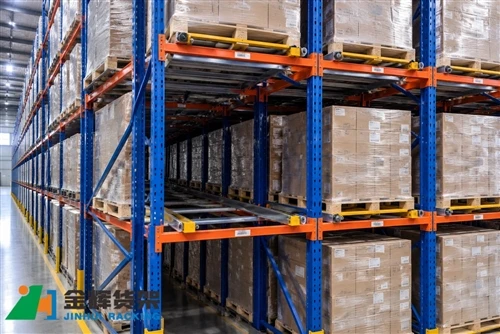
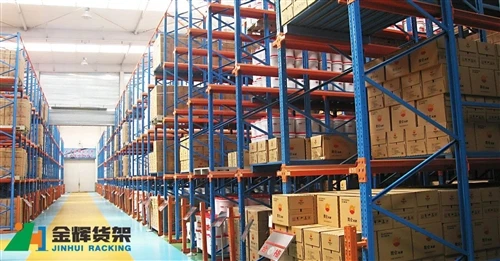
Drive-in racking is a high-density storage solution where forklifts enter the storage lanes to load and unload pallets. Instead of requiring an aisle between every rack row, multiple pallets are stored deep within the same lane.
This design dramatically increases storage density but limits direct pallet accessibility.
Drive-in racking is generally used when warehouses store large quantities of identical products with relatively low SKU counts.
Typical applications include:
- Cold storage warehouses.
- Food processing facilities.
- Beverage manufacturers.
- Bulk raw material storage.
- Seasonal inventory.

Accessibility Comparison
The biggest difference between these two systems is accessibility.
Selective pallet racking allows every pallet to be accessed independently, making picking operations faster and reducing unnecessary forklift movement.
Drive-in racking sacrifices accessibility to achieve higher storage density. Because pallets are stored several positions deep, operators must remove front pallets before accessing those located further inside the lane.
If inventory rotation and order fulfillment speed are priorities, selective pallet racking offers a clear advantage.
Storage Density Comparison
When warehouse floor space is limited, storage density becomes a critical consideration.
Drive-in racking reduces the number of forklift aisles, allowing considerably more pallet positions within the same warehouse footprint.
Selective pallet racking requires wider access aisles but provides superior operational flexibility.
Businesses must balance available warehouse space against inventory accessibility when choosing between the two systems.
Comparison Table
| Comparison Item | Selective Pallet Racking | Drive-In Racking |
|---|---|---|
| Pallet Access | Direct access to every pallet | Access only from lane entrance |
| Storage Density | Medium | Very High |
| SKU Variety | Excellent | Limited |
| Inventory Rotation | FIFO Compatible | Typically LIFO |
| Warehouse Flexibility | Very High | Moderate |
Forklift Operation: Which System Is More Efficient?
Forklift travel has a direct impact on warehouse productivity. Every extra maneuver increases handling time, fuel or battery consumption, and the possibility of accidental rack damage. Because selective pallet racking and drive-in racking are designed differently, forklift operation also differs significantly.
With heavy duty selective pallet racking, forklifts travel through clearly defined aisles and retrieve pallets directly from the required storage location. Operators rarely need to move other pallets before accessing the desired load, making daily operations faster and easier to manage.
Drive-in racking requires forklifts to enter storage lanes to place or retrieve pallets. While this design saves floor space, it also increases travel inside the rack structure and demands greater operator skill.
For warehouses handling frequent inbound and outbound shipments, selective pallet racking generally delivers higher handling efficiency.
Inventory Rotation: FIFO vs LIFO
Inventory rotation is another major factor when selecting a warehouse storage system.
Selective pallet racking naturally supports FIFO (First In, First Out) inventory management because every pallet remains individually accessible. Warehouse operators can retrieve the oldest inventory first without relocating other products.
Drive-in racking is typically operated using a LIFO (Last In, First Out) approach. Since pallets are stored several positions deep, the most recently stored pallet is generally removed first.
This difference makes selective pallet racking the preferred solution for industries where inventory freshness and traceability are essential.
Industries commonly requiring FIFO include:
- Food distribution.
- Beverage warehouses.
- Pharmaceutical storage.
- Retail distribution centers.
- E-commerce fulfillment.
Space Utilization Comparison
If warehouse floor space is extremely limited, drive-in racking can significantly increase pallet capacity by minimizing the number of forklift aisles.
However, maximizing storage density is not always the same as maximizing warehouse efficiency.
Many businesses find that selective pallet racking provides a better overall balance between storage capacity and operational productivity because workers spend less time locating and moving inventory.
Warehouse planners should evaluate:
- Available building area.
- Warehouse height.
- Number of SKUs.
- Daily pallet movement.
- Forklift traffic.
- Future expansion plans.
Installation and Maintenance
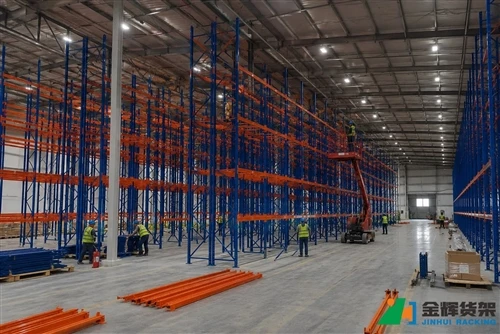
Heavy duty selective pallet racking is relatively simple to install, expand, and modify. Additional bays or beam levels can usually be added without affecting the remainder of the warehouse layout.
Drive-in racking requires more precise installation because the guide rails and support structure must maintain accurate alignment throughout every storage lane.
Maintenance also differs between the two systems.
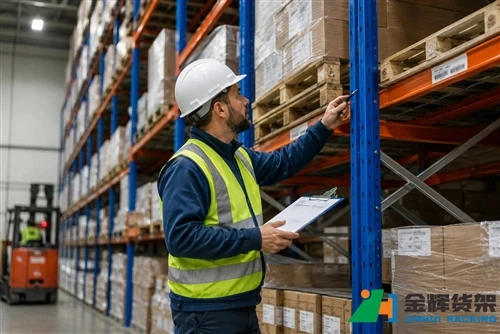
Since forklifts regularly enter drive-in rack lanes, the likelihood of structural impacts is generally higher than with selective pallet racking. Regular inspections become particularly important to ensure guide rails, uprights, and structural components remain in good condition.

Cost Comparison
Initial investment depends on warehouse dimensions, rack height, pallet quantity, and engineering requirements.
Drive-in racking generally requires fewer aisles but includes additional structural components such as guide rails and lane supports. Selective pallet racking uses more floor space but offers greater operational flexibility and lower handling costs.
Rather than comparing purchase price alone, businesses should evaluate the total cost of ownership, including labor efficiency, maintenance, inventory management, and future expansion.
Which Warehouses Should Choose Selective Pallet Racking?
Heavy duty selective pallet racking is usually the better choice when flexibility and accessibility are more important than maximum storage density.
It is particularly suitable for:
- Manufacturing facilities.
- Third-party logistics companies.
- E-commerce fulfillment centers.
- Retail distribution warehouses.
- Automotive parts storage.
- Pharmaceutical distribution.
Businesses managing many different products benefit from immediate pallet access and simplified inventory control.
Which Warehouses Benefit from Drive-In Racking?
Drive-in racking performs best when warehouses store large quantities of identical products with relatively low inventory turnover.
Typical applications include:
- Cold storage warehouses.
- Frozen food facilities.
- Beverage production.
- Bulk chemical storage.
- Seasonal inventory.
For these environments, maximizing pallet positions often outweighs the need for individual pallet accessibility.
Quick Selection Checklist
| Warehouse Requirement | Recommended System |
|---|---|
| Many different SKUs | Selective Pallet Racking |
| Fast order fulfillment | Selective Pallet Racking |
| Highest storage density | Drive-In Racking |
| Large quantities of identical pallets | Drive-In Racking |
| FIFO inventory management | Selective Pallet Racking |
| Maximum warehouse flexibility | Selective Pallet Racking |
Frequently Asked Questions
Which racking system offers better pallet accessibility?
Heavy duty selective pallet racking provides direct access to every pallet, making it the better option for warehouses handling multiple SKUs and frequent inventory movement.
Is drive-in racking cheaper?
Not necessarily. Although drive-in racking increases storage density, the total investment depends on warehouse layout, rack configuration, and operational requirements. Long-term operating costs should also be considered.
Which system is safer for forklift operations?
Selective pallet racking generally reduces the risk of forklift impacts because operators do not need to drive into storage lanes.
Can selective pallet racking be expanded later?
Yes. Additional bays, beam levels, or rack rows can usually be added with minimal disruption, making it one of the most flexible warehouse storage systems.
How do I choose the right pallet racking system?
Evaluate your inventory turnover, SKU quantity, available warehouse space, forklift operation, and future growth plans. Working with an experienced rack manufacturer can help determine the most efficient solution.
Conclusion
Heavy duty selective pallet racking and drive-in racking each provide valuable warehouse storage solutions, but they are designed for different operational priorities. Selective pallet racking offers unmatched flexibility, direct pallet access, and excellent inventory control, making it the preferred choice for most manufacturing, logistics, retail, and distribution facilities. Drive-in racking excels where storage density is the primary objective and inventory consists of large volumes of similar products.
Selecting the right system requires balancing storage capacity, operational efficiency, inventory management, and long-term business growth.
Find the Right Warehouse Storage Solution with Jinhui Rack
Jinhui Rack designs and manufactures customized warehouse storage systems for businesses across manufacturing, logistics, retail, food processing, and industrial distribution. Whether you need flexible Heavy Duty Selective Pallet Racking or a high-density storage solution, our engineering team can recommend the best configuration for your warehouse.
WhatsApp
+8618502527163
Email
info@jhrack.com