When designing a warehouse storage system, pallet rack beams often receive most of the attention because they directly support the pallets. However, the pallet rack upright frame is equally important because it transfers the loads from the beams to the warehouse floor and contributes to the overall stability of the rack structure.
Choosing the right upright frame is not simply a matter of selecting a taller or thicker steel section. The frame needs to match the rack height, rack depth, beam configuration, pallet loads, number of storage levels, warehouse conditions, and operating requirements.
For warehouse managers, purchasing teams, contractors, and storage equipment distributors, understanding how upright frames are selected can make it easier to specify the right pallet racking system and avoid unnecessary modifications later.
Quick Answer
The right pallet rack upright frame depends on rack height, frame depth, beam elevations, maximum pallet load, number of storage levels, rack configuration, forklift operation, and applicable warehouse design requirements. Upright frames should be selected as part of the complete rack system rather than based on steel thickness or appearance alone.
What Is a Pallet Rack Upright Frame?
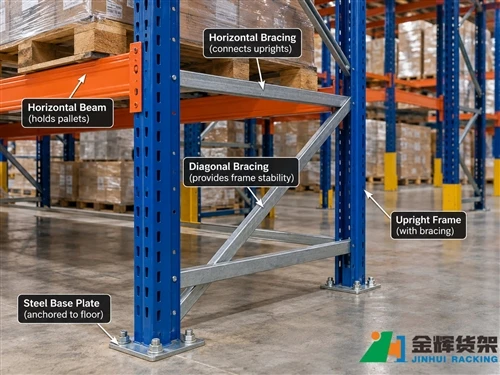
A pallet rack upright frame is the vertical structural assembly that supports the horizontal beams and transfers the stored load toward the warehouse floor.
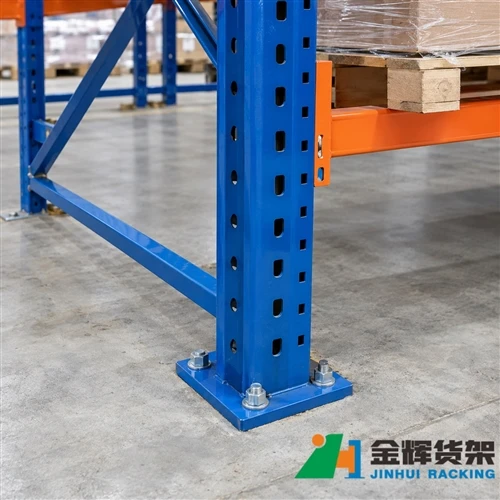
A typical upright frame consists of vertical columns connected with horizontal and diagonal bracing. Base plates are normally used at the bottom of the frame to connect the rack to the floor according to the system design.
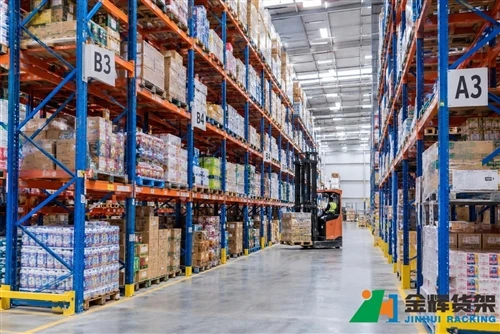
In a conventional selective pallet racking system, upright frames and beams work together to create individual pallet storage bays.
The basic structural relationship is simple:
- Upright frames provide vertical support.
- Beams support the pallet loads between the frames.
- Bracing contributes to frame rigidity and stability.
- Base plates and anchors connect the rack structure to the floor.
Although these components perform different functions, they need to be designed as one complete system.
Why Upright Frame Selection Matters
The upright frame affects several important characteristics of an industrial pallet racking system.
- Overall rack height
- Rack depth
- Vertical load transfer
- Storage level configuration
- Rack stability
- Forklift clearance
- Warehouse space utilization
- Potential future expansion
A rack frame that is suitable for a low-level storage application may not be appropriate for a tall, heavily loaded warehouse rack.
Similarly, changing the number of beam levels or increasing pallet loads can change the requirements for the upright frame.
How Rack Height Affects Upright Frame Selection
Rack height is one of the first factors to consider when selecting an upright frame.
As the rack becomes taller, the structural requirements can change because the frame has to support the loads from more storage levels while maintaining appropriate stability.
Warehouse planners should therefore specify the required overall rack height rather than selecting an upright frame independently.
The required height may be influenced by:
- Clear warehouse height
- Required number of pallet levels
- Pallet height
- Forklift lifting height
- Fire protection requirements
- Building structure
- Required clearance above stored pallets
A higher rack can provide more vertical storage capacity, but the complete configuration needs to be reviewed before increasing rack height.
How Rack Depth Affects the Upright Frame
Upright frame depth should match the intended pallet and storage configuration.
For example, a standard single-deep selective pallet rack has different dimensional requirements from a double-deep configuration.
Frame depth can influence:
- Pallet support
- Pallet overhang
- Storage density
- Forklift operation
- Overall warehouse footprint
The frame should provide an appropriate structure for the intended pallet arrangement rather than simply being selected according to available floor space.
If the warehouse uses unusual pallet dimensions, the frame depth should be reviewed together with the pallet dimensions and beam arrangement.
How Pallet Weight Affects Upright Frame Requirements
The maximum pallet weight is one of the most important inputs for pallet rack design.
For example, a warehouse storing 500 kg pallets has a different loading requirement from a warehouse storing 1,500 kg pallets.
The upright frame needs to account for the cumulative load transferred from the beam levels above it.
When determining the required frame configuration, warehouse operators should provide:
- Average pallet weight
- Maximum pallet weight
- Number of pallets per beam level
- Number of storage levels
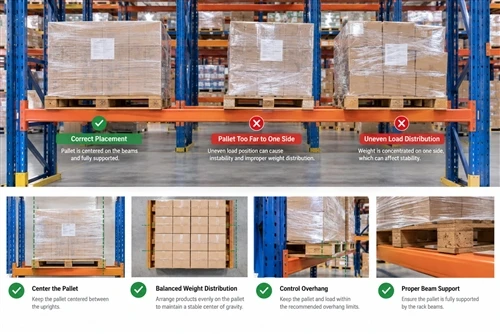
- Expected load distribution
Using the average pallet weight alone can result in an inaccurate design if some products are significantly heavier.
For a more detailed explanation of overall rack loading, see our article How to Determine Pallet Rack Load Capacity for Warehouse Storage.
Why the Number of Beam Levels Matters
The number of beam levels determines how many loaded storage positions are supported by each upright frame.
For example, a rack with two beam levels may have a significantly different cumulative vertical load from a rack with five loaded beam levels.
When additional levels are added, the frame needs to support the resulting increase in accumulated load.
Storage level configuration should therefore be determined before the final upright frame is selected.
Warehouse planners should consider:
- Number of pallet levels
- Beam elevation
- Pallet height
- Maximum pallet weight
- Required vertical clearance
- Forklift lifting height
Upright Frame Size Is More Than Steel Thickness
One common purchasing mistake is comparing pallet rack frames mainly by steel thickness.
Steel thickness is only one part of the structural configuration.
The performance of an upright frame can also depend on:
- Column profile
- Column geometry
- Frame height
- Frame depth
- Bracing arrangement
- Material properties
- Beam elevations
- Connection configuration
- Overall rack layout
Two upright frames can look similar while having different structural characteristics.
For this reason, warehouse buyers should compare complete engineering specifications rather than relying on one steel thickness number.
What Is an Upright Column?
The upright column is the main vertical member of the frame.
It typically contains regularly spaced connection holes that allow beams to be installed at different heights.
This modular configuration is one of the reasons selective pallet racking is widely used in warehouses with changing storage requirements.
Beam positions can often be adjusted to accommodate different pallet heights and product configurations, subject to the rack manufacturer's specifications.
What Is Upright Bracing?
Bracing connects the upright columns and helps form the structural frame.
Depending on the rack design, horizontal and diagonal bracing may be arranged at different positions along the frame.
The bracing configuration is not merely cosmetic. It forms part of the engineered frame assembly.
This is another reason why warehouse operators should not modify or remove frame bracing without appropriate technical review.
How Frame Depth and Pallet Dimensions Work Together
Pallet dimensions should always be considered when determining frame depth.
A pallet may be 1,000 mm, 1,100 mm, 1,200 mm, or another depth depending on the warehouse operation.
The rack should provide appropriate support while allowing the required pallet positioning and forklift clearance.
Different pallet sizes may require different rack configurations.
Our previous article, How Pallet Size Affects Pallet Racking Design, explains how pallet dimensions influence rack depth, beam arrangement, and storage design.
How Upright Frames Connect With Pallet Rack Beams
Beams connect the upright frames and create the horizontal storage levels.
The beam-to-frame connection needs to be compatible with the rack system and designed for the intended loading condition.
When selecting an upright frame, the beam configuration should therefore already be known or considered as part of the design.
This includes:
- Beam length
- Beam profile
- Beam elevation
- Number of beams per level
- Number of storage levels
- Expected pallet load
A longer beam, heavier pallet load, or different storage configuration can change the overall structural requirements.
Selective Pallet Racking and Upright Frame Configuration
Selective pallet racking is one of the most flexible pallet storage systems for warehouse applications.
Its modular design allows rack height, frame depth, beam levels, bay width, and pallet positions to be configured according to the application.
Selective pallet racking is particularly suitable for warehouses that require direct access to individual pallets.
Typical applications include:
- Manufacturing warehouses
- Distribution centers
- 3PL warehouses
- Automotive parts storage
- Retail distribution
- Industrial warehouses
For warehouses with many SKUs, the ability to access individual pallet positions can be more valuable than simply maximizing storage density.
How Forklift Type Affects Upright Frame Planning
Forklift equipment needs to be considered when planning the rack configuration.
Different forklifts have different lifting heights, turning requirements, reach capabilities, and operating characteristics.
Common equipment includes:
- Counterbalance forklifts
- Reach trucks
- Electric pallet trucks
- Order pickers
- Specialized warehouse handling equipment
The forklift does not determine the upright frame by itself, but it affects the rack height, beam elevations, aisle layout, and pallet handling configuration.
A rack should therefore be designed around the actual material handling equipment used in the facility.

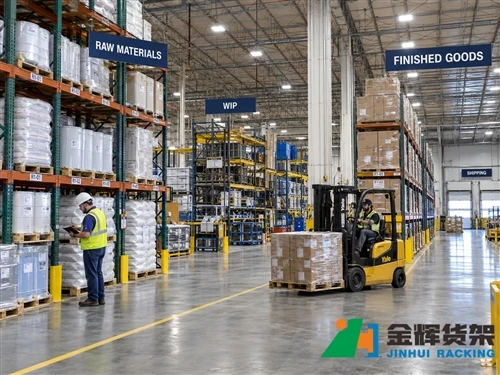
Heavy duty upright frames form the vertical structure of a pallet racking system and support multiple storage levels.
How Warehouse Columns Affect Upright Frame Placement
Existing building columns can influence where rack upright frames can be installed.
A warehouse layout may contain structural columns, walls, doors, fire protection equipment, loading areas, or other fixed obstacles.
Rack rows need to be positioned around these conditions while maintaining appropriate aisle and operating space.
This is particularly important when installing pallet racking in an existing building rather than a newly constructed warehouse.
Our guide on how warehouse columns affect pallet racking layout covers this planning issue in more detail.
Upright Frame Selection for High-Bay Warehouses
High-bay warehouses use vertical space more aggressively than conventional storage facilities.
When rack height increases, the complete structural design becomes increasingly important.
High-bay rack planning should consider:
- Available clear height
- Number of storage levels
- Maximum pallet load
- Forklift lifting capability
- Building structure
- Fire protection system
- Seismic conditions where applicable
- Rack anchoring requirements
The upright frame should be designed specifically for the intended height and loading condition.
Should Heavy Pallets Always Use Larger Upright Frames?
Not necessarily.
Heavy pallet loads require an appropriate structural design, but selecting a frame simply because it looks larger is not a reliable engineering method.
The complete system needs to be evaluated based on the actual load, beam configuration, rack height, frame geometry, and applicable design requirements.
A properly engineered frame is more important than simply increasing material thickness.
How Upright Frame Selection Affects Warehouse Expansion
Warehouse requirements can change over time.
A business may increase inventory, add new SKUs, introduce heavier products, or increase the number of storage levels.
When planning a new rack system, it can therefore be useful to discuss future requirements with the manufacturer.
However, future modifications should not be assumed to be automatically compatible with the original rack.
Adding beam levels, increasing pallet weight, or changing the rack height may require a structural review.
Upright Frame Selection for Different Storage Systems
Upright frames are used in different pallet storage configurations, but the structural requirements vary according to the system.
Selective Pallet Racking
Selective pallet racking uses upright frames and beams to create individual accessible pallet positions. It is suitable for warehouses requiring flexibility and direct pallet access.
Double Deep Racking
Double deep pallet racking stores pallets two positions deep and can increase storage density compared with conventional selective layouts.
Push Back Racking
Push back racking uses inclined rails and nested carts to store multiple pallets deep. It is commonly used when higher density is required while maintaining loading and retrieval from the same aisle.
Pallet Flow Racking
Pallet flow racking uses roller tracks to move pallets through storage lanes and is particularly useful where FIFO inventory rotation is important.
The upright frame and supporting structure should always be designed for the specific storage system rather than assuming that one frame configuration can be used for every application.
How to Choose the Right Pallet Rack Upright Frame
Before ordering a pallet rack system, prepare the following information:
- Measure the available warehouse clear height.
- Confirm the required rack height.
- Record pallet length, width, and height.
- Record the maximum loaded pallet weight.
- Determine the required number of storage levels.
- Confirm the planned beam elevations.
- Determine the required rack depth.
- Identify the forklift type and lifting height.
- Map warehouse columns and fixed building structures.
- Confirm the desired storage system.
- Discuss current and potential future storage requirements with the rack manufacturer.
This information allows the supplier to evaluate the upright frame as part of the complete rack configuration.
Common Pallet Rack Upright Frame Mistakes
Choosing a Frame by Steel Thickness Alone
Steel thickness does not provide enough information to determine the suitability of an upright frame.
Ignoring Rack Height
A frame suitable for a low-level rack should not automatically be used for a significantly taller configuration.
Ignoring Maximum Pallet Weight
Using average product weight instead of the actual maximum load can lead to an inaccurate rack specification.
Adding Beam Levels Without Review
Additional storage levels can increase the cumulative load transferred through the upright frames.
Changing Frame Components Without Approval
Replacing or modifying structural components can change the original design conditions.
Ignoring Building Conditions
Columns, floor conditions, fire protection systems, and other building features can influence rack placement and design.
How to Inspect Pallet Rack Upright Frames
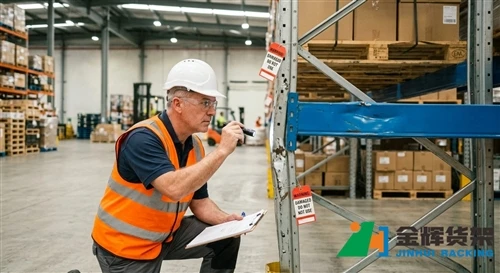
After installation, warehouse teams should periodically check the condition of upright frames and other rack components.
Common inspection points include:
- Visible column deformation
- Forklift impact damage
- Damaged bracing
- Loose or missing components
- Base plate condition
- Anchor condition
- Corrosion
- Unapproved modifications
Regular inspection is particularly important in busy warehouses where forklifts operate continuously around the rack structure.
For a more detailed inspection approach, see our pallet rack inspection checklist.
FAQ About Pallet Rack Upright Frames
What is a pallet rack upright frame?
A pallet rack upright frame is the vertical structural assembly that supports the rack beams and transfers stored loads toward the warehouse floor. It typically consists of vertical columns, horizontal and diagonal bracing, and a base connection.
How do I choose a pallet rack upright frame?
Consider rack height, frame depth, maximum pallet load, number of beam levels, beam elevations, pallet dimensions, forklift operation, warehouse conditions, and the complete rack configuration.
Does a taller pallet rack require a different upright frame?
Potentially. Rack height is an important part of structural design, so the upright frame should be selected for the specific rack height and loading condition.
Does pallet weight affect upright frame selection?
Yes. The upright frame transfers the cumulative loads from the storage levels, so maximum pallet weight and the number of loaded levels are important design inputs.
Can pallet rack upright frames be customized?
Yes. Industrial pallet racking can be customized according to rack height, depth, pallet dimensions, load requirements, beam configuration, and warehouse layout.
Can I replace an existing upright frame with another manufacturer's frame?
It should not be assumed that different rack components are interchangeable. The replacement component should be evaluated for dimensional compatibility and structural suitability before installation.
Final Thoughts
The upright frame is a fundamental structural component of an industrial pallet racking system.
Its selection should be based on the complete warehouse application rather than a single specification such as steel thickness or frame appearance.
Rack height, frame depth, pallet weight, beam levels, pallet dimensions, forklift operation, warehouse structure, and future requirements all need to be considered when developing the final configuration.
For warehouses installing new racks or modifying an existing system, working with an experienced pallet rack manufacturer can help ensure that the frame, beams, and other components are properly matched to the application.
Need a pallet racking system designed around your warehouse? Jinhui Rack provides customized pallet storage solutions based on pallet dimensions, load requirements, rack height, warehouse layout, and material handling conditions.
Talk to Jinhui Rack About Your Pallet Racking Project
Whether you need selective pallet racking, double deep storage, push back racking, pallet flow systems, or another industrial storage configuration, our team can help evaluate the appropriate rack structure for your application.
Send us your warehouse dimensions, pallet size, maximum pallet weight, required rack height, storage levels, and forklift information for a customized solution.
WhatsApp: +86 185 0252 7163
Email: info@jhrack.com