Pallet rack floor anchors are small components, but they play an important role in connecting an upright frame to the warehouse floor. A pallet racking system does not rely only on its steel columns and beams. The rack also needs a stable connection with the supporting floor so that the complete structure can perform as designed.
Floor anchoring should therefore be considered as part of the complete rack structure rather than as an isolated installation detail. The condition of the concrete floor, base plate, anchor connection, rack alignment, and surrounding operating environment can all affect the quality of the anchoring connection.
This guide explains the role of pallet rack floor anchors, how they work with base plates, what warehouse operators should inspect, and what to consider when planning or modifying a pallet racking system.
What Are Pallet Rack Floor Anchors?
Pallet rack floor anchors are fastening components used to connect the rack upright and its base plate to the warehouse floor.
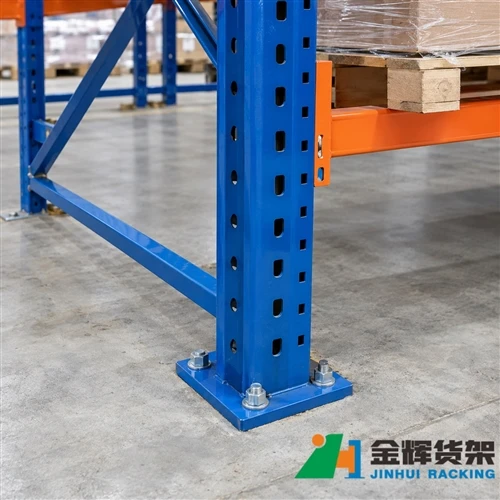
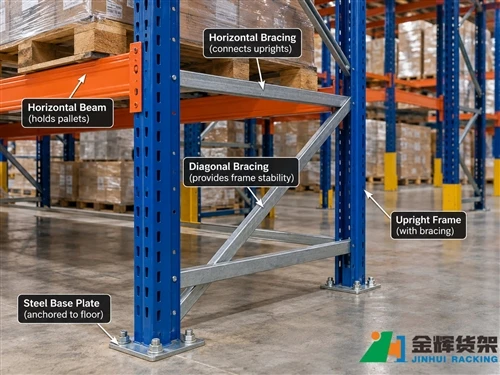
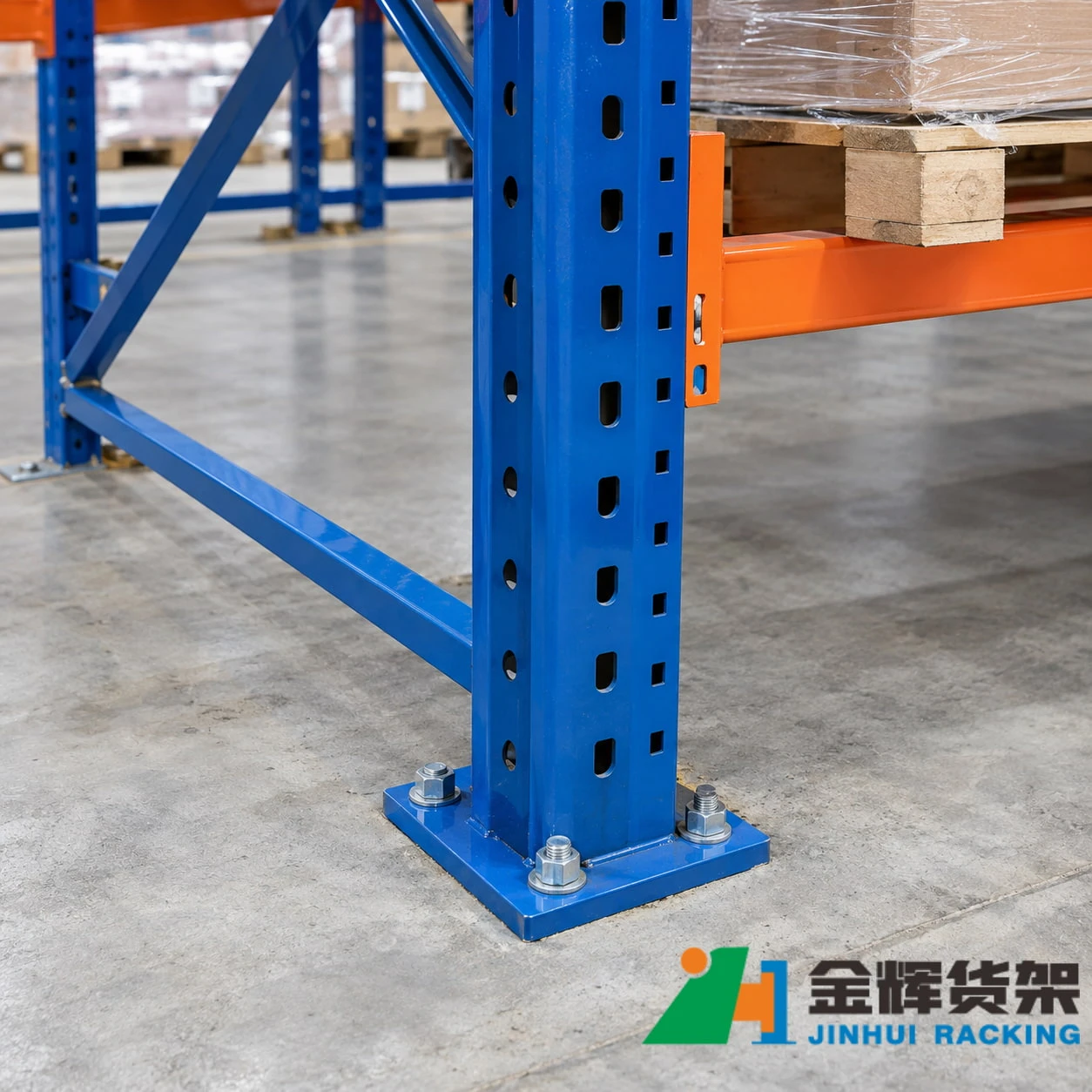
The upright frame transfers structural forces toward the bottom of the rack. The base plate provides the connection area at the bottom of the upright, while the anchor connects this assembly to the concrete floor.
In a typical pallet racking structure, the relationship can be understood as:
Rack Frame → Upright → Base Plate → Floor Anchor → Concrete Floor
Each part has a different function, but they work together as part of the complete rack structure.
Why Are Pallet Racks Anchored to the Floor?
Anchoring helps maintain the intended position of the rack relative to the warehouse floor. It is particularly important for rack systems that are exposed to regular forklift activity, pallet handling, loading, unloading, and other warehouse movements.
A properly designed and installed anchoring connection can help:
- Keep rack uprights positioned as intended.
- Reduce unwanted movement of the rack.
- Connect the rack frame to the supporting floor.
- Support the stability of the complete rack assembly.
- Maintain the intended relationship between rack components.
Anchoring does not replace proper rack design or correct operating practices. It is one part of the overall structural system.
How Floor Anchors Work With Pallet Rack Base Plates
The base plate is located at the bottom of the upright column and provides the interface between the steel rack frame and the warehouse floor.
Floor anchors pass through or connect to the base plate according to the rack design and secure the rack to the concrete floor.
This means that a problem with the base plate or the floor can also affect the anchoring connection. A warehouse should therefore inspect the anchor and the surrounding base area together instead of checking only whether a bolt is physically present.
Floor Anchor vs. Base Plate: What Is the Difference?
| Component | Primary Role |
|---|---|
| Upright Column | Provides the main vertical structural member of the rack frame. |
| Base Plate | Connects the bottom of the upright to the floor interface. |
| Floor Anchor | Secures the rack assembly to the warehouse floor. |
| Concrete Floor | Provides the supporting substrate for the anchoring connection. |
These components should be considered together when evaluating rack stability. A strong anchor cannot compensate for an unsuitable floor condition or a damaged base plate.
Why Concrete Floor Conditions Matter
The performance of a floor anchor depends partly on the condition of the concrete into which it is installed.
Before installing or modifying a pallet rack system, the warehouse floor should be evaluated for conditions that could affect the anchoring connection. Relevant factors can include concrete condition, floor damage, cracking, thickness, levelness, and the suitability of the floor for the proposed rack installation.
Existing warehouses may have areas where the floor has been damaged by forklifts, previous construction, chemical exposure, heavy equipment, or other operations. These conditions should not automatically be treated as suitable for rack anchoring.
When floor conditions are uncertain, the rack supplier or an appropriately qualified professional should review the installation requirements.
Where Are Floor Anchors Installed on a Pallet Rack?
Anchors are normally associated with the base plates at the bottom of the upright frames. Their exact position and quantity depend on the rack design and anchoring requirements.
Anchor locations should match the approved rack configuration. Warehouse personnel should not move anchor points simply to avoid floor damage, cracks, embedded services, or other obstructions without reviewing the proposed change.
The anchor arrangement is part of the relationship between the rack frame and the floor, so changes should be treated as structural modifications rather than simple installation adjustments.
How Rack Alignment Relates to Floor Anchoring
Anchoring and rack alignment are closely related during installation.
A rack should be positioned and aligned according to the approved layout before the final anchoring condition is established. If the frame is not correctly positioned, anchoring it in the wrong location can make later correction more difficult.
After installation, the rack should be checked to confirm that the upright frames remain properly positioned and that the anchoring connection is secure.
This is especially important when multiple rack rows are installed in a large warehouse. Small positioning errors can become more noticeable when repeated across long rows.
What Can Cause Pallet Rack Anchors to Become Loose?
Floor anchors can be exposed to different operating conditions over the service life of a rack system.
Potential causes of anchor problems include:
- Forklift impact near the rack upright.
- Damage to the base plate or surrounding concrete.
- Improper installation.
- Changes to the rack structure.
- Warehouse floor deterioration.
- Repeated vibration or operational movement.
- Unauthorized modification or repair.
A loose anchor should not simply be tightened without first considering why it became loose. If the surrounding base plate, concrete, or upright has also been damaged, the complete area may require further evaluation.
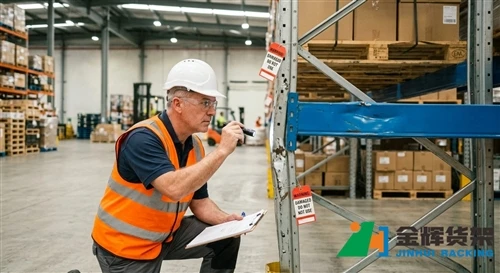
How to Inspect Pallet Rack Floor Anchors
Routine visual checks can help warehouse personnel identify obvious anchoring problems before they become more serious.
During an inspection, check:
- Whether the required anchors are present.
- Whether visible anchor components appear loose or damaged.
- Whether the base plate is visibly distorted.
- Whether the concrete around the anchor shows damage.
- Whether there are signs of forklift impact.
- Whether the upright appears displaced from its intended position.
- Whether unauthorized modifications have been made.
Inspection should not be limited to the anchor itself. The surrounding base plate, upright, concrete, and nearby rack components should also be examined.
What Does a Damaged Pallet Rack Anchor Look Like?
Visible signs of a potential anchoring problem can include a missing anchor, an obviously loose component, damage around the base plate, cracked or broken concrete near the anchor, or visible movement of the upright from its intended position.
However, not every anchoring problem can be identified from a visual inspection alone. If the condition of an anchor or its surrounding concrete is uncertain, the rack should be evaluated according to the manufacturer's requirements or by a qualified professional.
Warehouse personnel should avoid assuming that an anchor is safe simply because it is still physically present.
What Should You Do if a Rack Anchor Is Damaged?
If an anchor or the surrounding base area appears damaged, the affected rack should be assessed before normal operation continues in a way that could worsen the condition.
Do not improvise a replacement anchor, drill a new hole next to the existing hole, weld the base plate, or make another structural modification without appropriate technical approval.
The correct repair depends on the rack design, anchor arrangement, concrete condition, damage type, and applicable engineering requirements.
Floor Anchors and Forklift Impact
Forklift impact is one of the operating events that can affect the lower portion of a pallet rack.
An impact that appears to have affected only an upright may also have affected the base plate, anchor, concrete, or the alignment of the rack frame.
For this reason, post-impact inspection should include the entire lower connection area rather than stopping at the visibly damaged steel member.
Warehouse teams should also report rack impacts promptly instead of waiting for the next scheduled inspection.
Can Floor Anchors Be Moved During Warehouse Renovation?
Warehouse renovation projects sometimes involve changes to floor layouts, equipment, conveyors, doors, production areas, or traffic routes.
If an existing pallet rack needs to be relocated, the original anchor arrangement should not simply be duplicated in a new position without reviewing the new installation conditions.
The new location may have different floor conditions, building constraints, rack dimensions, or operating requirements. The rack should be reinstalled according to the requirements of the new configuration.
Floor Anchoring When Expanding an Existing Rack System
Adding rack bays to an existing warehouse can also require a review of floor anchoring conditions.
The new rack section should be treated as part of the planned rack configuration rather than as an independent extension that can be attached wherever floor space is available.
Before expansion, review:
- Existing rack layout
- New rack dimensions
- Upright locations
- Base plate positions
- Floor condition
- Forklift traffic
- Required clearances
- Compatibility with the existing rack configuration
This approach helps ensure that the expansion remains consistent with the overall warehouse storage design.
Common Pallet Rack Floor Anchoring Mistakes
Ignoring the Condition of the Concrete Floor
An anchor is only as useful as the supporting substrate allows. Damaged or unsuitable concrete should be evaluated before installation.
Using an Anchor Without Confirming Compatibility
A visually similar anchor is not automatically suitable for a particular rack and floor condition. Anchoring components should follow the approved design requirements.
Drilling Around an Existing Problem Without Review
Moving an anchor hole to avoid a crack or obstruction can change the intended connection. Such changes should be reviewed before installation.
Checking the Bolt but Ignoring the Base Plate
A visible anchor does not guarantee that the entire bottom connection is in good condition. The base plate, upright, and surrounding concrete should also be inspected.
Ignoring Anchor Damage After a Forklift Impact
An impact near the bottom of an upright can affect more than the visible steel. The anchor and concrete connection should also be checked.
Replacing Damaged Anchors With Improvised Hardware
Structural rack components and their fastening systems should be replaced with compatible components rather than improvised alternatives.
Pallet Rack Floor Anchor Inspection Checklist
- Check that required anchors are present.
- Look for visible damage or looseness.
- Inspect the base plate around each anchor.
- Check the surrounding concrete for visible damage.
- Look for signs of forklift impact.
- Check whether the upright remains correctly positioned.
- Report missing or damaged anchors promptly.
- Do not make unauthorized anchor modifications.
- Use appropriate replacement components when repairs are required.
- Review significant rack changes before modifying the anchoring arrangement.
How Floor Anchoring Fits Into a Complete Pallet Rack System
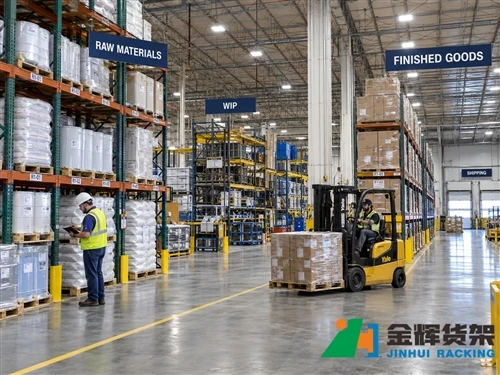
Floor anchoring is only one part of a complete pallet racking system. Upright frames, beams, bracing, base plates, anchors, pallets, and the warehouse floor all interact within the overall rack structure.
For this reason, rack planning should consider the complete installation rather than selecting anchoring components separately at the end of a project.
JINHUI pallet racking solutions can be designed around warehouse dimensions, pallet requirements, storage conditions, and project-specific requirements.
Explore JINHUI Warehouse Pallet Rack Solutions.
FAQ About Pallet Rack Floor Anchors
Why do pallet racks need floor anchors?
Floor anchors connect the rack's base plates and upright frames to the warehouse floor and help maintain the intended position of the rack structure.
Are floor anchors the same as pallet rack base plates?
No. The base plate is part of the bottom of the upright frame, while the floor anchor provides the fastening connection between the rack assembly and the floor.
Can a damaged rack anchor simply be tightened?
Not necessarily. If an anchor is loose or damaged, the surrounding base plate, concrete, upright, and cause of the problem should also be evaluated.
Can I drill a new anchor hole if the original location is damaged?
Do not make this change without appropriate technical review. Changing the anchor location can affect the intended rack-to-floor connection.
Does a floor anchor determine the rack's total load capacity?
No. Rack performance depends on the complete engineered configuration, including upright frames, beams, connections, anchoring, dimensions, loading conditions, and floor requirements.
Plan the Rack-to-Floor Connection as Part of the Complete System
Pallet rack floor anchors provide the important connection between the rack structure and the warehouse floor. Their performance depends not only on the anchor itself but also on the base plate, upright frame, concrete condition, installation arrangement, and operating environment.
For new installations, warehouse expansions, relocations, and repairs, the anchoring arrangement should be considered as part of the complete rack design. Regular inspection can also help identify visible problems such as damaged anchors, damaged concrete, or displaced rack bases.
JINHUI Rack provides warehouse pallet racking solutions for different storage requirements and warehouse conditions. For a project-specific recommendation, provide your warehouse layout, pallet information, storage requirements, and operating conditions.
Contact JINHUI Rack:
WhatsApp: +86 185 0252 7163
Email: info@jhrack.com
Website: https://www.jinhui-rack.com/