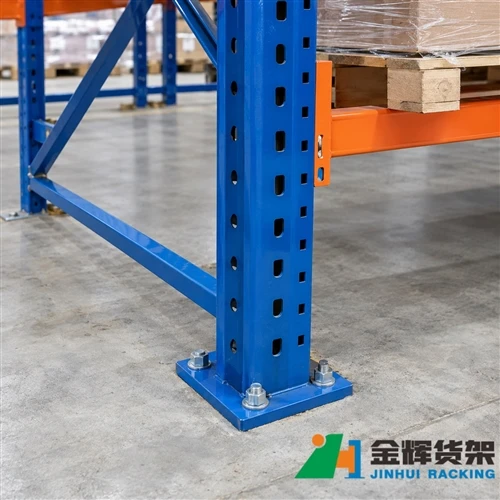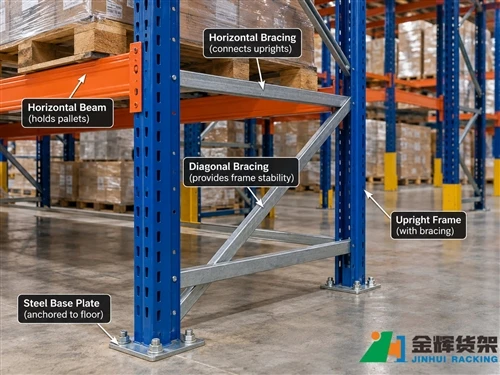
Pallet rack upright frames are more than two vertical steel columns. The columns, horizontal bracing, diagonal bracing, base plates, and other structural components work together to form the rack frame.
Among these components, upright frame bracing plays an important role in maintaining the geometry and rigidity of the frame. The bracing connects the upright columns and forms part of the structural path through which forces are transferred within the rack system.
Understanding how pallet rack bracing works can help warehouse managers recognize why these components should not be removed, modified, or damaged without appropriate technical review.
What Is Pallet Rack Upright Frame Bracing?
Upright frame bracing consists of structural members that connect the vertical columns of a pallet rack frame. Depending on the rack design, these members can include horizontal and diagonal braces arranged at different positions along the frame.
The braces help connect the two upright columns into a rigid frame rather than leaving them as independent vertical members.
In a conventional pallet racking system, the upright frame works together with the beams, beam connections, base plates, and other components to create the complete rack structure.
What Components Make Up an Upright Frame?
A typical pallet rack upright frame can include several structural components:
- Vertical upright columns
- Horizontal bracing
- Diagonal bracing
- Base plates
- Connection hardware
- Other frame components specified by the rack design
The exact configuration depends on the rack system and engineering requirements. Components should therefore be treated as parts of one complete frame rather than selected or modified independently.
How Does Upright Bracing Support the Rack Frame?
Upright columns provide the main vertical structural members of the frame, while bracing connects the columns and helps maintain the intended frame geometry.
When a rack frame is assembled correctly, the bracing helps the columns work together as one structural assembly. This is important because a pallet rack is subjected to more than the static weight of stored pallets. Forklift activity, pallet placement, rack configuration, and other operating conditions can also introduce forces into the structure.
Bracing therefore forms part of the engineered rack assembly rather than functioning as a decorative connection between columns.
Horizontal Bracing vs. Diagonal Bracing
Horizontal and diagonal braces can serve different geometric functions within an upright frame.
| Bracing Type | Typical Function |
|---|---|
| Horizontal Bracing | Connects the upright columns across the frame and helps maintain the designed frame geometry. |
| Diagonal Bracing | Connects different points of the upright columns diagonally and contributes to frame rigidity and stability. |
| Complete Bracing Assembly | Works with the upright columns and other rack components as part of the engineered frame structure. |
The actual number, position, size, and arrangement of braces should follow the rack manufacturer's design. A warehouse operator should not assume that braces can be relocated simply because another arrangement appears to provide a similar appearance.
Why Should Upright Bracing Not Be Removed?
Removing a brace can change the original structural configuration of the upright frame.
A brace may appear to be a relatively small steel component, but it forms part of the frame assembly. Removing it can change how the columns interact and may affect the structural behavior of the rack.
For this reason, warehouse personnel should not remove bracing to create additional clearance for products, forklifts, pipes, conveyors, cables, or other equipment without appropriate technical review.
How Upright Bracing Works With Pallet Rack Beams
Upright frames and pallet rack beams perform different functions within the overall structure.
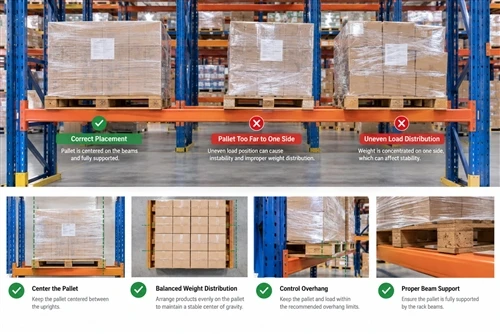
The upright frame provides vertical structural support, while the beams connect the frames and support pallet loads at each storage level.
The two components must be designed to work together. Beam length, beam elevation, number of storage levels, pallet loads, rack height, and frame configuration can all influence the requirements of the complete rack system.
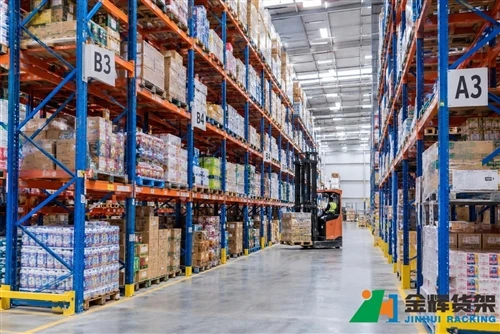
JINHUI Selective Pallet Racking Systems use upright frames, beams, bracing, and safety accessories as components of a modular pallet storage structure.
Learn more about JINHUI Selective Pallet Racking Systems.
Upright Frame Bracing and Rack Height
Rack height is an important consideration when designing the upright frame.
As the rack becomes taller, the frame configuration must be evaluated as a complete engineered structure. The arrangement of upright columns, bracing, beams, connections, and anchoring should correspond to the intended rack dimensions and loading conditions.
Warehouse operators should therefore avoid treating a tall rack as simply a standard rack with additional upright sections added on top.
When the required rack height changes, the complete frame design should be reviewed by the rack manufacturer or qualified engineer.
How Pallet Loads Relate to the Upright Frame
The load path of a conventional pallet rack can be simplified as:
Pallet Load → Beam → Upright Frame → Base Plate → Warehouse Floor
Within the upright frame, the columns and bracing work together as part of the structural assembly.
This is why rack capacity should never be judged by looking at a single component in isolation. A beam, upright column, brace, connection, or base plate may have a different function, but the performance of the complete rack depends on how these components work together.
What Can Damage Upright Frame Bracing?
Bracing can be exposed to damage during normal warehouse operations, particularly in facilities with frequent forklift traffic.
Common causes can include:
- Forklift impact
- Improper pallet handling
- Contact with stored products
- Unauthorized modifications
- Improper installation
- Corrosion or environmental exposure
- Accidental contact during maintenance work
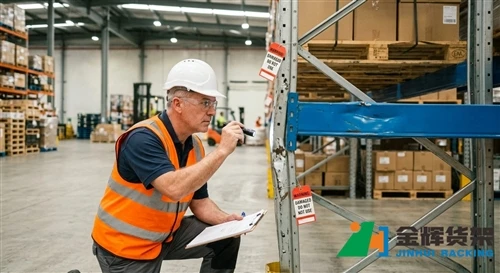
Even when a brace appears to have only minor damage, warehouse personnel should not assume that it is structurally insignificant.
How to Inspect Pallet Rack Bracing
Routine visual inspection can help identify obvious problems with upright frame bracing.
During an inspection, look for:
- Bent or visibly deformed braces
- Cracked or damaged components
- Missing braces
- Loose or missing connection hardware
- Signs of forklift impact
- Unusual frame distortion
- Corrosion that affects the structural component
- Unauthorized modifications
The inspection should cover the complete upright frame rather than checking only the front of the rack. Damage can occur at different positions along the frame and may not be obvious from the main aisle.

What Should You Do if Upright Bracing Is Damaged?
If a brace is visibly bent, broken, missing, or otherwise damaged, the affected rack should be evaluated before normal operation continues in that area.
Warehouse personnel should not straighten a damaged brace with a hammer, weld a component without engineering approval, drill new holes, or replace a structural member with an improvised part.
The appropriate repair or replacement method depends on the rack design, component type, damage condition, and manufacturer's requirements.
Why Unauthorized Bracing Modifications Are a Problem
Warehouse operators sometimes modify rack frames to accommodate building services or operating requirements. Examples can include removing a brace to create space for a pipe, cable, conveyor, or other equipment.
Such changes can affect the original frame configuration.
Before modifying any structural rack component, the proposed change should be reviewed by the rack manufacturer or a qualified structural engineer. The objective is to confirm that the modified configuration still meets the required structural and operational conditions.
Upright Bracing During Pallet Rack Installation
Correct bracing installation is important from the beginning of a rack project.
The upright frame should be assembled according to the approved rack design. Columns should be connected with the specified horizontal and diagonal bracing, and the frame should be positioned and aligned correctly before beams and other components are installed.
Installation teams should also verify that connection hardware is properly installed and that the frame matches the project drawings or manufacturer's installation instructions.
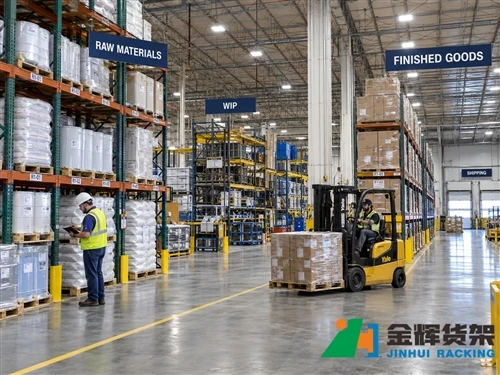
JINHUI's pallet racking systems are assembled from modular rack components, allowing the frame and beam configuration to be installed according to the requirements of the warehouse project.
How Bracing Relates to Rack Reconfiguration
One advantage of modular pallet racking is that storage levels can often be adjusted to accommodate changing pallet heights and product configurations.
However, adjustable beam positions should not be confused with unrestricted modification of the upright frame.
Moving a beam within its approved configuration is different from removing, drilling, cutting, relocating, or replacing structural bracing.
When a warehouse needs a significant rack modification, the complete configuration should be reviewed before work begins.
Common Pallet Rack Bracing Mistakes
Removing Bracing for Additional Clearance
Removing a brace to create more product or forklift clearance can change the structural configuration of the frame.
Replacing a Brace With an Improvised Part
A visually similar steel member is not necessarily an engineered replacement. Replacement components should be compatible with the rack system.
Ignoring Bent Bracing
A bent brace should not automatically be considered cosmetic damage. Its condition should be evaluated before the rack continues in normal service.
Drilling New Holes in Upright Components
Unapproved drilling can change the original structural configuration and should not be performed without technical approval.
Mixing Components From Different Rack Systems
Components that appear similar may have different dimensions, connection methods, or structural requirements. Rack components should be compatible with the original system.
Upright Frame Bracing Checklist
- Confirm that the upright frame matches the approved rack design.
- Check that horizontal and diagonal braces are installed in their intended positions.
- Look for bent, cracked, missing, or damaged braces.
- Check visible connection hardware for damage or missing components.
- Inspect the frame for signs of forklift impact.
- Do not remove structural bracing without technical approval.
- Do not drill or cut upright frame components without engineering review.
- Use compatible replacement components when repairs are required.
- Review major rack modifications before implementation.
- Keep installation and inspection records for the rack system.
FAQ About Pallet Rack Upright Frame Bracing
What is the purpose of pallet rack upright bracing?
Upright bracing connects the vertical columns and forms part of the structural frame. It helps maintain the designed frame geometry and contributes to the overall rigidity and stability of the rack assembly.
What is the difference between horizontal and diagonal bracing?
Horizontal braces connect the upright columns horizontally, while diagonal braces connect different points of the columns diagonally. Both can form part of the engineered upright frame configuration.
Can I remove a pallet rack brace if it interferes with a product?
No structural brace should be removed simply to create additional storage clearance. The proposed change should first be reviewed by the rack manufacturer or a qualified engineer.
Can a damaged upright brace be straightened?
Warehouse personnel should not assume that a damaged structural brace can be safely straightened. The component should be evaluated and repaired or replaced according to the appropriate technical requirements.
Does upright bracing determine the entire rack capacity?
No. Rack performance depends on the complete structural configuration, including upright frames, beams, connections, dimensions, anchoring, loading conditions, and other relevant components.
Build a Properly Configured Pallet Rack Frame
Upright frame bracing is a relatively small part of a pallet racking system, but it is an important part of the overall frame structure. Horizontal and diagonal braces connect the upright columns and help maintain the intended configuration of the rack.
For this reason, bracing should be installed, inspected, repaired, and modified as part of the complete rack system rather than treated as an independent accessory.
JINHUI Rack provides pallet racking systems designed around warehouse dimensions, pallet requirements, loading conditions, forklift operations, and project requirements.
Contact JINHUI Rack:
WhatsApp: +86 185 0252 7163
Email: info@jhrack.com
Website: https://www.jinhui-rack.com/