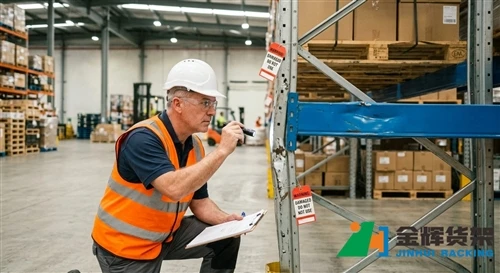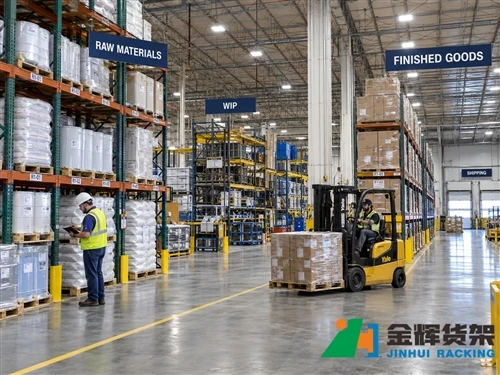
Retail distribution centers need to store a wide range of products while keeping inventory accessible and supporting fast receiving, replenishment, picking, and shipping operations. Unlike warehouses that handle only a few product types, retail distribution facilities often manage many SKUs with different dimensions, pallet configurations, and turnover rates.
A well-planned pallet racking system can help retail warehouses use vertical space effectively while keeping products organized and accessible. The right configuration depends on SKU variety, inventory turnover, pallet characteristics, warehouse layout, and material handling equipment.
Why Pallet Racking Is Important in Retail Distribution Centers
Retail distribution centers often operate as a link between suppliers and stores, fulfillment facilities, or customers. Inventory may arrive in large quantities and then be distributed in smaller quantities according to demand.
This creates several storage requirements at the same time:
- High SKU variety
- Different pallet sizes and product dimensions
- Frequent replenishment
- Regular pallet movement
- Reserve inventory storage
- Fast order fulfillment
- Clear inventory identification
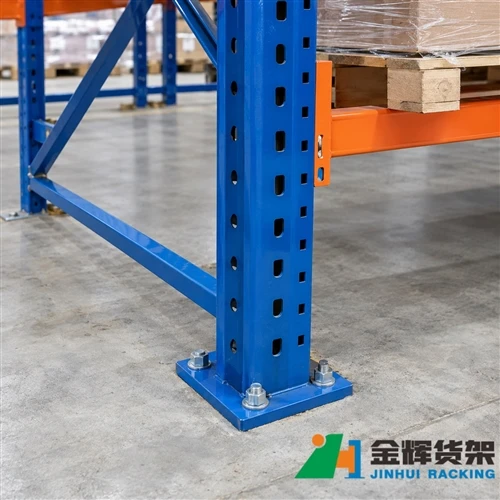
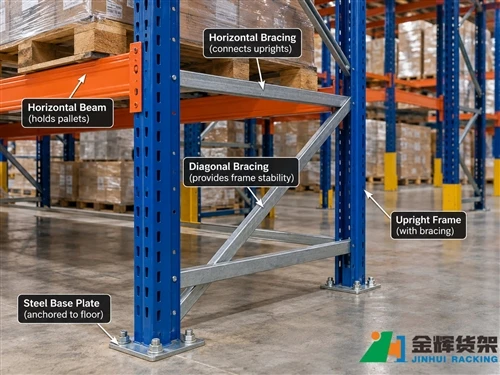
Pallet racking provides a structured way to organize reserve inventory while maintaining forklift access to stored products. JINHUI warehouse pallet rack solutions can be configured around warehouse dimensions, pallet requirements, inventory characteristics, and operating conditions.
Understand the Inventory Profile Before Choosing a Rack System
The first step in designing retail distribution center storage is understanding what the warehouse actually stores.
Retail inventory can include packaged consumer products, household goods, appliances, beverages, cartons, promotional products, and other palletized merchandise. These products may have very different weights, dimensions, turnover rates, and storage requirements.
Instead of using the same rack configuration throughout the warehouse, operators can divide inventory into storage zones according to its characteristics.
| Inventory Characteristic | Storage Consideration |
|---|---|
| Many different SKUs | Prioritize direct pallet accessibility and location visibility |
| Large quantities of the same SKU | Consider higher-density storage configurations |
| Fast-moving products | Place storage locations closer to relevant picking or dispatch areas |
| Slow-moving reserve inventory | Use available vertical space efficiently while maintaining appropriate access |
| Products with different pallet sizes | Configure rack levels and storage positions around actual pallet requirements |
Selective Pallet Racking for High SKU Variety
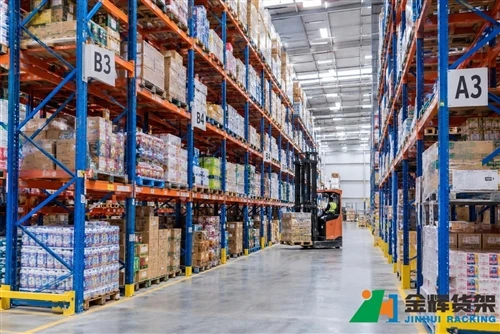
Selective pallet racking is particularly suitable for retail distribution centers that need direct access to many different products. Each pallet position can be accessed independently, which makes the system practical when inventory variety is more important than achieving the maximum possible storage density.
JINHUI's Selective Pallet Racking Systems can be configured according to pallet dimensions, warehouse conditions, load requirements, beam levels, and forklift operation.
This configuration can be useful for retail distribution warehouses where different products need to be stored in clearly separated locations and retrieved independently.
How to Separate Fast-Moving and Slow-Moving Retail Inventory
Not every SKU should be treated in the same way. One of the practical ways to improve warehouse organization is to separate inventory according to movement frequency.
Fast-moving products generally require more frequent access. Their storage locations should therefore be planned with forklift travel, replenishment frequency, and picking operations in mind.
Slow-moving products may remain in storage for longer periods. These products can be positioned in locations that make better use of available vertical space without unnecessarily occupying the most convenient operating areas.
This approach allows the rack layout to support the actual movement of inventory rather than simply maximizing the number of pallet positions.
When Higher-Density Racking Makes Sense
Selective racking is not necessarily the only solution for a retail distribution center. Some facilities store large quantities of the same product, making higher-density storage more attractive.
For example, Push Back Racking can be considered for batch-oriented inventory where several pallets of similar products need to be stored in depth.
Drive-in racking can also be considered when storage density is more important than direct access to every individual pallet. JINHUI's warehouse pallet rack portfolio includes selective, drive-in, push-back, pallet flow, and radio shuttle configurations for different storage requirements.
The key is to match the rack configuration with the inventory profile instead of applying one storage method to every product category.
Using Pallet Flow Racking for Inventory Rotation
Some retail products require more controlled stock rotation. When FIFO is an important operational requirement, pallet flow racking can provide a different approach from conventional selective storage.
Pallet Flow Racking uses gravity-assisted movement to transfer pallets from the loading side toward the picking side. This configuration can support FIFO inventory rotation and is particularly relevant when inventory sequence matters.
Retail warehouses should determine whether FIFO is required for specific product categories before selecting a flow-based storage configuration.
How Rack Layout Supports Retail Replenishment
Retail distribution centers often need to replenish picking areas from reserve inventory. Rack layout can influence how efficiently this process is performed.
A practical layout should consider the relationship between:
- Receiving areas
- Reserve pallet storage
- Replenishment routes
- Picking areas
- Shipping and dispatch areas
- Forklift travel paths
Reserve pallets should be positioned so that replenishment movements do not unnecessarily interfere with other warehouse traffic. Clear separation between major operational zones can also help reduce congestion.
Consider Pallet Dimensions and Product Variability
Retail distribution centers may receive products on different pallet types or with different load configurations. Product cartons can also vary considerably in height and packaging structure.
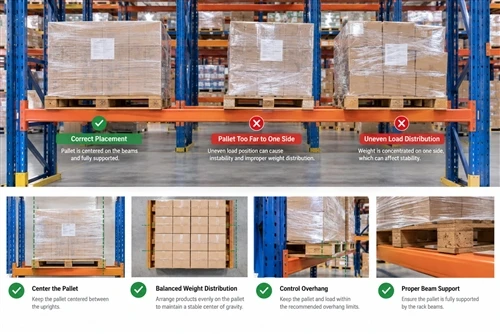
Rack design should therefore be based on the actual pallet and load information rather than assuming that every pallet has identical dimensions.
Important information to confirm during project planning includes:
- Pallet length and width
- Maximum pallet load
- Overall loaded pallet height
- Number of pallets per storage bay
- Required storage levels
- Forklift type
- Required aisle configuration
JINHUI's selective pallet racking system is designed around these project-specific requirements rather than relying on a single fixed configuration.

How to Organize Rack Locations in a Retail Distribution Center
Physical rack organization should work together with the warehouse's inventory management process. Each storage location should have a clear identification method so warehouse personnel can locate inventory quickly.
A typical location structure can identify the warehouse zone, aisle, bay, level, and pallet position. This makes it easier to connect physical storage locations with inventory records and warehouse management procedures.
For facilities using a WMS, physical rack locations can also be mapped to digital warehouse locations. This helps reduce the risk of storing inventory in the wrong position or retrieving the wrong pallet.
Retail Distribution Center Rack Layout Considerations
A retail warehouse layout should balance storage density with accessibility and material flow.
Before finalizing the rack arrangement, review:
- Warehouse length and width
- Clear building height
- Building columns and structural obstructions
- Receiving and shipping locations
- Pallet dimensions
- Forklift turning requirements
- Required aisle space
- Emergency and safety access
- Future storage requirements
Rack rows should not simply be added wherever floor space is available. Their position should support the overall movement of products through the distribution center.
Common Pallet Racking Mistakes in Retail Distribution Centers
Using One Rack Configuration for Every Product
Retail inventory can have very different storage characteristics. Using one configuration for all products may result in poor accessibility for some SKUs and unnecessary floor-space consumption for others.
Ignoring Inventory Turnover
Fast-moving products often require more frequent access than slow-moving reserve inventory. Rack locations should reflect this difference.
Focusing Only on Storage Density
Higher pallet density does not automatically mean better warehouse performance. If operators spend significantly more time locating or retrieving inventory, the additional density may not provide the expected operational benefit.
Not Planning for Future Changes
Retail product ranges change frequently. A rack layout should allow reasonable flexibility for changing SKU quantities, pallet configurations, and storage requirements.
Retail Distribution Center Pallet Racking Checklist
- Identify the number and type of SKUs.
- Record pallet dimensions and maximum loads.
- Classify inventory by turnover rate.
- Separate reserve storage from picking operations where appropriate.
- Determine whether FIFO is required for specific products.
- Evaluate selective and higher-density rack configurations.
- Confirm forklift type and operating requirements.
- Plan rack locations around receiving and shipping flows.
- Allow sufficient space for forklift movement and safe operation.
- Consider future changes in inventory volume and product mix.
FAQ About Pallet Racking for Retail Distribution Centers
What type of pallet racking is commonly used in retail distribution centers?
Selective pallet racking is commonly suitable for retail distribution centers with many SKUs because it provides direct access to individual pallet positions. Higher-density systems can be considered when inventory characteristics justify deeper storage.
Is selective pallet racking suitable for fast-moving retail products?
It can be suitable when direct pallet access and flexible inventory handling are important. The final layout should also consider replenishment frequency, forklift travel, and the relationship between reserve storage and picking areas.
When should a retail warehouse consider pallet flow racking?
Pallet flow racking can be considered when FIFO inventory rotation and controlled pallet movement are important. It may be particularly relevant for inventory where stock sequence needs to be maintained.
Can different pallet racking systems be used in the same retail distribution center?
Yes. Different inventory profiles may justify different rack configurations within the same facility. For example, selective racking can provide accessible reserve storage while higher-density systems can be used for suitable bulk inventory.
Build a Retail Distribution Center Racking Solution Around Your Inventory
Retail distribution centers need more than maximum pallet capacity. The storage system should support SKU variety, inventory turnover, replenishment, forklift operation, and the movement of products from receiving through storage and shipping.
JINHUI Rack provides customized warehouse pallet racking solutions for different storage applications. The appropriate system can be developed around your warehouse dimensions, pallet information, storage requirements, and operating conditions.
If you are planning a new retail distribution center or upgrading an existing warehouse, send us your warehouse layout, pallet dimensions, pallet weight, and storage requirements.
Contact JINHUI Rack:
WhatsApp: +86 185 0252 7163
Email: info@jhrack.com
Website: https://www.jinhui-rack.com/