Planning Long Span Shelving for Efficient Manual Warehouse Picking
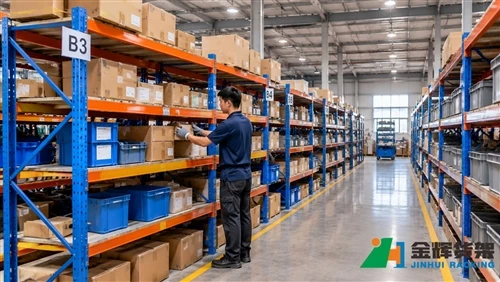
Long span shelving is commonly used in warehouses where products are too large or heavy for small parts bins but do not need to be stored on pallet racking. It provides accessible shelf levels for cartons, plastic totes, components, tools, and other manually handled inventory.
Although the structure looks straightforward, a practical shelving layout requires careful planning. Shelf dimensions, load capacity, product turnover, picking height, and replenishment access all affect how well the system performs. This guide explains how to plan long span shelving for manual picking operations.

1. What Is Long Span Shelving?
Long span shelving is a medium-duty storage system built around upright frames and horizontal beams. Shelf panels or other suitable decking materials are installed between the beams to create individual storage levels.
Compared with small boltless shelving units, long span shelving is generally designed for wider bays and larger or heavier items. Compared with pallet racking, it is intended for goods that are loaded and retrieved manually rather than handled as complete pallet loads.
Typical applications include:
- Cartons and packaged products in distribution warehouses.
- Plastic totes containing components or spare parts.
- Tools, hardware, and maintenance supplies.
- Packaged goods in manufacturing workshops.
- Retail backroom and wholesale inventory.
- Small and medium-sized products that require frequent manual access.
The appropriate system depends on the actual dimensions, weight, packaging, and handling method of the stored goods.
2. Determine the Products and Storage Requirements
Before selecting bay dimensions, review the inventory that will be placed on the shelves. A shelving system designed around a few large cartons may not work well if the warehouse also stores hundreds of small component boxes.
Collect the following information for each product group:
| Information | Planning Purpose |
|---|---|
| Product dimensions | Determines shelf width, depth, and usable storage height. |
| Unit or container weight | Helps establish the required shelf-level capacity. |
| Quantity in stock | Helps estimate the number of storage locations. |
| Picking frequency | Helps position frequently requested products in convenient locations. |
| Packaging type | Determines whether cartons, totes, trays, or other containers are suitable. |
| Replenishment method | Defines how new stock will be delivered to each shelf location. |
It is also useful to distinguish between active picking stock and reserve inventory. Products needed throughout the day may require more accessible locations, while less frequently requested stock can be assigned to other suitable shelf positions.
3. Select Suitable Bay and Shelf Dimensions
Bay dimensions should match the size and weight of the stored products. A shelf that is too narrow can make cartons difficult to position, while an unnecessarily deep shelf may leave unused space behind the products and make stock identification harder.
Shelf width
Allow enough width for the intended cartons or containers, including practical clearance for placing and removing them. If several product types share one shelf, consider how they will be separated and identified.
Shelf depth
Shelf depth should suit the front-to-back dimensions of the stored goods. Deep shelves may be useful for larger containers, but products should remain visible and accessible. Avoid arranging stock so that workers must repeatedly remove front items to reach products at the back.
Shelf height and adjustment
Adjustable shelf levels allow the system to accommodate products with different heights. The vertical spacing should provide enough room for the goods and comfortable hand access without creating excessive unused space.
JINHUI's long span shelving product information describes shelf-level adjustment in 50 mm increments. The final configuration should be checked against the selected frame and beam specifications.
4. Arrange Shelf Levels for Manual Picking
Manual picking depends on how easily workers can identify, reach, and remove products. The shelf layout should consider both product weight and picking frequency.
Frequently picked products
Products requested regularly can be assigned to convenient picking positions, provided their dimensions and weight are suitable for those levels. This can reduce unnecessary reaching and repeated movement during order preparation.
Heavier products
Heavier cartons and containers should be placed at heights that allow workers to handle them safely. Do not place heavy goods on upper shelves simply to free up lower storage space. The shelf capacity and the overall shelving configuration must also be suitable for the intended loads.
Lightweight and slow-moving products
Lightweight products with lower picking frequency may be stored on higher levels when the shelf design and access method allow it. Products should still be clearly identified and reachable without unsafe climbing or overreaching.
Keep product groups identifiable
Where possible, assign separate shelf sections to different product families, specifications, or order categories. This makes it easier for workers to find the correct stock and reduces confusion when similar items are stored in the same area.
5. Plan Picking Aisles and Worker Access
The aisle layout should provide enough room for workers to move, pick products, and use carts or order-picking trolleys. Aisle width should not be selected from a general rule alone. It needs to reflect the shelving depth, picking method, equipment dimensions, and expected traffic.
During layout planning, review:
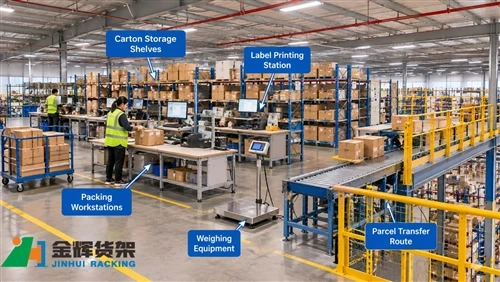
- The space required for workers to stand in front of the shelves.
- Whether picking carts can pass or turn at aisle intersections.
- Access to frequently used storage sections.
- Pedestrian routes and nearby forklift operating areas.
- Emergency exits, fire equipment, and building access routes.
- Clearance around doors, columns, and other fixed obstacles.
Where manual picking and forklift traffic operate near one another, separate their routes where practical. Floor markings, designated crossing points, and suitable operating procedures can help reduce conflicts.
6. Organize Inventory Locations and Labels
A clear location system is important when a warehouse contains many shelf bays and product variations. Without consistent identification, workers may spend unnecessary time searching for stock or may select the wrong item.
A practical location code can include an aisle, bay, shelf level, and individual position. For example, a location such as A02-B04-L03 can identify a specific position within a warehouse's own coding structure.
Use labels that are easy to read from the picking aisle. Depending on the inventory system, labels may include:
- Location code.
- Product or SKU number.
- Short product description.
- Barcode or QR code, if used by the warehouse.
- Stock status or handling notes where necessary.
Location labels should match the warehouse inventory records. When products are moved to another shelf, both the physical label and the inventory system should be updated according to the site's procedure.
7. Coordinate Replenishment with Picking Activities
Manual picking areas need regular replenishment. If new cartons are delivered while workers are collecting orders, poorly planned movements can block aisles and interrupt picking operations.
One approach is to separate reserve stock from active picking locations. Reserve inventory can be held in a suitable storage area, while smaller quantities are replenished to the shelves used for daily order preparation.
When planning replenishment, consider:
- How often each product needs to be replenished.
- Whether replenishment takes place during or outside picking periods.
- Where cartons and containers are temporarily staged.
- How workers will identify low-stock locations.
- Whether replenishment carts can move through the aisles without obstructing order picking.
For high-volume operations, replenishment tasks can be scheduled or triggered by minimum stock levels. The appropriate method depends on order patterns, inventory software, and the number of active picking locations.
8. Check Shelf Capacity and Structural Requirements
Long span shelving is available in different configurations, and its capacity depends on the selected components and structural arrangement. The allowable load should be confirmed for each shelf level and for the complete shelving structure.
When reviewing a proposed system, check:
- Rated capacity for each shelf level.
- Upright frame and beam specifications.
- Shelf panel type and support arrangement.
- Uniformly distributed load assumptions and any restrictions on concentrated loads.
- Connection and locking details.
- Floor condition and anchoring requirements.
- Required clearances and any site-specific safety provisions.
Do not assume that a shelf can safely support a particular load simply because its dimensions appear suitable. Concentrated loads, uneven loading, modified shelf spacing, and changes to the original configuration can affect performance.
For reference, JINHUI's product page describes long span shelving configurations with typical shelf-level capacities in the 150 kg to 800 kg range, depending on specifications. This is not a universal rating for every configuration. The capacity for a particular project must be confirmed against its final design.
9. Common Layout Mistakes to Avoid
| Common Mistake | Why It Causes Problems | Better Planning Approach |
|---|---|---|
| Using one shelf size for every product | Different carton dimensions can leave wasted space or create access problems. | Group products by size and select suitable shelf dimensions. |
| Placing heavy goods on high shelves | Manual handling becomes more difficult and may increase risk. | Consider product weight and safe handling height when assigning locations. |
| Making aisles too narrow | Workers and picking carts may obstruct one another. | Check the actual picking method, cart size, and traffic flow. |
| Mixing similar products without clear labels | Picking errors become more likely. | Use consistent location codes and product identification. |
| Ignoring replenishment routes | Restocking may interrupt picking work. | Define reserve stock locations and replenishment procedures. |
| Changing shelf positions without checking capacity | The revised configuration may not match the original design assumptions. | Confirm permitted adjustments with the supplier and approved specifications. |
10. Information to Prepare for a Long Span Shelving Quotation
Accurate project information helps the supplier recommend a suitable shelving configuration. Before requesting a quotation, prepare the following details:
- Warehouse dimensions and available installation area.
- Required shelving height, bay width, and shelf depth.
- Dimensions and weights of the products to be stored.
- Estimated number of shelf levels and storage locations.
- Maximum expected load per shelf level.
- Whether the shelves will hold cartons, totes, components, or mixed inventory.
- Picking method and any carts or handling equipment used.
- Preferred shelf panel material and surface finish, if known.
- Any special requirements for labels, dividers, or accessories.
A warehouse floor plan or simple layout drawing can also help identify aisle positions, building columns, doors, and other obstacles before the shelving arrangement is finalized.
Conclusion
Long span shelving is a practical option for warehouses that handle medium-sized products through manual storage and picking. Its usefulness depends on matching shelf dimensions and capacity to the inventory, arranging products at suitable picking heights, and providing clear access for workers and replenishment activities.
Start with the actual product list and daily picking process before deciding on the number of bays and shelf levels. A layout based on real operating requirements is more useful than simply installing as many shelves as the floor area allows.
Discuss Your Shelving Requirements with JINHUI RACK
If you are planning a manual picking area or upgrading existing warehouse shelving, share your warehouse dimensions, product sizes, shelf load requirements, and picking method with our team.
Email: info@jhrack.com
WhatsApp: +86 185 0252 7163
Product: Longspan Shelving System
Contact page: Contact JINHUI RACK