Planning Cantilever Rack Storage for Steel Pipes and Tubes
Steel pipes and metal tubes are difficult to store in conventional pallet racks. Their length, weight, round profiles, and different bundle sizes can make floor stacking inconvenient and create handling risks. Cantilever racking is often considered for this type of inventory because its open-front structure allows long materials to be stored without front columns blocking access.
However, choosing a cantilever rack is only one part of the project. The rack layout must match the actual pipe dimensions, bundle weights, support positions, lifting equipment, and warehouse operating conditions. This guide explains the main points to review when planning a pipe and tube storage area.
1. Why Cantilever Racking Is Used for Pipe Storage
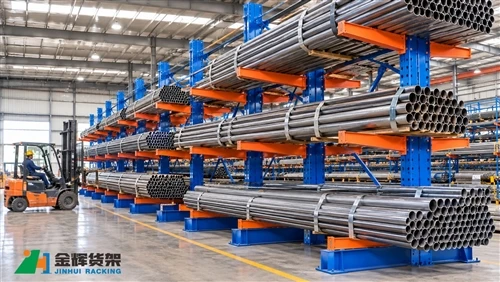
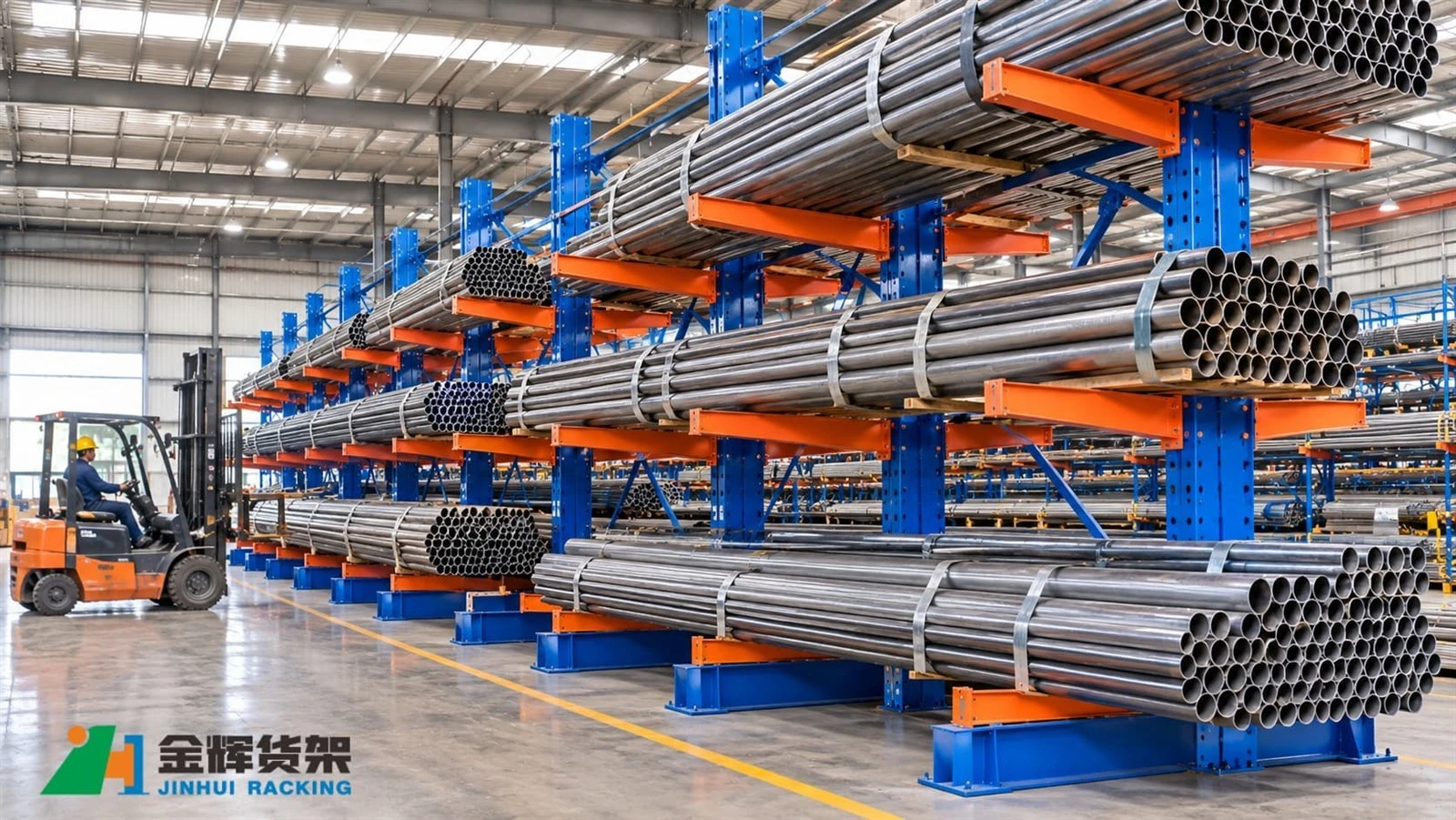
Cantilever racks use vertical columns, base supports, and horizontal arms to create open storage levels. Unlike conventional pallet racks, they do not have front upright frames at every storage bay. This makes it easier to position long materials from the front or side, depending on the warehouse layout and handling method.
For steel pipe warehouses, this structure can offer several practical benefits:
- Open access: Forklifts or other suitable handling equipment can approach the stored bundles without front uprights obstructing the loading area.
- Separate storage levels: Different pipe diameters, lengths, and specifications can be assigned to designated levels or rack sections.
- Visible inventory: Clearly separated storage locations make it easier to identify pipe types and bundle quantities.
- Adjustable configuration: Arm positions can often be changed to suit different product dimensions, provided the revised configuration remains within the rack's approved design.
- Less reliance on floor stacking: Suitable materials can be stored above floor level, reducing the area occupied by unorganized bundles.
These benefits depend on proper rack design and operating procedures. Cantilever racking does not automatically make every pipe bundle safe to store. Round materials, in particular, need suitable support and restraint against rolling or movement.
2. Collect Pipe and Bundle Information Before Designing the Rack
Rack dimensions should be based on the materials that will actually be stored, rather than on a general estimate of warehouse capacity. A pipe storage project may include several product sizes, wall thicknesses, materials, and bundle configurations.
Prepare an inventory list covering the following information:
| Information | Why It Matters |
|---|---|
| Pipe length | Determines the required storage span and the number and position of support points. |
| Outside diameter and profile | Helps determine suitable arm arrangements, separators, and anti-roll measures. |
| Bundle weight | Forms part of the load calculation for each arm, upright, base, and complete rack structure. |
| Bundle dimensions | Defines the space needed for storage, lifting, and clearance between adjacent bundles. |
| Quantity by specification | Helps determine how many storage locations are required for each pipe type. |
| Handling method | Affects rack orientation, aisle width, access arrangements, and loading procedures. |
It is also useful to identify which materials are stored as bundled stock and which are handled individually. A rack designed for strapped bundles may not be suitable for loose pipes of the same dimensions without additional support and restraint provisions.
3. Plan Arm Length, Spacing, and Load Distribution
The cantilever arms carry the stored materials, so their dimensions and positions must be selected according to the load arrangement. Arm length should not be chosen simply because it is close to the pipe diameter or bundle width. The design needs to account for how the material rests on the arms and how the load is transferred into the rack columns and bases.
Arm length
Arm length should provide adequate support for the intended bundle without creating an unsuitable overhang or an unstable loading position. The required length depends on the bundle width, the direction from which it is handled, and the way the materials are placed on the rack.
For round pipes, the contact area between the bundle and the support surface may be limited. Suitable saddles, stops, or other engineered accessories may be needed to keep the bundle in position. Their use should be included in the rack design rather than added without checking compatibility.
Arm spacing along the rack
Long pipes need support at multiple points. The spacing between rack columns and support arms should be determined from pipe length, bundle stiffness, weight, and the permitted deflection under load.
If the support points are too far apart, pipes may bend excessively or become unstable during storage and handling. If the supports are positioned without considering the bundle's weight distribution, some arms may receive more load than intended.
Load distribution
Do not assume that a bundle's total weight is shared equally by every arm. The actual distribution depends on the number of support points, the bundle's stiffness, its position, and the loading arrangement. The rack supplier or qualified designer should calculate the expected loads for the proposed configuration.
Arm capacity, column capacity, base capacity, bracing, anchorage, and floor conditions should be checked as parts of the complete system. A stated capacity for one component does not establish the capacity of the entire rack.
4. Prevent Pipes from Rolling or Moving
Round steel pipes can roll when they are placed on a flat support surface, particularly if a bundle is not properly secured. This is one of the main issues to address when planning cantilever storage for tubular materials.
Depending on the pipe type and bundle arrangement, the design may require:
- Arm end stops or retaining pins compatible with the rack design.
- Suitable saddles or shaped supports for round materials.
- Separators to keep different bundles from shifting into one another.
- Strapping or bundling methods appropriate for the material and handling process.
- Clearly defined loading positions that prevent bundles from being placed too close to the arm ends.
Stops and restraints should be selected for the expected loading conditions. They should not be treated as a substitute for correct bundle preparation or safe forklift operation. Operators should also avoid placing loose pipes on rack arms unless the storage arrangement has been designed for that condition.
5. Choose a Rack Layout That Fits the Handling Equipment
The storage arrangement must work with the equipment used to move the pipes. A layout that provides adequate rack capacity may still be unsuitable if forklifts cannot approach the storage positions safely or if long materials cannot be turned within the available space.
Single-sided cantilever racks
Single-sided racks store materials on one side of the upright columns. They are commonly considered for installation along warehouse walls or at the edge of a storage area where access is required from only one direction.
Before placing a single-sided rack against a wall, check the available clearance, column position, material overhang, and access needed for inspection and maintenance.
Double-sided cantilever racks
Double-sided racks have storage arms on both sides of the upright columns. They can be useful when a central storage row needs to serve two access aisles. The layout should allow enough room for the handling equipment to approach each side and position long bundles without interfering with nearby operations.
Forklift aisle and turning space
Pipe bundles may be much longer than standard pallets. The aisle should therefore be checked using the actual forklift, attachment, load length, and turning method. The nominal width of a forklift alone is not enough to establish the required operating space.
Where long loads are handled, consider the full movement from the receiving area to the rack location. Check turning points, intersections, door openings, column positions, pedestrian routes, and the space required to place or retrieve a bundle.
6. Organize Pipe Storage by Specification and Movement Frequency
A well-planned rack layout should make it clear where each pipe type belongs. Mixing materials with different dimensions or specifications in the same storage location can slow down picking and increase the chance of selecting the wrong product.
One practical approach is to divide the rack into storage groups based on:
- Pipe material, such as carbon steel, stainless steel, or aluminum.
- Outside diameter, wall thickness, and pipe length.
- Product specification or customer order requirements.
- Bundle weight and handling method.
- Picking frequency and dispatch priority.
Frequently requested products may be assigned to locations that are easier to reach, provided their weight and dimensions are suitable for those positions. Heavier bundles should not be moved to higher levels simply to improve access or free up floor space. Their storage positions must follow the approved load and handling plan.
Use durable location labels that can be read from the operating aisle. The label should identify the rack location and, where appropriate, the pipe specification or inventory code. Inventory records should be updated whenever bundles are moved.
7. Loading and Unloading Procedures
Safe operation depends on more than the rack structure. Workers need a consistent method for approaching, lifting, placing, and retrieving long pipe bundles.
Before loading a bundle, operators should check that:
- The bundle is suitable for the assigned rack location.
- The load weight is within the approved capacity of the rack and handling equipment.
- The bundle is properly secured for lifting.
- The forklift attachment or lifting method is suitable for the length and shape of the load.
- The storage position is clear and the required aisle is unobstructed.
- No person is standing beneath or within the potential movement area of the suspended load.
When retrieving materials, operators should follow the planned unloading sequence and avoid pulling a bundle across adjacent stored products. If a bundle is caught, unstable, or difficult to remove, the operator should stop and reassess the method rather than forcing it out.
8. Common Planning Mistakes
| Planning Mistake | Possible Consequence | What to Review |
|---|---|---|
| Using average pipe weight instead of the heaviest bundle | Some storage positions may be overloaded. | Maximum bundle weight and the actual load arrangement. |
| Choosing arm spacing without checking pipe length | Insufficient support or excessive material deflection. | Support positions, bundle stiffness, and load distribution. |
| Ignoring the risk of rolling | Pipes may shift or fall from the storage level. | Bundle restraint, arm stops, and suitable support accessories. |
| Planning aisles around unloaded forklift dimensions | Long bundles may be difficult to turn or position. | Actual truck, attachment, load length, and operating route. |
| Mixing different pipe specifications | Picking errors and additional handling. | Storage zoning, location labels, and inventory records. |
| Changing arm positions without design review | The revised configuration may no longer match the approved capacity. | Manufacturer instructions and the rack's engineering specifications. |
9. Information to Prepare When Requesting a Cantilever Rack Quotation
Providing accurate project information helps the supplier evaluate the rack configuration and avoid repeated design changes. For a steel pipe storage project, prepare the following details:
- Warehouse floor plan, clear height, and available storage area.
- Pipe lengths, diameters, profiles, and maximum bundle dimensions.
- Maximum weight per bundle and expected quantity of each specification.
- Required number of storage levels and estimated storage capacity.
- Forklift model, attachments, load dimensions, and operating aisle requirements.
- Single-sided or double-sided rack preference, if already established.
- Indoor or outdoor installation conditions.
- Any special requirements for separators, stops, saddles, or surface treatment.
With these details, the rack configuration can be assessed against the actual products and warehouse conditions. The final design should specify the permitted loads, arm arrangement, rack dimensions, anchorage requirements, and any operating restrictions.
Conclusion
Cantilever racking can provide an organized storage arrangement for steel pipes and tubes, but the design needs to reflect the dimensions and weight of the materials being handled. Arm length, support spacing, load distribution, anti-roll provisions, forklift access, and storage location planning all affect how well the system works in daily operations.
Rather than selecting a rack based on dimensions alone, start with a clear inventory list and the handling equipment used in the warehouse. This gives the supplier the information needed to develop a cantilever rack system suited to the actual storage requirements.
Discuss Your Pipe Storage Requirements with JINHUI RACK
If you are planning a new steel pipe storage area or replacing floor-stacked materials with a cantilever rack system, send us your pipe dimensions, bundle weights, warehouse layout, and handling equipment details.
Email: info@jhrack.com
WhatsApp: +86 185 0252 7163
Product: Cantilever Rack Systems
Contact page: Contact JINHUI RACK