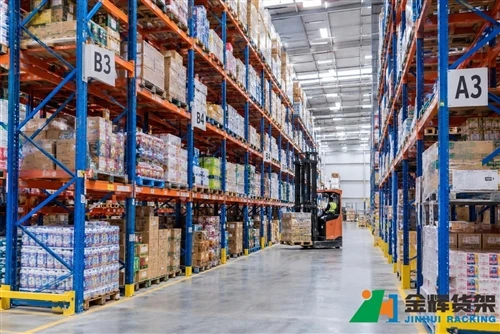
A pallet rack may look like a simple combination of upright frames and horizontal beams, but the connection between these components is critical to the way the rack is assembled and operated. One widely used connection design is the teardrop pallet rack connection, which uses specially shaped openings in the upright and matching beam connectors.
Unlike welded connections, a teardrop-style pallet rack connection is designed around modular components. This allows beam levels to be changed and rack bays to be configured for different storage requirements while maintaining a repeatable connection between the beam and upright.
This guide explains how teardrop pallet rack connections work, what the main components do, how to inspect them, and what warehouse operators should consider when replacing or modifying rack components.
What Is a Teardrop Pallet Rack Connection?
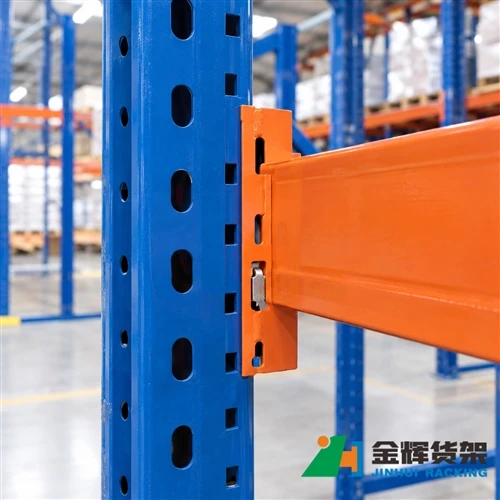
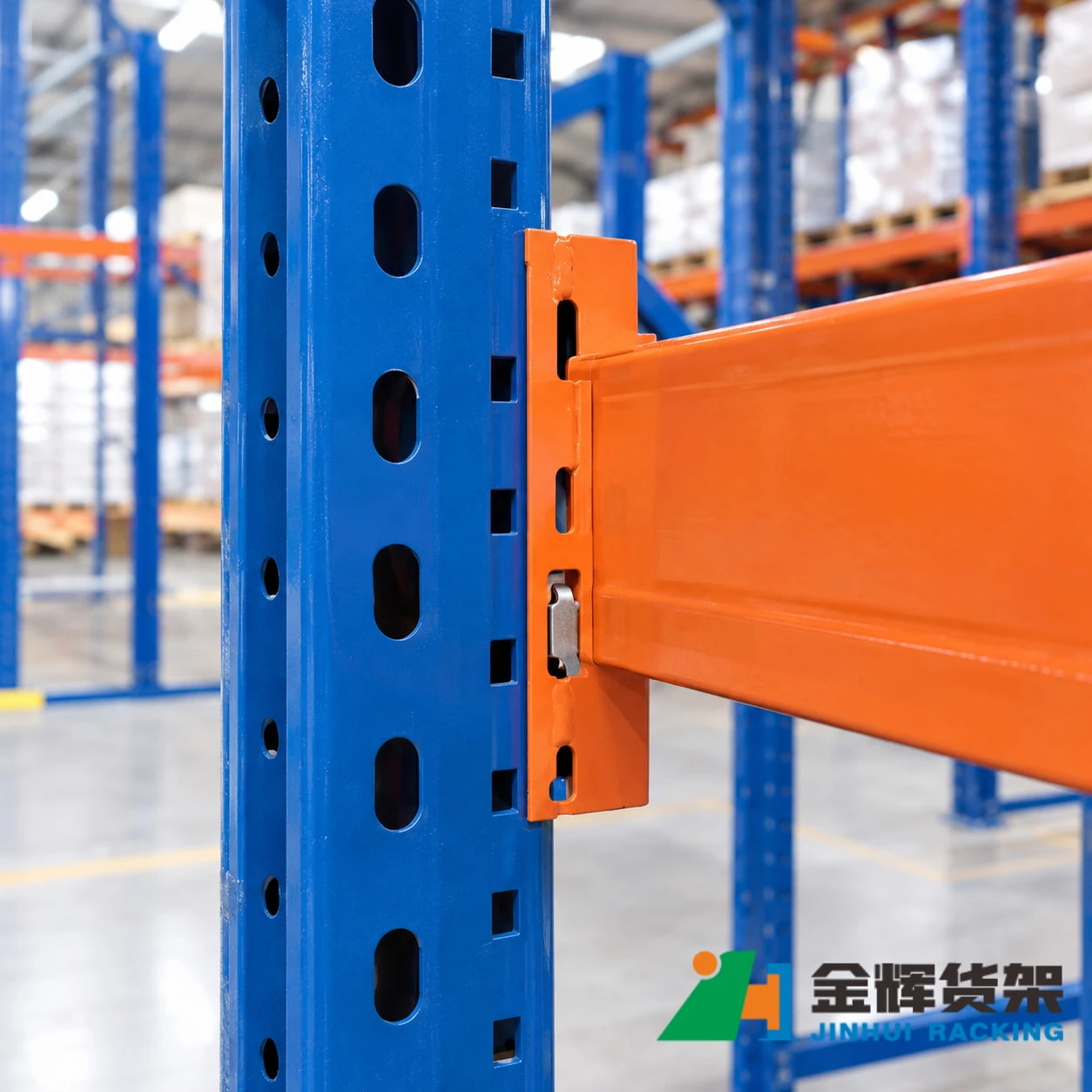
A teardrop pallet rack connection is a mechanical beam-to-upright connection that uses shaped openings in the upright column and matching connectors attached to the end of the rack beam.
The opening is commonly designed with a larger upper section and a narrower lower section. The beam connector is positioned into the opening and then seated into its working position.
This design allows the beam to be connected to the upright without permanently welding the beam to the frame. The result is a modular rack structure in which beam levels can be adjusted according to the warehouse's storage requirements.
How Does a Teardrop Rack Connection Work?
The basic connection involves two primary components: the upright column and the beam connector.
The upright contains a series of specially shaped connection openings. The beam has connectors attached to both ends. During assembly, the connectors are inserted into the appropriate openings and seated into position.
Once properly engaged, the connection allows the beam to work as part of the complete rack structure.
The general connection sequence can be understood as:
Upright Opening → Beam Connector → Seated Beam Connection
The exact connector shape, opening design, and engagement method depend on the particular rack system. Components should therefore be matched to the rack design rather than treated as universally interchangeable.
Why Are Teardrop Connections Popular in Pallet Racking?
The main advantage of a teardrop-style connection is modularity. Warehouse storage requirements often change as inventory, pallet sizes, and operating methods change.
A modular beam connection allows storage levels to be adjusted without rebuilding the complete upright frame.
Other potential advantages include:
- Fast assembly of rack beams and upright frames.
- Adjustable beam positions.
- Modular rack configuration.
- Convenient expansion of compatible rack bays.
- Easy access to beam-to-upright connection points during inspection.
These advantages make this type of connection suitable for warehouses that need flexible pallet storage configurations.
Main Components of a Teardrop Pallet Rack Connection
| Component | Function |
|---|---|
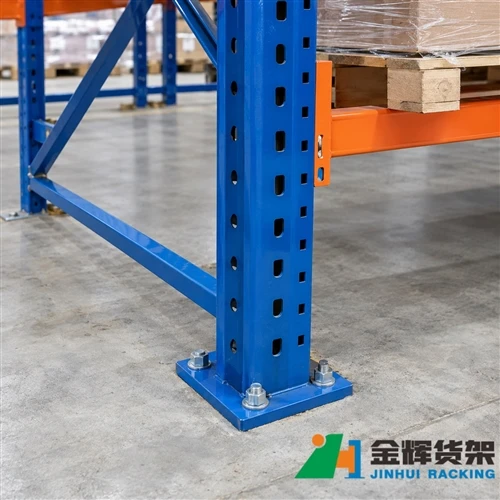
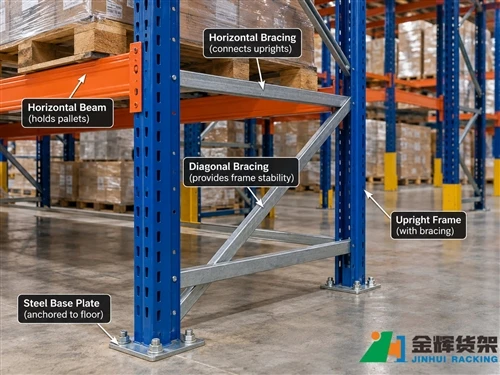
| Upright Column | Provides the vertical structural member containing the beam connection openings. |
| Beam | Provides the horizontal support for pallet loads and connects the upright frames. |
| Beam Connector | Provides the mechanical connection between the beam end and upright column. |
| Connection Opening | Provides the shaped engagement point for the beam connector. |
| Safety Locking Component | Helps prevent unintended beam disengagement where required by the rack design. |
These components must work together as a compatible system. The appearance of two components alone is not enough to confirm that they can safely be used together.
How Teardrop Upright Holes Affect Beam Positioning
The upright connection openings determine where the beam can be positioned vertically.
Because the openings are arranged at repeated intervals along the upright, the warehouse can select different beam levels during rack configuration.
This is useful when pallet heights vary. For example, a warehouse may need one arrangement for a uniform pallet inventory and another arrangement when products of different heights are stored in the same rack system.
However, beam positioning should always follow the rack design and required configuration. Moving a beam simply because an opening is physically available does not automatically mean that the resulting configuration is suitable for the intended storage load.
Teardrop Connection vs. Welded Beam Connection
The most obvious difference is the way the beam is attached to the upright.
A teardrop-style connection uses a mechanical connector and shaped upright openings, while a welded structure relies on permanent welded joints between its structural members.
For warehouse pallet racking, a modular mechanical connection can provide greater flexibility when storage levels need to be adjusted or when additional compatible bays are required.
However, the choice of connection design should be based on the complete rack system rather than on connection appearance alone.
What Makes a Teardrop Beam Connection Secure?
A properly functioning connection depends on the beam connector being correctly engaged with the upright opening and the components being compatible with the rack system.
The connection should not rely on improvised parts, damaged connectors, or modified upright openings.
During inspection, warehouse personnel should look for:
- Correct engagement between the beam connector and upright.
- Visible damage to the connector.
- Damage or deformation around the upright opening.
- Missing or damaged locking components.
- Unexpected movement at the connection.
- Evidence of forklift impact.
If a connection appears damaged or does not engage correctly, the affected rack should be evaluated before continued normal use.
Why Beam Connectors Must Match the Upright
One of the most important considerations when replacing pallet rack components is compatibility.
Different rack manufacturers and rack models can use different upright profiles, opening patterns, connector dimensions, locking arrangements, and beam designs. Two components may look similar while having different connection geometry.
For this reason, a replacement beam should not be selected simply because its connector appears to fit the upright opening.
The complete connection should be verified for compatibility with the existing rack system.
How to Inspect Teardrop Pallet Rack Connections
Routine inspection can help identify visible problems before they develop into larger rack issues.
Start by examining the connection between each beam end and the upright. The beam should appear correctly seated, and the connector should not show obvious deformation or damage.
Then inspect the surrounding upright area for:
- Deformed connection openings.
- Cracks or visible damage.
- Impact marks from forklifts.
- Beam displacement.
- Missing locking components.
- Signs of unauthorized modification.
Inspection should cover both ends of the beam because a problem at one end may not be immediately obvious when viewing the opposite side.
Common Problems With Teardrop Rack Connections
Damaged Beam Connectors
Forklift impact, improper handling, or previous damage can deform the beam connector. A damaged connector may not engage with the upright as intended.
Damaged Upright Openings
The opening in the upright is part of the connection interface. If the area around an opening has been bent or otherwise damaged, the connection should be evaluated before the beam remains in service.
Missing Safety Lock
Where the rack design uses a locking component, the lock should be present and correctly positioned. A missing locking component should not be ignored.
Incorrect Beam Replacement
Replacing a damaged beam with a visually similar component can create a compatibility problem if the connector or beam configuration does not match the existing rack.
Modified Upright Openings
Drilling, cutting, enlarging, or otherwise modifying upright openings can change the original connection design. Structural rack members should not be modified without appropriate engineering approval.
Can Teardrop Rack Beams Be Moved?
One of the practical advantages of a modular teardrop-style rack is the ability to change beam levels when the rack system is designed for adjustable configuration.
However, changing a beam position should not be treated as simply moving the beam to any convenient opening.
Before changing a storage level, consider:
- Pallet height.
- Required clearance.
- Storage load.
- Forklift operating requirements.
- Overall rack configuration.
- Applicable rack design requirements.
The new beam position should remain consistent with the approved rack configuration and operating requirements.
What to Check When Replacing a Teardrop Rack Beam
When a beam needs to be replaced, the first step is to identify the existing rack system accurately.
Check the beam length, beam profile, connector configuration, upright opening pattern, and other relevant characteristics before ordering a replacement.
It is also important to determine whether the replacement is intended to match an existing rack or whether the warehouse is planning a larger modification.
For larger changes, the complete rack configuration should be reviewed rather than replacing individual components without considering the rest of the structure.
Can Different Brands of Teardrop Rack Components Be Mixed?
Compatibility should never be assumed simply because two rack components use the term "teardrop."
Different systems can have different connection geometry, steel profiles, hole dimensions, connector shapes, and locking arrangements.
Mixing components from different systems without technical verification can therefore create an unsuitable connection.
When replacing components, the safest approach is to identify the rack system and confirm compatibility with the manufacturer or a qualified rack professional.
Teardrop Connections and Warehouse Rack Expansion
Modular beam connections can make pallet rack expansion more practical when the new components are compatible with the existing system.
For example, a warehouse may add storage bays as inventory volume increases. However, expansion should consider more than the connection itself.
The warehouse layout, rack alignment, floor conditions, pallet loads, aisle arrangement, forklift operation, and overall structural configuration should all be reviewed as part of the expansion.
JINHUI provides customized pallet racking solutions for warehouses with different storage requirements and layouts. Its selective pallet racking systems are designed around warehouse dimensions, pallet requirements, load requirements, and forklift operations.
Explore JINHUI Selective Pallet Racking Systems.
Teardrop Pallet Rack Connection Inspection Checklist
- Check that the beam connector is correctly engaged.
- Inspect both ends of every beam.
- Look for damaged or deformed connectors.
- Check the upright openings for visible damage.
- Confirm required locking components are present.
- Look for signs of forklift impact.
- Check for beam displacement or unusual movement.
- Do not drill, cut, or modify upright openings without approval.
- Verify replacement components before installation.
- Do not mix rack components without confirming compatibility.
FAQ About Teardrop Pallet Rack Connections
What is a teardrop pallet rack connection?
It is a mechanical beam-to-upright connection that uses shaped openings in the upright and matching connectors attached to the rack beam.
Why are teardrop rack connections used?
They provide a modular connection that can allow beam levels to be adjusted and rack configurations to be changed when the system is designed for that purpose.
Can any teardrop beam fit any teardrop upright?
No. Similar-looking teardrop connections can have different dimensions and connector designs. Compatibility should be verified before components are mixed or replaced.
What should I do if a teardrop connection is damaged?
Inspect the beam connector, upright opening, locking components, and surrounding structure. If structural damage is present, the affected rack should be evaluated before continued use.
Can I drill additional holes in a teardrop upright?
Upright openings should not be modified without appropriate technical approval because changes can affect the original rack connection and structural design.
Are teardrop connections suitable for warehouse pallet racks?
Teardrop-style connections are widely used in modular pallet rack designs, but suitability depends on the complete rack system, component compatibility, storage requirements, and engineered configuration.
Choose Compatible Rack Components for a Reliable Connection
The teardrop connection is more than a simple hole-and-hook arrangement. It is an important interface between the pallet rack beam and upright frame, and its performance depends on correct component geometry, proper engagement, locking components, and the condition of the surrounding rack structure.
For warehouse operators, the most important practices are to inspect beam connections regularly, respond to impact damage, avoid unauthorized modifications, and verify compatibility before replacing rack components.
When planning a new pallet racking project or expanding an existing warehouse, a complete rack configuration should be considered rather than selecting individual components in isolation.
JINHUI Rack provides customized warehouse pallet racking solutions for different storage applications. Share your warehouse layout, pallet information, storage requirements, and operating conditions with our team for a project-specific recommendation.
Contact JINHUI Rack:
WhatsApp: +86 185 0252 7163
Email: info@jhrack.com
Website: https://www.jinhui-rack.com/