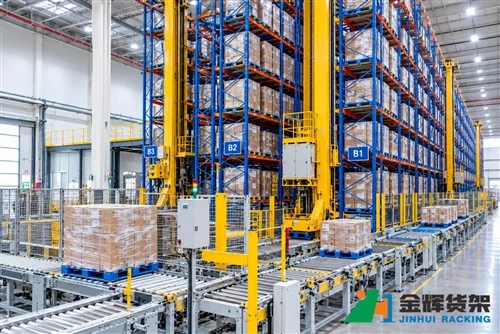
Choosing the right pallet rack beam type is an important part of designing a safe and efficient warehouse storage system. Pallet rack beams are the horizontal structural members that support pallets between upright frames, so their design directly affects load capacity, storage configuration, and long-term rack performance.
Warehouse buyers sometimes focus mainly on beam length or load capacity when selecting rack components. However, the beam profile, connection design, span, pallet arrangement, and loading condition also need to be considered together.
Different warehouses may require different beam configurations depending on pallet dimensions, maximum load weight, number of pallet positions per bay, storage levels, forklift operation, and overall warehouse layout.
For this reason, the right pallet rack beam should be selected as part of the complete racking system rather than treated as an independent component.
Quick Answer
The right pallet rack beam type depends on the required load capacity, beam span, pallet configuration, number of storage levels, rack height, and warehouse operating conditions. Beam profile and dimensions should be selected according to the rack manufacturer's engineering design rather than simply choosing the largest or heaviest-looking beam.
What Is a Pallet Rack Beam?
A pallet rack beam is the horizontal load-bearing component that connects two upright frames and supports palletized goods at each storage level.
In a conventional selective pallet racking system, two beams normally form one horizontal storage level. Pallets are positioned across the beam span and supported by the rack structure.
The basic structure includes:
- Upright frames
- Horizontal beams
- Diagonal and horizontal bracing
- Base plates
- Beam connectors
- Safety locks or pins
- Optional wire decking or other accessories
Each component performs a different structural function, but the components work together as one complete rack system.
Jinhui's selective pallet racking systems use upright frames, beams, bracing, and accessories to create flexible pallet storage bays for different warehouse applications.
Why Pallet Rack Beam Type Matters
The beam is directly exposed to the pallet load, which makes beam selection an important part of rack design.
The beam configuration can affect:
- Load capacity
- Beam span
- Number of pallet positions
- Storage level configuration
- Rack bay width
- Overall rack stability
- Warehouse storage efficiency
- Long-term operating performance
A beam designed for a short span and moderate load should not automatically be used for a longer span or heavier pallet configuration.
Similarly, changing the number of pallet positions within a bay can change the loading condition and therefore affect the required beam design.
Common Pallet Rack Beam Configurations
Industrial pallet racking can use different beam profiles and structural configurations depending on the application.
Common designs may include box-shaped or other formed steel beam profiles engineered for pallet storage applications.
The actual profile selected depends on factors such as:
- Required beam capacity
- Beam span
- Steel specification
- Rack configuration
- Connection method
- Load distribution
- Deflection requirements
Instead of selecting a beam based only on its visual size, warehouse operators should provide the manufacturer with complete loading and dimensional information.

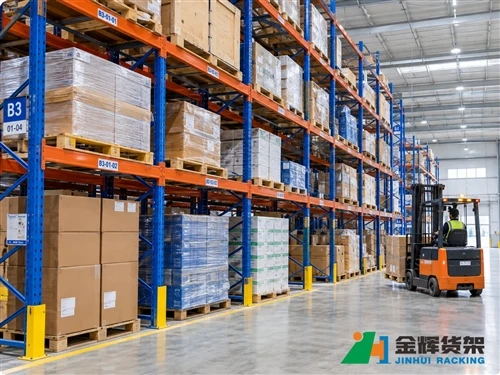
Pallet rack beams connect upright frames and support pallet loads at each storage level.
Beam Type Should Match the Pallet Load
The first major consideration when choosing a beam type is the pallet load.
Warehouse operators should identify the maximum loaded pallet weight rather than using only the average pallet weight.
For example, if most pallets weigh 700 kg but some loads reach 1,200 kg, the rack design should account for the actual maximum requirement.
Important load information includes:
- Maximum pallet weight
- Number of pallets per beam level
- Total load per beam pair
- Number of storage levels
- Load distribution
- Potential future load increases
The beam should then be selected according to the engineered loading condition.
Our previous article, How to Determine Pallet Rack Load Capacity, explains why beam capacity and complete rack capacity should be evaluated together.
Beam Type and Beam Span
Beam span is another important factor.
A beam spanning between two upright frames experiences structural loading according to the span and the applied pallet loads.
When beam length increases, the structural requirements may also change.
For example, a rack bay designed for two pallet positions may use a different beam configuration from a bay designed for three pallet positions.
The beam type should therefore be considered together with:
- Beam length
- Bay width
- Pallet width
- Number of pallet positions
- Maximum load
- Required storage levels
This is why beam length should not be selected separately from the beam profile and load requirements.
For more information, see our recent guide on choosing pallet rack beam length.
Beam Type and Number of Pallet Positions
The number of pallets stored across one beam level affects the loading condition.
A warehouse may use a bay designed for multiple pallet positions depending on pallet dimensions and storage requirements.
For example, a beam level may be configured for:
- Two pallet positions
- Three pallet positions
- Other customized pallet arrangements
However, simply increasing the number of pallets does not mean that any longer beam can be used.
The beam must be evaluated according to the total load and how the load is distributed across the span.
Warehouse operators should provide the pallet dimensions and maximum loaded pallet weight when requesting a rack quotation or technical drawing.
Beam Type and Rack Height
The beam configuration also needs to be considered together with overall rack height.
A tall selective pallet rack may contain several beam levels, which means the upright frames must transfer the combined loads from all storage levels to the warehouse floor.
Adding additional beam levels can increase pallet positions, but it can also change the structural requirements of the rack.
The design should therefore consider:
- Total rack height
- Number of beam levels
- Load per pallet
- Beam span
- Upright frame capacity
- Warehouse floor conditions
Our recent article on pallet rack height covers how vertical storage requirements interact with forklift capability and warehouse conditions.
Beam Connection Design Is Also Important
A pallet rack beam is not only defined by its steel profile.
The connection between the beam and upright frame is another important part of the rack system.
A typical selective pallet rack uses a mechanical connection between the beam connector and upright column. Safety pins or locks may be incorporated into the connection to help prevent unintended beam disengagement.
The connection needs to be compatible with the upright frame and designed for the intended application.
Warehouse operators should therefore avoid mixing beams and upright frames from different rack systems unless the compatibility and structural performance have been professionally verified.
Beam Type and Upright Frame Selection
Beams and upright frames work together to support the stored loads.
The beam transfers the pallet load to the upright frames, while the upright frames transfer the loads toward the warehouse floor.
This creates a basic structural relationship:
Pallet Load → Beam → Upright Frame → Base Plate → Warehouse Floor
Changing one component can therefore affect the overall rack configuration.
For example, increasing beam length or pallet load may require a different beam capacity, while adding storage levels may change the requirements for the upright frame.
Our article on pallet rack upright frame selection explains this relationship in greater detail.
Beam Type for Heavy-Duty Pallet Storage
Heavy-duty pallet storage requires careful consideration of both beam and upright capacity.
Applications may involve pallets containing industrial components, metal products, machinery parts, building materials, or other dense products.
For these applications, the rack supplier needs accurate information about:
- Maximum pallet weight
- Pallet dimensions
- Number of pallets per bay
- Number of storage levels
- Beam span
- Rack height
- Forklift type
A generic label such as "heavy duty" is not sufficient to determine whether a particular rack configuration is appropriate.
The actual load rating needs to be based on the complete rack design.
Beam Type and Wire Decking
Some warehouses use wire decking or other decking components between pallet rack beams.
When decking is included, the decking dimensions and support arrangement need to be compatible with the beam configuration.
The decking should not be treated as a completely independent accessory.
Its dimensions, support points, allowable load, pallet type, and installation method should all be considered when selecting the complete rack configuration.
Our guide on pallet rack wire decking provides more information about selecting decking for different storage applications.
The beam configuration should match pallet positioning, load distribution, and the number of storage levels.
Beam Type and Pallet Rack Safety
Beam selection also contributes to safe warehouse operation.
Warehouse operators should regularly inspect rack beams for visible damage, deformation, impact marks, corrosion, or other conditions that may affect the rack system.
Forklift impacts are one potential source of damage in busy warehouse environments.
If a beam or connector has been damaged, it should not simply be straightened or repaired without appropriate technical evaluation.
The rack manufacturer or qualified professional should determine whether the component remains suitable for use or needs replacement.
How to Choose the Right Pallet Rack Beam Type
Step 1: Confirm Pallet Dimensions
Record pallet length, width, and loaded height.
Step 2: Confirm Maximum Pallet Weight
Use the heaviest expected pallet load rather than relying only on average inventory weight.
Step 3: Determine Pallet Positions Per Bay
Establish how many pallets need to be stored across each beam level.
Step 4: Determine Beam Length
Use the pallet arrangement and required horizontal clearances to determine the required beam span.
Step 5: Determine Storage Levels
Confirm the number of beam levels required based on warehouse height and inventory volume.
Step 6: Evaluate Beam Capacity
Select the appropriate beam configuration according to the intended span and load distribution.
Step 7: Check Upright Frame Capacity
Make sure the upright frame can support the combined loading from the proposed storage levels.
Step 8: Confirm Beam-to-Frame Compatibility
Ensure the beam connection system matches the upright frame and rack configuration.
Step 9: Consider Forklift Operation
Confirm that the rack configuration works with the forklift type, aisle layout, and storage height.
Step 10: Review the Complete Rack Design
Before production, review the complete configuration rather than evaluating the beam as an isolated component.
Common Mistakes When Selecting Pallet Rack Beams
Choosing the Beam Based Only on Appearance
A visibly larger beam is not automatically the correct solution. Beam performance depends on the complete structural configuration.
Using Beam Length as the Only Specification
Beam length needs to be evaluated together with pallet weight, pallet positions, beam profile, and rack height.
Ignoring Load Distribution
The number and arrangement of pallets across the beam affect how the load is transferred through the structure.
Mixing Incompatible Rack Components
Beams and upright frames should be compatible with the intended rack system and connection design.
Adding Storage Levels Without Reviewing the Rack
Additional levels increase the total loading on the upright frames and should be reviewed before modification.
Ignoring Future Storage Changes
Changes in pallet weight, pallet dimensions, or inventory volume may affect future rack requirements.
Why a Complete Pallet Rack Design Is Better Than Choosing Individual Components
Warehouse racking should be designed as a complete system.
The beam, upright frame, pallet dimensions, rack depth, beam spacing, rack height, and load capacity all interact.
For example, increasing beam length may allow more pallet positions per bay, but it can also change beam loading. Increasing rack height may create more storage positions, but it can increase the total load transferred through the upright frames.
This is why Jinhui recommends providing complete warehouse information before finalizing the rack configuration.
Important information includes:
- Warehouse length and width
- Clear height
- Pallet length and width
- Loaded pallet height
- Maximum pallet weight
- Required pallet positions
- Number of storage levels
- Forklift type
- Required aisle width
- Existing building columns
- Special operating conditions
Industrial Pallet Rack Beams From Jinhui Rack
Jinhui Rack provides industrial pallet racking systems for warehouses requiring different storage capacities, pallet configurations, and layout requirements.
For selective pallet storage, the rack can be configured around the customer's pallet dimensions, maximum load, storage height, required pallet positions, and forklift operation.
The company's selective pallet racking systems use modular upright frames and beams to create flexible storage bays with direct access to individual pallet positions.
Customized rack configurations can be developed for different warehouse dimensions and storage requirements.
Final Thoughts
The right pallet rack beam type should be selected according to the complete storage application rather than beam appearance or a single dimension.
Pallet weight, pallet dimensions, beam span, number of pallet positions, storage levels, upright frame capacity, and forklift operation all contribute to the final beam specification.
For warehouses with changing inventory requirements, selecting a properly engineered and flexible rack configuration can make future storage adjustments easier while maintaining practical warehouse operations.
The most reliable approach is to provide the rack manufacturer with accurate pallet and warehouse information and allow the complete rack system to be evaluated before production.
Need help selecting the right pallet rack beam?
Send Jinhui Rack your pallet dimensions, maximum load weight, required pallet positions, rack height, warehouse dimensions, and forklift information. Our team can help develop a suitable pallet racking configuration for your warehouse.
Talk to Jinhui Rack
Share your pallet size, load capacity, warehouse dimensions, and storage requirements with our team for a pallet racking solution designed around your actual operating conditions.
WhatsApp: +86 185 0252 7163
Email: info@jhrack.com