Is a Gravity Rack System Worth the Investment? A Complete Cost Guide
When warehouse managers begin planning a new storage system, one of the first questions they ask is: "How much does a Gravity Rack System cost?" Unlike standard selective pallet racking, gravity rack systems incorporate roller lanes, speed controllers, precision engineering, and customized layouts. As a result, the initial investment is generally higher.
However, focusing only on the purchase price can be misleading. A gravity rack system is designed to improve warehouse efficiency, reduce forklift travel, maximize storage density, and lower long-term operating costs. For many distribution centers, food manufacturers, cold storage facilities, and logistics companies, these operational savings often outweigh the higher upfront investment.
This guide explains the major cost components of a gravity rack system, compares it with other warehouse storage solutions, and analyzes whether investing in pallet flow racking delivers a worthwhile return.
Why Is a Gravity Rack More Expensive Than Standard Pallet Racking?
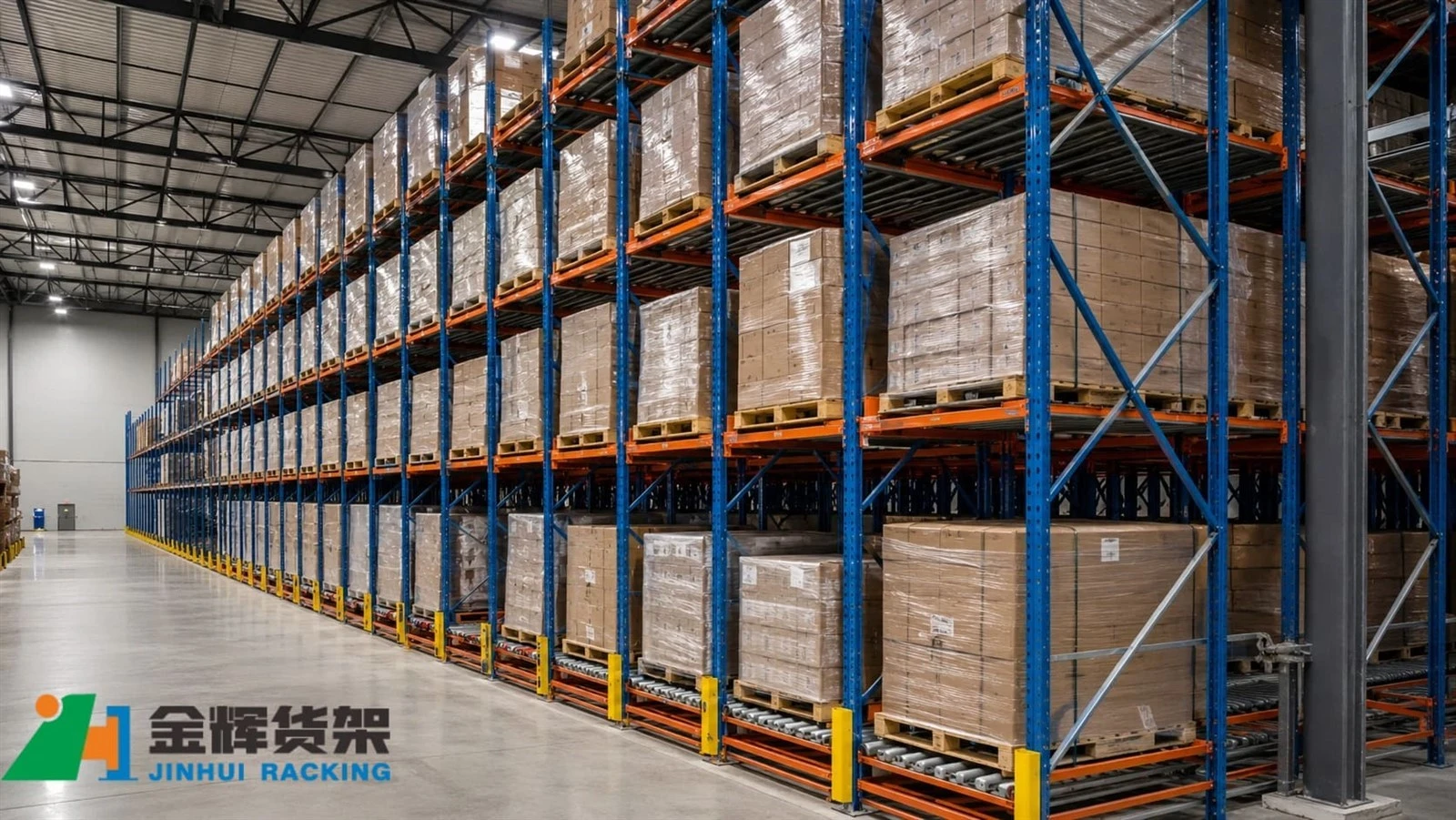
A gravity rack system is much more than a conventional pallet rack with rollers. Every lane is engineered to ensure pallets move smoothly and safely using gravity alone. The system must be precisely designed according to pallet weight, dimensions, travel speed, lane depth, and warehouse operating conditions.
Compared with selective pallet racks, gravity racks require additional components that increase manufacturing complexity but also significantly improve operational performance.
Main Cost Components
- Structural uprights and beams
- Heavy-duty roller tracks
- Brake rollers (speed controllers)
- Entry guides
- Pallet separators
- Safety stops
- Lane dividers
- Engineering and structural calculations
- Professional installation
Every warehouse has different pallet sizes, throughput requirements, and building dimensions. Therefore, gravity rack systems are almost always customized rather than supplied as standard products.
For customized engineering solutions, visit our Gravity Rack System product page.
What Factors Affect Gravity Rack Cost?
The total investment depends on multiple engineering and operational factors rather than a single price per pallet position.
1. Warehouse Size
Larger projects generally reduce the average cost per pallet position because engineering, manufacturing, and installation become more efficient.
2. Storage Lane Depth
Longer flow lanes require additional rollers and more sophisticated speed control systems. Deep-lane designs increase storage density but also increase material costs.
3. Pallet Weight
Heavy-duty industrial pallets require stronger roller tracks, reinforced frames, and higher-capacity brake rollers than lightweight consumer goods.
4. Number of Storage Levels
Higher rack structures require additional structural reinforcement, safety protection, and seismic considerations depending on local regulations.
5. Automation Requirements
Gravity racks integrated with conveyors, AS/RS systems, pallet shuttles, or warehouse management systems involve additional equipment and engineering, increasing the overall project investment.

Gravity Rack Cost Compared with Other Warehouse Storage Systems
| Storage System | Initial Investment | Storage Density | Labor Cost | Long-Term ROI |
|---|---|---|---|---|
| Selective Pallet Rack | Low | Medium | Higher | Good |
| Double Deep Rack | Medium | High | Medium | Very Good |
| Drive-In Rack | Medium | High | Medium | Good |
| Gravity Rack System | Higher | Very High | Low | Excellent |
Looking Beyond the Initial Investment
Many warehouse owners focus on equipment cost alone, but the total cost of ownership should include labor, maintenance, warehouse utilization, forklift operating time, inventory accuracy, and productivity improvements.
A gravity rack system reduces unnecessary pallet handling because products automatically move to the picking position. Forklift operators spend less time traveling through warehouse aisles, improving labor efficiency and reducing equipment wear.
For businesses handling thousands of pallets every day, these operational savings often produce a significantly faster return on investment than conventional pallet racking.
If you're new to pallet flow storage, we recommend reading our guide What Is a Gravity Rack System? before evaluating project costs.
Typical Return on Investment (ROI) Analysis
Although the initial investment for a gravity rack system is generally higher than that of conventional pallet racking, many companies recover the additional cost through increased warehouse efficiency and lower operating expenses.
The exact payback period depends on inventory turnover, labor costs, warehouse utilization, and daily pallet movement. Warehouses with high throughput often experience faster returns because labor savings accumulate quickly over time.
The following example illustrates a typical ROI comparison for a medium-sized distribution center.
| Performance Indicator | Before Gravity Rack | After Gravity Rack |
|---|---|---|
| Warehouse Capacity | 4,000 Pallets | 6,100 Pallets |
| Storage Density | 60% | 88% |
| Forklift Travel Distance | 100% | Approximately 65% |
| Labor Efficiency | Baseline | +25% |
| Estimated ROI Period | - | 2–4 Years* |
*The actual return on investment varies depending on warehouse size, labor rates, pallet throughput, inventory turnover, and system configuration.
Hidden Savings That Many Companies Overlook
When comparing storage systems, many buyers focus only on equipment pricing. However, gravity rack systems generate long-term savings that are not immediately visible during the purchasing stage.
Reduced Forklift Operating Costs
Because pallets automatically move toward the picking face, forklift operators travel shorter distances and complete more tasks within the same shift. This lowers fuel or battery consumption while reducing equipment wear.
Lower Labor Costs
Separate loading and picking aisles allow inbound and outbound operations to occur simultaneously. Faster pallet handling means fewer labor hours are required to process the same number of orders.
Improved Inventory Rotation
Gravity rack systems naturally support First-In, First-Out (FIFO) inventory management, helping businesses reduce product expiration, inventory aging, and unnecessary waste.
Better Warehouse Space Utilization
Increasing storage density often delays or even eliminates the need for warehouse expansion, saving substantial construction and rental costs.
Which Industries Gain the Fastest ROI?
Although gravity rack systems can be used across many industries, warehouses with high inventory turnover typically achieve the fastest financial returns.
- Food processing facilities
- Beverage distribution centers
- Cold storage warehouses
- Pharmaceutical logistics
- Retail distribution centers
- E-commerce fulfillment warehouses
- Third-party logistics (3PL)
- Automotive component suppliers
These industries frequently process hundreds or thousands of pallets every day, making labor savings and operational efficiency especially valuable.
Is a Gravity Rack System Worth the Investment?
For warehouses focused on maximizing storage capacity and improving operational efficiency, the answer is often yes.
Although the initial investment is higher than traditional pallet racking, gravity rack systems provide measurable long-term value through higher storage density, faster pallet movement, reduced forklift travel, and lower labor costs.
Businesses planning for future growth should evaluate the total cost of ownership rather than focusing solely on equipment pricing. In many cases, operational savings over several years exceed the initial difference in purchase cost.
You can also compare gravity racks with other high-density storage solutions in our article Gravity Rack vs. Drive-In Rack, or learn how gravity racks improve warehouse utilization in How Much Can a Gravity Rack System Increase Warehouse Storage Capacity?.
Frequently Asked Questions
How much does a gravity rack system cost?
The cost depends on warehouse size, pallet specifications, lane depth, load capacity, and project complexity. Since each project is customized, pricing is typically provided after evaluating your warehouse layout and operational requirements.
Why is a gravity rack more expensive than selective pallet racking?
Gravity racks require roller tracks, brake rollers, safety components, and customized engineering, which increase the initial investment. However, they also deliver greater storage density and long-term operational savings.
How long does it take to recover the investment?
Many high-throughput warehouses achieve a return on investment within two to four years through improved productivity, reduced labor costs, and better warehouse space utilization.
Are gravity rack systems suitable for cold storage?
Yes. Gravity rack systems are widely used in refrigerated warehouses because FIFO inventory rotation helps maintain product freshness while maximizing storage capacity.
Can existing warehouses be upgraded to gravity rack systems?
In many cases, yes. Existing warehouse layouts can often be redesigned to incorporate gravity rack systems, depending on building dimensions, pallet characteristics, and operational requirements.
Conclusion
Choosing a warehouse storage system should never be based on purchase price alone. A gravity rack system is an investment in productivity, storage efficiency, and long-term operational performance.
For warehouses handling fast-moving inventory, the combination of high-density storage, FIFO inventory management, reduced forklift travel, and lower labor costs often makes gravity rack systems one of the most cost-effective storage solutions available.
If you're planning a new warehouse or upgrading an existing facility, our engineering team can design a customized gravity rack solution that balances investment, storage capacity, and long-term return.
Need a Customized Gravity Rack Solution?
Jinhui Rack specializes in designing and manufacturing custom gravity rack systems for warehouses of all sizes. Contact us today for a free layout consultation and project quotation.
Explore Our Product
Gravity Rack System | FIFO Pallet Flow Racking
WhatsApp
+8618502527163
Email
info@jhrack.com