Choosing Between Gravity Rack and Selective Pallet Racking for Your Warehouse
Choosing the right warehouse storage system has a direct impact on storage capacity, inventory accuracy, labor efficiency, and long-term operating costs. Among the many pallet racking options available today, Gravity Rack Systems and Selective Pallet Racking are two of the most widely used solutions.
Although both systems are designed to store palletized goods safely and efficiently, they serve different operational needs. Selective pallet racking offers direct access to every pallet and is ideal for warehouses with a large variety of SKUs. Gravity rack systems, on the other hand, are engineered for high-density FIFO storage and are best suited for operations handling large volumes of fast-moving inventory.
So, which warehouse storage system is the better choice? The answer depends on your warehouse layout, inventory turnover, product variety, and future expansion plans.
In this guide, we'll compare gravity rack systems and selective pallet racking from every important perspective, including storage density, accessibility, warehouse efficiency, investment cost, and return on investment.

Understanding the Two Storage Systems
What Is a Gravity Rack System?
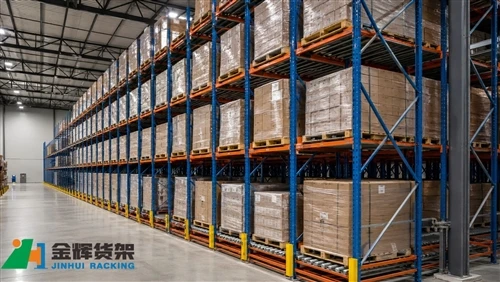
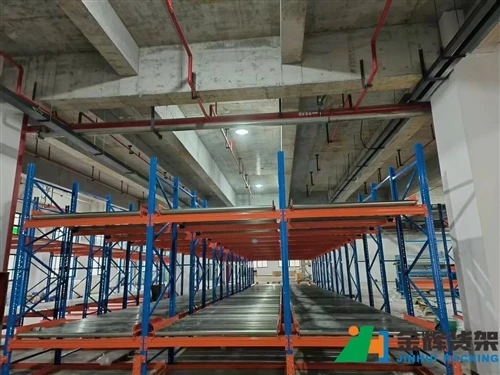
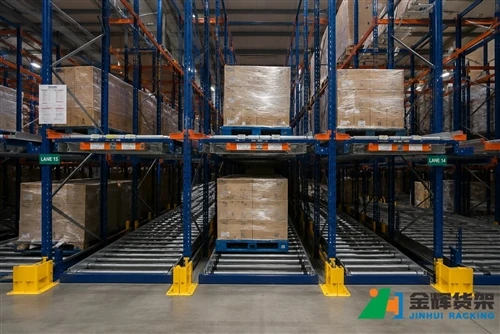
A Gravity Rack System, also called a Pallet Flow Rack, uses inclined roller lanes that allow pallets to move automatically from the loading side to the picking side using gravity. As each pallet is removed, the next pallet rolls forward automatically, creating a continuous First-In, First-Out (FIFO) inventory flow.
Because multiple pallets are stored deep within each lane, gravity racks achieve significantly higher storage density than conventional pallet racking.
Learn more about our Gravity Rack System designed for high-density warehouse storage.
What Is Selective Pallet Racking?
Selective Pallet Racking is the most common warehouse storage solution worldwide. Every pallet position is directly accessible by a forklift, making inventory management simple and highly flexible.
This system works especially well for warehouses storing hundreds or thousands of different SKUs because every pallet can be accessed without moving another pallet first.
Explore our Selective Pallet Racking Systems for warehouses requiring maximum accessibility.
Key Differences Between Gravity Rack and Selective Rack
| Comparison Item | Gravity Rack | Selective Pallet Rack |
|---|---|---|
| Storage Density | Very High | Medium |
| Inventory Method | FIFO | FIFO |
| Pallet Accessibility | Lane Access | 100% Direct Access |
| Forklift Travel | Low | Higher |
| Storage Capacity | Excellent | Good |
| Investment Cost | Higher | Lower |
| Ideal Warehouse Type | High Throughput | High SKU Variety |
Storage Density Comparison
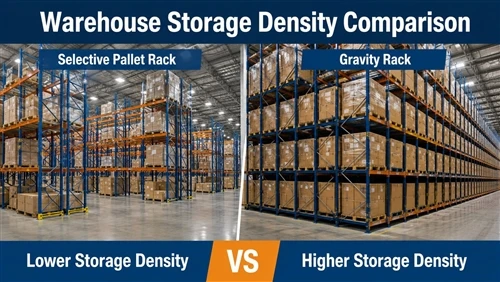
The most significant advantage of a gravity rack system is its ability to maximize warehouse storage density. Since pallets are stored deep within each lane, fewer forklift aisles are required. This allows more of the available floor space to be dedicated to pallet storage.
Selective pallet racking requires an access aisle for every rack row because forklifts must reach each pallet individually. While this provides excellent accessibility, it also reduces the total number of pallet positions that can fit within the same warehouse.
In many warehouse projects, gravity rack systems increase storage capacity by 30% to 60% compared with selective pallet racking.
Read our detailed analysis: How Much Can a Gravity Rack System Increase Warehouse Storage Capacity?.

Inventory Management and FIFO Performance
Both systems can support FIFO inventory management, but they achieve it differently.
Selective pallet racking relies on warehouse staff and inventory management procedures to ensure older inventory is picked first. While this approach works well, it depends heavily on disciplined warehouse operations.
Gravity rack systems naturally enforce FIFO because new pallets are loaded from one side while older pallets are automatically discharged from the opposite side. This makes gravity racks particularly suitable for industries with strict inventory rotation requirements, including food processing, pharmaceuticals, beverages, and cold storage.
Forklift Efficiency
Forklift productivity has a direct impact on warehouse operating costs.
Because gravity racks automatically move pallets to the picking face, forklift operators travel shorter distances and spend less time repositioning inventory. Separate loading and unloading aisles also reduce traffic congestion, allowing inbound and outbound operations to occur simultaneously.
Selective pallet racking provides excellent accessibility but generally requires more forklift travel, especially in large warehouses with long picking routes.
Warehouse Space Utilization
Warehouse space is expensive, making efficient utilization a priority for nearly every business. While both storage systems improve organization compared with floor stacking, they use available space in very different ways.
Gravity rack systems maximize warehouse cube utilization by reducing the number of forklift aisles and storing pallets in deep flow lanes. Multiple pallets of the same SKU can be stored within a single lane, allowing businesses to significantly increase storage density without expanding the building.
Selective pallet racking, on the other hand, prioritizes accessibility. Every pallet has its own storage location and direct forklift access, which requires additional aisle space and reduces the total number of pallet positions available.
For warehouses experiencing rapid inventory growth, gravity racks often provide a more cost-effective alternative to leasing additional warehouse space.
Investment Cost vs Long-Term Value
One of the biggest differences between these two storage systems is the initial investment.
Selective pallet racking is one of the most economical warehouse storage solutions. The simple structural design makes manufacturing, installation, and future expansion relatively inexpensive.
Gravity rack systems require roller tracks, brake rollers, pallet separators, and customized engineering. Consequently, the initial project cost is higher. However, businesses should evaluate the total cost of ownership rather than focusing only on purchase price.
Over time, gravity rack systems reduce labor costs, forklift operating time, warehouse congestion, and inventory handling. These operational savings often generate an attractive return on investment for warehouses with high pallet throughput.
For a detailed cost analysis, read our article Gravity Rack Cost Guide: Is a Pallet Flow Rack Worth the Investment?.
Which Warehouse Is Best Suited for Each System?
| Warehouse Requirement | Recommended System | Reason |
|---|---|---|
| Large Number of SKUs | Selective Pallet Rack | Direct access to every pallet location. |
| High Inventory Turnover | Gravity Rack | Continuous FIFO pallet flow improves efficiency. |
| Maximum Storage Density | Gravity Rack | Deep-lane storage minimizes aisle space. |
| Flexible Inventory Management | Selective Pallet Rack | Ideal for changing inventory profiles. |
| Cold Storage Warehouse | Gravity Rack | FIFO reduces product aging and improves picking efficiency. |
| Food & Beverage Distribution | Gravity Rack | Supports strict inventory rotation requirements. |
| General Warehousing | Selective Pallet Rack | Simple, economical, and highly versatile. |
Can Gravity Rack and Selective Rack Be Used Together?
Absolutely. Many modern warehouses combine both systems to balance storage density with operational flexibility.
Fast-moving products with high inventory volumes can be stored in gravity rack lanes, while slower-moving or low-volume SKUs remain in selective pallet racking. This hybrid approach allows businesses to maximize warehouse efficiency without sacrificing inventory accessibility.
By using each storage system where it performs best, warehouses can optimize space utilization, improve picking productivity, and accommodate future business growth.
Frequently Asked Questions
Which storage system provides higher storage density?
Gravity rack systems generally provide significantly higher storage density because they utilize deep-lane storage and require fewer forklift aisles than selective pallet racking.
Which system offers better pallet accessibility?
Selective pallet racking provides 100% direct access to every pallet position, making it ideal for warehouses with a large number of different SKUs.
Is a gravity rack system always more expensive?
Yes, the initial investment is typically higher due to roller tracks, brake rollers, and customized engineering. However, long-term operating savings often compensate for the additional investment.
Which industries benefit most from gravity racks?
Food processing, beverage distribution, pharmaceutical logistics, cold storage, retail distribution centers, and 3PL warehouses are among the industries that benefit most from gravity rack systems.
Can I upgrade from selective pallet racking to gravity rack?
In many cases, yes. A warehouse assessment can determine whether existing layouts can be redesigned to incorporate gravity rack systems while maximizing available storage space.
Conclusion
There is no single warehouse storage system that fits every operation. The right solution depends on your inventory profile, warehouse layout, throughput requirements, and long-term business goals.
If your priority is maximum pallet accessibility and SKU flexibility, selective pallet racking remains one of the best choices available. If your objective is higher storage density, improved FIFO inventory management, and greater warehouse efficiency, a gravity rack system offers clear advantages.
Many businesses achieve the best overall performance by combining both systems within the same facility, creating a warehouse that is both flexible and highly efficient.
Need Help Choosing the Right Storage System?
Jinhui Rack provides customized warehouse storage solutions based on your building dimensions, pallet specifications, inventory characteristics, and operational requirements. Our engineering team can help you determine whether gravity racks, selective pallet racking, or a hybrid solution is the best fit for your warehouse.
Selective Pallet Racking Systems
WhatsApp
+8618502527163
Email
info@jhrack.com