Gravity Rack vs Drive-In Rack: Which High-Density Storage System Is Better?
As warehouse operators continue to face rising land costs, labor shortages, and increasing inventory volumes, maximizing storage density has become one of the highest priorities in warehouse design. High-density storage systems allow businesses to store more pallets within the same building footprint while improving inventory management and operational efficiency.
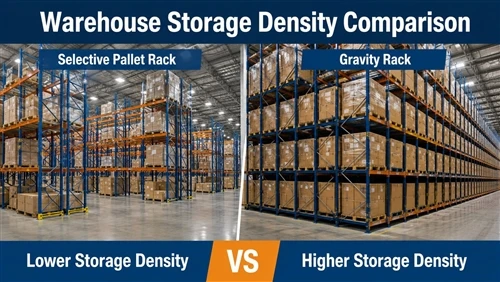
Among today's most popular high-density warehouse storage solutions, Gravity Rack Systems (Pallet Flow Racks) and Drive-In Pallet Racking stand out as two proven technologies. Both systems significantly increase storage capacity compared with conventional selective pallet racks, yet they achieve this goal through entirely different operating principles.
Choosing between these two systems is not simply about storage density. Warehouse managers must also consider inventory rotation methods, forklift movement, labor productivity, SKU quantity, warehouse safety, product turnover, and long-term operating costs.
In this comprehensive guide, we'll compare Gravity Rack and Drive-In Rack systems from every important angle to help you determine which solution best fits your warehouse operation.
What Is a Gravity Rack System?
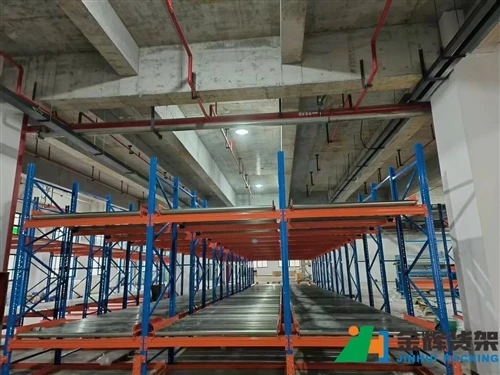
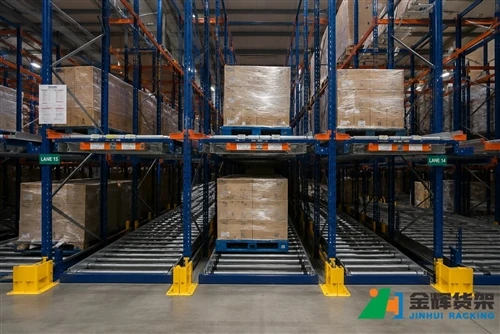
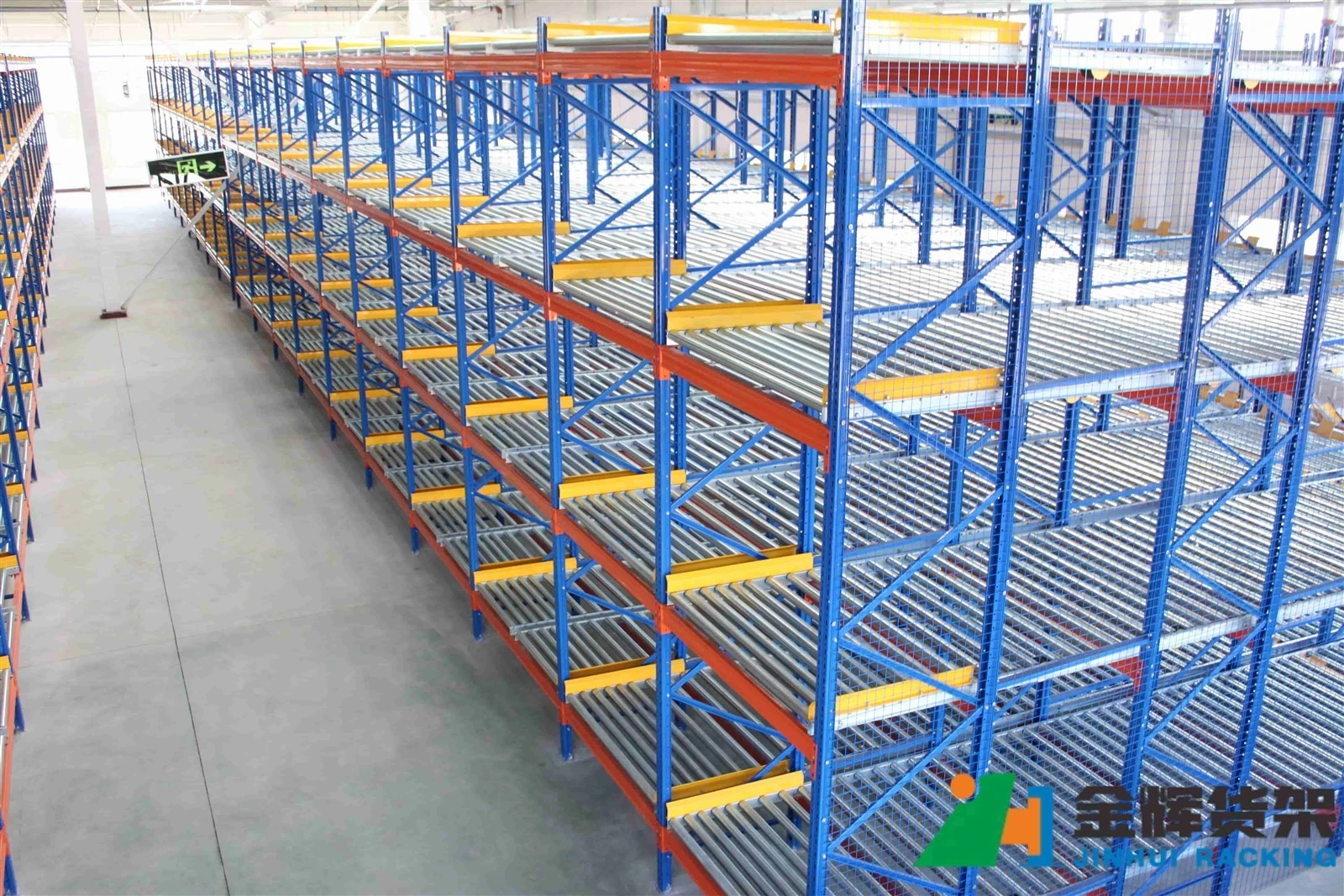
A Gravity Rack System, also known as a Pallet Flow Rack, is a dynamic storage solution designed around the principle of gravity-assisted pallet movement. Instead of forklifts entering storage lanes, pallets travel automatically through slightly inclined roller tracks from the loading side to the picking side.
Each storage lane is equipped with precision-engineered rollers and speed controllers. As new pallets are loaded from the rear, gravity gently moves them toward the front picking face. When the front pallet is removed, the remaining pallets automatically advance to the next picking position.
This continuous product flow naturally creates a First-In, First-Out (FIFO) inventory system, making gravity racks ideal for warehouses storing products with expiration dates or requiring strict inventory rotation.
Compared with static pallet racking, gravity racks reduce forklift travel distance, minimize handling time, improve picking efficiency, and support continuous replenishment without interrupting outbound operations.
Learn more about our customized Gravity Rack System designed for FIFO warehouse storage.
Main Benefits of Gravity Rack Systems
- True FIFO inventory management
- Excellent storage density
- Reduced forklift traffic
- Higher warehouse productivity
- Lower labor costs
- Fast pallet replenishment
- Suitable for cold storage facilities
- Compatible with warehouse automation systems
What Is a Drive-In Rack?
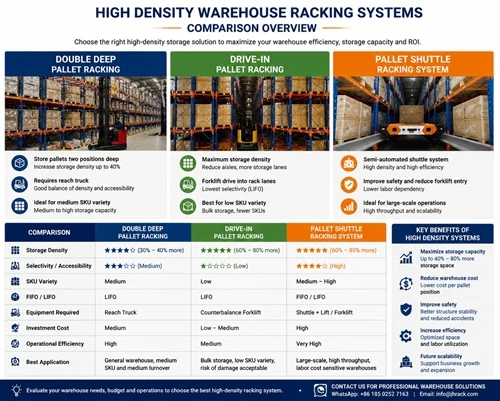
A Drive-In Rack is another high-density warehouse storage system specifically designed for storing large quantities of identical products. Unlike gravity racks, forklifts drive directly into the storage lanes to place and retrieve pallets from support rails installed on both sides of each lane.
Because multiple pallets are stored several positions deep, drive-in racks dramatically reduce the number of required aisles and increase overall warehouse utilization.
Most drive-in systems operate using the Last-In, First-Out (LIFO) inventory principle. The last pallet loaded into the lane is generally the first pallet removed.
Drive-in racks are commonly used in manufacturing plants, beverage warehouses, building material distribution centers, cold storage facilities, and warehouses storing large production batches with limited SKU variety.
Typical Advantages of Drive-In Racking
- High storage density
- Lower initial investment than gravity racks
- Excellent utilization of warehouse cube space
- Ideal for bulk pallet storage
- Suitable for large quantities of identical products
- Simple structural design
Gravity Rack vs Drive-In Rack: Feature Comparison
| Comparison Item | Gravity Rack | Drive-In Rack |
|---|---|---|
| Inventory Rotation | FIFO | LIFO |
| Storage Density | ★★★★★ | ★★★★☆ |
| Forklift Travel | Minimal | Frequent |
| Forklift Enters Rack | No | Yes |
| Warehouse Safety | Excellent | Good |
| Picking Efficiency | Very High | Medium |
| SKU Variety | Medium to High | Low |
| Cold Storage | Excellent | Excellent |
| Automation Compatibility | Excellent | Limited |
| Typical Investment | Higher | Lower |
Storage Density Comparison
Both systems are classified as high-density storage solutions because they significantly reduce the number of warehouse aisles required. However, the methods they use to achieve higher storage density differ considerably.
Gravity rack systems separate loading and unloading operations by using two independent faces. Pallets automatically flow through gravity-powered roller lanes, allowing replenishment and picking to occur simultaneously without interference.
Drive-in racks eliminate multiple aisles by allowing forklifts to enter storage lanes. While this reduces aisle space, forklift maneuvering inside the rack structure requires additional operating time and increases the possibility of rack impact.
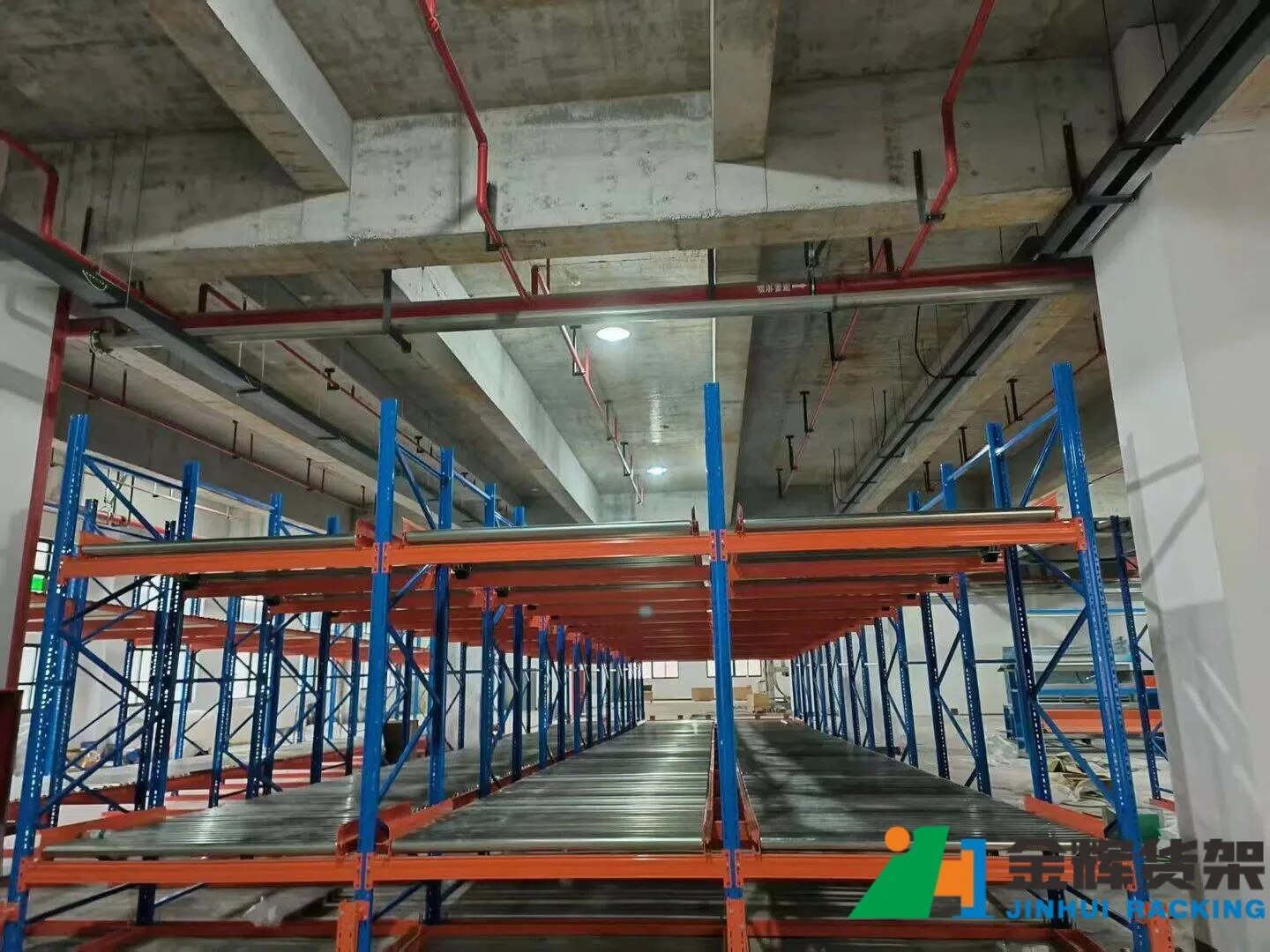
In practical warehouse projects, gravity rack systems generally achieve storage utilization between 80% and 90%, while drive-in racks typically range from 75% to 85%, depending on pallet dimensions, lane depth, and warehouse configuration.
Warehouse Efficiency Comparison
Storage density is only one factor when selecting a warehouse storage system. Daily operating efficiency has an even greater impact on labor costs, order fulfillment speed, and long-term warehouse productivity.
Because Gravity Rack systems automatically move pallets to the picking position, forklift operators spend less time entering storage lanes or searching for inventory. Loading and picking are separated into different aisles, allowing inbound and outbound operations to occur simultaneously.
Drive-In Racks require forklifts to drive directly into each storage lane during both loading and unloading. As lane depth increases, forklift travel time also increases. Frequent entry into the rack structure can reduce picking efficiency and increase the risk of accidental rack damage.
| Operational Factor | Gravity Rack | Drive-In Rack |
|---|---|---|
| Loading Speed | Excellent | Good |
| Picking Speed | Very High | Medium |
| Forklift Travel Distance | Short | Long |
| Labor Productivity | Higher | Medium |
| Rack Impact Risk | Low | Higher |
| Order Fulfillment | Fast | Moderate |
FIFO vs. LIFO Inventory Management
The most significant difference between these two storage systems lies in their inventory rotation method.
Gravity Rack Systems are specifically designed for First-In, First-Out (FIFO) inventory management. Every new pallet is loaded from the rear of the lane while the oldest pallet is picked from the front. This automatic stock rotation minimizes product aging and helps prevent expired inventory.
Drive-In Racks generally operate on a Last-In, First-Out (LIFO) basis. Since pallets are loaded and unloaded from the same aisle, the most recently stored pallet is usually the first one retrieved.
FIFO storage is particularly important for products with limited shelf life, including food, beverages, pharmaceuticals, dairy products, frozen goods, and chemical materials. LIFO storage, on the other hand, is often suitable for raw materials, seasonal inventory, or products with low turnover requirements.
Investment Cost Comparison
Many buyers initially compare storage systems based only on purchase price. However, the total cost of ownership should also include labor expenses, warehouse productivity, maintenance requirements, equipment utilization, and operational efficiency.
Drive-In Racking generally requires a lower initial investment because of its relatively simple structural design. Gravity Rack Systems require precision roller lanes, speed controllers, and additional engineering, resulting in a higher upfront cost.
Despite this difference, many companies recover the additional investment through reduced forklift travel, faster picking, improved labor efficiency, and lower inventory handling costs over the life of the system.
| Cost Factor | Gravity Rack | Drive-In Rack |
|---|---|---|
| Initial Investment | Higher | Lower |
| Labor Cost | Lower | Higher |
| Maintenance | Low | Low |
| Operating Efficiency | Excellent | Good |
| Long-Term ROI | Excellent | Good |
Best Applications for Gravity Rack Systems
- Food processing plants
- Beverage distribution centers
- Cold storage warehouses
- Pharmaceutical logistics
- Retail distribution centers
- E-commerce fulfillment warehouses
- Third-party logistics (3PL)
If your warehouse requires strict FIFO inventory management and fast order picking, our Gravity Rack System offers a reliable, high-density solution tailored to your operational needs.
Best Applications for Drive-In Racking
- Bulk pallet storage
- Manufacturing plants
- Raw material warehouses
- Building materials
- Seasonal inventory storage
- Warehouses with limited SKU variety
Which Storage System Should You Choose?
There is no universal answer because the ideal solution depends on your inventory profile, warehouse layout, and operational priorities.
- Choose Gravity Rack if you require FIFO inventory rotation, high picking efficiency, reduced forklift travel, and continuous pallet replenishment.
- Choose Drive-In Rack if your warehouse stores large quantities of identical products and minimizing initial investment is your primary concern.
Frequently Asked Questions
Is a Gravity Rack better than a Drive-In Rack?
Neither system is universally better. Gravity Racks are ideal for FIFO inventory and high-throughput operations, while Drive-In Racks are better suited for bulk storage of identical SKUs using LIFO inventory management.
Which system provides higher storage density?
Both systems offer high-density storage. Gravity Rack generally provides higher usable storage density while maintaining faster picking efficiency.
Can Drive-In Racks support FIFO?
Traditional Drive-In Racks are primarily designed for LIFO operations. Warehouses requiring true FIFO inventory management should consider Gravity Rack Systems.
Are Gravity Rack Systems suitable for cold storage?
Yes. Gravity Rack Systems are widely used in refrigerated warehouses because FIFO inventory rotation helps reduce product expiration and maximize storage efficiency.
Conclusion
Gravity Rack and Drive-In Rack systems both improve warehouse space utilization, but they serve different operational goals. Gravity Rack Systems excel in FIFO inventory management, higher picking efficiency, and long-term operational savings, making them ideal for food, beverage, pharmaceutical, and logistics industries. Drive-In Racks remain a cost-effective choice for bulk pallet storage where LIFO inventory rotation is acceptable.
Before selecting a storage system, evaluate your SKU variety, inventory turnover, warehouse layout, and future growth plans. Choosing the right solution today will improve productivity and reduce operating costs for years to come.
Related Product
Gravity Rack System | FIFO Pallet Flow Racking Solution
WhatsApp
+8618502527163
Email
info@jhrack.com