Increase Warehouse Storage Capacity with a Gravity Rack System
Warehouse space is becoming one of the most valuable resources in modern logistics. As rental costs continue to rise and order volumes increase, companies are under constant pressure to store more inventory without expanding their facilities. For warehouse managers, improving storage density is often far more cost-effective than constructing a new warehouse.
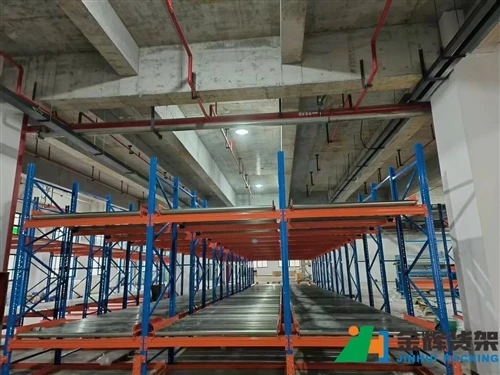
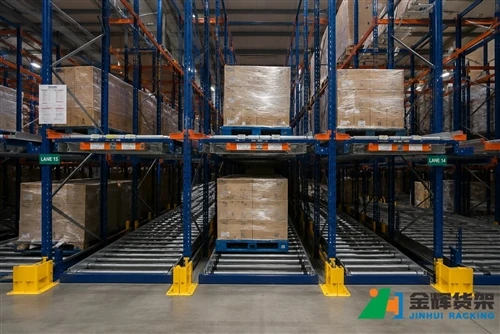
One of the most efficient ways to maximize warehouse capacity is by installing a Gravity Rack System, also known as a Pallet Flow Rack. Unlike conventional static pallet racking, gravity racks use inclined roller lanes to move pallets automatically from the loading side to the picking side. This dynamic storage method significantly reduces aisle space while improving inventory flow and operational efficiency.
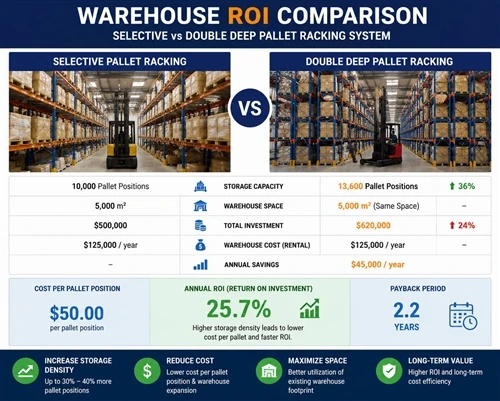
But how much additional storage capacity can a gravity rack actually provide? The answer depends on several factors, including warehouse layout, pallet dimensions, lane depth, SKU variety, and inventory turnover. In many real-world warehouse projects, companies achieve storage capacity improvements of 30% to more than 60% after upgrading from traditional selective pallet racking.
In this article, we'll explain how gravity rack systems increase warehouse capacity, compare storage density with other pallet racking systems, analyze return on investment, and help you determine whether a gravity rack solution is the right choice for your operation.

Why Warehouse Storage Capacity Matters
Warehouse storage capacity directly affects operating costs, inventory flexibility, and customer service. When storage space reaches its limit, companies often consider renting additional facilities or relocating to larger warehouses. However, these options require significant capital investment and increase long-term operating expenses.
Improving storage density within an existing warehouse is usually the fastest and most economical solution. High-density pallet racking systems make better use of both floor space and vertical space, allowing businesses to store more pallets without increasing the building footprint.
Higher storage capacity also reduces travel distances for forklifts, improves inventory organization, and increases warehouse productivity. These operational improvements contribute to lower labor costs and faster order fulfillment.
How Gravity Rack Systems Maximize Warehouse Space
A Gravity Rack System increases storage capacity through several key design features that optimize warehouse layout and pallet flow.
1. Reduced Number of Aisles
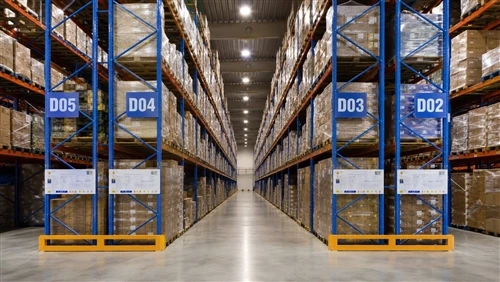
Traditional selective pallet racking requires an access aisle for every rack row because forklifts must reach every pallet position individually. Gravity racks separate loading and unloading operations, allowing multiple pallet positions to share the same storage lane. As a result, fewer aisles are required, and more floor space becomes available for storage.
2. Deep Lane Storage
Gravity racks store pallets several positions deep within each lane. Instead of allocating one pallet position per aisle access point, warehouses can create long flow lanes capable of storing 10, 20, or even more pallets in a single lane depending on product characteristics and warehouse dimensions.
3. Better Vertical Space Utilization
Because gravity racks are designed for high-density storage, they make excellent use of warehouse height. Multiple storage levels combined with deep pallet lanes dramatically increase total pallet positions within the same building.
4. Continuous FIFO Product Flow
Gravity automatically moves pallets toward the picking face after each retrieval. This continuous movement eliminates empty picking positions and keeps inventory flowing without requiring additional forklift repositioning.
5. Separate Loading and Picking Operations
Inbound replenishment occurs from one side of the rack while outbound picking takes place from the opposite side. This design eliminates traffic congestion and allows both operations to continue simultaneously.
Learn more about our customized Gravity Rack System designed for high-density FIFO warehouse storage.
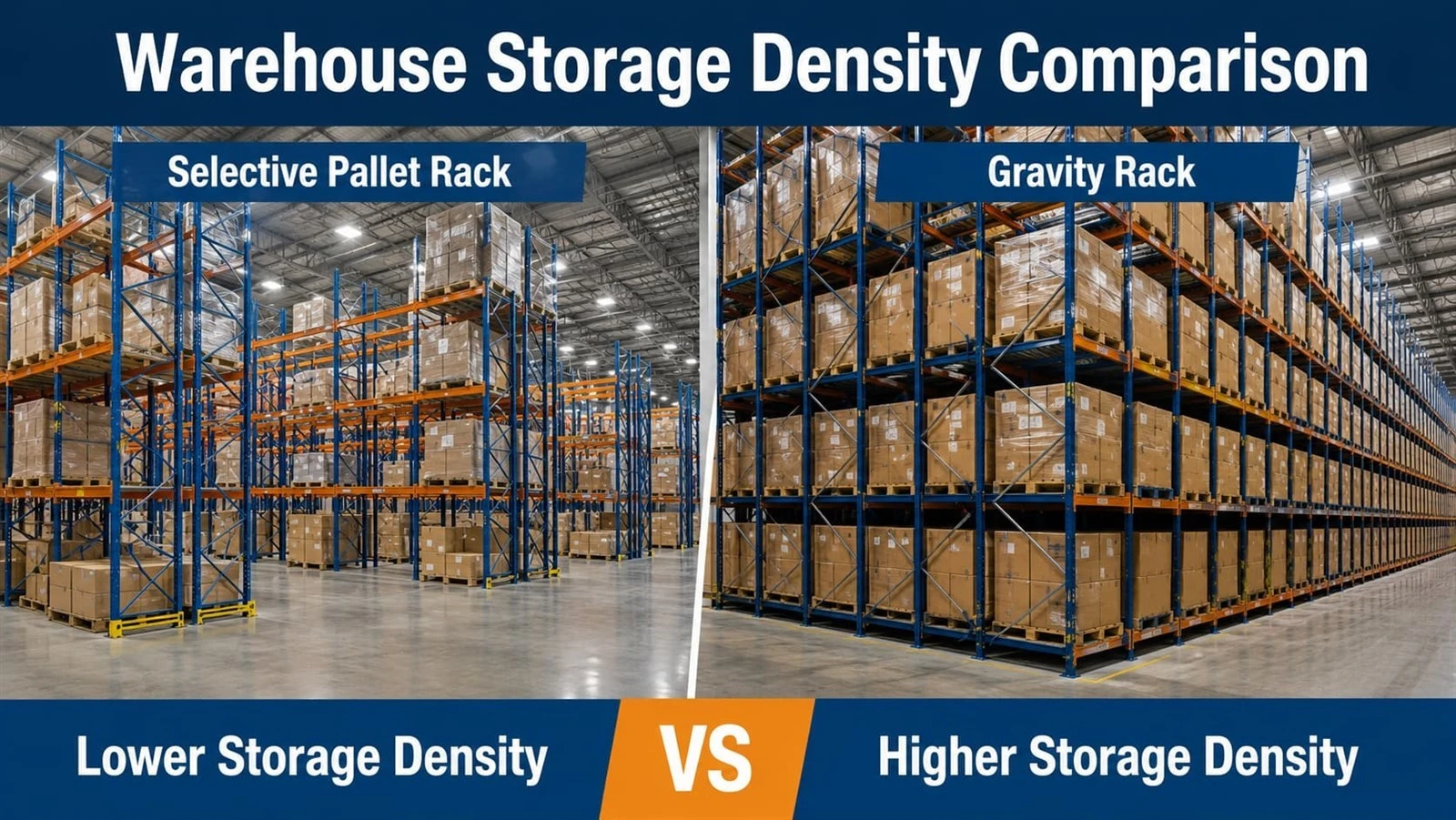
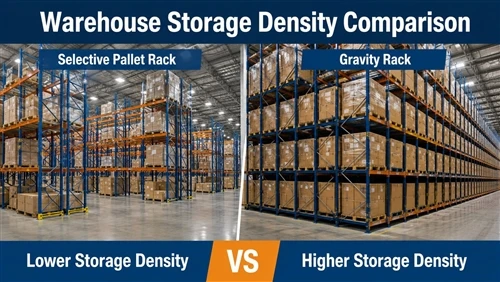
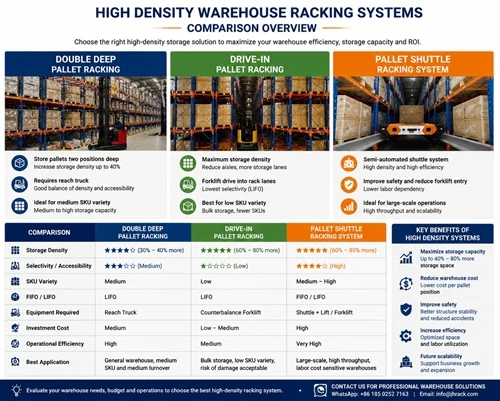
Storage Density Comparison
| Storage System | Storage Density | Inventory Method | Forklift Efficiency | Best For |
|---|---|---|---|---|
| Selective Pallet Rack | 50–60% | FIFO | Excellent | High SKU warehouses |
| Double Deep Rack | 65–75% | FIFO/LIFO | Good | Medium SKU warehouses |
| Drive-In Rack | 75–85% | LIFO | Medium | Bulk storage |
| Gravity Rack System | 80–90% | FIFO | Excellent | Fast-moving inventory |
How Much Storage Capacity Can You Actually Gain?
Although every warehouse is different, gravity rack systems typically increase pallet positions by 30% to 60% compared with conventional selective pallet racking. The exact improvement depends on warehouse dimensions, ceiling height, pallet size, lane depth, and SKU configuration.
For example, a warehouse that originally stores 4,000 pallet positions using selective pallet racks may increase capacity to more than 6,000 pallet positions after converting suitable storage zones to gravity rack systems. This represents an increase of approximately 50% without expanding the building.
Warehouse Cube Utilization: Looking Beyond Floor Space
Many warehouse managers evaluate storage capacity based only on floor area. However, the true measurement of warehouse efficiency is cube utilization-how effectively the entire building volume is used from floor to ceiling.
Gravity Rack Systems are specifically designed to maximize cubic storage. By combining deep storage lanes with multiple beam levels, they allow warehouses to take full advantage of building height while minimizing the number of access aisles.
Compared with conventional pallet racking, gravity racks improve both horizontal and vertical storage efficiency. Forklifts spend less time traveling through aisles and more time loading or retrieving pallets, increasing throughput while reducing operating costs.
Warehouse designers often evaluate the following factors when calculating cube utilization:
- Building height
- Clear storage height
- Number of storage levels
- Lane depth
- Pallet dimensions
- Forklift turning radius
- Aisle width
- SKU quantity
Optimizing these variables together allows companies to significantly increase pallet positions without constructing additional warehouse space.
Real Warehouse Capacity Comparison
The following example demonstrates how replacing selective pallet racks with gravity rack systems can improve warehouse capacity in a typical distribution center.
| Warehouse Item | Selective Rack | Gravity Rack |
|---|---|---|
| Warehouse Area | 10,000 m² | 10,000 m² |
| Pallet Positions | 4,200 | 6,500 |
| Storage Density | 58% | 87% |
| Forklift Travel | 100% | Approximately 70% |
| Estimated Capacity Increase | - | +55% |
Although actual results vary depending on warehouse layout, this example reflects the performance improvements achieved by many logistics centers after upgrading to gravity flow storage.
Factors That Influence Storage Capacity
Not every warehouse will achieve the same increase in pallet positions. Several design variables affect the final storage capacity.
Warehouse Height
Taller buildings generally achieve greater improvements because additional beam levels can be installed without increasing the building footprint.
SKU Quantity
Gravity racks perform best when multiple pallets of the same SKU are stored within each flow lane. Warehouses handling thousands of unique SKUs may require a combination of storage systems.
Pallet Dimensions
Pallet size directly determines lane width, beam spacing, and storage depth. Proper engineering ensures maximum space utilization while maintaining safe pallet flow.
Lane Depth
Longer pallet flow lanes generally increase storage density, but lane depth should always be selected according to inventory turnover and replenishment frequency.
Warehouse Layout
Column spacing, fire protection systems, loading docks, and traffic flow all influence the final warehouse design. An experienced engineering team can optimize these constraints to maximize pallet capacity.
Industries That Benefit Most
Gravity Rack Systems are widely used across industries that require high-density storage and efficient FIFO inventory management.
- Food manufacturing
- Beverage distribution
- Cold storage warehouses
- Pharmaceutical logistics
- Retail distribution centers
- Third-party logistics (3PL)
- Automotive component storage
- E-commerce fulfillment centers
Many of these industries also require strict inventory rotation, making gravity rack systems an ideal long-term storage solution.
If you're new to pallet flow storage, you may also find our guide What Is a Gravity Rack System? helpful. You can also read our comparison article Gravity Rack vs. Drive-In Rack to understand how different high-density storage systems compare.