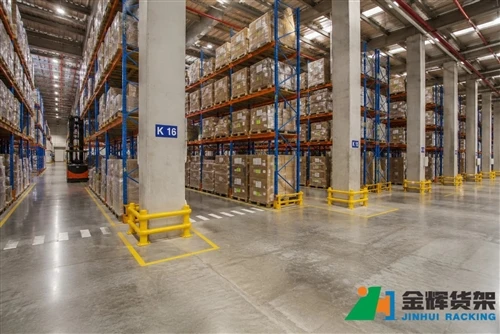
Why Cold Storage Warehouses Require Specialized Racking
Unlike standard warehouses, cold storage facilities operate at temperatures ranging from 0°C to -30°C (32°F to -22°F). These extreme conditions affect both materials and operational efficiency.
If you're unfamiliar with standard systems, start with our pallet racking system overview.
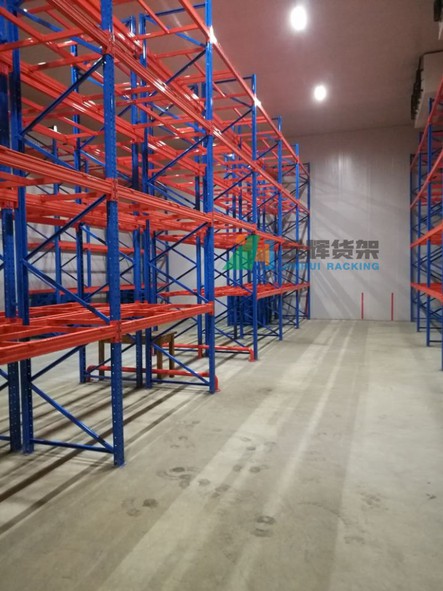
Main Challenges in Cold Storage Racking Design
1. Low Temperature Impact on Steel
Steel becomes more brittle in freezing environments, increasing the risk of structural stress and potential damage under heavy loads.
2. Condensation and Corrosion
Temperature differences between loading docks and storage zones can create condensation, leading to corrosion if materials are not properly treated.
3. Limited Space and High Cost per Cubic Meter
Cold storage is expensive to operate, so maximizing storage density is critical to reduce energy costs.
4. Reduced Forklift Efficiency
Cold temperatures affect battery performance and operator efficiency, requiring optimized layout design.
Best Pallet Racking Systems for Cold Storage
1. Drive-In Racking System
Ideal for high-density storage, drive-in racking reduces aisle space and maximizes storage capacity-perfect for bulk goods with low SKU variety.
Learn more in our drive-in vs drive-through comparison.
2. Shuttle Racking System
Automated shuttle systems minimize forklift usage inside cold zones, improving efficiency and reducing labor exposure to low temperatures.
3. Mobile Racking System
Mobile racks eliminate unnecessary aisles, significantly increasing storage density in expensive cold environments.
4. Selective Racking (Modified)
Used when high selectivity is required, but often combined with special coatings and layout optimization.

Key Design Considerations for Cold Storage Racking
1. Anti-Corrosion Coating
Use galvanized steel or high-quality powder coating to prevent rust caused by condensation.
2. Floor Flatness and Anchoring
Frozen floors can shift slightly over time, so proper anchoring and floor preparation are critical.
3. Load Capacity Planning
Always calculate load capacity with a safety margin. See our load capacity guide.
4. Layout Optimization
Efficient layout reduces forklift travel time and energy consumption.
Cost Considerations for Cold Storage Racking
Cold storage racking systems are typically 10%–30% more expensive than standard warehouse systems due to:
- Special materials and coatings
- Complex installation requirements
- Higher design precision
For general pricing insights, check our pallet racking cost guide.
Common Mistakes to Avoid
- Using standard racking without anti-corrosion treatment
- Ignoring temperature effects on materials
- Underestimating energy cost impact of layout
- Choosing low-density systems for high-cost cold space
Conclusion
Designing pallet racking for cold storage requires more than just choosing a system-it requires understanding environmental challenges, material performance, and operational efficiency.
The right solution can significantly reduce costs while improving storage performance and safety.
Need a Cold Storage Racking Solution?
Our team provides customized cold storage racking systems designed for durability, efficiency, and long-term performance.