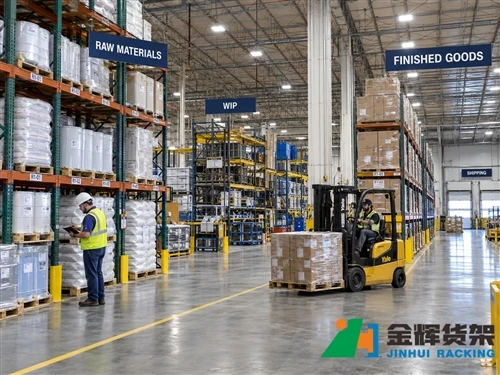
A warehouse can have a well-designed pallet racking system and still experience inventory problems if employees cannot quickly identify where products are stored.
As the number of SKUs, pallet positions, and daily warehouse movements increases, pallet rack labeling becomes an important part of warehouse organization.
A clear location identification system allows warehouse operators to understand where a pallet belongs, where it should be picked from, and where replenishment inventory should be placed. This is particularly important for distribution centers, 3PL warehouses, manufacturing facilities, and warehouses with a large number of SKUs.
Pallet rack labeling does not increase the structural capacity of a rack. Instead, it improves the way people interact with the storage system.
Quick Answer
Pallet rack labeling improves warehouse operations by giving every storage position a clear and consistent identification code. When rack rows, bays, levels, and positions are labeled logically, warehouse employees can locate products faster, reduce picking and put-away errors, and maintain more accurate inventory records.
Why Pallet Rack Labeling Matters in Warehouse Operations
When a warehouse contains only a few rack rows, employees may remember where common products are stored.
That approach becomes much less reliable as the warehouse grows.
A larger warehouse may contain:
- Hundreds of pallet rack bays
- Multiple rack rows
- Several beam levels
- Hundreds or thousands of SKUs
- Fast-moving and slow-moving inventory
- Reserve storage locations
- Temporary staging areas
Without a consistent identification system, workers may spend unnecessary time searching for the correct pallet location.
A properly designed warehouse rack labeling system gives each storage location a unique identity that can be connected to inventory records in a warehouse management system or other inventory control process.
What Is a Pallet Rack Location?
A pallet rack location is a specific physical position where a pallet can be stored.
Depending on the warehouse layout, a location may be identified using several levels of information:
- Warehouse zone
- Rack row
- Rack bay
- Rack level
- Position within the bay
For example, a location code might follow a structure such as:
A-05-03-02
In this example, the first section could represent the storage zone, the second the rack row, the third the bay, and the fourth the rack level.
The exact coding structure can be customized according to the warehouse's physical layout and inventory management system.
How Rack Location Codes Should Be Structured
A good location code should be easy for warehouse employees to understand and difficult to confuse with another location.
One practical structure is:
| Location Element | Example | Purpose |
|---|---|---|
| Zone | A | Identifies a warehouse area |
| Row | 05 | Identifies a rack row |
| Bay | 03 | Identifies the rack bay |
| Level | 02 | Identifies the vertical storage level |
The actual format should match the warehouse's operational requirements rather than following one universal standard.
Rack Bay Labels vs. Rack Level Labels
Large warehouse rack systems may require several types of identification.
Rack Row Identification
Row identifiers help forklift operators quickly determine which aisle or rack row they need to enter.
Bay Identification
Bay numbers identify individual sections of the rack. They are particularly useful when a long rack run contains dozens of bays.
Level Identification
Level labels identify the vertical position of a pallet within the rack.
For example, a warehouse may use:
- Level 01 for floor storage
- Level 02 for the first elevated beam level
- Level 03 for the second elevated level
- Level 04 for the highest storage level
Consistent terminology helps reduce misunderstandings between warehouse workers and inventory systems.
How Pallet Rack Labels Improve Picking Accuracy
Picking errors often occur when employees select the correct product but retrieve it from the wrong location.
This can happen when several similar products are stored in adjacent rack bays.
Clear location labels provide a physical reference that complements the information displayed by a WMS, handheld terminal, tablet, or paper picking list.
For example, instead of searching for a product visually, a picker can be instructed to retrieve inventory from:
Zone B → Row 08 → Bay 16 → Level 03
The worker can then verify the physical label before removing the pallet.
This simple process can reduce unnecessary searching and help prevent incorrect pallet retrieval.
Pallet Rack Labeling and Inventory Accuracy
Inventory accuracy depends on more than counting pallets.
The warehouse must also know where each pallet is located.
If a pallet physically exists but its recorded location is incorrect, the inventory system may show the product as available while warehouse employees cannot find it.
This creates a hidden operational problem.
A consistent rack location system helps connect the physical warehouse with the digital inventory record.
When a pallet is received, put away, moved, or picked, its location can be updated using the same location code shown on the physical rack.
Why Location Labels Are Especially Important for High-SKU Warehouses
Warehouses with many SKUs typically have more individual storage locations and more opportunities for product misplacement.
As discussed in our previous article about SKU variety and pallet racking layout, inventory diversity can significantly influence how storage positions should be organized.
Once the storage zones are established, each location needs a practical identification method.
For example, a warehouse could organize locations according to:
- Fast-moving inventory
- Medium-moving inventory
- Slow-moving inventory
- Seasonal products
- Reserve inventory
- Special handling products
Clear labels make these zones easier to operate on a daily basis.

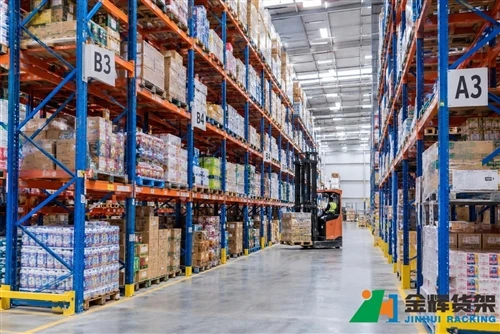
Clearly identified rack locations help warehouse workers connect physical pallet positions with inventory records and picking instructions.
Where Should Pallet Rack Labels Be Installed?
Labels should be positioned where warehouse employees can easily see them during normal operations.
Depending on the warehouse design, labels may be installed on:
- Rack uprights
- Rack beams
- End-of-row posts
- Overhead signs
- Rack bay markers
For long rack rows, larger signs at the end of the row can help forklift operators identify the correct aisle before entering it.
Smaller labels can then identify individual bays and levels.
The objective is to create a logical visual hierarchy rather than placing random labels throughout the rack system.
End-of-Aisle Signs and Rack Bay Labels
End-of-aisle signs are particularly useful in larger warehouses.
From a distance, an operator may not be able to read a small bay label attached to an individual rack frame.
A larger aisle-level sign can provide the first navigation point.
Once inside the correct aisle, smaller bay and level labels provide more precise information.
This creates a simple navigation sequence:
Warehouse Zone → Aisle → Rack Row → Bay → Level → Pallet
This approach can make warehouse navigation more intuitive, especially for new employees.
Labeling Should Match the Physical Rack Layout
One common mistake is designing inventory codes separately from the physical warehouse.
The digital location structure should reflect how people actually move through the warehouse.
For example, if rack bays are numbered from left to right when viewed from one aisle, the same sequence should be reflected consistently throughout that zone.
Changing numbering direction between different rack sections can create unnecessary confusion.
Consistency is more important than using a complicated coding system.
How Rack Layout and Labeling Work Together
Labels cannot fully solve a poor warehouse layout.
If a rack system contains confusing dead-end aisles, inconsistent numbering, blocked access points, or poorly positioned storage zones, even excellent labels will not eliminate operational problems.
That is why location labeling should be developed together with the physical rack layout.
For warehouses planning a new pallet racking system, location numbering can be incorporated into the layout planning process from the beginning.
This makes it easier to establish logical relationships between rack rows, bays, levels, aisles, and inventory zones.
Labeling and Forklift Visibility
Warehouse labels should be readable from the position where operators actually need the information.
A forklift operator approaching an aisle may need a large identifier, while an employee placing a pallet into a specific bay needs a more detailed location code.
These are different information requirements.
For this reason, a warehouse may use multiple label sizes rather than placing one identical label everywhere.
The objective is to provide the right information at the right viewing distance.
How to Reduce Confusion Between Similar Rack Locations
Location codes should avoid unnecessary similarity.
For example, labels such as:
- A-01-01
- A-01-11
- A-11-01
can be difficult to distinguish quickly if they are printed too small or positioned poorly.
A consistent format with clear spacing can make these codes easier to read.
Large warehouses should also consider whether letters and numbers could be visually confused by employees working quickly or under low-light conditions.
Color Coding for Warehouse Storage Zones
Color coding can supplement location numbers when used consistently.
For example:
- Green for fast-moving inventory
- Blue for standard storage
- Yellow for reserve inventory
- Orange for special handling areas
Color should not replace the actual location code.
Instead, it should provide an additional visual cue that helps employees recognize a storage zone quickly.
How Labels Support Put-Away Operations
Put-away is another area where rack labeling can improve warehouse efficiency.
After receiving a pallet, the warehouse team needs to determine where it should be stored.
A clear location structure allows the WMS or warehouse operator to assign a destination such as:
C-04-18-03
The employee can then travel directly to the specified location rather than searching for an open pallet position.
This can reduce unnecessary forklift travel and make the put-away process more consistent.
Rack Labeling for Replenishment Operations
Many warehouses operate separate forward-picking and reserve-storage areas.
When inventory in a picking location becomes low, reserve stock must be moved to the appropriate location.
Clear rack labels make it easier to distinguish between these locations.
For example:
- Forward location: P-03-12-01
- Reserve location: R-08-21-04
The exact coding method can vary, but the relationship between the two locations should be clear to warehouse employees.
How Rack Labels Help New Warehouse Employees
Experienced warehouse workers often know the location of frequently handled products from memory.
New employees do not have this knowledge.
A logical labeling system reduces the amount of information they need to memorize.
Instead of learning hundreds of product locations, a new employee can follow a structured location code and identify the correct rack position physically.
This can make employee training easier and reduce dependence on individual worker knowledge.
Common Pallet Rack Labeling Mistakes
Using Inconsistent Location Codes
If different warehouse areas use different numbering logic, employees may have difficulty understanding the location structure.
Making Labels Too Small
A label that can only be read from a few feet away may not be useful at the end of a long aisle.
Relying Only on Color
Color coding should supplement, not replace, written location identifiers.
Changing Rack Locations Without Updating Inventory Records
Physical relocation without a corresponding system update can create inventory discrepancies.
Ignoring Future Rack Expansion
Location numbering should leave room for future rack rows, bays, or zones where practical.
Placing Labels Where They Can Be Obstructed
Pallets, stretch wrap, forklifts, or rack components should not routinely block important location information.
How to Create a Practical Pallet Rack Labeling System
A warehouse can follow a simple process when establishing its location identification system:
- Divide the warehouse into logical storage zones.
- Assign a unique identifier to each rack row or aisle.
- Number rack bays consistently in one direction.
- Assign clear identifiers to vertical storage levels.
- Define the format of the complete location code.
- Match the physical labels with inventory records.
- Use larger signs where information needs to be visible from a distance.
- Test the system with actual forklift operators and warehouse employees.
- Adjust confusing locations before final implementation.
- Document the location numbering rules for future expansion.
How Pallet Rack Labeling Supports Warehouse Efficiency
Warehouse efficiency is not determined only by how many pallets fit inside the building.
It also depends on how quickly employees can perform everyday tasks.
A well-organized location system can support:
- Faster pallet identification
- More accurate picking
- More consistent put-away
- Easier replenishment
- Better inventory visibility
- Reduced product searching
- Simpler employee training
- More organized warehouse operations
These benefits become increasingly important as warehouse storage capacity and SKU variety increase.
Integrating Rack Labels With a Warehouse Management System
For warehouses using a WMS, the physical rack location should correspond directly with the location stored in the software.
For example, when a system instructs an employee to retrieve inventory from:
B-12-04-03
the physical warehouse should contain a clearly identifiable location with the same code.
This creates a direct connection between the digital inventory record and the physical storage position.
Barcode labels can further simplify this process by allowing employees to scan the location rather than manually entering a long code.
Does Every Warehouse Need Barcode Rack Labels?
Not necessarily.
Small warehouses with relatively few products may operate effectively with simple printed location labels.
Larger facilities with high transaction volumes may benefit from barcodes, QR codes, handheld scanners, or other digital identification methods.
The labeling system should match the complexity of the warehouse rather than adding technology simply for its own sake.
How Rack Design Influences Labeling Requirements
The physical rack configuration also influences how labels should be installed.
A conventional selective rack layout may require clear bay and level identification for each accessible pallet position.
Long rack rows may require prominent aisle and row signs.
Higher-density systems may require additional identification because individual pallet access can depend on lane or storage sequence.
For this reason, labeling should be considered as part of the complete rack solution rather than as an afterthought.
FAQ About Pallet Rack Labeling
What information should be included on a pallet rack label?
A rack label can include the zone, row, bay, level, position, barcode, or other information required by the warehouse's inventory management system.
Should pallet rack bays be numbered from left to right?
A consistent direction is generally easier for warehouse employees to understand. The most important factor is to establish a clear numbering rule and apply it consistently.
Can pallet rack labels be used with a WMS?
Yes. Physical location labels can correspond directly with WMS location codes, allowing employees to connect digital inventory records with physical storage positions.
Are barcode labels better than printed rack numbers?
Barcode labels can improve scanning and reduce manual data entry, but simple printed identifiers may be sufficient for smaller warehouses. The appropriate choice depends on transaction volume and inventory management requirements.
Should rack labels be installed at every level?
In many warehouses, identifying individual levels is useful because it allows employees to distinguish between vertically stacked storage positions. The exact labeling arrangement should reflect the rack configuration and operating process.
Can rack labels improve picking speed?
Yes. Clear location identification can reduce the time employees spend searching for products and help them follow a more direct picking route.
Final Thoughts
Pallet rack labeling is a small physical detail that can have a significant operational impact.
When rack rows, bays, levels, and storage zones are identified consistently, warehouse employees can navigate the storage system more confidently and connect physical pallet locations with inventory records.
This becomes particularly valuable in warehouses with high SKU variety, frequent inventory movement, multiple storage zones, or large pallet racking systems.
The best labeling system is not necessarily the most complicated one. It should be clear, consistent, visible, scalable, and compatible with the warehouse's actual workflow.
When rack layout, inventory organization, and location labeling are planned together, the warehouse can achieve better visibility without sacrificing practical accessibility.
A pallet rack stores the inventory, but a clear location system tells warehouse employees exactly where that inventory belongs.
Need Help Planning Your Pallet Racking System?
Jinhui Rack provides customized pallet racking solutions for warehouses, distribution centers, manufacturing facilities, 3PL operations, and industrial storage applications.
Our team can evaluate your warehouse dimensions, pallet sizes, SKU variety, storage capacity, forklift operations, and inventory workflow to help develop a practical pallet rack layout.
If you are planning a new warehouse or improving an existing storage system, send us your warehouse information and storage requirements for a customized solution.
WhatsApp: +86 185 0252 7163
Email: info@jhrack.com