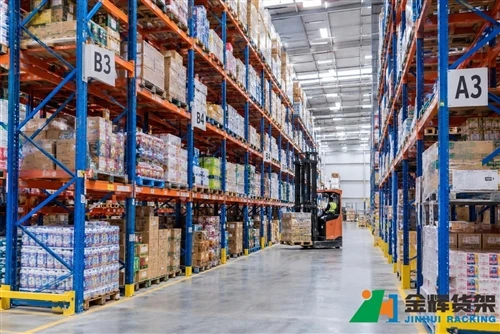
When warehouse space is limited and storage density becomes a priority, high-density racking systems such as drive-in and drive-through racking are often the best solutions. However, many buyers are confused about the differences between these two systems and which one better suits their operations.
This guide will help you clearly understand how each system works, their advantages, limitations, and how to choose the right one for your warehouse.

What Is Drive-In Racking?
Drive-in racking is a high-density storage system where forklifts enter the rack structure from one side to store and retrieve pallets.
- Operates on LIFO (Last In, First Out)
- Only one access aisle
- Maximizes storage density
- Ideal for bulk storage of similar goods
This system is commonly used in cold storage, food, and beverage industries.
What Is Drive-Through Racking?
Drive-through racking is similar in structure but allows forklifts to enter from both sides of the rack.
- Operates on FIFO (First In, First Out)
- Two access aisles
- Better inventory rotation
- Higher efficiency in certain operations
It is ideal for industries that require strict inventory control, such as pharmaceuticals and perishable goods.
Key Differences Between Drive-In and Drive-Through Racking
| Feature | Drive-In Racking | Drive-Through Racking |
|---|---|---|
| Access | Single side | Both sides |
| Inventory Method | LIFO | FIFO |
| Storage Density | Very high | High |
| Cost | Lower | Higher |
| Efficiency | Moderate | Higher |
Advantages of Drive-In Racking
- Maximizes warehouse space utilization
- Lower investment cost
- Simple structure and installation
Advantages of Drive-Through Racking
- Better stock rotation (FIFO)
- Reduced handling time
- Improved operational efficiency
Which System Should You Choose?
The right choice depends on your inventory type and operational needs.
- If you store large quantities of the same product → choose drive-in racking
- If inventory rotation is critical → choose drive-through racking
- If budget is limited → drive-in is more cost-effective
For many warehouses, the decision is not just about density, but about workflow efficiency and long-term scalability.
Common Mistakes Buyers Make
- Choosing based only on price
- Ignoring forklift operation requirements
- Not considering future expansion
These mistakes can lead to inefficiencies and higher operational costs over time.
Conclusion
Both drive-in and drive-through racking systems are excellent high-density storage solutions, but they serve different purposes. Understanding their differences will help you design a more efficient and cost-effective warehouse system.
Need Help Choosing the Right Racking System?
JIN HUI Rack provides customized high-density storage solutions tailored to your warehouse layout and inventory flow.
Contact our experts for a free consultation and layout design.
📧 Email: info@jhrack.com
📱 WhatsApp: +86 185 0252 7163