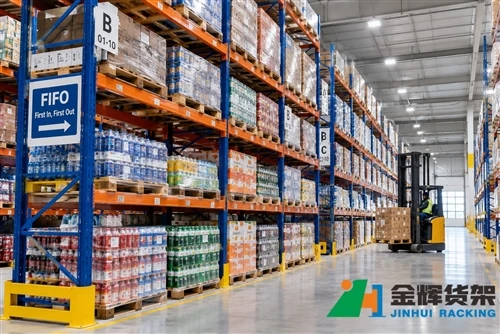
One of the most important factors when selecting a warehouse storage system is load capacity. Choosing the wrong pallet racking capacity can lead to serious safety risks, product damage, and operational inefficiencies.
Understanding how much weight a pallet racking system can hold is not just about numbers-it requires considering beam strength, upright frames, load distribution, and safety factors.

What Determines Pallet Racking Load Capacity?
Pallet racking load capacity is influenced by several structural and operational factors. It is not a single fixed number but a combination of system components working together.
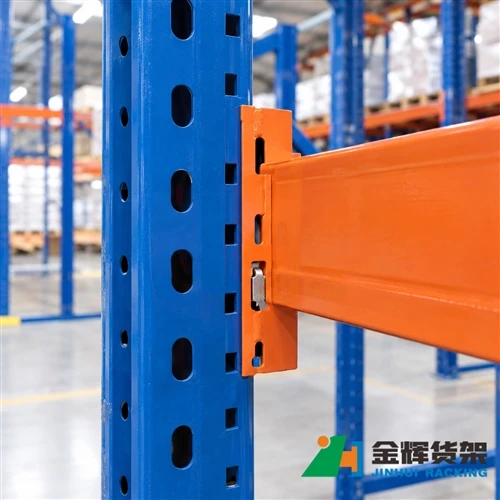
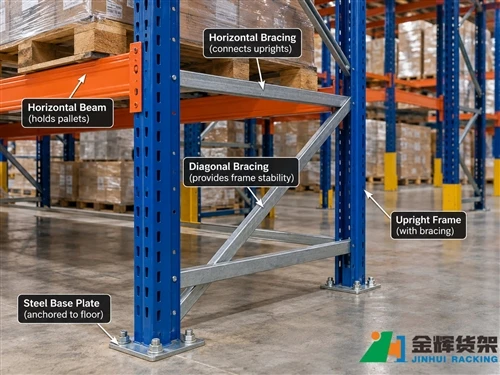
- Beam size and thickness
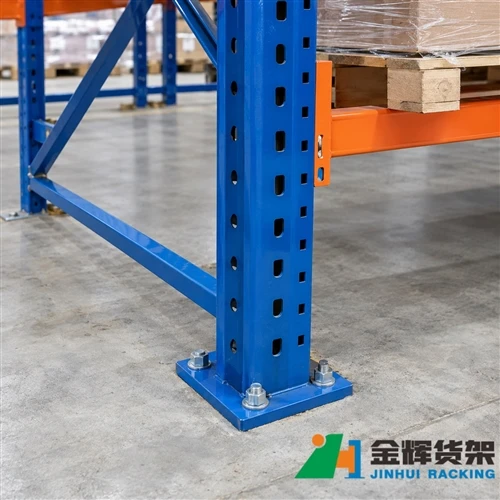
- Upright frame strength
- Material quality (steel grade)
- Rack height and depth
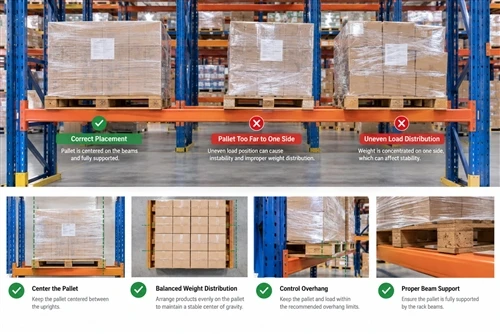
- Load distribution on beams
For example, a standard pallet racking system may support between 500 kg to 4,000 kg per level depending on its design and configuration.
Beam Capacity vs Upright Capacity
Many buyers assume that load capacity only depends on beams, but this is not entirely correct.
Beam capacity refers to how much weight each horizontal beam can support, while upright capacity refers to the total load that vertical frames can تحمل across all levels.
The overall system capacity is always limited by the weakest component.
How to Calculate Load Capacity
A simplified way to estimate pallet racking load capacity is:
Total Load Capacity = Beam Capacity × Number of Beam Levels
However, this calculation assumes evenly distributed loads and does not include safety factors. In real warehouse environments, engineers must also consider dynamic loads and impact from forklifts.
Example Calculation
- Beam capacity: 2,000 kg per level
- Number of levels: 3
Total capacity = 2,000 × 3 = 6,000 kg per bay
In practice, a safety factor is applied to ensure long-term stability and safe operation.
Safety Factors You Must Consider
Ignoring safety factors is one of the most common mistakes in warehouse design.
- Uneven pallet loading
- Forklift impact
- Beam deflection over time
- Installation quality
Professional manufacturers always design racking systems with safety margins to prevent structural failure.

Different Racking Types Have Different Capacities
Load capacity also varies depending on the type of racking system used.
- Drive-in racking: High density, heavy load capacity
- Radio shuttle racking: Optimized for automation and consistent loads
- Cantilever racking: Designed for long and bulky items
Each system is engineered for specific applications, so choosing the right type is essential for safety and efficiency.
Common Mistakes When Choosing Load Capacity
Many businesses underestimate or overestimate their load requirements. Both can lead to problems.
- Choosing low-capacity racks to reduce cost
- Ignoring future storage expansion
- Not considering pallet weight variations
A well-designed system should balance safety, cost, and long-term usability.
Why Work with a Professional Racking Supplier?
Load capacity calculation requires engineering knowledge and real-world experience. Professional suppliers can provide structural analysis, load testing, and customized solutions based on your warehouse requirements.
This ensures your racking system is both safe and cost-effective.
Need Help Calculating Your Racking Load Capacity?
JIN HUI Rack provides customized pallet racking systems designed for your specific load requirements and warehouse layout.
Our engineers can help you calculate safe load capacity and design a reliable storage solution.
📧 Email: info@jhrack.com
📱 WhatsApp: +86 185 0252 7163