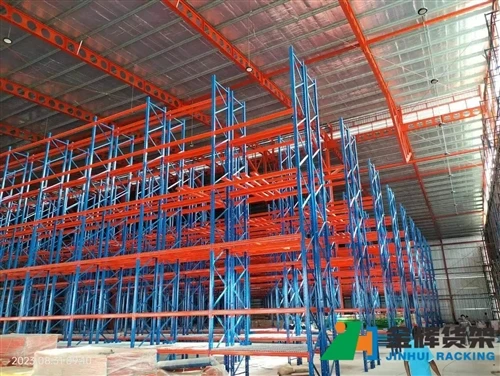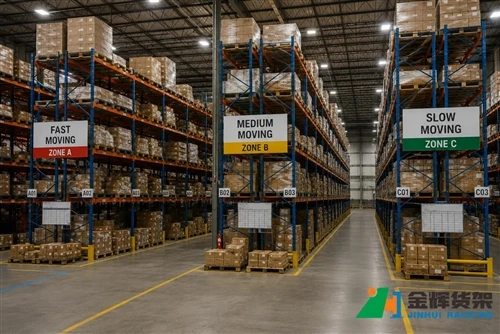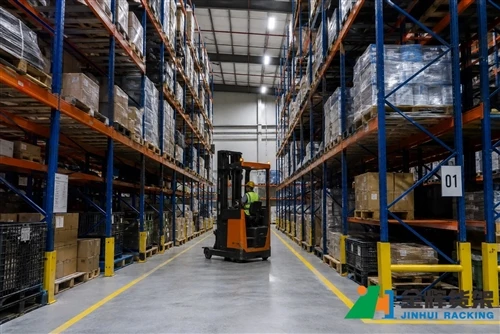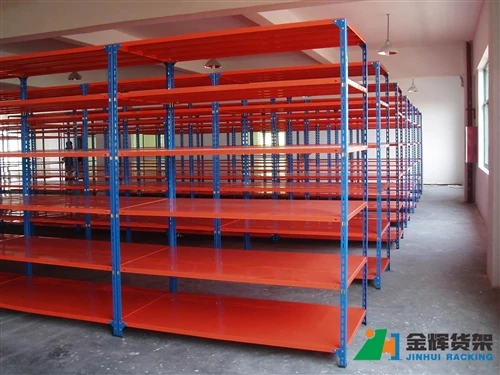
For many warehouse operators, running out of storage space does not necessarily mean the building is full. In many cases, the real problem is inefficient space utilization. Traditional warehouse layouts often dedicate a large percentage of floor space to forklift aisles, leaving less room for pallet storage.
Rather than investing in a larger warehouse or constructing a new facility, many companies improve storage density by optimizing their pallet racking layout. Among the available high-density storage solutions, the Double Deep Pallet Racking System has become one of the most popular choices because it balances increased capacity with relatively simple warehouse operations.

Why Storage Density Matters More Than Ever
Warehouse operating costs have risen significantly over the past decade. Industrial land prices, warehouse rental rates, labor expenses, and utility costs continue to increase in most regions. As a result, businesses are under pressure to maximize every square meter of available storage space.
Increasing storage density offers several important benefits:
- Reduce warehouse rental costs per pallet position.
- Delay expensive warehouse expansion projects.
- Store more inventory within the existing building.
- Improve inventory organization.
- Increase return on warehouse investment.
- Support future business growth without relocating.
For companies storing medium or large quantities of identical products, Double Deep Pallet Racking often provides the best balance between accessibility and storage density.
What Is Storage Density?
Storage density refers to the percentage of warehouse space that is used for storing inventory rather than aisles, equipment movement, or unused floor area.
Although every warehouse is unique, a traditional selective pallet rack system typically uses a larger number of aisles because every pallet must remain directly accessible. While this provides maximum flexibility, it also reduces the total number of pallet positions available inside the building.
Double Deep Pallet Racking addresses this issue by placing two pallets deep within each storage bay. Because fewer aisles are required, a greater percentage of the warehouse can be dedicated to inventory storage.
How Does Double Deep Pallet Racking Increase Storage Capacity?
The principle behind Double Deep Pallet Racking is relatively straightforward. Instead of positioning a single pallet behind each aisle, two pallets are stored in depth. This effectively reduces the number of operating aisles while increasing the number of storage locations.
Forklifts equipped with telescopic forks or pantograph reach mechanisms can safely retrieve both the front and rear pallets without entering the rack structure.
This design creates a practical compromise between Selective Pallet Racking and high-density systems such as Drive-In Racking.

Typical Storage Capacity Improvement
Although actual results depend on warehouse dimensions and rack configuration, most facilities experience a significant increase in pallet positions after switching from Selective Pallet Racking to Double Deep storage.
| Warehouse Characteristic | Selective Pallet Rack | Double Deep Pallet Rack |
|---|---|---|
| Storage Density | Standard | Approximately 30–40% Higher |
| Number of Aisles | More | Reduced |
| Warehouse Utilization | Medium | High |
| Investment Return | Good | Excellent for High-Volume Storage |
In practical terms, a warehouse with 8,000 pallet locations using selective racking may be able to increase capacity to more than 10,000 pallet positions after converting to a properly designed Double Deep layout. The exact improvement depends on aisle width, building dimensions, pallet size, and forklift operating requirements.
Factors That Influence Storage Improvement
Not every warehouse will achieve the same storage increase. Several engineering factors determine the final capacity of a Double Deep Pallet Racking system.
1. Warehouse Dimensions
Long, rectangular warehouses generally benefit the most because fewer cross aisles are required, allowing longer storage rows and higher pallet density.
2. Ceiling Height
Higher buildings allow additional beam levels, increasing vertical storage capacity. Combined with Double Deep layouts, high-clearance warehouses can achieve substantial improvements in pallet positions.
3. Pallet Size
Larger pallets require longer beams and deeper rack frames, while standard pallet dimensions allow engineers to optimize bay spacing and maximize storage efficiency.
4. SKU Quantity
Double Deep systems are most effective when each SKU occupies multiple pallet positions. Warehouses with thousands of low-volume SKUs may benefit more from Selective Pallet Racking, which provides direct access to every pallet.
5. Forklift Equipment
Using the correct reach truck with telescopic forks is essential for maintaining safe and efficient operations in Double Deep storage systems.
Is Double Deep Always the Best Choice?
While Double Deep Pallet Racking provides impressive storage density, it is not suitable for every warehouse. Facilities with extremely high order-picking frequency or strict FIFO inventory management may find Selective Pallet Racking more practical.
The best storage solution depends on inventory turnover, SKU variety, warehouse layout, and long-term business objectives. Professional warehouse planning ensures the selected system delivers the highest return on investment.
Businesses planning comprehensive warehouse upgrades should also evaluate complete Warehouse Pallet Rack Solutions to determine which storage configuration best supports future growth.
Warehouse Layout Example: How Capacity Increases in Practice
To better understand the impact of Double Deep Pallet Racking, consider a medium-sized warehouse with a floor area of approximately 5,000 square meters. Using a traditional selective pallet rack layout, the warehouse may require numerous operating aisles to provide direct access to every pallet location. Although this configuration offers excellent accessibility, a considerable amount of floor space is occupied by forklift travel lanes rather than inventory.
After redesigning the warehouse with a Double Deep Pallet Racking System, the number of aisles can be significantly reduced while maintaining safe forklift operations. The recovered floor space is converted into additional pallet positions, resulting in a noticeable increase in storage capacity without changing the building itself.
| Item | Selective Pallet Rack | Double Deep Pallet Rack |
|---|---|---|
| Warehouse Area | 5,000 m² | 5,000 m² |
| Pallet Positions | 8,000 | 10,600 |
| Storage Increase | - | Approximately 32.5% |
| Additional Warehouse Required | Yes | No |
Although every warehouse is different, this example demonstrates why many manufacturers and logistics companies choose Double Deep systems when warehouse expansion is expensive or unavailable.

Cost Savings Beyond Additional Storage
The value of Double Deep Pallet Racking is not limited to increasing pallet positions. Higher storage density also reduces the cost of operating a warehouse over the long term.
- Delay warehouse expansion projects.
- Reduce rental costs per pallet location.
- Improve warehouse space utilization.
- Lower facility operating costs.
- Increase inventory capacity during seasonal demand.
- Improve return on warehouse investment.
For businesses operating in regions where industrial property prices continue to rise, maximizing existing warehouse space is often more economical than leasing or constructing additional storage facilities.
Industries That Benefit Most from Double Deep Pallet Racking
Although Double Deep Pallet Racking can be applied in many industries, it delivers the greatest benefits when large quantities of identical products are stored.
| Industry | Why Double Deep Works Well |
|---|---|
| Food & Beverage | Large production batches with high pallet quantities. |
| Cold Storage | High storage density reduces refrigerated warehouse costs. |
| Manufacturing | Efficient storage for raw materials and finished goods. |
| Paper & Packaging | Large quantities of identical palletized products. |
| 3PL Warehouses | Higher pallet capacity improves warehouse profitability. |
When Should You Upgrade to Double Deep Pallet Racking?
You should consider upgrading your warehouse if you experience one or more of the following situations:
- Your warehouse is approaching maximum capacity.
- Building expansion is too expensive.
- You store multiple pallets of the same SKU.
- Warehouse rental costs continue to increase.
- You want to improve storage density without moving to a fully automated warehouse.
For businesses requiring even higher levels of warehouse automation, integrating pallet racking with an Automated Storage and Retrieval System (ASRS) may provide additional productivity and labor-saving benefits.
Frequently Asked Questions
How much storage space can Double Deep Pallet Racking save?
Most warehouses achieve approximately 30–40% more pallet positions, although the exact increase depends on warehouse dimensions, pallet size, aisle width, and rack layout.
Is Double Deep Pallet Racking suitable for every warehouse?
No. It is best suited for warehouses storing larger quantities of the same SKU. Operations requiring immediate access to every pallet may be better served by selective pallet racking.
Do I need special forklifts?
Yes. Double Deep systems require reach trucks fitted with telescopic forks or pantograph mechanisms to safely access rear pallets.
Can an existing warehouse be converted?
In many cases, yes. Our engineering team can evaluate your current warehouse layout and determine whether a conversion is practical and cost-effective.
Conclusion
Double Deep Pallet Racking offers one of the best returns on investment for businesses seeking to increase storage capacity without expanding their warehouse. By reducing aisle space and optimizing pallet placement, companies can often achieve a 30% to 40% increase in storage density while maintaining efficient forklift operations.
At Jinhui Rack, we design customized Double Deep Pallet Racking solutions based on your warehouse dimensions, pallet specifications, inventory profile, and operational workflow. From layout planning and structural engineering to manufacturing and installation support, we help customers maximize every square meter of available warehouse space.
Contact Our Warehouse Storage Experts
If you're planning to increase warehouse capacity, our engineering team is ready to provide a free storage layout evaluation and customized pallet racking proposal.
WhatsApp
+86 185 0252 7163
Email
info@jhrack.com