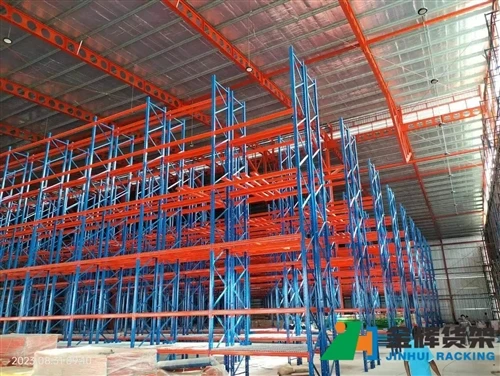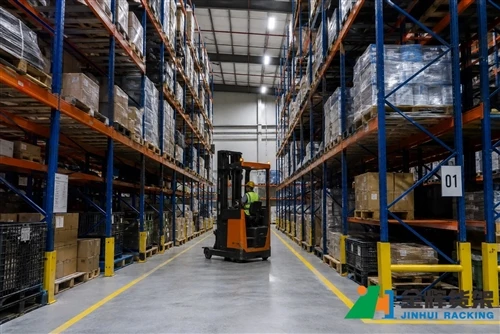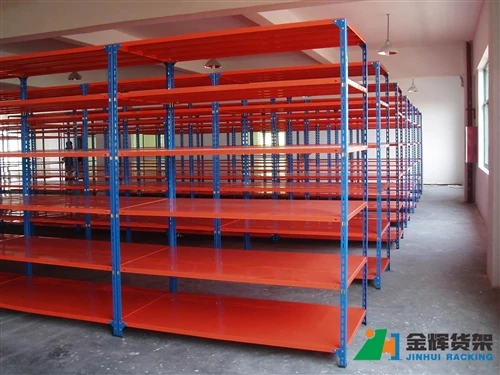
Seasonal inventory can completely change the way a warehouse operates.
A warehouse that has sufficient pallet positions during a normal month may suddenly face full rack bays, crowded staging areas, longer forklift travel, and temporary storage problems when demand increases before a holiday, promotional campaign, harvest season, or annual production cycle.
This creates a different challenge from ordinary warehouse storage planning. The goal is not simply to maximize the number of pallet positions. A seasonal warehouse needs enough capacity during peak periods while remaining practical and cost-effective during the rest of the year.
Pallet racking for seasonal inventory should therefore be designed around changes in inventory volume, SKU demand, storage duration, product characteristics, and material flow.
Quick Answer
The best way to prepare pallet racking for seasonal inventory is to estimate peak pallet volume, identify which SKUs will increase, separate reserve stock from frequently accessed inventory, and select a flexible storage configuration. Selective, push back, drive-in, pallet flow, double deep, and shuttle systems can each serve different seasonal inventory profiles.
Why Seasonal Inventory Creates a Different Storage Challenge
Normal warehouse capacity planning is often based on average inventory levels.
Seasonal businesses cannot rely on average inventory alone.
For example, a distributor may normally hold 3,000 pallets but increase inventory to 5,000 or 6,000 pallets before its busiest sales period.
If the warehouse is designed only around the 3,000-pallet average, the additional inventory may end up in temporary floor locations, overflow buildings, trailers, or poorly organized areas.
This can create several operational problems:
- Insufficient pallet rack positions
- Blocked aisles
- Overloaded staging areas
- Longer forklift travel distances
- More temporary storage locations
- Difficulty locating seasonal SKUs
- Higher risk of inventory congestion
- Additional labor requirements
A better strategy is to plan the rack system around the warehouse's peak operating condition, while also considering what happens when seasonal inventory returns to normal levels.
Start With Peak Pallet Volume
The first step is to determine how much additional inventory the warehouse actually needs to accommodate.
Do not estimate seasonal demand only by looking at sales revenue.
For pallet storage planning, the more useful information includes:
- Maximum pallets on hand
- Average pallets on hand
- Number of seasonal SKUs
- Maximum pallets per seasonal SKU
- Expected inventory arrival period
- Expected shipment period
- Average storage duration
- Pallet dimensions
- Maximum pallet weight
For example, if normal inventory is 3,000 pallets and peak inventory reaches 4,500 pallets, the warehouse needs to understand where the additional 1,500 pallets will be stored.
That does not necessarily mean permanently installing 1,500 additional pallet positions. The answer depends on how long the additional inventory remains in the warehouse and how often it needs to be accessed.
Calculate Seasonal Storage Requirements by SKU
Seasonal inventory should be analyzed at the SKU level whenever possible.
Two products may both increase during peak season, but their storage requirements may be completely different.
| SKU Profile | Seasonal Characteristic | Possible Storage Strategy |
|---|---|---|
| High-volume seasonal SKU | Large quantity, limited season | High-density storage |
| Fast-moving seasonal SKU | Frequent picking during peak demand | Accessible rack positions / forward storage |
| Low-volume seasonal SKU | Small quantity, occasional orders | Flexible selective storage |
| Long-storage seasonal stock | Stored for an extended period | Reserve or dense storage |
This prevents the warehouse from using the same storage strategy for every seasonal product.
Separate Seasonal Reserve Stock From Active Inventory
One of the most effective ways to handle seasonal inventory is to divide storage into active inventory and reserve inventory.
Active inventory is the stock that warehouse operators access frequently.
Reserve inventory provides additional supply that can replenish the active storage area.
Reserve Pallet Storage → Forward Storage → Picking / Shipping
This structure is particularly useful during seasonal peaks because not every seasonal pallet needs to occupy the most accessible rack locations.
High-demand products can remain in convenient positions while additional inventory is stored in reserve locations.
Use Selective Pallet Racking When SKU Variety Is High
Selective pallet racking is often a practical option when seasonal inventory includes many different SKUs.
Each pallet position can be accessed independently, making the system suitable for warehouses where product variety is more important than maximum storage density.
This is especially useful when seasonal demand creates a temporary increase in SKU variety rather than simply increasing the quantity of existing products.
For example, a retailer may introduce hundreds of seasonal products for a holiday campaign. Even if each SKU has only a small number of pallets, direct access can be more useful than storing several different SKUs in a deep storage lane.
Use High-Density Racking for Large Seasonal Batches
The situation is different when a seasonal business stores large quantities of the same SKU.
Suppose a manufacturer produces a large batch of one product before its annual selling season. The warehouse may need to store hundreds of identical pallets for several weeks or months.
Using one selective rack position for every pallet may consume more aisle space than necessary.
In this situation, high-density systems can be considered.
- Drive-in pallet racking
- Push back pallet racking
- Double deep pallet racking
- Radio shuttle pallet racking
- Pallet flow racking
The appropriate option depends on how the seasonal inventory is loaded and retrieved.
When Push Back Racking Works Well for Seasonal Inventory
Push back racking can be useful for seasonal inventory because multiple pallets can share a storage lane.
This can increase storage density without requiring every pallet to have a separate aisle-facing position.
It can be particularly suitable when:
- Several pallets belong to the same SKU
- Inventory is stored in batches
- LIFO storage is acceptable
- High storage density is important
- Seasonal stock remains in storage for a defined period
However, push back storage should not be selected simply because it offers more pallet positions. The inventory rotation method and pallet accessibility requirements need to match the system.
When Drive-In Racking Can Help With Seasonal Stock
Seasonal inventory sometimes arrives in very large quantities and remains relatively static until the selling period begins.
Drive-in racking can provide high storage density by allowing forklifts to enter storage lanes.
This makes it suitable for certain bulk-storage applications where many pallets of the same product are stored together.
For example, a manufacturer may build inventory before a seasonal production shutdown or a predictable annual demand cycle.
Drive-in storage can reduce the amount of aisle space required for a large quantity of similar pallets.
However, the system provides less direct access than selective racking and is therefore more suitable for inventory profiles that can tolerate deeper storage.
Double Deep Storage for Seasonal Inventory
Double deep pallet racking provides another way to increase pallet storage capacity.
Two pallets can be stored one behind another, allowing the warehouse to increase storage depth without completely changing the rack layout.
This configuration can be useful for seasonal products with multiple pallets per SKU.
However, the rear pallet is not as directly accessible as a front pallet, so the system should be matched to suitable inventory profiles.
For warehouses that need a balance between accessibility and additional storage density, double deep storage can be considered alongside selective and other high-density systems.
Use Pallet Flow Racking When Seasonal Products Require FIFO
Not every seasonal product can be managed using LIFO.
Food, beverages, pharmaceuticals, cosmetics, and certain manufactured products may require inventory rotation according to production or expiration dates.
Pallet flow racking can support FIFO storage by allowing pallets to enter from one side and move toward the retrieval side.
This can be particularly useful when seasonal products have a defined shelf life or when inventory rotation is operationally important.
The warehouse should consider both loading and retrieval sides when planning the layout because pallet flow storage generally requires operational space at both ends.
Plan for the Peak, Not Just the Average
One of the most common seasonal storage mistakes is designing the warehouse around average inventory.
Average inventory may be useful for financial analysis, but it does not tell the warehouse how much physical space is required during the busiest period.
For pallet racking capacity planning, consider at least three conditions:
Normal Season: Average inventory and regular warehouse traffic.
Pre-Peak Season: Inventory begins increasing and receiving volume rises.
Peak Season: Maximum pallet quantity and highest operational activity.
The warehouse layout should remain workable under all three conditions.
Why Seasonal Storage Needs Flexible Rack Capacity
Installing permanent rack capacity for a short seasonal peak can sometimes leave expensive storage space underutilized for much of the year.
This is why flexibility matters.
Depending on the operation, flexibility can come from:
- Adjustable beam levels
- Reconfigurable rack bays
- Reserve storage zones
- Mixed rack configurations
- Temporary overflow storage
- Higher rack utilization
- Flexible SKU zoning
A warehouse does not necessarily need every storage location to serve exactly the same purpose throughout the year.
Use Rack Levels Strategically During Peak Season
Vertical storage can help seasonal warehouses absorb temporary inventory increases.
When rack design and operating conditions allow, slower-moving reserve inventory can occupy upper levels, while frequently accessed seasonal products can remain in more accessible positions.
This can help preserve valuable lower-level positions for active inventory.
However, rack load ratings, pallet condition, forklift lifting capacity, building clearance, fire protection requirements, and local safety requirements must always be considered before changing storage levels.
Seasonal Inventory Should Not Block Forklift Aisles
When rack positions become full, warehouse teams sometimes place additional pallets in available floor areas.
This can quickly create congestion.
Temporary pallets should never be allowed to compromise required forklift routes, emergency access, pedestrian areas, or rack operating clearances.
The warehouse should identify approved overflow zones before the peak season begins.
This is one reason warehouse aisle planning should be considered together with seasonal capacity planning.
How Seasonal Demand Changes Forklift Traffic
Peak inventory does not only increase the number of stored pallets.
It can also increase the number of pallet movements.
A seasonal warehouse may experience:
- More inbound deliveries
- More put-away operations
- More replenishment movements
- More order picking
- More outbound pallet movements
- More staging activity
This means that a rack layout that works during normal demand may become congested during peak demand.
When planning seasonal storage, review both storage capacity and material flow capacity.
Place High-Demand Seasonal Products Near the Right Operating Area
Not every fast-moving seasonal SKU should automatically be placed near shipping.
The correct location depends on where the product enters and leaves the warehouse.
For example:
- Raw materials may be positioned near production.
- Finished goods may be positioned closer to shipping.
- Replenishment inventory may be stored near forward picking areas.
- Bulk reserve stock may be placed farther from high-traffic zones.
This approach reduces unnecessary forklift travel while maintaining a logical material flow.
Use SKU Zoning Before the Peak Season Starts
Seasonal inventory should be assigned to defined zones before large volumes arrive.
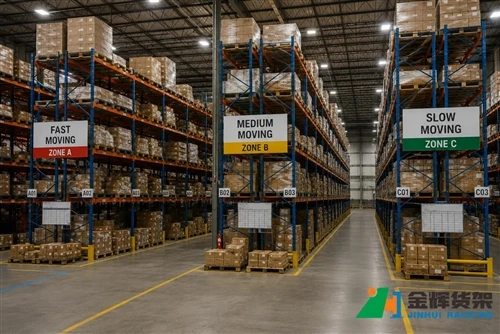
A simple zoning strategy can divide the warehouse into:
Zone A: Fast-moving seasonal products
Zone B: Medium-moving seasonal products
Zone C: Slow-moving or reserve seasonal stock
Zone D: Receiving, staging, or temporary overflow
The actual warehouse should use its own location codes and inventory management system, but the basic principle is to make the storage logic clear before peak operations begin.

Seasonal inventory can be organized into defined rack zones according to turnover, pallet volume, and accessibility requirements.
How to Handle Seasonal Overflow Storage
If permanent rack capacity cannot economically accommodate the entire seasonal peak, the warehouse may need an overflow strategy.
Possible options include:
- Dedicated overflow rack zones
- Temporary pallet storage areas
- External warehouse space
- Short-term third-party storage
- Additional seasonal shifts
- Reallocation of low-turnover inventory
The correct option depends on how long the overflow lasts and how frequently the inventory needs to be accessed.
For short-term peaks, external overflow storage may sometimes be more practical than permanently expanding the main rack system.
Reorganize Slow-Moving Inventory Before Peak Season
One of the easiest ways to create additional capacity is to review existing inventory before the seasonal increase begins.
Identify pallets that:
- Have not moved for a long period
- Are obsolete
- Can be consolidated
- Can be moved to reserve storage
- Can be transferred to another facility
- Are scheduled for disposal or return
Removing or relocating unnecessary stock can create additional capacity without immediately purchasing new racking.
This should be done carefully because slow-moving inventory may still be required for future customer orders or production.
Use Inventory Data to Predict Seasonal Rack Demand
Historical warehouse data can provide a much better basis for seasonal rack planning than guesswork.
Review previous peak periods and compare:
| Data | Why It Matters |
|---|---|
| Peak pallets on hand | Determines maximum storage requirement |
| Peak inbound volume | Shows receiving capacity requirements |
| Peak outbound volume | Shows shipping and picking pressure |
| Top seasonal SKUs | Identifies products needing priority locations |
| Average storage duration | Helps determine accessibility requirements |
Historical data can also reveal whether the warehouse is experiencing a temporary spike or a long-term increase in demand.
When Seasonal Demand Becomes Permanent Growth
A seasonal peak can sometimes hide a larger business trend.
If the warehouse reaches maximum capacity every year and the peak inventory continues to increase, temporary solutions may eventually become insufficient.
For example:
Year 1: Peak inventory = 4,000 pallets
Year 2: Peak inventory = 4,500 pallets
Year 3: Peak inventory = 5,200 pallets
If this trend continues, the business may need a permanent capacity expansion rather than another temporary overflow strategy.
This is where a scalable pallet racking system becomes important.
How to Choose a Rack System for Seasonal Inventory
The following questions can help narrow down the appropriate solution:
- How many pallets are stored during normal operations?
- How many pallets are required during peak season?
- How many seasonal SKUs are involved?
- How many pallets are stored per SKU?
- How quickly do seasonal products move?
- Does the inventory require FIFO?
- Is LIFO acceptable?
- How frequently must individual pallets be accessed?
- What forklift equipment is available?
- How much vertical building space is available?
- How much floor area can be allocated to storage?
- Will the seasonal increase become permanent?
The answers can help determine whether the warehouse should emphasize direct access, storage density, flexibility, or a combination of these factors.
Comparing Pallet Racking Options for Seasonal Storage
| Rack Type | Seasonal Use Case | Main Strength |
|---|---|---|
| Selective | Many seasonal SKUs | Direct pallet access |
| Push Back | Large batches of similar products | High-density storage |
| Drive-In | Large quantities of low-variety stock | Very high density |
| Double Deep | Multiple pallets per SKU | Higher density with relatively direct access |
| Pallet Flow | FIFO seasonal products | Product rotation |
| Radio Shuttle | Large seasonal reserve inventory | High-density automated/semi-automated storage |
In larger facilities, combining different rack types can be more effective than trying to use one system for every seasonal product.
Seasonal Pallet Racking for Manufacturing Warehouses
Manufacturers often build inventory before predictable demand periods.
For example, a factory may produce additional finished goods before a major sales season or accumulate raw materials before a planned production cycle.
The rack layout should connect inventory storage with production and shipping activities.
High-use raw materials can be positioned near production areas, while finished goods can be organized according to shipment frequency.
For more information about manufacturing storage requirements, see How to Choose Pallet Racking for a Manufacturing Warehouse.
Seasonal Pallet Racking for Distribution Centers
Distribution centers can experience particularly sharp seasonal changes because they may handle inventory for multiple suppliers or retail channels.
During peak periods, the challenge is often not only where to store inventory but also how to maintain fast receiving and shipping operations.
A distribution center should therefore consider:
- Inbound pallet volume
- Outbound pallet volume
- Cross-docking opportunities
- Fast-moving SKU locations
- Reserve inventory
- Staging capacity
- Forklift traffic
Rack capacity should be coordinated with the entire warehouse flow rather than considered independently.
Do Not Forget Seasonal Staging Space
One of the most common mistakes is to calculate seasonal storage capacity but ignore staging capacity.
A pallet may occupy a rack position for most of its storage life, but it may also spend time in:
- Receiving staging
- Quality inspection
- Picking staging
- Shipping staging
- Returns processing
During peak season, these areas can become congested quickly.
A warehouse may technically have enough rack positions but still run out of usable operating space.
How to Prepare Pallet Racking Before Peak Season
A practical preparation process can begin several weeks or months before the expected peak.
- Analyze previous peak data.
- Forecast seasonal pallet volume.
- Identify high-demand seasonal SKUs.
- Review current rack occupancy.
- Remove or relocate obsolete inventory.
- Assign seasonal rack zones.
- Prepare overflow areas.
- Check rack condition and protection.
- Review forklift routes.
- Update warehouse location records.
This preparation reduces the need to make major layout decisions while the warehouse is already under peak-season pressure.
How to Return the Warehouse to Normal After Peak Season
Seasonal planning should include the post-peak period.
When demand falls, temporary storage areas should be cleared and inventory should be consolidated.
This can create an opportunity to:
- Consolidate partial pallets
- Remove obsolete products
- Reclassify SKU turnover
- Review rack utilization
- Move slow-moving inventory to reserve locations
- Prepare for the next seasonal cycle
The data collected during the peak period can then be used to improve the following year's warehouse plan.
Flexible pallet rack zoning allows warehouses to accommodate seasonal inventory increases while maintaining organized material flow.
Common Seasonal Storage Mistakes
Mistake 1: Planning Only for Average Inventory
Average inventory does not represent the maximum number of pallets the warehouse must physically accommodate.
Mistake 2: Treating All Seasonal Products the Same
High-volume, fast-moving, slow-moving, and FIFO-sensitive products have different storage requirements.
Mistake 3: Filling Every Rack Position Before Peak Season
A warehouse may need some flexible capacity for incoming seasonal stock and replenishment operations.
Mistake 4: Ignoring Staging Space
Receiving and shipping areas can become bottlenecks even when rack capacity is sufficient.
Mistake 5: Using High-Density Storage Without Considering Access
High-density racking is valuable, but it should be matched to the inventory's movement and rotation characteristics.
Mistake 6: Ignoring the Post-Peak Period
A good seasonal storage strategy should also define what happens when inventory levels return to normal.
FAQ About Pallet Racking for Seasonal Inventory
What type of pallet racking is best for seasonal inventory?
There is no single best system for every seasonal application. Selective racking works well for many SKUs requiring direct access, while push back, drive-in, double deep, pallet flow, and shuttle systems can be considered for specific high-density or FIFO applications.
Should I design my warehouse for average or peak inventory?
Peak inventory should be considered when determining the maximum physical storage requirement. However, the solution should also remain economically and operationally practical during normal periods.
Can pallet racking be used for temporary seasonal storage?
Yes. Adjustable and reconfigurable rack systems can provide flexibility as inventory levels change. The rack system must still be properly designed, installed, loaded, and operated according to its specifications.
How can I increase seasonal pallet capacity without expanding the building?
Possible strategies include improving rack utilization, adding storage levels where appropriate, reorganizing inventory, using higher-density rack configurations, and separating active inventory from reserve stock.
Is push back racking suitable for seasonal products?
It can be suitable for seasonal products stored in batches, particularly when multiple pallets of the same SKU are stored together and LIFO access is acceptable.
How should fast-moving seasonal products be stored?
Fast-moving seasonal products generally benefit from accessible locations that minimize unnecessary forklift travel. Their exact position should depend on the warehouse's receiving, production, picking, and shipping flow.
How can I prepare pallet racking before a peak season?
Review historical peak inventory, forecast pallet volume, classify seasonal SKUs, free unused capacity, assign rack zones, prepare overflow space, and review forklift and staging routes before inventory levels begin increasing.
Final Thoughts
Seasonal inventory requires a different approach to pallet racking because warehouse demand changes over time.
The most effective solution is not necessarily to install enough permanent racks for the absolute maximum inventory. Instead, warehouse managers should understand which products increase, how long they remain in storage, how frequently they are accessed, and what inventory rotation method they require.
Selective racking can provide flexibility for high SKU variety, while push back, drive-in, double deep, pallet flow, and shuttle systems can provide higher-density storage for suitable inventory profiles.
At the same time, seasonal planning should include forklift traffic, staging space, receiving capacity, shipping activity, and the transition back to normal inventory levels.
The best seasonal pallet racking strategy is one that absorbs peak inventory without allowing temporary demand to permanently reduce warehouse flexibility and operating efficiency.
Need a Pallet Racking Solution for Seasonal Storage?
Jinhui Rack provides customized pallet racking solutions for distribution centers, manufacturing warehouses, logistics facilities, and industrial storage applications.
We can evaluate your warehouse dimensions, peak pallet quantity, SKU profile, pallet specifications, inventory turnover, forklift requirements, and storage objectives to help develop a suitable rack configuration.
For a customized pallet racking proposal, provide your warehouse layout, pallet size, maximum pallet weight, required pallet positions, and forklift information.
WhatsApp: +8618502527163
Email: info@jhrack.com