Types of Warehouse Racking Systems
Warehouse racking systems are essential for organizing goods, improving storage efficiency, and maximizing available warehouse space. As logistics, manufacturing, and e-commerce industries continue to grow, businesses require reliable storage solutions that can support heavy loads while maintaining easy access to inventory.
Choosing the right warehouse racking system can significantly improve operational efficiency and storage capacity. In this guide, we will explore the most common types of warehouse racking systems and their applications to help you select the best storage solution for your facility.

What Is a Warehouse Racking System?
A warehouse racking system is a structured storage solution designed to store palletized goods vertically using steel rack frames and beams. These systems allow warehouses to maximize vertical space while maintaining organized inventory management.
Modern warehouses rely on pallet racking systems to safely store goods, improve picking efficiency, and optimize warehouse layout.
Selective Pallet Racking
Selective pallet racking is the most widely used warehouse storage system. It provides direct access to every pallet, making it ideal for warehouses that store a wide variety of products.
This racking system is flexible, easy to install, and compatible with most forklifts. Because of its accessibility and adaptability, selective racking is commonly used in logistics centers and manufacturing warehouses.

Drive-In Racking
Drive-in racking is designed for high-density pallet storage. In this system, forklifts drive directly into the rack structure to store pallets in deep lanes.
This storage method is particularly suitable for warehouses that store large quantities of similar products. Drive-in racks maximize storage density and significantly reduce aisle space.
Push Back Racking
Push back racking systems use a series of nested carts that move along inclined rails. When a new pallet is placed on the rack, it pushes the previous pallet backward.
This system increases storage density while maintaining relatively fast pallet access. It is commonly used in distribution centers where multiple pallets of the same product need to be stored.
Pallet Flow Racking
Pallet flow racking systems use gravity rollers to move pallets from the loading side to the picking side. This configuration supports the FIFO (First-In, First-Out) inventory management method.
These racks are ideal for industries such as food and beverage storage where inventory rotation is essential.
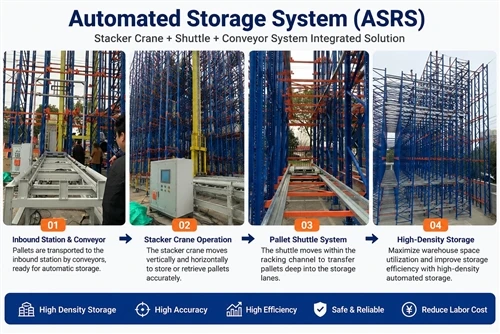
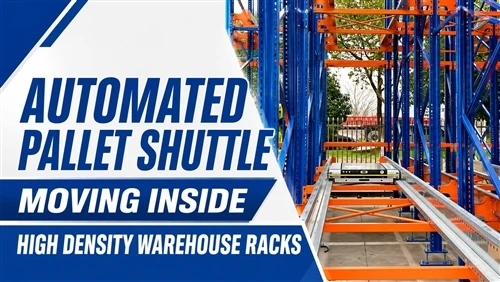
Radio Shuttle Racking
Radio shuttle racking is a semi-automated storage system that uses a motorized shuttle to transport pallets inside storage lanes.
This system reduces forklift travel time, increases storage density, and improves warehouse efficiency. Radio shuttle racks are commonly used in cold storage warehouses and high-volume distribution centers.
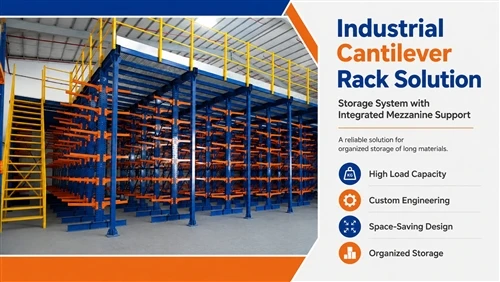
Cantilever Racking
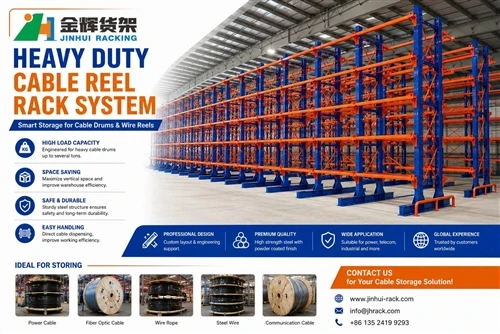
Cantilever racking is specifically designed for storing long or bulky items such as steel pipes, lumber, and construction materials.
The system features horizontal arms extending from vertical columns, allowing easy loading and unloading of oversized goods.
Mezzanine Racking Systems
Mezzanine racking systems create additional storage levels inside a warehouse by adding intermediate floors supported by steel structures.
This solution effectively doubles or triples usable warehouse space without expanding the building footprint.
How to Choose the Right Warehouse Racking System
Selecting the appropriate racking system depends on several factors:
- Warehouse size and ceiling height
- Pallet weight and dimensions
- Inventory turnover rate
- Forklift type and aisle width
- Desired storage density
Careful planning and professional warehouse layout design can significantly improve storage efficiency and operational productivity.
Conclusion
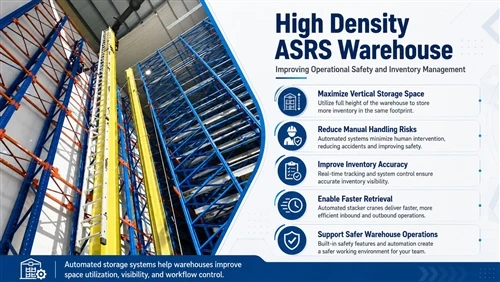
Different types of warehouse racking systems serve different storage requirements. From selective pallet racking to high-density shuttle systems, choosing the right solution depends on your warehouse operations, product characteristics, and inventory management strategy.
A well-designed racking system not only maximizes storage space but also improves warehouse workflow and safety.
Need a Warehouse Racking Solution?
JIN HUI Rack specializes in designing and manufacturing customized warehouse racking systems for logistics centers, manufacturing plants, and distribution warehouses.
With over 20 years of industry experience and two production facilities, we provide cost-effective storage solutions for clients worldwide.
📧 Email: info@jhrack.com
📱 WhatsApp: +86 185 0252 7163