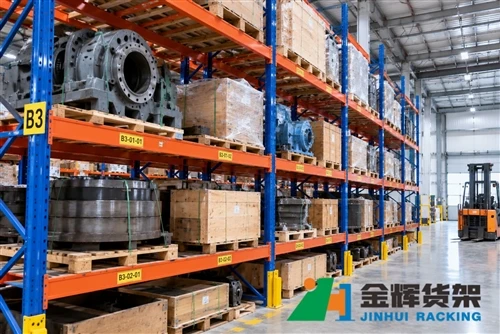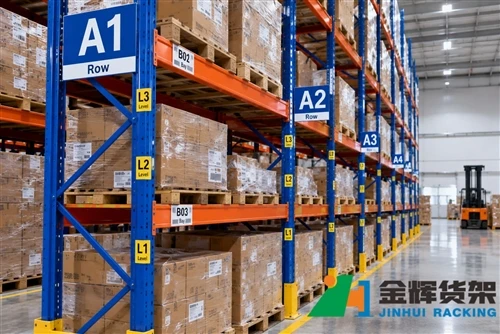
Why Forklift Travel Distance Matters in a Pallet Racking Warehouse
Forklift travel distance is an important but often overlooked factor in warehouse productivity. A warehouse may have enough pallet positions and a well-organized pallet racking system, yet operators may still spend significant time traveling between receiving, storage, picking, staging, and shipping areas.
Reducing unnecessary forklift travel does not simply mean making aisles shorter. The goal is to create a warehouse flow in which frequently moved pallets are stored in practical locations, rack rows support efficient movement, and forklifts spend less time traveling without productive work.
A practical warehouse optimization strategy should therefore consider rack layout, SKU movement frequency, storage zones, cross aisles, staging locations, forklift routes, and inventory flow together.

What Causes Excessive Forklift Travel?
Long forklift travel distances are usually caused by a combination of storage and operational decisions rather than one single problem.
- Fast-moving pallets are stored far from picking or shipping areas.
- Frequently accessed SKUs are distributed across too many warehouse zones.
- Receiving and storage areas are positioned without considering actual material flow.
- Forklifts must travel long distances to reach frequently used rack aisles.
- Cross-aisle locations do not match the actual movement pattern.
- Staging areas are located too far from the racks or shipping docks.
- Storage locations are assigned without considering pallet movement frequency.
- Forklift routes are repeatedly interrupted by congestion or poorly positioned staging stock.
- Warehouse layout changes have not kept pace with changes in SKU demand.
Before changing the rack system, warehouse managers should identify where forklifts actually spend their time and which movements occur most frequently.
How to Measure Forklift Travel Distance
The first step is to establish a baseline.
Instead of estimating forklift movement from the warehouse floor plan alone, record representative material movements over a normal operating period. Useful data includes the starting point, destination, pallet quantity, movement frequency, and approximate route.
| Data | What It Helps Identify |
|---|---|
| Pickup location | Where forklift movements begin |
| Drop-off location | Where pallets are actually stored or delivered |
| Movement frequency | Which routes create the most repeated travel |
| SKU or product group | Which products should receive priority during slotting |
| Travel route | Which aisles and cross aisles carry the highest traffic |
| Time of movement | Whether congestion changes during receiving, picking, or shipping peaks |
A simple comparison between the current layout and a proposed layout can then show whether a change is likely to reduce unnecessary movement.
Use SKU Movement Frequency to Improve Rack Locations
Not every pallet should be treated equally when planning storage locations.
Products that are moved frequently generally deserve more accessible storage positions than products that remain in storage for long periods. This is the basic principle behind velocity-based slotting and ABC classification.
For a pallet racking warehouse, a practical approach is to divide products into movement groups:
| Movement Group | Typical Storage Strategy | Travel Objective |
|---|---|---|
| High velocity | Place in highly accessible rack locations close to major picking or shipping flow | Minimize repeated forklift travel |
| Medium velocity | Use intermediate storage zones with reasonable accessibility | Balance access and storage capacity |
| Low velocity | Use less frequently accessed rack locations where appropriate | Prioritize space efficiency over travel distance |
This approach does not mean every fast-moving SKU must be placed directly beside the shipping dock. The available storage capacity, product dimensions, replenishment requirements, forklift type, safety clearances, and actual order patterns must also be considered.
For more detail on organizing pallet racking around product movement, see How to Organize Pallet Racking by SKU and Inventory Turnover.
Position Pallet Racks to Support the Actual Material Flow
Rack orientation should support the way pallets move through the warehouse.
A common mistake is to design rack rows mainly around available floor dimensions and then expect forklift operators to adapt to the resulting travel pattern.
A better approach is to start with the major material flows:
- Receiving
- Inspection or staging
- Putaway
- Reserve storage
- Picking or retrieval
- Order staging
- Shipping
The rack layout should then provide practical connections between these areas without creating unnecessary backtracking.
For warehouses handling large numbers of pallet movements, even small improvements in repeated travel can become significant over many shifts.
Reduce Unnecessary Cross-Warehouse Travel
One effective way to reduce forklift travel is to avoid sending forklifts across the entire warehouse for frequently repeated tasks.
For example, if a group of fast-moving pallets is consistently retrieved from the rear of the warehouse and delivered to a shipping staging area at the front, the route should be reviewed.
Possible improvements may include:
- Relocating frequently moved inventory closer to the primary workflow.
- Creating logical storage zones for different product movement levels.
- Improving connections between high-traffic rack aisles.
- Reducing unnecessary backtracking.
- Positioning staging areas closer to the activities they support.
The objective is not simply to reduce the physical distance of every route. The objective is to reduce repeated non-value-added travel while maintaining safe forklift access.
Use Cross Aisles Carefully
Cross aisles can provide alternative routes between rack aisles, but adding more cross aisles does not automatically improve warehouse efficiency.
Too few cross aisles may force forklifts to travel to the end of a rack block before changing direction. Too many can reduce available storage positions or interrupt useful rack faces.
The right arrangement depends on traffic patterns, rack orientation, forklift characteristics, warehouse dimensions, and operational requirements.
When reviewing cross-aisle locations, ask:
- Where do forklifts change direction most often?
- Which rack aisles have the highest traffic?
- Are forklifts repeatedly traveling to the end of a rack block only to turn around?
- Does a cross aisle actually reduce travel, or does it create congestion?
- Will the proposed route maintain sufficient clearance for the operating equipment?
For a detailed discussion of aisle planning, see How Warehouse Aisle Width Affects Pallet Racking Capacity and Forklift Access.
Keep Fast-Moving Pallets Accessible
Accessibility is not determined only by horizontal distance.
A pallet stored on a high rack level may require additional forklift travel, lifting time, positioning, and retrieval effort compared with a pallet stored in a more accessible location.
For high-frequency inventory, consider the complete retrieval process:
- Distance from the main operating area
- Rack aisle accessibility
- Required lifting height
- Forklift positioning requirements
- Potential congestion
- Replenishment frequency
- Interaction with other warehouse activities
This is why warehouse slotting should consider both where a pallet is stored and how often it is accessed.
Separate Storage Flow from Staging Flow Where Possible
Staging areas can become a hidden source of forklift travel.
If pallets repeatedly move between racks and temporary staging locations before reaching shipping, forklifts may perform several short trips instead of one efficient movement.
Review whether staging areas are positioned logically relative to:
- Receiving docks
- Shipping docks
- High-frequency rack zones
- Order consolidation areas
- Inspection areas
- Loading areas
Where operationally practical, staging should support the main warehouse flow rather than force forklifts to cross active storage areas unnecessarily.
Consider Forklift Traffic When Planning Rack Rows
A rack layout should be designed around the actual material-handling equipment used in the warehouse.
Different forklift types have different turning requirements, operating characteristics, and aisle requirements. Therefore, rack rows that appear efficient on a drawing may not perform efficiently once forklifts begin operating in the space.
When reviewing rack layout, consider:
| Factor | Planning Question |
|---|---|
| Forklift type | Is the rack layout compatible with the equipment used for pallet handling? |
| Aisle configuration | Can forklifts enter, position, and exit the rack aisle efficiently? |
| Rack orientation | Does the row direction support the dominant material flow? |
| Cross aisles | Are alternative routes available where they provide operational value? |
| Traffic concentration | Are high-frequency movements concentrated in manageable areas? |
| Safety clearance | Can the proposed routes operate without compromising required clearances? |
Do Not Reduce Aisle Width Just to Shorten Travel Distance
Reducing forklift travel distance should never be achieved by creating unsafe or unsuitable operating aisles.
A narrower aisle may increase storage density, but it may also affect forklift maneuverability, equipment selection, operator visibility, and operating efficiency.
The correct aisle arrangement should be determined from the actual forklift and rack configuration rather than from a simple rule such as "narrower aisles are always better."
The relationship between aisle width, rack capacity, and forklift access should therefore be evaluated as part of the complete warehouse design.
How Pallet Rack Layout and Slotting Work Together
Rack layout and inventory slotting should not be treated as separate decisions.
A warehouse can have an efficient rack layout but poor SKU placement. Conversely, a well-planned SKU strategy may still produce excessive travel if the rack arrangement creates inefficient routes.
A practical optimization process is:
- Map the current warehouse layout.
- Identify receiving, shipping, staging, and primary storage zones.
- Collect pallet movement and SKU frequency data.
- Identify high-frequency material flows.
- Measure representative forklift travel distances.
- Classify products by movement frequency.
- Test alternative rack and storage locations.
- Check aisle access and forklift maneuverability.
- Compare travel distance and storage capacity.
- Implement the change and measure actual operating results.
This approach prevents warehouse managers from optimizing only one metric while creating problems somewhere else.
How to Reduce Forklift Travel Without Rebuilding the Whole Warehouse
Not every travel-distance problem requires a completely new rack layout.
Before moving racks, consider lower-cost operational improvements:
- Re-slot high-frequency SKUs.
- Move frequently retrieved pallets closer to the main workflow.
- Consolidate fragmented inventory locations.
- Improve staging area organization.
- Reduce unnecessary temporary pallet movements.
- Review replenishment schedules.
- Identify recurring backtracking routes.
- Use actual movement data to adjust storage assignments.
These changes can often be tested before making a major investment in a new racking system.
When a larger warehouse redesign is required, a complete warehouse pallet rack solution can be planned around storage capacity, pallet dimensions, forklift access, inventory flow, and future operational requirements.
How to Evaluate Whether a New Layout Is Better
A new layout should not be judged only by the number of pallet positions it creates.
Compare the proposed layout against the current operation using several practical indicators.
| Performance Indicator | What to Compare |
|---|---|
| Forklift travel distance | Average and total travel for representative pallet movements |
| Travel time | Time required for common putaway and retrieval tasks |
| Storage capacity | Number of usable pallet positions |
| Accessibility | Ease of reaching high-frequency inventory |
| Congestion | Traffic conflicts in major aisles and staging areas |
| Safety | Clearances, visibility, pedestrian interaction, and operating conditions |
The best warehouse layout is usually not the one with the shortest theoretical route or the highest possible storage density. It is the configuration that provides a practical balance between storage capacity, travel efficiency, accessibility, safety, and operational flow.
Common Mistakes That Increase Forklift Travel
1. Storing Fast Movers Far from the Main Workflow
High-frequency products can generate repeated travel throughout the day. Their storage locations should therefore be reviewed when analyzing travel distance.
2. Designing Racks Before Understanding Material Flow
If rack rows are positioned before the warehouse's major material flows are understood, forklifts may be forced into inefficient routes.
3. Focusing Only on Storage Density
Adding more pallet positions does not necessarily improve warehouse productivity if forklifts must travel significantly farther to access them.
4. Ignoring Staging Movements
Repeated movements between racks, staging areas, and shipping can create substantial additional travel.
5. Never Updating Slotting
SKU demand changes over time. A storage assignment that was efficient several years ago may no longer match the current movement pattern.
Forklift Travel Distance Optimization Checklist
- Have current forklift routes been documented?
- Which SKUs generate the highest pallet movement frequency?
- Are fast-moving products stored in practical locations?
- Are frequently used rack aisles easy to access?
- Do cross aisles support actual traffic patterns?
- Are staging areas positioned logically?
- Are forklifts repeatedly backtracking?
- Does the rack layout match the equipment being used?
- Would re-slotting improve travel without moving the racks?
- Does a proposed layout maintain safe operating clearances?
- Has the proposed layout been compared using actual movement data?
FAQ About Reducing Forklift Travel Distance
What is the best way to reduce forklift travel distance?
The most effective approach is usually to combine better SKU slotting with a rack layout that supports the actual flow of receiving, storage, picking, staging, and shipping. The right solution depends on the warehouse's movement data and operating equipment.
Should fast-moving pallets always be stored near the shipping dock?
Not necessarily. Fast-moving products generally benefit from accessible locations, but receiving flow, replenishment, product dimensions, order patterns, congestion, and available storage capacity must also be considered.
Can changing SKU locations reduce forklift travel without moving the racks?
Yes. Re-slotting inventory can reduce repeated travel when high-frequency products are currently stored in inefficient locations. This can be a useful first step before considering a major rack-layout change.
Does a higher-density rack layout always reduce warehouse costs?
No. Higher storage density can increase pallet capacity, but if it significantly increases travel time, congestion, or handling complexity, the overall operational result may not improve.
How often should warehouse slotting be reviewed?
There is no single schedule that fits every warehouse. Slotting should be reviewed when SKU demand, order profiles, seasonal patterns, storage requirements, or warehouse processes change significantly.
Final Thoughts
Reducing forklift travel distance is not simply a matter of making the warehouse smaller or reducing aisle length. It is about putting the right products in the right locations and creating a rack layout that supports the actual movement of goods.
Start with real movement data, identify high-frequency travel, review SKU locations, evaluate rack orientation and cross aisles, and compare the results against storage capacity and safety requirements.
For warehouses planning a new pallet racking system or looking to improve an existing layout, Jinhui Rack can help evaluate pallet dimensions, storage requirements, rack configuration, forklift access, and overall warehouse flow.
WhatsApp: +86 185 0252 7163
Email: info@jhrack.com
Website: https://www.jinhui-rack.com/