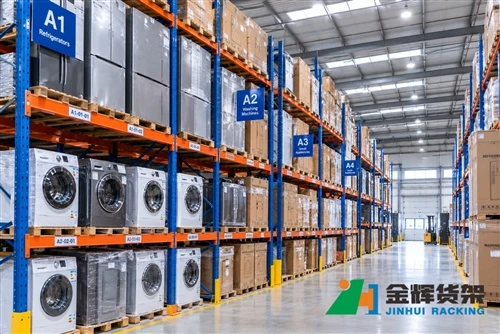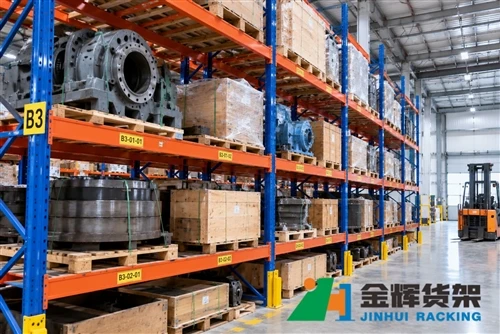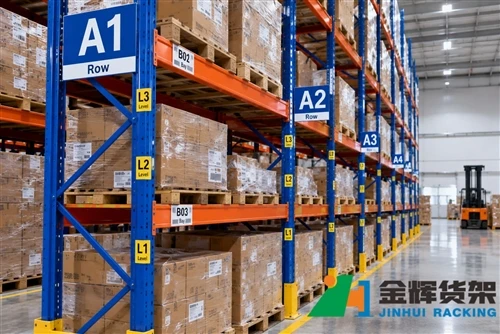
Home appliance warehouses handle products with a wide range of dimensions, weights, packaging styles, and inventory turnover rates. Refrigerators, washing machines, microwave ovens, dishwashers, air conditioners, and small household appliances may all require different storage arrangements. Even products from the same category can have different carton dimensions because of variations in models, packaging, and accessories.
These differences make warehouse storage planning more complicated than simply placing pallets on racks. A suitable warehouse racking system should provide stable support for packaged products, accommodate different pallet and carton sizes, maintain clear access to inventory, and support efficient receiving, picking, and dispatch operations.
This guide explains how to plan warehouse racking for home appliances, organize different product categories, protect packaged goods, and improve storage efficiency without compromising safe handling.
1. Understand the Storage Challenges in Home Appliance Warehouses
Home appliances are often bulky, packaged in cardboard cartons, and stored on pallets before shipment to retailers, distributors, or customers. Their storage requirements depend on product dimensions, packaging strength, unit weight, pallet configuration, and how frequently each model is dispatched.
| Storage Challenge | Potential Problem | Planning Approach |
|---|---|---|
| Large carton dimensions | Products may not fit within planned rack clearances | Measure actual loaded pallet dimensions before setting rack positions |
| Different appliance models | Similar-looking products may be stored in the wrong locations | Use clear SKU identification and consistent location codes |
| Fragile external packaging | Cartons may be crushed, torn, or damaged during handling | Provide suitable pallet support and follow handling instructions |
| Uneven inventory turnover | Fast-moving models may be difficult to retrieve | Assign storage positions according to dispatch frequency and operating needs |
| Seasonal demand changes | Temporary stock increases put pressure on storage capacity | Review available pallet positions and replenishment plans before peak periods |
Understanding these challenges before selecting a rack configuration helps prevent storage locations from becoming unsuitable as inventory changes.
2. Select a Racking System Based on Appliance Inventory
Different appliance warehouses have different requirements. A distributor storing hundreds of models in small quantities may need a different arrangement from a regional distribution center holding large quantities of a few popular products.
Selective Pallet Racking for Different Appliance Models
Selective pallet racking provides direct access to individual pallet positions. This can be useful when a warehouse stores many appliance models, brands, sizes, or product codes and needs to retrieve specific pallets without moving other loads.
For example, a distributor may store several refrigerator models alongside washing machines and dishwashers. Direct pallet access can help warehouse staff retrieve the required model while keeping other inventory in place.
Explore JINHUI RACK selective pallet racking systems when evaluating storage for diverse appliance inventory. The final configuration should be based on the required pallet positions, actual load dimensions, handling equipment, and operational workflow.
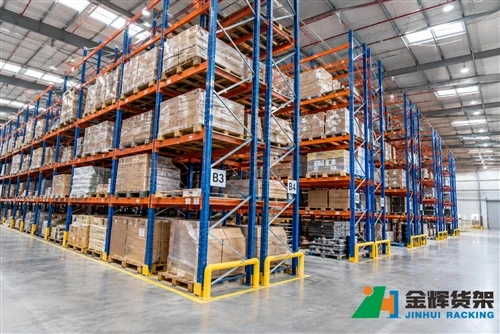
Heavy-Duty Pallet Racking for Larger Loads
Some home appliances are heavy or occupy substantial pallet space. The complete loaded pallet weight, its dimensions, and the way the load rests on the rack must be considered when choosing a suitable system.
Heavy-duty industrial racking systems may be appropriate for palletized appliance stock when the system is designed for the intended loads and operating conditions. Always verify the applicable load specifications rather than assuming that all heavy-duty racks are suitable for every appliance pallet.
3. Measure Cartons and Pallets Before Planning Rack Dimensions
One common storage planning mistake is using product dimensions instead of the dimensions of the complete storage unit. A refrigerator carton, for example, may be wider or taller than the appliance itself because of protective packaging, corner guards, or other packing materials.
Before finalizing the rack layout, collect the following information:
- Loaded pallet width and depth: Include carton overhang and any packaging that extends beyond the pallet base.
- Total load height: Measure from the bottom of the pallet to the highest point of the packaged appliance.
- Gross pallet weight: Include the appliance, packaging, accessories, and pallet.
- Pallet type and condition: Confirm that the pallet is suitable for the intended storage and handling method.
- Product orientation: Check whether packaging instructions specify an upright position or other handling restrictions.
- Handling equipment: Consider forklift dimensions, lifting height, turning requirements, and the clearances needed for safe operation.
Use the actual inventory profile rather than relying on a single standard pallet size. If several pallet configurations are used, the rack layout must accommodate the intended loads while maintaining suitable clearances.
4. Organize Appliance Inventory by Product Category and SKU
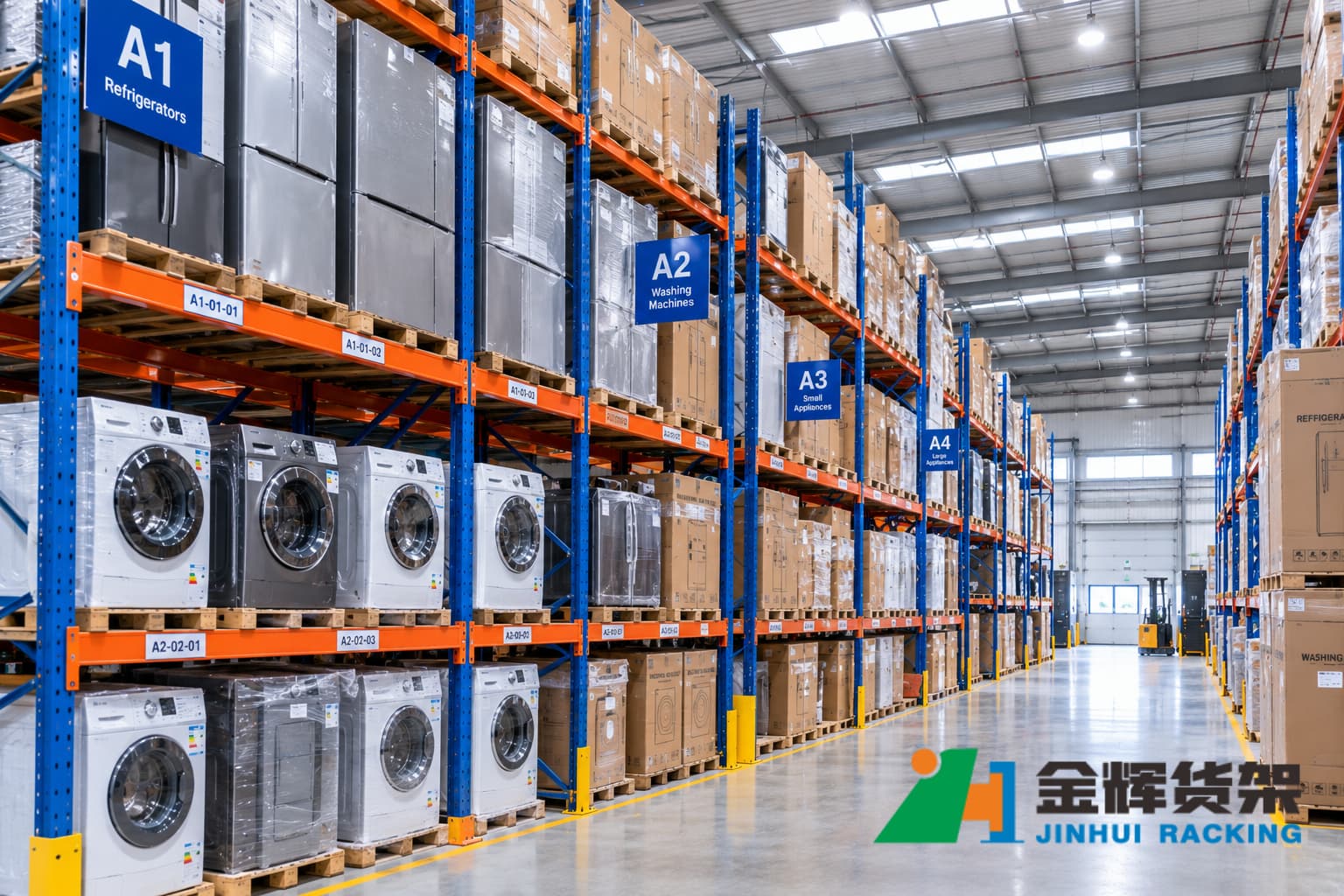
Home appliance warehouses often contain similar products with different model numbers, colors, capacities, or regional specifications. A clear location structure helps reduce picking errors and makes inventory easier to manage.
A practical arrangement may separate inventory into product categories such as:
- Large appliances: Refrigerators, freezers, washing machines, and dishwashers.
- Kitchen appliances: Microwave ovens, ovens, and other packaged kitchen equipment.
- Climate-control products: Air conditioners and related packaged units.
- Small appliances: Vacuum cleaners, air purifiers, and compact household equipment.
- Accessories and replacement parts: Items stored separately from full-size appliance pallets where appropriate.
The exact zones should reflect the warehouse's inventory, not a fixed category list. Where several models have similar packaging, display the SKU and product description clearly on the pallet label or in the warehouse inventory system.
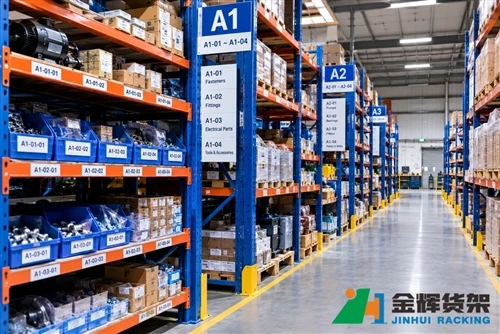
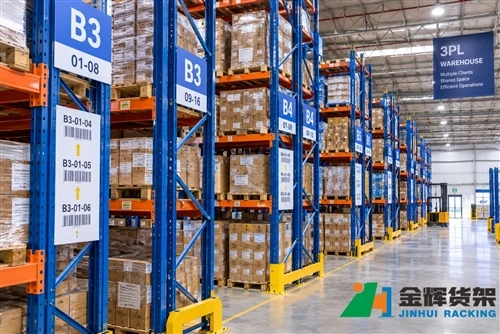
A consistent location code can identify the zone, aisle, rack, level, and individual storage position. This helps staff confirm both the product identity and its physical location before moving a pallet.
5. Protect Cartons and Packaged Appliances During Storage
Many appliances are shipped in protective cardboard packaging. Although cartons are designed to protect products during normal distribution, they can still be damaged by poor pallet conditions, unsuitable support, excessive compression, or rough handling.
To help protect stored appliances:
- Inspect pallets and packaging before put-away, and identify damaged cartons for appropriate handling.
- Follow the manufacturer's carton orientation, stacking, and handling instructions.
- Ensure palletized loads are stable and suitable for the selected rack configuration.
- Avoid allowing cartons to extend into aisles or beyond permitted rack clearances.
- Keep loads within the rack's approved capacity and the pallet's intended load limits.
- Use appropriate handling procedures when placing or removing pallets from elevated rack positions.
- Keep damaged or unstable loads out of normal storage until they have been assessed and made safe to handle.
Do not assume that a carton can support the weight of another appliance simply because the products can be stacked during transport. Follow packaging instructions and confirm that any stacking arrangement is suitable for the actual storage conditions.
6. Position Fast-Moving Appliances for Efficient Picking
Not every appliance model has the same dispatch frequency. Popular products may move through the warehouse quickly, while less common models may remain in storage for longer periods.
Assigning locations based on demand can help improve picking efficiency:
- Fast-moving models: Consider locations that support frequent retrieval and replenishment without disrupting other warehouse activities.
- Medium-turnover models: Place these in suitable positions that balance accessibility and available storage capacity.
- Slow-moving models: Use appropriate reserve locations while preserving safe access for inspection and retrieval.
- Promotion or seasonal inventory: Review expected demand before allocating temporary storage space.
Storage assignments should be reviewed when sales patterns change. A product that becomes popular during a promotion may require more convenient access than it did during a quieter period.
7. Plan Aisles and Handling Routes Around Large Loads
Large appliance pallets can be difficult to maneuver in confined spaces. A rack layout must provide enough room for the actual handling equipment to approach, lift, turn, and position each load safely.
When planning aisles and travel routes, consider:
- The type and turning requirements of the forklift or other handling equipment.
- The width and depth of the largest loaded pallets.
- The height of rack beams and the clearance required for elevated loads.
- The movement of inbound pallets from receiving to storage.
- The routes used to transfer picked appliances to staging and dispatch areas.
- Pedestrian routes and the need to separate people from material-handling operations.
Aisle width should be determined from the equipment specifications, load dimensions, building conditions, and operating requirements. Narrowing aisles without checking these factors can make pallet placement difficult and increase the risk of collisions or product damage.
8. Maintain Accurate Inventory Records
Physical organization alone does not guarantee accurate inventory. Warehouse staff also need reliable records showing which appliance model is stored in each location and how many units are available.
A basic inventory control process should cover:
- Receiving: Check product model numbers, quantities, pallet condition, and visible packaging damage.
- Put-away: Assign the correct storage location and record the movement in the inventory system.
- Picking: Match the requested SKU and quantity against the pallet label and order details.
- Replenishment: Move reserve stock to picking or dispatch areas according to the warehouse's operating procedures.
- Returns: Verify the product identity and condition before returning appliances to available inventory.
- Stock verification: Investigate discrepancies between recorded quantities and physical stock.
If a warehouse management system (WMS) is used, ensure that its location codes match the physical rack labels. Clear records help staff find the correct appliance model and reduce the risk of dispatching the wrong product.
9. Review Storage Capacity Before Peak Demand
Demand for certain home appliances may change around promotional periods, holidays, new product launches, or seasonal purchasing cycles. Temporary increases in stock can place pressure on receiving areas, rack positions, and dispatch staging space.
Before a peak period, review the expected inbound quantities, existing stock, planned outbound volume, and available pallet positions. Identify which models may need additional space and confirm that the warehouse can handle the expected inventory without obstructing aisles or emergency access routes.
Temporary floor storage should not become an uncontrolled substitute for planned racking. Any alternative storage arrangement must remain suitable for the load, packaging, handling method, and applicable site safety requirements.
10. Home Appliance Warehouse Racking Checklist
Use this checklist when planning a new appliance warehouse or improving an existing storage layout.
| Planning Area | What to Verify |
|---|---|
| Product dimensions | Actual carton and loaded pallet dimensions |
| Load requirements | Gross pallet weight, load distribution, and verified rack capacity |
| Racking configuration | Suitable rack type, storage levels, and access requirements |
| SKU organization | Product identification, location codes, and model separation |
| Packaging protection | Pallet condition, carton stability, and handling instructions |
| Material handling | Forklift compatibility, aisle clearance, and safe travel routes |
| Inventory management | Receiving, put-away, picking, returns, and stock verification |
| Future demand | Expected inventory growth, promotional stock, and available capacity |
Conclusion
Effective warehouse racking for home appliances starts with understanding the dimensions, weight, packaging, and turnover of the products being stored. A well-planned system can accommodate different appliance models, provide clear access to palletized inventory, and support more consistent receiving, picking, and dispatch operations.
By selecting an appropriate racking configuration, measuring loaded pallets accurately, protecting cartons, and maintaining reliable location records, warehouse operators can improve storage organization while reducing avoidable handling problems.
The most suitable solution depends on the actual inventory profile, warehouse layout, handling equipment, and load requirements. Reviewing these factors before selecting or modifying a racking system helps ensure that the storage arrangement supports current operations and future changes.
Contact JINHUI RACK
Looking for a warehouse racking solution for refrigerators, washing machines, or other home appliance inventory? Contact JINHUI RACK to discuss your warehouse dimensions, pallet specifications, storage capacity, and operational requirements.
Email: info@jhrack.com
WhatsApp: +86 18502527163