Accurate inventory tracking starts with knowing exactly where every pallet is stored. In warehouses that use pallet racking systems, unclear location labels, inconsistent numbering, and outdated inventory records can lead to misplaced products, picking errors, unnecessary forklift travel, and time-consuming stock checks.
A well-designed pallet rack location labeling system gives every storage position a clear and consistent identity. When physical labels work together with warehouse management software, barcode scanning, and standardized operating procedures, employees can locate products more reliably and keep inventory records up to date.
This guide explains how to create a practical warehouse location labeling system, choose suitable rack identification methods, organize location codes, and maintain accurate inventory information as warehouse operations change.
1. Why Pallet Rack Location Labels Matter
Pallet rack location labels identify where inventory should be stored and retrieved. They connect the physical warehouse layout with the location information used by warehouse employees and inventory management systems.
Without a consistent labeling method, workers may rely on memory, handwritten notes, or informal descriptions such as "the rack near the loading door." These descriptions become unreliable as the warehouse grows, employees change shifts, or storage layouts are modified.
A standardized location labeling system can help warehouses:
- Improve inventory accuracy: Employees can record the exact location of received, moved, counted, and picked pallets.
- Reduce picking errors: Clear location codes help workers distinguish between nearby rack bays and storage levels.
- Speed up put-away: Receiving staff can direct inventory to assigned storage positions rather than searching for available space.
- Support cycle counting: Inventory teams can count stock by defined rack locations and investigate discrepancies more efficiently.
- Improve shift handovers: Standardized codes reduce confusion between employees working different shifts.
- Support warehouse software: Physical labels provide recognizable location identifiers for barcode-based or other digital inventory workflows.
Location labels do not guarantee accurate inventory by themselves. They work best when combined with correct scanning procedures, disciplined stock movements, and regular inventory verification.
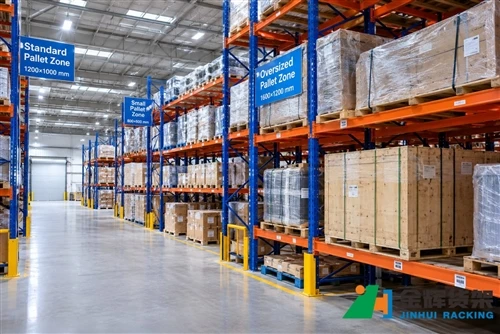
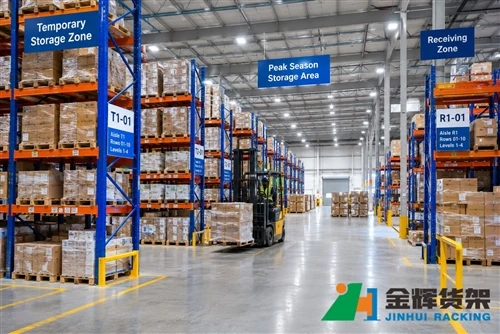
2. Divide the Warehouse Into Clear Location Zones
Before creating individual pallet rack labels, divide the warehouse into logical zones. A zone-based structure makes location codes easier to understand and allows the system to expand without renumbering the entire facility unnecessarily.
Depending on the warehouse layout, zones may include:
- Receiving and inbound inspection
- Reserve pallet storage
- Forward picking locations
- Returns and quarantine storage
- Damaged inventory areas
- Shipping and dispatch staging
- Special storage areas for specific product categories
Assign each zone a unique identifier and document its physical boundaries. For example, a warehouse might use R for reserve storage, P for picking, and Q for quarantine. These are illustrative codes; the actual abbreviations should suit the site's language, layout, and software requirements.
Keep zone names short and distinct. Avoid using similar abbreviations for areas that employees could easily confuse, particularly when inventory moves between receiving, inspection, and available stock.
3. Build a Consistent Pallet Rack Location Code
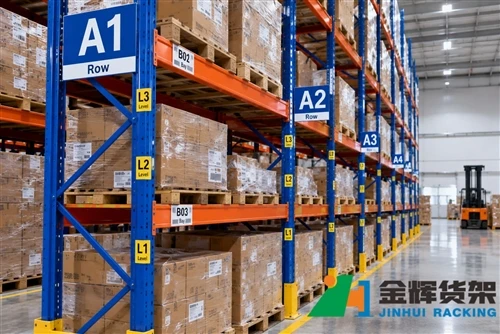
After establishing the zones, define a location code that identifies a specific storage position. A common approach is to combine the zone, rack row, bay, level, and position where needed.
For example, a warehouse could use the following illustrative format:
R-03-06-02-01
- R: Reserve storage zone
- 03: Rack row 03
- 06: Bay 06
- 02: Storage level 02
- 01: Pallet position 01, if a bay contains multiple defined positions
This example is not a universal standard. Some warehouses do not need a separate position identifier, while others require additional information to distinguish multiple locations within a rack bay. The code should match the actual physical layout and the way inventory is managed.
| Location Element | What It Identifies | Example |
|---|---|---|
| Zone | The functional warehouse area | R |
| Rack row | A defined row of pallet racking | 03 |
| Bay | A specific bay along the rack row | 06 |
| Level | The designated vertical storage level | 02 |
| Position | A distinct pallet position where needed | 01 |
Use one documented naming convention throughout the facility. Avoid mixing different code orders, inconsistent separators, and multiple names for the same physical location.
4. Match Location Labels to the Physical Rack Layout
Location numbering should follow a predictable physical sequence. Employees should be able to move through the warehouse and identify rack rows, bays, and storage levels without repeatedly checking a separate map.
When assigning rack locations, consider the following practices:
- Use a consistent direction: Number rack rows and bays according to a documented starting point and sequence.
- Identify levels clearly: Make the vertical storage level distinguishable from the bay number.
- Account for both rack sides: Where a rack row has accessible storage on both sides, define how each side is identified.
- Preserve unique identifiers: Each active storage position should have a unique code within the warehouse.
- Document exceptions: Record unusual layouts, split bays, irregular storage positions, or special areas in the location map.
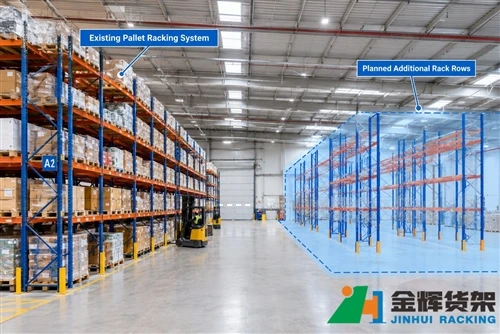
- Update codes after changes: Any rack reconfiguration should trigger a review of affected labels and inventory records.

The location map and the physical warehouse must always agree. If a bay is divided, removed, or reassigned, the corresponding location records should be updated before employees begin using the changed area.
5. Choose the Right Label Type for Your Warehouse
The best label depends on where it will be installed, how employees identify locations, the warehouse environment, and whether the system uses barcode scanning or other digital tools.
| Label Type | Typical Use | Key Consideration |
|---|---|---|
| Printed text labels | Basic rack row, bay, and level identification | Use clear characters and sufficient contrast for the viewing distance. |
| Barcode labels | Scanning pallet locations during put-away, picking, and stock movements | Ensure the barcode matches the correct location record and can be scanned from the intended position. |
| Large aisle or row signs | Identifying major warehouse areas and rack rows | Place signs where workers can identify the correct row while approaching it. |
| Reflective or specialized labels | Areas with challenging lighting or specific environmental conditions | Choose materials and printing suitable for the actual operating environment. |
| Floor location markings | Identifying staging areas and designated floor storage positions | Keep markings visible and maintain them as traffic and floor conditions change. |
Labels should be readable from the normal approach direction used by warehouse employees and material-handling equipment. Where workers scan locations from a forklift, verify that the barcode's placement, size, and orientation support that process.
For high-level storage, consider how labels can be read or scanned safely from the working position. Employees should not need to climb racks or use unsafe methods to identify a location.
6. Use Barcodes to Connect Rack Locations With Inventory Records
Barcode scanning can reduce manual data entry and help confirm that employees are working with the intended storage location. However, the barcode system must be correctly configured before it can deliver these benefits.
A practical barcode workflow may include the following steps:
- Create the location record: Add each approved storage position to the warehouse inventory system.
- Assign a unique location code: Make sure the physical identifier corresponds to one location record.
- Print and install the label: Place the barcode and human-readable code at the designated location.
- Test the label: Scan it using the equipment and software intended for daily operations.
- Record put-away movements: Scan or select the destination location when inventory is stored.
- Verify picking movements: Confirm the assigned location before removing inventory.
- Record relocations: Update the inventory system whenever stock moves to a different position.
Warehouses using a warehouse management system (WMS) should align the location code structure with the software's configuration. Before rolling out new labels, test representative locations and typical workflows to identify mismatches, unreadable barcodes, or confusing codes.
For more information about connecting warehouse storage with digital inventory operations, see how to integrate pallet racking with a warehouse management system.
7. Keep Location Labels Separate From Product and Load Information
A rack location label identifies where inventory belongs. It should not be confused with a product label, pallet identification label, shipment label, or rack load notice.
These identifiers serve different purposes:
- Location label: Identifies a fixed storage position.
- Product or SKU label: Identifies the type of product.
- Pallet or license plate label: Identifies a specific pallet or handling unit when the warehouse uses this method.
- Inventory status label: Indicates a condition such as pending inspection, approved stock, or quarantine.
- Rack load notice: Communicates applicable rack loading information according to the approved rack design.
Keeping these functions distinct helps prevent employees from treating a product identifier as a location code or assuming that a location label communicates allowable rack capacity.
Where the warehouse uses color coding for inventory status or work zones, document the meaning of each color and combine it with clear text or codes. Do not rely on color alone to communicate information that affects stock handling or safety.
8. Establish Rules for Location Changes and Empty Locations
Warehouse locations change over time. A bay may become unavailable during maintenance, a rack row may be reconfigured, or a storage area may be reassigned to a different product category.
Without formal change control, the warehouse map and the actual storage layout can gradually become inconsistent.
Use a documented process for location changes:
- Authorize the proposed layout or location change.
- Update the warehouse map and location records.
- Relocate affected inventory and record each movement.
- Remove, replace, or cover obsolete labels so they cannot be mistaken for active locations.
- Verify new labels against the physical rack and system records.
- Inform affected employees before the revised locations are used.
Empty locations should also be managed consistently. An empty pallet position is not necessarily available for every product: it may be reserved, temporarily blocked, or unsuitable for a particular load. The system should distinguish available locations from locations that are restricted or unavailable.
9. Audit Labels and Verify Inventory Accuracy
Even a well-designed labeling system needs regular maintenance. Labels can become dirty, damaged, obscured by stored goods, or inconsistent with a modified warehouse layout.
Include location label checks in routine warehouse inspections and inventory control activities. The frequency should reflect warehouse traffic, operating conditions, and the likelihood of layout changes.
During an audit, check whether:
- Each active storage position has the correct identifier.
- Labels are visible and readable from the intended approach direction.
- Barcodes can be scanned reliably with the warehouse's equipment.
- The physical location matches the warehouse map and digital record.
- Obsolete or duplicate labels have been removed or clearly deactivated.
- Restricted, damaged, or unavailable locations are correctly recorded.
- Inventory movements are recorded at the time they occur.
Location audits can also support cycle counting. When an inventory discrepancy is found, verify both the product quantity and the recorded location before making adjustments.
See our guide on managing pallet rack inventory cycle counts for additional guidance on organizing inventory verification activities.
10. Common Pallet Rack Labeling Mistakes
Several labeling mistakes can undermine warehouse inventory tracking even when the warehouse uses barcode scanners or inventory software.
| Common Mistake | Possible Consequence | Recommended Practice |
|---|---|---|
| Using duplicate location codes | Employees may store or pick inventory from the wrong position. | Maintain a controlled list of unique active location identifiers. |
| Changing labels without updating the system | Physical labels and inventory records no longer match. | Update and verify both the physical and digital records during every approved change. |
| Making labels too small or unclear | Workers may misread codes or spend extra time identifying locations. | Test label readability under actual warehouse lighting and viewing conditions. |
| Placing labels where goods or rack components hide them | Locations become difficult to identify or scan. | Choose a consistent, visible mounting position that suits the rack design. |
| Using inconsistent numbering conventions | Employees may confuse rows, bays, and levels. | Document one code structure and apply it throughout the warehouse. |
| Ignoring damaged or obsolete labels | Scanning errors and location confusion may increase. | Include label condition and accuracy in regular inspections. |
| Recording movements later from memory | Inventory records may not reflect actual stock locations. | Record and verify movements as part of the normal handling process. |
11. Warehouse Location Labeling Checklist
Use this checklist when introducing a new labeling system or reviewing an existing one.
| Check Item | Requirement |
|---|---|
| Zone structure | Warehouse zones have clear names and defined boundaries. |
| Location code format | Rows, bays, levels, and positions follow a consistent naming convention. |
| Unique identifiers | Every active storage location has a unique code. |
| Label visibility | Labels are readable from the intended operating position. |
| Barcode verification | Scanned codes resolve to the correct location records. |
| System integration | Location identifiers match the warehouse map and inventory system. |
| Change management | Relocations, rack modifications, and deactivated positions are documented. |
| Employee training | Warehouse employees understand how to identify locations and record stock movements. |
| Routine audits | Label condition and location accuracy are checked periodically. |
Frequently Asked Questions
What information should a pallet rack location label include?
At minimum, it should include a unique location identifier that employees can read and match to the warehouse's location records. Depending on the system, the identifier may represent a zone, rack row, bay, level, and individual pallet position.
Should every pallet rack location have its own barcode?
For warehouses using barcode-based location control, each independently managed storage position should have an identifier that resolves to the correct location record. The label design and placement should be tested with the actual scanning workflow.
Can warehouse location codes be changed after installation?
Yes, but changes should follow a controlled process. Update the warehouse map and digital records, relocate affected inventory, replace obsolete labels, and verify the revised locations before employees begin using them.
How often should warehouse rack labels be inspected?
There is no single frequency suitable for every warehouse. Inspection intervals should reflect traffic levels, environmental conditions, label durability, and the frequency of layout changes. Damaged, missing, or misleading labels should be corrected promptly.
Do rack location labels replace rack load notices?
No. Location labels identify storage positions, while rack load notices communicate loading information for the approved rack configuration. They serve different purposes and should remain clearly distinguishable.
Conclusion
A reliable pallet rack location labeling system connects the physical warehouse layout with inventory records and daily handling procedures. By creating clear zones, using consistent location codes, choosing suitable labels, and controlling location changes, warehouse managers can make storage positions easier to identify and inventory movements easier to track.
For the best results, treat labeling as part of the warehouse's overall storage and inventory management process. Combine visible rack identification with accurate system records, employee training, barcode verification where applicable, and regular audits. When planning a new installation or warehouse reorganization, consider how the racking layout and location identification system will work together from the beginning.
JINHUI provides pallet racking solutions for warehouses with different storage layouts and operational requirements. A well-planned racking arrangement, combined with a consistent location labeling strategy, can support clearer inventory control and more efficient warehouse operations.
WhatsApp: +86 185 0252 7163
Email: info@jhrack.com