Damaged goods are a common challenge in warehouse operations. Products can be damaged during transportation, unloading, pallet handling, rack storage, order picking, or internal transfers. If damaged items are not identified and controlled promptly, they may be mixed with sellable inventory, shipped to customers, or recorded incorrectly in the warehouse management system.
In a warehouse using pallet racking, effective damage management requires more than removing visibly broken products. Warehouse teams need a consistent process for inspecting goods, recording damage, isolating affected inventory, investigating the cause, and deciding whether products can be released, reworked, returned, or disposed of.
This guide explains how to manage damaged goods in a warehouse racking system, improve inventory accuracy, reduce repeat damage, and maintain safer warehouse operations.
1. Identify Common Types of Warehouse Goods Damage
Understanding the type of damage is the first step toward selecting the appropriate response. Different products require different inspection criteria, handling procedures, and disposition decisions.
Common types of warehouse goods damage include:
- Packaging damage: Torn cartons, crushed boxes, broken seals, damaged wrapping, or exposed packaging materials.
- Product damage: Broken components, cracks, dents, scratches, contamination, or other defects that may affect product usability.
- Moisture damage: Water exposure, damp packaging, corrosion, or deterioration caused by unsuitable storage conditions.
- Load instability: Shifted products, leaning cartons, loose straps, or damaged wrapping that makes a pallet unsafe to move.
- Pallet damage: Broken boards, cracked runners, damaged blocks, or other defects that may compromise pallet support.
- Handling damage: Impact marks, punctures, crushed corners, or deformation associated with forklift handling or other warehouse activities.
Not every damaged carton means the product inside is unusable. Similarly, packaging that appears intact does not guarantee that the product has not been damaged. Warehouse personnel should follow product-specific inspection requirements and avoid making assumptions based only on external appearance.
2. Inspect Damaged Goods as Soon as They Are Identified
Damage should be recorded when it is discovered, whether during receiving, put-away, routine storage checks, replenishment, picking, packing, or dispatch. Early identification helps prevent damaged products from moving further through the warehouse without the required review.
A practical inspection process should include the following steps:
- Identify the affected product, SKU, pallet, or shipment.
- Determine the quantity of goods that may be affected.
- Inspect the packaging and visible product condition without creating additional damage.
- Check whether the pallet is stable and suitable for safe handling.
- Record the rack location or work area where the damage was found.
- Take photographs or collect other supporting evidence when required.
- Notify the responsible warehouse team or supervisor according to the site's procedure.
If a load is leaning, unstable, leaking, or otherwise unsafe to approach, personnel should not attempt to inspect or move it without an appropriate risk assessment and suitable procedures. Restrict access to the affected area when necessary and involve trained personnel.
For damage discovered in a storage rack, also check whether there are visible signs of impact or damage to the rack components. Goods damage and rack damage may occur during the same incident, but they require separate assessments and records.
3. Separate Damaged Goods from Available Inventory
One of the most important controls is preventing damaged or unverified products from being picked or shipped as normal inventory. Goods that require inspection should have a clearly defined status and a controlled storage location.
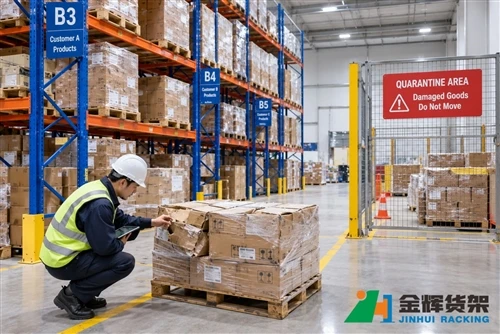
Depending on the warehouse's operations, damaged inventory may be assigned to a designated quarantine area, a controlled rack location, or another approved inspection zone. The selected arrangement should provide suitable access, clear identification, and appropriate physical support for the products.
Consider establishing separate categories for:
- Available inventory: Products that meet the warehouse's release requirements.
- Pending inspection: Products whose condition has not yet been confirmed.
- Damaged inventory: Products with confirmed or suspected damage that requires a disposition decision.
- Pending customer approval: Products awaiting instructions or authorization from the inventory owner.
- Approved for rework or return: Products assigned to an authorized corrective process.
- Approved for disposal: Products that have received the required disposal authorization.
These categories should match the warehouse management system and the organization's actual procedures. Not every facility needs all of these statuses, but the distinction between available and unavailable inventory must remain clear.
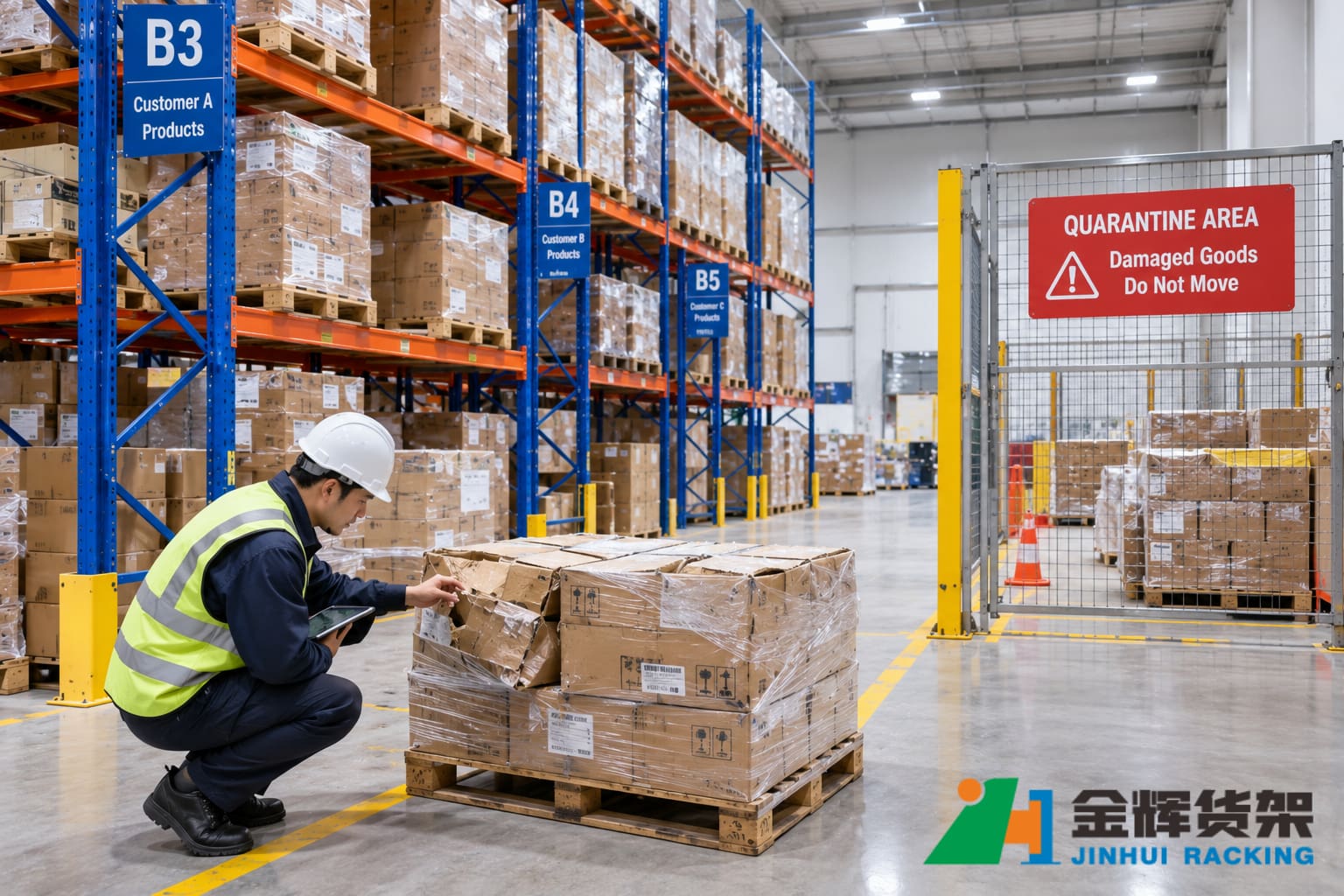
Clear labels, location codes, and inventory status records help prevent accidental picking. Where practical, use physical separation and system controls together rather than relying only on a handwritten note or verbal instruction.
4. Create a Controlled Damaged Goods Storage Area
A designated damaged goods area makes it easier for warehouse teams to identify, inspect, and manage products that cannot immediately return to normal inventory. It also helps prevent damaged items from occupying ordinary picking locations without a clear status.
When planning this area, consider the following requirements:
- Clear identification: Mark the area and its storage locations so employees can distinguish them from normal inventory positions.
- Suitable access: Provide enough space for authorized inspection and handling activities.
- Appropriate support: Ensure pallets and loads are supported by a suitable storage arrangement.
- Controlled movement: Define who can move, release, or adjust damaged inventory.
- Inventory visibility: Record the location and status of each affected pallet or product group.
- Product-specific precautions: Follow additional handling or segregation requirements for leaking, contaminated, fragile, or otherwise hazardous goods.
Do not automatically place every damaged pallet into an ordinary rack position. The load may have become unstable, the pallet may no longer provide adequate support, or the product may require special handling. Assess the actual condition before choosing a storage method.
For returned products that require a separate inspection and disposition process, see the related guide on managing warehouse returns using pallet racking systems.
5. Update Inventory Records and Product Status
Physical segregation alone is not sufficient if the warehouse management system still shows damaged products as available. Inventory records should reflect the actual quantity, location, and status of the affected goods.
When recording damaged inventory, capture the information relevant to the warehouse's control process:
- Product name and SKU.
- Customer, supplier, or inventory owner where applicable.
- Pallet ID, batch number, or lot number when used.
- Quantity affected and unit of measure.
- Physical location where the damage was discovered.
- Date and time of discovery.
- Type and apparent extent of damage.
- Photographs or supporting documents, where required.
- Current inventory status and next action.
If only part of a pallet is damaged, record the affected quantity separately when the inventory system and warehouse procedure allow it. Avoid treating an entire pallet as unusable without checking the actual condition and applicable product requirements.
All inventory adjustments should follow the warehouse's authorization process. Do not delete or overwrite the original transaction history merely to make the system balance with the physical count.
A well-maintained relationship between rack locations and inventory records can make damaged goods easier to trace. Learn more about integrating pallet racking with a warehouse management system.
6. Investigate the Cause of Goods Damage
Recording damage is necessary, but identifying its cause is equally important. Without an investigation, the same problem may continue to occur during receiving, storage, handling, or order fulfillment.
Warehouse managers should review the circumstances surrounding each incident and distinguish confirmed evidence from possible explanations.
| Possible Cause | What to Investigate | Potential Preventive Action |
|---|---|---|
| Transportation or receiving damage | Delivery condition, packaging, unloading records, and photographs | Improve receiving inspections and document delivery exceptions. |
| Forklift impact | Incident reports, impact marks, handling routes, and operator procedures | Review handling practices, traffic management, and rack protection. |
| Unstable pallet loads | Load arrangement, wrapping, pallet condition, and weight distribution | Improve load securing and verify pallet suitability before storage. |
| Unsuitable storage conditions | Moisture exposure, temperature requirements, contamination, or other environmental factors | Adjust storage conditions and follow product-specific requirements. |
| Picking or replenishment errors | Handling records, equipment use, and movement procedures | Improve task instructions and employee training. |
| Packaging or product defects | Packaging condition, supplier information, and repeated defect patterns | Refer recurring issues to the appropriate supplier or quality team. |
| Rack or storage configuration issues | Load support, clearance, rack condition, and storage instructions | Review the approved storage arrangement with a qualified professional. |
For example, if several cartons are crushed on pallets stored in the same rack area, the warehouse should check the affected loads, their handling history, and the surrounding storage conditions. Repeated damage may indicate a common process issue, but the conclusion should be based on the available evidence.
7. Check Pallets and Racking When Structural Problems Are Suspected
Damage to goods can sometimes be associated with a damaged pallet, an unstable load, or an impact involving the racking system. These conditions should not be treated as the same problem because the appropriate response may differ.
When a damaged load is found in a rack, check for visible signs such as:
- Broken or deformed pallet boards and runners.
- Products extending into adjacent storage positions.
- Leaning loads or displaced pallets.
- Visible damage to rack beams, uprights, connectors, or protective components.
- Evidence of forklift impact near the affected storage position.
- Changes in the load arrangement that may affect support or clearance.
If rack damage is suspected, follow the site's rack safety procedures, restrict access where necessary, and arrange an assessment by a qualified person. Damaged structural components should not be repaired, modified, or returned to service without the appropriate approval.
For additional guidance, read how to inspect pallet racking systems regularly. Goods inspection and rack inspection should work together when an incident may affect both inventory and storage equipment.
8. Establish a Clear Disposition Process
Once the damage has been documented and assessed, the warehouse needs a clear decision about what happens next. The correct action depends on the product's condition, contractual requirements, quality standards, and the authority responsible for approving the disposition.
Common disposition options include:
- Release: Return products to available inventory only after the required inspection confirms they meet release criteria.
- Repackaging: Replace damaged packaging when the product itself remains acceptable and repackaging is permitted.
- Rework: Send products through an approved repair, inspection, or corrective process.
- Return to supplier: Arrange a return when authorized by the supplier agreement or responsible inventory owner.
- Customer review: Hold inventory until the customer or authorized decision-maker provides instructions.
- Disposal: Dispose of unusable products according to the applicable authorization, safety, and waste-handling requirements.
Warehouse employees should not independently decide to release, discard, or materially alter goods when approval is required. Document the decision, the responsible approver, and the resulting inventory transaction.
Products with suspected contamination, leakage, or other safety concerns may require specialized procedures. Follow the relevant product instructions and site safety requirements rather than applying the ordinary damaged-goods process automatically.
9. Train Employees to Prevent Repeat Damage
Consistent employee practices can reduce avoidable damage during routine warehouse activities. Training should address the actual products, handling equipment, rack configuration, and workflows used in the facility.
Key training areas include:
- Recognizing common forms of packaging, pallet, and product damage.
- Inspecting pallets and loads before moving or storing them.
- Using suitable handling equipment and following approved operating procedures.
- Placing pallets correctly in designated storage locations.
- Reporting damage and recording inventory status promptly.
- Following quarantine, release, and disposition procedures.
- Identifying when a load or rack condition requires the area to be restricted.
Training should also explain that damaged inventory must not be returned to available stock simply because a rack position is needed or an order is waiting to be picked. Inventory status and release decisions should follow the established control process.
10. Monitor Damage Trends and Improve Warehouse Procedures
Tracking damage over time helps warehouse managers determine whether preventive measures are working. A single incident may be isolated, while repeated incidents involving similar products, locations, or handling activities may point to a process that needs improvement.
Useful indicators may include:
- Number of damaged-goods incidents during a defined reporting period.
- Quantity of inventory affected by damage.
- Damage incidents by warehouse zone or operational stage.
- Recurring damage types and confirmed causes.
- Time required to inspect and resolve damaged inventory.
- Percentage of incidents with complete supporting records.
- Completion status of corrective and preventive actions.
Use consistent definitions when comparing results. For example, distinguish the number of incidents from the number of damaged units, and separate confirmed damage from suspected damage awaiting inspection.
Review the results with warehouse operations, inventory control, quality, and other relevant teams. Where appropriate, update receiving procedures, packaging requirements, handling instructions, storage rules, or employee training based on the findings.
Common Mistakes in Damaged Goods Management
| Common Mistake | Why It Creates Problems | Better Practice |
|---|---|---|
| Leaving damaged goods in normal picking locations | Products may be picked or shipped before inspection. | Assign a clear status and move affected goods to an appropriate controlled area. |
| Recording damage without updating inventory status | The system may continue to show unusable goods as available. | Update the inventory record according to the approved procedure. |
| Discarding products without authorization | Inventory ownership, financial records, and claims may be affected. | Obtain the required approval and document the disposition. |
| Ignoring pallet or rack damage | Unsafe support or structural problems may remain unresolved. | Inspect the relevant components and follow the site's safety procedures. |
| Failing to investigate recurring incidents | The same damage may continue to occur. | Review incident evidence and implement appropriate corrective actions. |
| Relying only on verbal communication | Damage details and approval decisions may be difficult to trace later. | Maintain consistent records and supporting evidence. |
Damaged Goods Management Checklist
Warehouse teams can use the following checklist to review their damaged-goods process.
| Control Area | Verification Item |
|---|---|
| Identification | The affected product, SKU, pallet, and quantity have been identified. |
| Inspection | The damage and apparent extent have been documented. |
| Safety | Unsafe loads or suspected rack damage have been handled under the appropriate safety procedures. |
| Segregation | Damaged or unverified inventory is distinguishable from available stock. |
| Inventory Records | The location, quantity, status, and relevant identifiers are recorded correctly. |
| Investigation | The incident has been reviewed to identify its likely cause. |
| Disposition | The next action has been approved by the appropriate person or organization. |
| Evidence | Required photographs, transaction records, and approval documents are retained. |
| Prevention | Recurring issues are reviewed and corrective actions are tracked. |
Frequently Asked Questions
Should damaged goods remain in the pallet racking system?
It depends on the condition of the goods, pallet, load stability, and storage arrangement. Goods that are stable and suitable for controlled storage may be held in an approved location while awaiting inspection or instructions. Unstable loads, damaged pallets, or conditions that may affect rack safety require appropriate precautions before further handling or storage.
How can a warehouse prevent damaged goods from being shipped?
Use clear inventory statuses, designated quarantine locations, appropriate system restrictions, and an authorized release process. Employees should verify that products have been approved for release before picking or dispatching them.
What information should be included in a damaged-goods report?
A report commonly includes the product identifier, affected quantity, discovery location, date, damage description, photographs where required, inventory status, investigation findings, and the approved next action.
Who should approve the disposal of damaged inventory?
The responsible approver depends on the warehouse's contractual arrangements and internal procedures. Approval may involve the inventory owner, customer, quality team, or another authorized person. Warehouse staff should follow the applicable authorization process before disposing of goods.
What is the difference between damaged goods and damaged pallet racking?
Damaged goods refer to products or packaging that have been affected. Damaged pallet racking refers to structural storage components that may have been compromised. An incident can involve both, so each should be assessed and documented separately using the appropriate procedures.
Conclusion
Effective damaged-goods management helps warehouses protect product quality, maintain accurate inventory records, and reduce avoidable losses. A reliable process starts with prompt inspection and clear identification, followed by controlled segregation, accurate system updates, documented disposition decisions, and investigation of the underlying cause.
For warehouses using pallet racking, it is also important to check whether damaged pallets, unstable loads, or possible rack impacts create additional storage risks. By combining inventory controls with suitable storage arrangements, employee training, and regular reviews, warehouse teams can manage damaged goods more consistently and reduce the likelihood of repeat incidents.
WhatsApp: +86 185 0252 7163
Email: info@jhrack.com